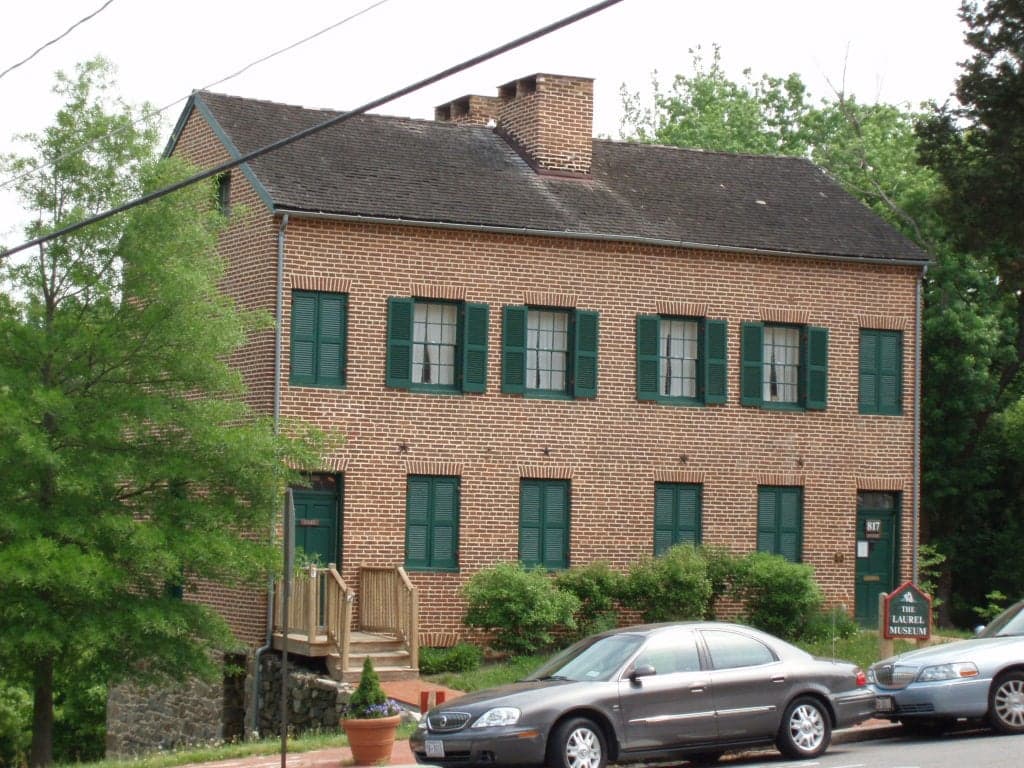
Photo: Wikipedia
Political ClimatePolitical Climate in Laurel, MD
District shown is the primary district for this city’s centroid. Cities may span multiple districts.
Local Political AnalysisPolitical Analysis of Laurel, MD
Laurel, Maryland, is a deep blue stronghold, and it’s been that way for a while. The Cook Partisan Voting Index (PVI) of D+39 tells you everything you need to know about the local political lean—this isn’t a swing town, it’s a one-party lock. Over the past decade, the shift has been pronounced, with progressive policies taking root faster than you can say “county council.” If you remember Laurel in the 1990s, it was a quieter, more middle-of-the-road place politically. Now, it’s a place where the local government often feels like it’s operating on autopilot, pushing through tax hikes and zoning changes that squeeze small property owners and long-time residents. The trajectory is clear: more regulation, higher costs, and a growing sense that your voice doesn’t matter much if you lean right.
How it compares
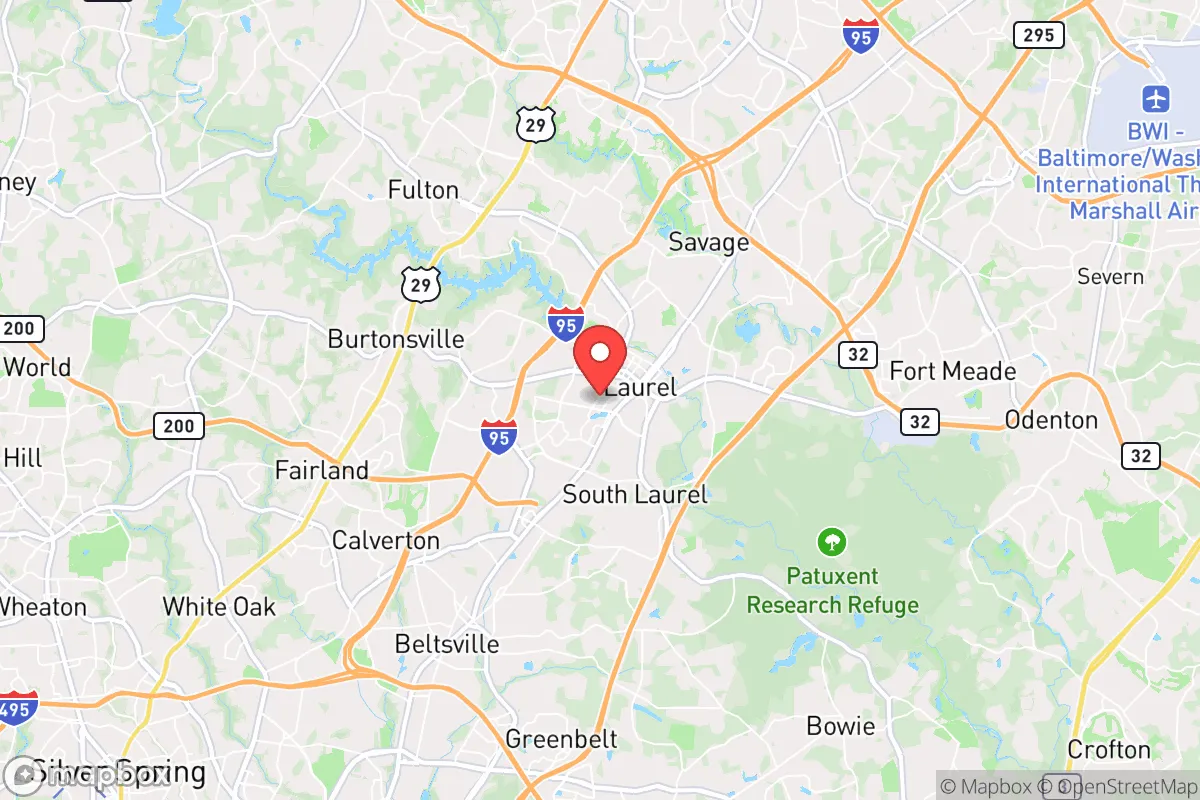
Drive 15 minutes west to Columbia, and you’ll find a similar vibe—another D+ stronghold with a heavy progressive tilt. But head east toward Bowie or south toward Crofton, and you start to see a different picture. Those areas still have a mix of moderate Democrats and a solid conservative minority that can actually influence local school board and council races. Laurel, by contrast, is surrounded by jurisdictions that amplify its blue hue. Prince George’s County, where most of Laurel sits, is one of the most reliably Democratic counties in the state. Anne Arundel County, which covers the northern sliver of Laurel, is more purple, but the city itself is firmly in the PG County orbit. The contrast is stark: in Laurel, a conservative candidate for city council might get 30% of the vote on a good day. In nearby towns like Jessup or Savage, that same candidate could pull 45% or more. It’s a reminder that Laurel’s politics aren’t just blue—they’re deep blue, with little room for dissent.
What this means for residents
For folks who value personal freedoms and limited government, living in Laurel means constantly watching your back. The city council and county government have a habit of reaching into your wallet and your life. Property taxes have crept up steadily, and new fees for things like stormwater management and recycling programs add up fast. There’s also a growing push for “inclusionary zoning” mandates that force developers to set aside units for low-income housing—sounds noble, but it often drives up costs for everyone else and reduces the supply of market-rate homes. On the freedom front, you’ve got mask mandates that lingered longer than in neighboring counties, and local police are increasingly asked to enforce social policies rather than focus on crime. The school board has embraced progressive curriculum changes that prioritize social justice over core academics, and parents who push back are often labeled as troublemakers. If you’re a conservative, you learn to pick your battles—and sometimes, you just keep your head down.
One cultural distinction that stands out is Laurel’s embrace of “sanctuary city” policies, even though it’s not officially designated as one. Local law enforcement has been instructed not to cooperate with federal immigration authorities in most cases, which creates a sense of lawlessness for those who believe in rule of law. The city also hosts a growing number of “community engagement” events that feel more like political rallies than neighborhood gatherings, with local officials using them to push progressive talking points. If you’re looking for a place where your conservative values are respected, Laurel isn’t it. The long-term outlook is more of the same—unless there’s a major shift in county leadership or a grassroots revolt, the D+39 lean is baked in. For now, the best advice I can give a friend is to stay informed, vote in every local election, and don’t expect the city to change its stripes anytime soon.

State Political ClimatePolitical Climate in Maryland
State Political AnalysisPolitical Environment in the State
Maryland has long been a solidly blue state, but its political reality is far more complex than a simple Democratic label suggests. The state’s overall partisan lean is heavily influenced by the Washington, D.C. suburbs, with Democrats holding a roughly 2-to-1 voter registration advantage and consistently winning statewide races by double digits. Over the last 10-20 years, the trajectory has been a steady march leftward on cultural and economic issues, driven by rapid suburbanization and an influx of federal employees and contractors. However, this blue veneer masks a deep and growing urban-rural divide that makes Maryland one of the most politically stratified states in the country.
Urban vs. rural divide
The political map of Maryland is a tale of two states. The western and eastern shores, along with the central rural counties, are reliably red. Places like Garrett County (the westernmost), Allegany County (home to Cumberland), and Caroline County on the Eastern Shore routinely vote Republican by 30-40 points. In contrast, the population centers—Montgomery County, Prince George’s County, and Baltimore City—are deep blue, often delivering 75-85% of their votes to Democrats. The swing counties that decide elections are the suburban and exurban rings: Anne Arundel County (Annapolis), Howard County (Columbia), and Frederick County. Frederick, in particular, has been a bellwether—it voted for Obama twice, then Trump in 2016 and 2020, before flipping back to Biden in 2024. This split means that while the state’s overall politics are progressive, a conservative moving to Frederick or Hagerstown will find a much more politically balanced community than someone settling in Bethesda or Silver Spring.
Policy environment
Maryland’s policy environment is a mixed bag for conservatives, with some bright spots and many red flags. On the tax front, the state has a progressive income tax structure with rates up to 5.75%, and property taxes are high, especially in the D.C. suburbs. The state also has a digital advertising tax (the first of its kind in the nation) and a wealth tax on capital gains over $350,000, which directly impacts business owners and investors. Education policy is dominated by the Blueprint for Maryland’s Future, a massive funding plan that funnels billions into public schools but has been criticized for expanding bureaucracy and limiting school choice. The state has no school voucher program and only a handful of charter schools, making it a tough environment for parents seeking alternatives. Healthcare is heavily regulated, with a state-run insurance exchange and strict certificate-of-need laws that limit competition. Election laws are among the most progressive: no-excuse mail-in voting, same-day registration, and automatic voter registration are all in place. For a conservative, the policy environment feels like a slow but steady expansion of government control over personal finances, education, and healthcare.
Trajectory & freedom
On the freedom index, Maryland is trending in the wrong direction. The most significant recent contraction of personal liberty came with the Firearm Safety Act of 2013 and subsequent updates, which banned assault weapons, limited magazine capacity to 10 rounds, and instituted a handgun licensing system that requires a background check, fingerprinting, and a training course. In 2024, the state passed HB 824, which further restricted concealed carry by creating “sensitive places” where guns are banned, including public transportation and areas where alcohol is sold. On parental rights, the Maryland General Assembly passed the Trans Health Equity Act in 2023, which allows minors to access gender-affirming care without parental consent in certain circumstances—a major flashpoint for conservative families. Medical autonomy took a hit with the state’s strict COVID-19 mandates, which were among the longest-lasting in the region. Property rights are constrained by smart growth zoning laws that limit development in rural areas, and the state’s eminent domain powers have been used aggressively for transit-oriented projects. The overall trajectory is one of expanding government reach into areas conservatives consider private: family decisions, self-defense, and property use.
Civil unrest & political movements
Maryland has seen its share of political flashpoints. The 2015 Baltimore riots following the death of Freddie Gray were a national story, exposing deep racial and economic divides. Since then, the Black Lives Matter movement has remained active, particularly in Baltimore and Prince George’s County. On the right, the Maryland Shall Issue gun rights group has been a persistent legal force, successfully challenging some restrictions in court. The state’s sanctuary policies are a major issue: Montgomery County and Baltimore City have declared themselves sanctuaries, limiting cooperation with federal immigration enforcement. In 2024, a controversial election integrity bill (HB 1000) was proposed that would have allowed non-citizens to vote in local elections, though it failed to pass. The most visible flashpoint for a new resident would be the constant political signage and activism in suburban areas—yard signs for progressive candidates are ubiquitous in Bethesda, while Trump flags still fly in rural areas like Havre de Grace and Elkton. The divide is not just political but cultural, and it’s visible in everyday life.
Projection
Looking ahead 5-10 years, Maryland’s political trajectory is likely to continue leftward, but with important caveats. The D.C. suburbs are growing faster than the rest of the state, and the influx of federal workers and tech professionals will reinforce the blue vote. However, there are signs of a rural backlash. The Maryland Republican Party has been gaining ground in exurban counties like Harford and Carroll, and the 2024 election saw a slight rightward shift in some working-class areas. The biggest wildcard is the state’s high cost of living, which is driving some families to leave for Virginia, Pennsylvania, or the Carolinas. If this out-migration continues, it could accelerate the political homogenization of the state, leaving only the wealthiest blue enclaves and the poorest rural areas. For a conservative moving in now, expect to find a state where your vote will be consistently outnumbered in statewide races, but where local control in certain counties can still provide a buffer. The key is choosing your county wisely—Frederick, Carroll, and Harford offer a more balanced political environment than the D.C. suburbs.
For a new resident, the bottom line is this: Maryland is a beautiful state with strong schools and a robust economy, but it comes with a heavy government footprint. If you value low taxes, gun rights, and local control, you’ll need to live in the right county and be prepared to fight for your values at the local level. The state is not a lost cause for conservatives, but it is a place where you must be intentional about where you settle and how you engage. The political climate is challenging, but for those who choose their community wisely, it can still be a good place to raise a family.
* Values derived from national, state, county, city and local statistics and may differ in a specific area. Last updated: 2026-04-22T02:20:32.000Z
Narrative content on this page is AI-generated and may contain mistakes. Verify any details that matter before acting on them.
ReloMaps may earn a commission from affiliate links at no extra cost to you.

