
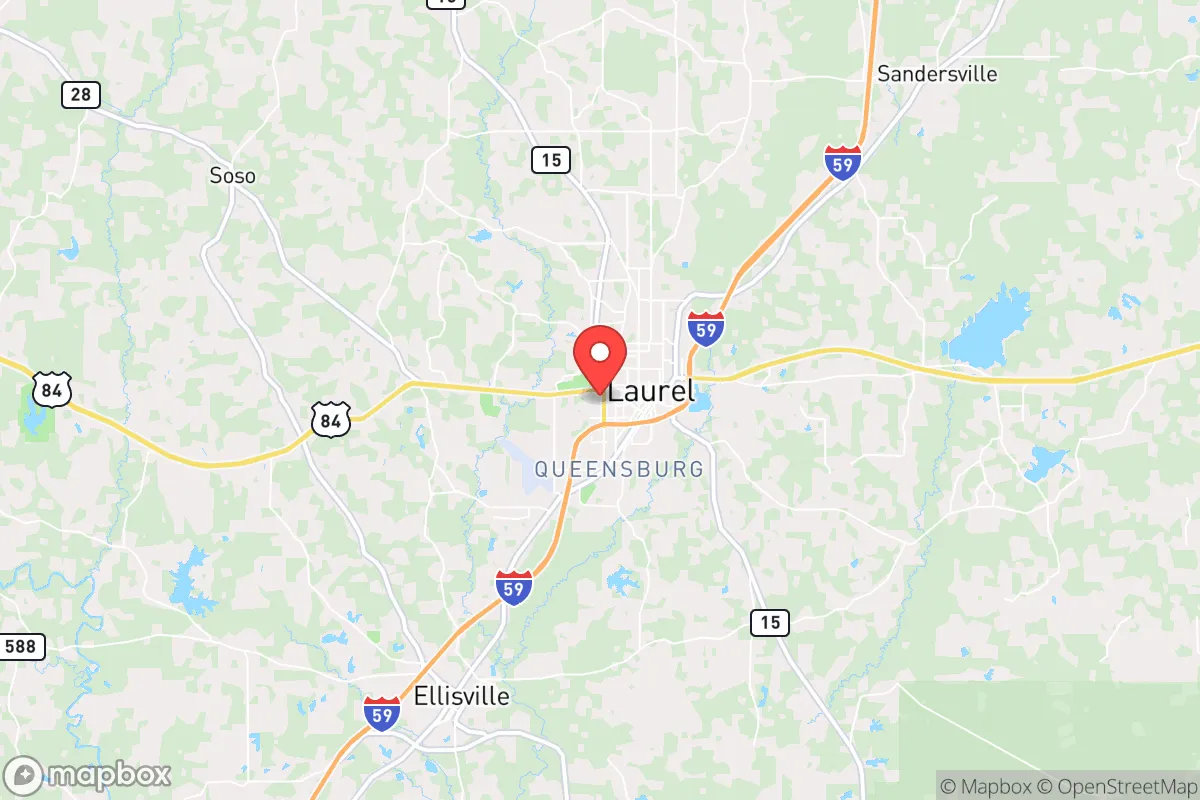

Photo: Wikipedia
Quality of Life in Laurel, MS
Above-average quality of iife. The area offers a reasonable cost of living, decent mobility, and a mix of neighborhood amenities.
What does Quality of Life tell us?
Quality of Life blends cost of living, nearby amenities, socioeconomic signals, and neighborhood character. City-level scores represent the whole municipality; individual neighborhoods can differ.
What does this tell us?
Quality of Life blends cost of living, nearby amenities, socioeconomic signals, and neighborhood character. City-level scores represent the whole municipality; individual neighborhoods can differ.
Cost of Living
41% below national average
The Real Cost of Living in Laurel, MS for 2026
| Tier | Individual | Family (4) |
|---|---|---|
| Survival | $13k | $25k |
| Comfortable | $25k | $36k |
| Luxury | $68k+ | $106k+ |
| Elite (Top 5%) | $141k+ | $218k+ |
105%
The Area Signal
A metric tracking the socioeconomic signals of the area.
Hobbies
Explore the areaGroceries
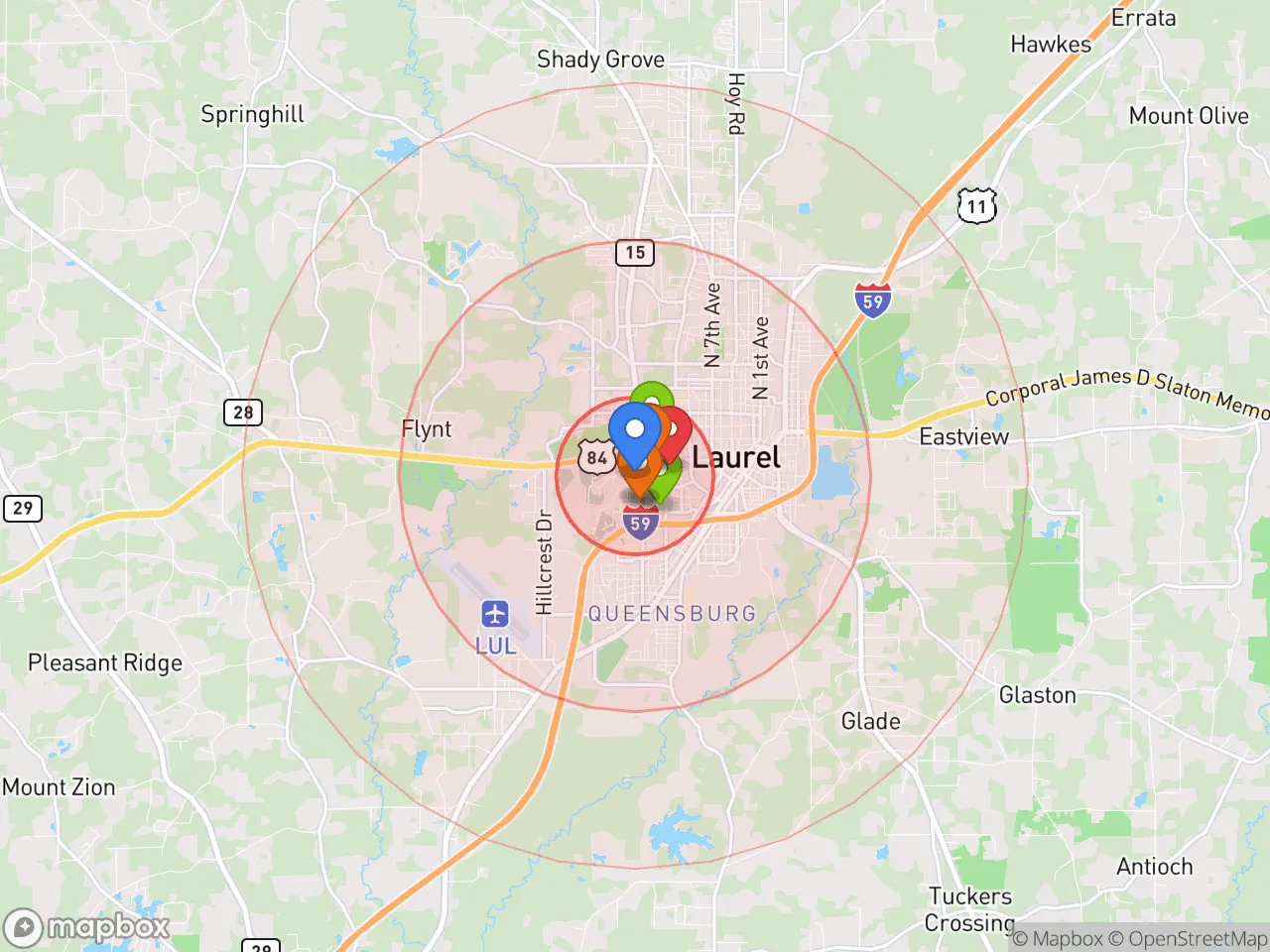
3 within 10 miles
Gas
19 within 10 miles
Hospital
1 within 20 miles
Airport
ATL — Hartsfield–Jackson Atlanta International
Post Office
USPS — Laurel, MS
Critical Amenities
Quality-of-Life Analysis
Laurel, Mississippi, presents a quality of life defined by deep affordability and a slower, community-oriented pace, attracting a mix of retirees, young families, and remote workers seeking a lower cost of living. The city’s cost of living index sits at 59—41 percent below the national average—making it one of the most budget-friendly small cities in the Southeast. Residents are predominantly long-term locals, though a growing number of newcomers are drawn by the area’s historic charm and the economic ripple effects of the Home Town television renovation boom.
Cost of living, housing, and how Laurel compares to nearby areas
Housing is the primary driver of Laurel’s affordability. The median home value is $110,200, roughly one-third of the national median, while the median rent is $839 per month—well below the state average of $950. For context, a comparable home in Hattiesburg (45 miles east) would cost about 20 percent more, and in the Jackson metro area, prices are roughly 30 percent higher. The average commute in Laurel is just 17 minutes, significantly shorter than the national average of 26 minutes, which reduces transportation costs and frees up time for family or recreation. Property taxes are low, with Jones County levying roughly 0.6 percent of assessed value, and Mississippi’s income tax is a flat 4 percent on most earnings. However, residents should note that wages in the region tend to lag behind national averages, and the local job market is concentrated in manufacturing (sanderson Farms, Howard Industries) and healthcare (South Central Regional Medical Center).
Everyday amenities, schools, and the rhythm of daily life
Daily life in Laurel revolves around a compact, walkable downtown anchored by the historic courthouse square, boutique shops, and locally owned restaurants like the Loft Deli and Café La Fleur. The city’s public school system, Laurel School District, serves roughly 3,500 students and has shown incremental improvement in test scores, though many families opt for private options such as Laurel Christian School or the nearby Jones County public schools, which generally rank higher. For outdoor recreation, the 1,200-acre Laurel City Park offers walking trails, sports fields, and a lake, while the De Soto National Forest is a 30-minute drive south for hiking and camping. The cultural calendar is anchored by the annual Laurel Little Theatre productions and the Mississippi Piney Woods Festival. Groceries and everyday shopping are concentrated along Highway 15, with a Walmart Supercenter and a handful of regional chains; for major retail or specialty dining, residents typically drive 30 minutes to Hattiesburg.
Laurel is best suited for those who prioritize low housing costs, a short commute, and a tight-knit community over urban nightlife or high-end career opportunities. Remote workers, retirees on fixed incomes, and families seeking a safe, slow-paced environment will find the most value here. The city’s ongoing revitalization—driven by tourism from the Home Town effect—has brought new coffee shops, a co-working space, and improved sidewalks, but it has not yet significantly raised home prices or altered the fundamental affordability equation. For anyone willing to trade big-city amenities for financial breathing room and genuine neighborly connection, Laurel delivers a quality of life that is hard to match at its price point.

Crime in Laurel, MS
Significantly higher crime rates than 77% of comparable U.S. locations.
Violent CrimeViolent Crime Analysis
Property CrimeProperty Crime Analysis
Crime Analysis
Laurel, Mississippi, reports a violent crime rate of 745.8 incidents per 100,000 residents and a property crime rate of 2,960.2 per 100,000, figures that significantly exceed both state and national averages. These statistics place the city in a high-crime category, a reality shaped by a combination of socioeconomic factors and local criminal justice policies. For anyone considering relocation, understanding the specific nature of these risks and how they manifest in daily life is essential for making an informed decision.
Crime in context
To grasp the severity of Laurel’s crime landscape, it helps to compare its rates to broader benchmarks. The national violent crime rate in 2023 was approximately 380 per 100,000, meaning Laurel’s rate is nearly double the U.S. average. Mississippi’s own violent crime rate, already one of the highest in the country at roughly 450 per 100,000, is still far below Laurel’s figure. Property crime tells a similar story: the national rate hovers around 1,950 per 100,000, while Laurel’s 2,960.2 rate is about 50% higher. These numbers are not abstract—they reflect a community where theft, burglary, and assault occur with troubling frequency. A key contributing factor, as seen in many high-crime areas, is the influence of progressive judicial policies. In jurisdictions with liberal district attorneys and judges, a focus on offender rehabilitation over public safety often results in reduced incarceration rates and shorter sentences, directly putting more criminals back on the street and undermining justice for victims and the broader public.
What residents experience
For those living in Laurel, the high crime rates translate into tangible daily concerns. Violent offenses, including aggravated assault and robbery, are not confined to any single area and can occur in commercial districts as well as residential neighborhoods. Property crime is the more pervasive issue, with vehicle break-ins, home burglaries, and package theft being common complaints. Residents often report feeling the need for heightened vigilance—locking doors at all times, avoiding certain streets after dark, and investing in security systems or neighborhood watch programs. The city’s police department works to address these issues, but limited resources and the revolving-door effect of progressive justice policies can hamper long-term progress. For families, the presence of repeat offenders in the community is a particular source of anxiety, as it erodes the sense of safety that is fundamental to quality of life.
Neighborhood-level variation
While Laurel’s overall crime numbers are high, risk is not distributed evenly across the city. Older, more established neighborhoods near downtown, such as those around the historic district, tend to see lower rates of violent crime but still experience property theft. In contrast, areas with higher poverty and rental density—particularly along the Highway 15 corridor and parts of the west side—report more frequent incidents of both violent and property crime. Gated communities and newer subdivisions on the city’s outskirts, like those near the Sawmill Road area, generally offer a safer environment, though no neighborhood is immune. Prospective residents should consult the Laurel Police Department’s online crime map and speak with local real estate agents to identify specific blocks with lower incident rates. Ultimately, choosing a home in a lower-crime pocket can mitigate some risk, but the city’s systemic challenges, exacerbated by lenient judicial approaches, remain a concern for all who live there.
* Values derived from national, state, county, city and local statistics and may differ in a specific area. Last updated: 2026-05-01T01:04:07.000Z
Narrative content on this page is AI-generated and may contain mistakes. Verify any details that matter before acting on them.
ReloMaps may earn a commission from affiliate links at no extra cost to you.

