Photo: Wikipedia
Demographics of Lawrenceburg, KY
Affluence Level in Lawrenceburg, KY
A middle-class area roughly in line with national averages across income, home values, education, and employment.
People of Lawrenceburg, KY
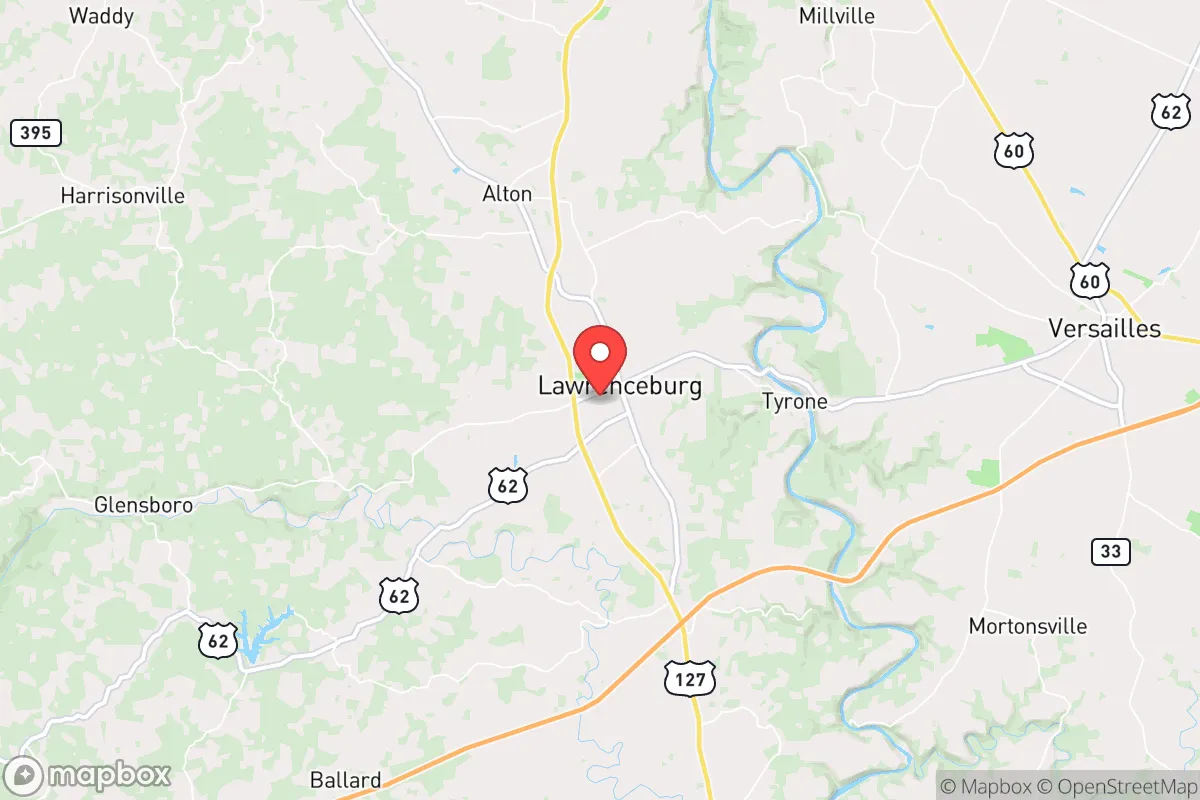
Lawrenceburg, Kentucky, is a small city of 11,838 residents that remains overwhelmingly white (90.5%) and native-born, with a foreign-born population of just 0.9%. The city’s character is shaped by its deep-rooted Appalachian and Scots-Irish heritage, a strong local manufacturing economy anchored by the Wild Turkey and Four Roses distilleries, and a notably low college attainment rate of 18.4%. This is a community where family ties run generations deep, and the population is slowly aging as younger adults leave for larger job markets.
How the city was settled and grew
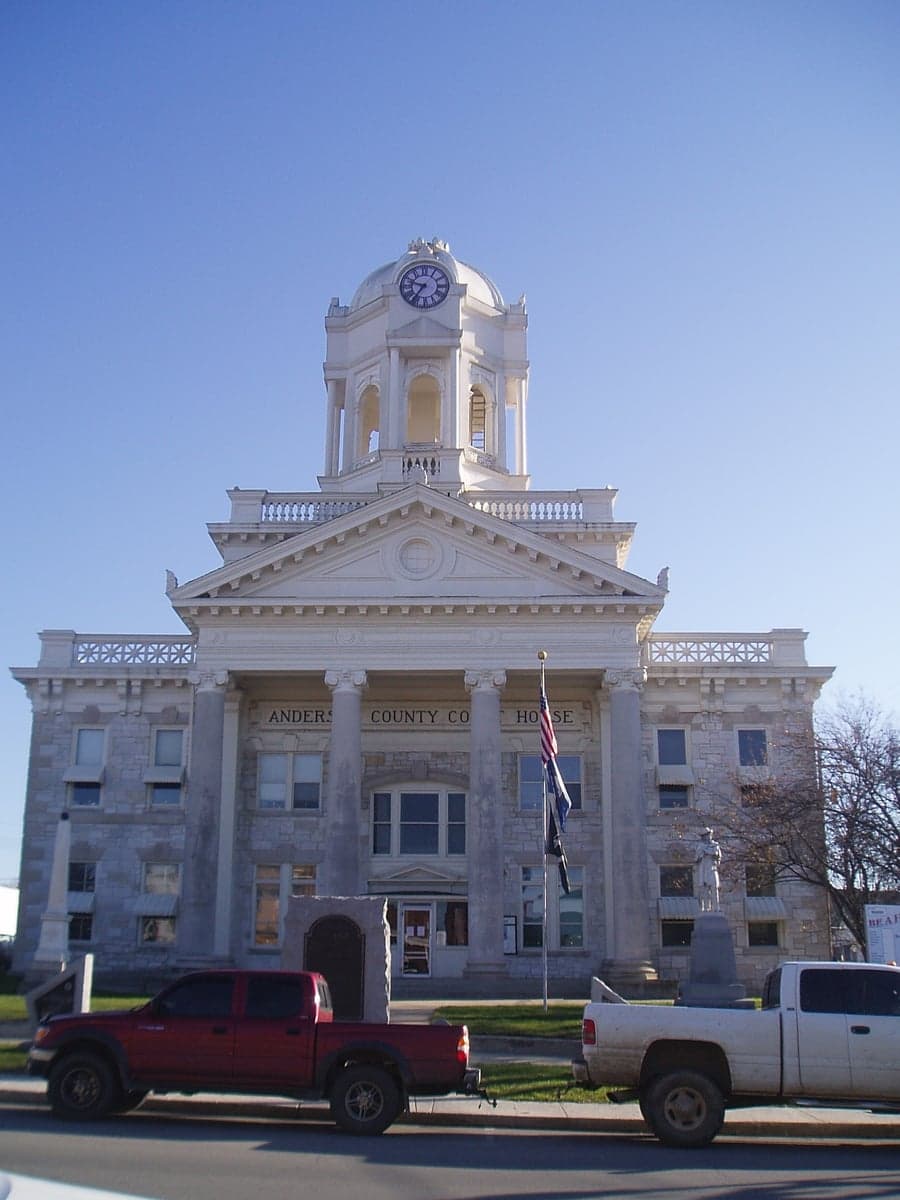
Lawrenceburg’s original population was drawn by the same forces that settled much of central Kentucky: land grants awarded to veterans of the Revolutionary War and the War of 1812. The first permanent settlers, predominantly of Scots-Irish and English descent, arrived in the late 1700s and early 1800s, clearing the fertile bottomlands along the Salt River. The town was formally established in 1820 as the seat of Anderson County, and its early economy revolved around agriculture, milling, and small-scale distilling. The historic Downtown Lawrenceburg district, centered on Main Street and Court Square, was built by these early families and remains the city’s commercial and civic core. A second wave arrived after the Civil War, when the Louisville Southern Railroad reached the area in the 1880s. This brought a small influx of German and Irish laborers who settled in the South Side neighborhood, near the rail depot and the new tobacco warehouses. The distilling industry, which had operated on a small scale since the 1800s, expanded significantly after Prohibition ended in 1933, drawing additional workers to the West Side area around the Wild Turkey distillery.
Modern era (post-1965)
The post-1965 period saw little demographic change in Lawrenceburg compared to larger Kentucky cities. The 1965 Immigration and Nationality Act, which opened the door to non-European immigration, had almost no effect here: the foreign-born share remains below 1%. Instead, the city’s modern growth came from domestic in-migration. The expansion of the Toyota manufacturing plant in nearby Georgetown in the 1980s and 1990s created a commuter corridor, drawing some new residents to subdivisions like Fox Creek Estates and Hunter’s Ridge on the city’s northern edge. These subdivisions attracted white-collar workers from Lexington and Frankfort, but the overall educational profile remained low—just 18.4% of adults hold a bachelor’s degree or higher, well below the national average. The Black population, at 4.8%, is concentrated in the older East End neighborhood, a historically African American area near the railroad tracks that dates to the early 1900s. The Hispanic population (2.3%) is a very recent arrival, largely tied to construction and agricultural work in the surrounding county; these families have settled mostly in rental housing along the US-127 corridor south of downtown. East/Southeast Asian residents (0.3%) are a tiny presence, primarily professionals employed at the distilleries or at the local hospital. The Indian-subcontinent population is effectively zero.
The future
Lawrenceburg’s population is projected to remain stable or decline slightly over the next decade. The city is not attracting significant international immigration, and the domestic in-migration that fueled growth in the 1990s and 2000s has slowed. The Hispanic population is the only minority group showing measurable growth, but it remains small and is likely to plateau rather than surge, given the limited job base outside manufacturing and agriculture. The city is not tribalizing into distinct ethnic enclaves; instead, it is slowly homogenizing as younger, college-educated residents leave for Lexington or Louisville, and the remaining population ages in place. The Downtown district is seeing modest reinvestment in historic buildings, but new housing construction is almost entirely single-family homes on the outskirts, reinforcing a low-density, car-dependent pattern. For a newcomer, Lawrenceburg offers a stable, safe, and culturally homogeneous environment—but one with limited economic mobility and little racial or ethnic diversity. The city’s future is one of slow, quiet continuity rather than transformation.
For a conservative-leaning individual or family moving to Lawrenceburg, the bottom line is this: you are joining a community that values tradition, local industry, and self-reliance. The population is overwhelmingly white and native-born, with minimal immigration and a strong sense of place. The city is not growing rapidly, nor is it diversifying. It is a place where roots run deep, and newcomers who respect that history will find a welcoming, low-crime environment with good schools and a strong work ethic.

* Values derived from national, state, county, city and local statistics and may differ in a specific area. Last updated: 2026-05-01T14:52:16.000Z
Narrative content on this page is AI-generated and may contain mistakes. Verify any details that matter before acting on them.
ReloMaps may earn a commission from affiliate links at no extra cost to you.

