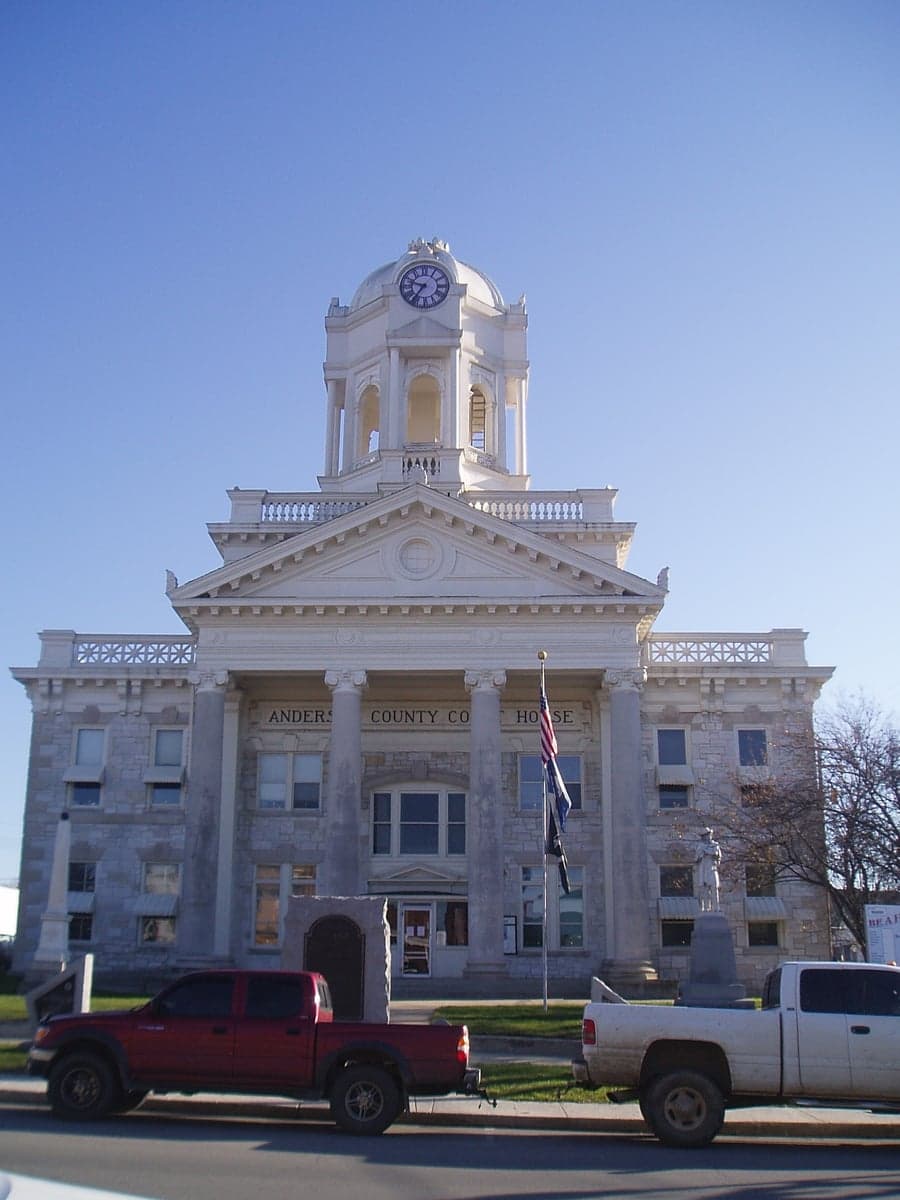

Photo: Wikipedia
Political ClimatePolitical Climate in Lawrenceburg, KY
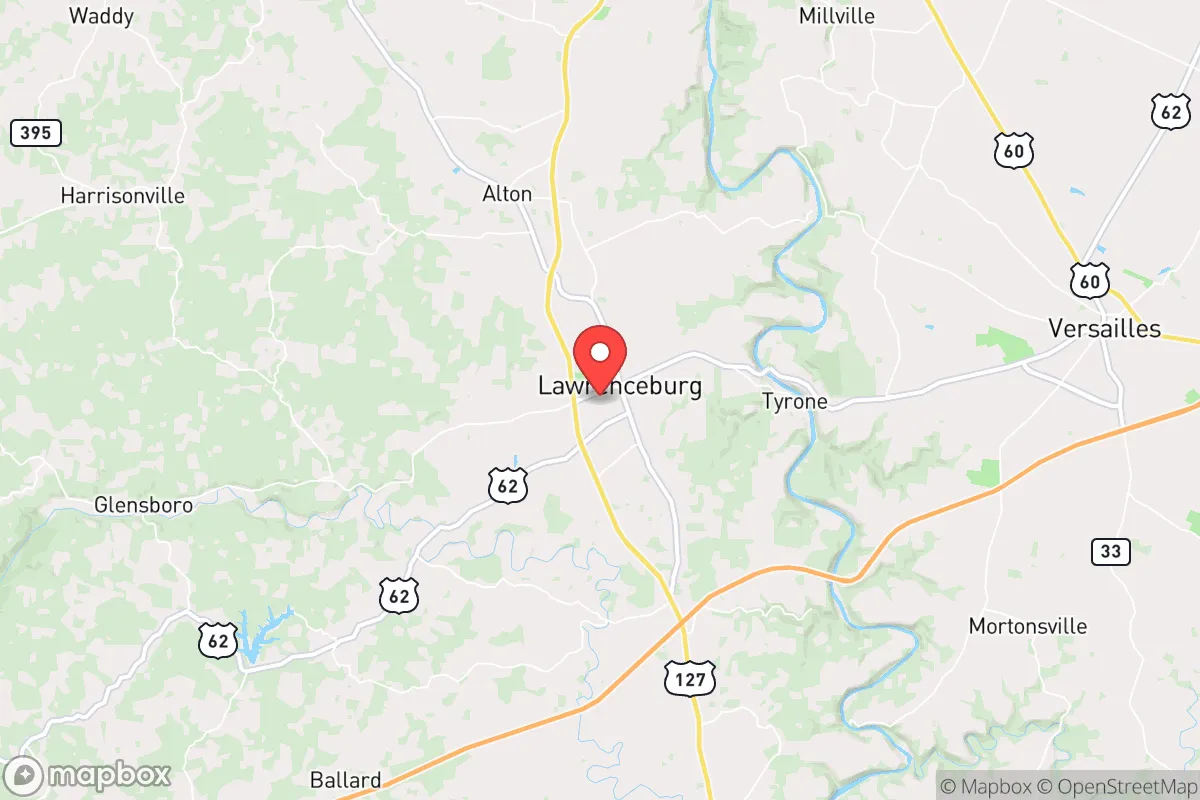
District shown is the primary district for this city’s centroid. Cities may span multiple districts.
Local Political AnalysisPolitical Analysis of Lawrenceburg, KY
Lawrenceburg, Kentucky, has long been a place where folks value their independence and aren't too keen on being told how to live their lives. The area leans solidly conservative, with a Cook PVI of R+7, meaning it's about 7 points more Republican than the national average. That's not just a number on a map; it reflects a deep-rooted belief in limited government, personal responsibility, and the Second Amendment. Over the last decade or so, you've seen the local GOP presence only strengthen, with most local offices and school board seats held by conservatives who prioritize fiscal restraint and local control over state or federal mandates.
How it compares
Drive 20 minutes east to Frankfort, the state capital, and you'll feel a subtle shift. While still conservative overall, Frankfort's political scene is more influenced by state government employees and a slightly more moderate, establishment-friendly vibe. Head 30 minutes north to Lexington, and it's a whole different world—a deep blue island in a red sea, where progressive policies on everything from zoning to policing are the norm. Lawrenceburg, by contrast, feels like a refuge from that kind of top-down thinking. The surrounding Anderson County is even more reliably conservative than the state as a whole, and you won't find much appetite here for the kind of social experimentation you see in bigger cities. The contrast is stark: while Lexington debates bike lanes and diversity initiatives, Lawrenceburg is more concerned with keeping property taxes low and ensuring the local sheriff has the resources to do his job without federal overreach.
What this means for residents
For someone living here, the political climate means a lot of things you might take for granted elsewhere are still protected. You don't get a lot of government nosing around in your business—whether it's how you run your small farm, what kind of firearm you keep in your truck, or how you choose to educate your kids. The local school board has resisted the kind of curriculum battles that have torn apart other districts, largely because parents here are vocal and the board listens. Property taxes remain among the lowest in the region, and there's a general understanding that the county's job is to keep the roads paved and the lights on, not to micromanage your personal choices. That said, there's a growing unease among long-time residents about the slow creep of state-level mandates from Frankfort, especially around land use and environmental regulations that feel disconnected from rural life. The concern is that if you're not vigilant, the same progressive overreach that's hollowed out places like Louisville could start trickling down here.
Culturally, Lawrenceburg still holds onto a few distinctions that set it apart. The local Wild Turkey Distillery is a point of pride, and the community rallies around its heritage without the kind of sanitized, corporate branding you see in tourist-trap towns. There's a strong tradition of volunteer fire departments and church-led charity, not government programs. The biggest policy debate in recent memory wasn't about a mask mandate or a diversity initiative—it was about whether to allow a new Dollar General on the edge of town, which says a lot about what people here actually care about. Looking ahead, the worry among locals isn't about losing an election; it's about the slow erosion of local control as state and federal governments push for uniformity. As long as Lawrenceburg keeps electing folks who remember that the best government is the one closest to the people, it'll stay the kind of place where you can still live free and quiet.

State Political ClimatePolitical Climate in Kentucky
State Political AnalysisPolitical Environment in the State
Kentucky has long been a reliably red state in federal elections, but its political landscape is more nuanced than a simple partisan label suggests. The state has voted for the Republican presidential candidate in every election since 2000, often by double-digit margins, with Donald Trump carrying it by 26 points in 2020 and 30 points in 2024. However, the state’s political trajectory over the past 20 years has been a steady march rightward, driven by a realignment of rural and working-class voters away from the Democratic Party, which once dominated state and local offices. Today, the GOP holds supermajorities in both chambers of the General Assembly, the governorship, and all but one of the state’s six congressional seats, making Kentucky one of the most solidly conservative states in the union.
Urban vs. rural divide
The political map of Kentucky is a textbook example of the urban-rural split that defines American politics. The state’s two major population centers—Louisville (Jefferson County) and Lexington (Fayette County)—are the only reliably blue areas, consistently voting Democratic in presidential and statewide races. Louisville, the state’s largest city, is a moderate-to-liberal enclave with a strong union history and a growing progressive activist scene, while Lexington, home to the University of Kentucky, leans left but is somewhat more tempered by its surrounding horse-farming and suburban communities. The rest of the state is overwhelmingly Republican. The rural counties of Eastern Kentucky—places like Pike, Floyd, and Harlan—were once Democratic strongholds but have flipped hard red over the past two decades, driven by cultural conservatism and opposition to the national Democratic Party’s environmental and social policies. The western part of the state, including the Purchase area around Paducah and the Pennyrile region, is deeply conservative, with counties like Graves and Marshall routinely delivering 70-80% Republican margins. A notable exception is the city of Bowling Green, home to a growing immigrant and refugee population, which has become a slightly more competitive area, though it still leans Republican overall. The suburbs of Louisville, such as Oldham County and parts of Shelby County, are reliably red, while the exurbs of Lexington, like Jessamine and Woodford counties, are also solidly conservative.
Policy environment
Kentucky’s policy environment is aggressively conservative, with a focus on low taxes, limited regulation, and cultural traditionalism. The state has a flat income tax that is being phased down from 5% to 4% by 2026, with a goal of eventual elimination. Property taxes are among the lowest in the nation, and there is no state-level estate or inheritance tax. The regulatory climate is business-friendly, with a right-to-work law (passed in 2017) and a tort reform system that caps non-economic damages in medical malpractice cases. On education, Kentucky has a robust school choice movement, with charter schools legalized in 2017 (though few have opened) and a tax-credit scholarship program for private school tuition. However, the state’s public education system has faced funding challenges, with teacher pension liabilities and per-pupil spending below the national average. Healthcare policy is a mixed bag: Kentucky expanded Medicaid under the Affordable Care Act in 2014, but the state has since imposed work requirements and premiums for able-bodied adults, and there is a strong push from the legislature to further privatize or restructure the program. Election laws have been tightened in recent years, with voter ID requirements, restrictions on absentee voting, and a ban on ballot drop boxes. The state also has a near-total ban on abortion, with no exceptions for rape or incest, and has passed a “trigger law” that took effect immediately after the Dobbs decision. Gun laws are among the most permissive in the country, with constitutional carry (no permit needed to carry a concealed firearm) enacted in 2019.
Trajectory & freedom
Kentucky is unquestionably moving in a direction of greater personal freedom, at least as defined by conservative and libertarian values. The most significant recent legislation includes the 2019 constitutional carry law, which eliminated the requirement for a permit to carry a concealed firearm, and the 2021 “Second Amendment Sanctuary” resolution, which declared the state’s intent to resist federal gun control. Parental rights have been strengthened through the 2022 “Parents’ Bill of Rights,” which requires schools to notify parents of any changes to a student’s health or well-being and prohibits instruction on sexual orientation or gender identity in elementary grades. Medical autonomy has been expanded in some areas—such as the 2021 law allowing pharmacists to prescribe birth control without a doctor’s visit—but sharply restricted in others, particularly around abortion and gender-affirming care for minors, which was banned in 2023. Property rights have been bolstered by the 2020 “Stand Your Ground” law, which removed the duty to retreat before using deadly force in self-defense. On taxation, the phased reduction of the income tax is a clear move toward greater economic freedom. However, there are areas where freedom has been curtailed: the state has aggressively enforced COVID-19 mandates in some settings, and local governments in Louisville and Lexington have imposed mask and vaccine requirements that were later preempted by the state legislature. Overall, the trajectory is toward a more libertarian-leaning conservative state, with the legislature consistently pushing to expand gun rights, parental control, and tax relief.
Civil unrest & political movements
Kentucky has seen its share of political flashpoints, most notably the 2020 protests in Louisville following the death of Breonna Taylor, which led to months of demonstrations, clashes with police, and the eventual passage of “Breonna’s Law,” which banned no-knock warrants. This movement was largely localized to Louisville and did not spread to the rest of the state, but it highlighted a deep cultural divide between the urban core and the rural conservative majority. On the right, the state has a strong grassroots movement centered on gun rights, school choice, and anti-abortion activism, with organizations like the Kentucky Right to Life and the Kentucky Sportsmen’s Coalition wielding significant influence. Immigration politics are relatively low-key, as Kentucky has a small foreign-born population, but there have been localized tensions in Bowling Green, which has a growing Iraqi and Congolese refugee community, and in Louisville, where sanctuary city policies have been debated but never enacted. Election integrity has been a hot topic since 2020, with the Republican-controlled legislature passing a series of voting restrictions in 2021, including a ban on ballot harvesting and stricter ID requirements. There has been no serious secession or nullification rhetoric, though some rural counties have passed symbolic resolutions asserting local control over federal mandates. The most visible political movement in recent years has been the “Save Our Schools” campaign, which mobilized parents against COVID-19 school closures and mask mandates, and which successfully pushed for the Parents’ Bill of Rights.
Projection
Over the next 5-10 years, Kentucky is likely to become even more conservative, driven by two key demographic trends: the continued out-migration of younger, more liberal residents from rural areas to cities outside the state, and the in-migration of conservative retirees and remote workers from higher-tax states like Illinois, California, and New York. The state’s population growth is concentrated in the suburbs of Louisville and Lexington, as well as in the Bowling Green area, which are all trending redder. The rural counties, particularly in Eastern Kentucky, are losing population but becoming more intensely Republican. The Democratic Party’s base is shrinking to Louisville and Lexington, and even there, the margins are tightening. The state legislature is expected to remain under Republican supermajority control for the foreseeable future, and the governorship is likely to stay red after Andy Beshear’s term ends in 2027. The biggest wildcard is the potential for a national Democratic wave to flip some suburban seats, but given the state’s deep cultural conservatism, this seems unlikely. A new resident moving in now should expect to find a state that is increasingly friendly to conservative values—low taxes, strong gun rights, parental control in education, and a limited government ethos—but also one that is culturally homogeneous and resistant to progressive change. The urban-rural divide will persist, but the state’s political center of gravity will continue to shift rightward.
For a conservative individual or family considering relocation, Kentucky offers a stable, predictable political environment that aligns closely with traditional values. The state’s low tax burden, permissive gun laws, and strong parental rights make it an attractive destination for those fleeing high-cost, high-regulation states. However, newcomers should be aware that the state’s political culture is deeply rooted in localism and distrust of federal overreach, and that the urban centers of Louisville and Lexington are politically distinct from the rest of the state. If you’re looking for a place where your rights are respected, your taxes are low, and your children’s education is under your control, Kentucky is a solid bet—just be prepared for a slower pace of life and a community that values tradition over change.
* Values derived from national, state, county, city and local statistics and may differ in a specific area. Last updated: 2026-05-01T14:52:16.000Z
Narrative content on this page is AI-generated and may contain mistakes. Verify any details that matter before acting on them.
ReloMaps may earn a commission from affiliate links at no extra cost to you.

