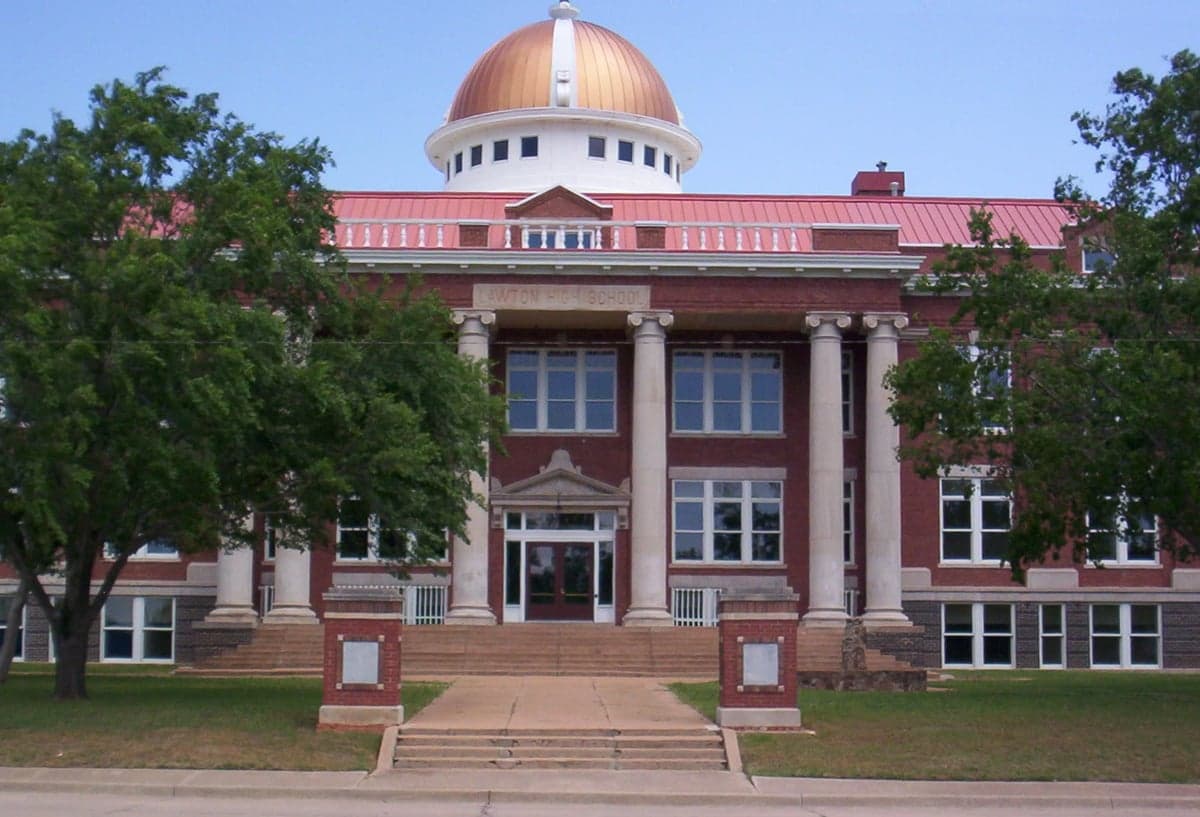
Photo: Wikipedia
Political ClimatePolitical Climate in Lawton, OK
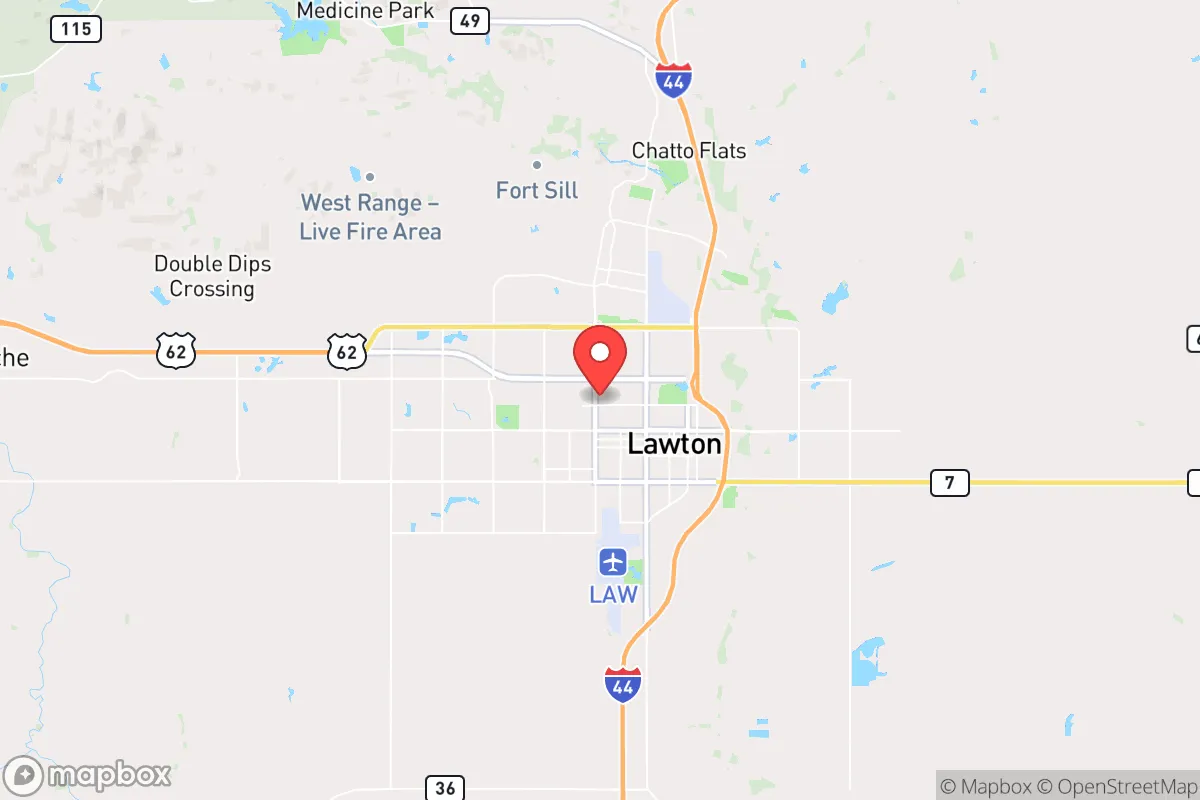
District shown is the primary district for this city’s centroid. Cities may span multiple districts.
Local Political AnalysisPolitical Analysis of Lawton, OK
Lawton has long been a solidly conservative community, and that hasn't changed much despite some national trends. The Cook PVI rating of R+17 tells you the real story: this is a place where traditional values and limited government still hold strong, even as the city itself has grown more diverse with the military presence at Fort Sill. You'll find that most folks here vote their conscience on personal freedoms and fiscal responsibility, and they're not shy about pushing back when they feel D.C. or Oklahoma City is overstepping.
How it compares
If you drive just 30 miles east to Duncan, you'll find an even deeper shade of red, but Lawton actually holds its own as a conservative anchor in southwest Oklahoma. The contrast is sharpest when you head north toward Oklahoma City, where you'll see pockets of progressive influence creeping in around the metro area. Lawton residents tend to view those trends with a wary eye, preferring the straightforward, no-nonsense approach you get here. Surrounding towns like Cache and Elgin are even more rural and traditional, but Lawton's size means it has to deal with more state and federal meddling. Still, the local county commission and city council have historically kept a tight lid on overreach, and most elected officials know better than to push a progressive agenda here.
What this means for residents
For someone moving here, the political climate means you can expect a government that mostly stays out of your business. Property taxes are low, zoning is minimal compared to bigger cities, and there's a general understanding that your personal choices—whether it's how you raise your kids, what you do on your land, or how you run your business—are yours to make. The downside is that when the state or federal government does try to impose mandates, especially on things like gun rights, school curriculum, or health mandates, you'll see a lot of pushback from the community. That's not a bad thing in my book; it means people are paying attention. The military families at Fort Sill tend to lean conservative too, which reinforces the culture of self-reliance and respect for individual liberty.
One thing that sets Lawton apart from some other Oklahoma towns is the strong sense of personal responsibility that comes with the military culture. You won't find a lot of hand-wringing over national politics here; instead, people focus on local issues like keeping taxes low, maintaining good schools without federal overreach, and protecting Second Amendment rights. The recent shifts toward progressive ideology in some parts of the country have largely passed Lawton by, and most residents intend to keep it that way. If you're looking for a place where your voice still matters and the government knows its place, Lawton is about as solid as it gets in this part of the state. Just don't expect any sudden moves toward the left—this community has a long memory and a strong sense of what works.

State Political ClimatePolitical Climate in Oklahoma
State Political AnalysisPolitical Environment in the State
Oklahoma has long been one of the most reliably conservative states in the nation, with a deep-rooted Republican lean that has only solidified over the past two decades. The state hasn’t voted for a Democratic presidential candidate since 1964, and in 2024, Donald Trump carried it by over 30 points. The dominant coalition is a mix of rural traditionalists, evangelical Christians, and increasingly, conservative transplants from bluer states like California and Colorado. Over the last 10-20 years, the trajectory has been a steady march rightward, with the GOP now holding supermajorities in both chambers of the legislature and every statewide office. That said, there are subtle shifts underway — especially in the Oklahoma City metro and Tulsa suburbs — that could reshape the political landscape over the next decade.
Urban vs. rural divide
The political map of Oklahoma is starkly divided between its two major metros and the vast rural expanse. Oklahoma City and Tulsa are the blue dots in a sea of red, but even they are more purple than deep blue. In 2024, Oklahoma County (Oklahoma City) voted for Trump by a slim 52-46 margin, while Tulsa County went 58-40 for Trump. The real action is in the suburbs: places like Edmond, Broken Arrow, and Norman are reliably conservative, but with a more suburban, college-educated flavor. Norman, home to the University of Oklahoma, has a noticeable progressive undercurrent — it’s the only city in the state with a Democratic mayor and a city council that has flirted with sanctuary city rhetoric. Meanwhile, rural counties like Beaver, Texas, and Roger Mills routinely deliver 85-90% of their votes to Republicans. The panhandle and southwestern Oklahoma are among the most conservative regions in the entire country, with strong libertarian streaks on land use and gun rights.
Policy environment
Oklahoma’s policy environment is aggressively conservative, with a focus on low taxes, limited regulation, and cultural traditionalism. The state has a flat income tax rate of 4.75%, and the legislature has been actively working to phase it out entirely — a move that would make Oklahoma one of the few no-income-tax states. Property taxes are among the lowest in the nation, thanks to a constitutional cap and homestead exemptions. On education, the state has embraced school choice in a big way: the Oklahoma Empowerment Act (2023) created a universal school voucher program that any family can use for private or homeschool expenses. This has made Oklahoma a magnet for conservative parents fleeing districts they see as overreaching. Healthcare policy is similarly hands-off: no Medicaid expansion until a 2020 ballot measure forced it, and even then, the state added work requirements. Election integrity is a top priority — Oklahoma requires voter ID, has no same-day registration, and in 2022 passed SB 440, which banned private funding of election administration and tightened absentee ballot rules. For a conservative moving in, the policy environment is about as friendly as it gets.
Trajectory & freedom
Oklahoma is trending toward more personal freedom in several key areas, but with some caveats. On gun rights, the state is a constitutional carry state (permitless carry since 2019) and has a strong preemption law that prevents local governments from enacting their own restrictions. In 2024, the legislature passed HB 3098, which prohibits any state or local enforcement of federal gun laws that violate the Second Amendment — a direct nullification-style move. Parental rights have been expanded significantly: the Parental Bill of Rights (2022) gives parents explicit authority over their children’s education, medical decisions, and records. Medical autonomy took a hit in 2022 when the state banned nearly all abortions after a trigger law took effect, but that’s a freedom issue depending on your perspective. On the concerning side, the state has shown a willingness to use government power to enforce cultural norms: the HB 1775 law (2021) bans the teaching of certain concepts about race and gender in public schools, and the state has threatened to pull funding from districts that violate it. For a conservative, this is a feature, not a bug — but it does represent a government intervention into classroom content that some libertarians find troubling.
Civil unrest & political movements
Oklahoma has seen relatively little civil unrest compared to coastal states, but there have been flashpoints. The most visible was the 2022 protests at the Oklahoma State Capitol over the abortion ban, which drew thousands but remained largely peaceful. On the right, the Oklahoma Second Amendment Association and local Moms for Liberty chapters are highly active, organizing against school board policies they see as overreaching. Immigration politics are less heated here than in border states, but HB 4156 (2024) made it a state crime to enter Oklahoma from Mexico without legal authorization — a direct challenge to federal authority that has sparked legal battles. Election integrity controversies have been minimal, but in 2020, the state’s GOP-led audit of the election found no significant irregularities, which actually boosted trust in the system. The most notable political movement is the “Free Oklahoma” coalition, a mix of libertarians and constitutional conservatives pushing for further tax cuts, property rights protections, and limits on federal overreach. You won’t see the kind of street-level chaos you’d find in Portland or Seattle, but the culture war is alive and well in school board meetings and county commission hearings.
Projection
Over the next 5-10 years, Oklahoma is likely to become more conservative, but with a shifting flavor. The biggest demographic trend is the influx of conservative transplants from California, Colorado, and the Pacific Northwest, who are drawn by low housing costs, school choice, and a business-friendly climate. Places like Stillwater, Owasso, and Yukon are seeing rapid growth, and these newcomers tend to be even more culturally conservative than native Oklahomans. However, the Oklahoma City metro is also attracting younger, more diverse populations, which could slowly shift the urban core leftward. The rural areas will continue to hemorrhage population, giving even more political weight to the suburbs. Expect the income tax to be fully eliminated within the decade, and expect further expansions of school choice and gun rights. The wild card is the state’s budget: if oil and gas revenues decline, the tax cuts could become unsustainable, potentially forcing a reckoning. For a conservative moving in now, the state will feel even more aligned with your values in 2035 than it does today — but you’ll need to watch the suburbs, where the real political battles will be fought.
For a new resident, the bottom line is this: Oklahoma offers one of the most freedom-friendly environments in the country for conservatives, with low taxes, strong gun rights, school choice, and a government that actively pushes back against federal overreach. You won’t find the kind of progressive policy experiments you’d see in Colorado or Arizona. But it’s not a libertarian paradise — the state is willing to use its power to enforce cultural and moral norms, especially in education and healthcare. If you’re looking for a place where your values are the default and the government mostly stays out of your way, Oklahoma is a strong bet. Just be prepared for the summer heat and the occasional tornado.
* Values derived from national, state, county, city and local statistics and may differ in a specific area. Last updated: 2026-10-10T16:27:58.000Z
Narrative content on this page is AI-generated and may contain mistakes. Verify any details that matter before acting on them.
ReloMaps may earn a commission from affiliate links at no extra cost to you.

