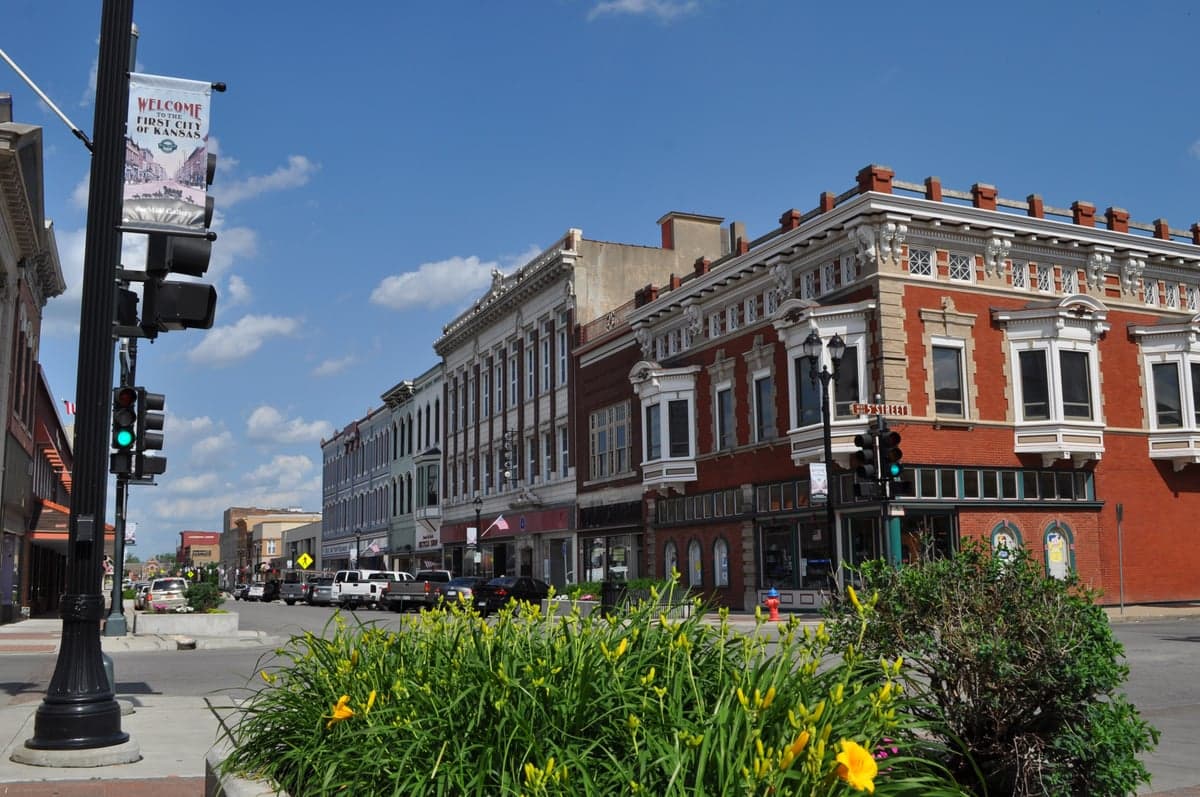
Photo: Wikipedia
Strategic Assessment of Leavenworth, KS
Meaningful friction. Expect exposure to either population pressure, blast zones, or natural disaster risk. Consider buying a retreat property.
What does the Strategic Assessment tell us?
Our Strategic Assessment grades tactical survivability of an area. Major population centers, military targets, fallout zones, natural disasters, and border exposure all drive risk — lower exposure means a more defensible position in a crisis.
This is heavily inspired by Joel Skousen's Strategic Relocation book. Highly recommended you checkout the book ($)What does this tell us?
Our Strategic Assessment grades tactical survivability of an area. Major population centers, military targets, fallout zones, natural disasters, and border exposure all drive risk — lower exposure means a more defensible position in a crisis.
This is heavily inspired by Joel Skousen's Strategic Relocation book. Highly recommended you checkout the book ($)Strategic Pillars

Key Distances
Regional Safe Places
Below is our recommended "safe zones" in Kansas and the surrounding area based on our strategic heuristics. For most people, it's unrealistic to live in a “safe zone” full-time due to work, family or other personal reasons. They tend to be more rural. However, many of these areas are perfect for second homes and retreat properties that double as a vacation home or even a short-term rental.
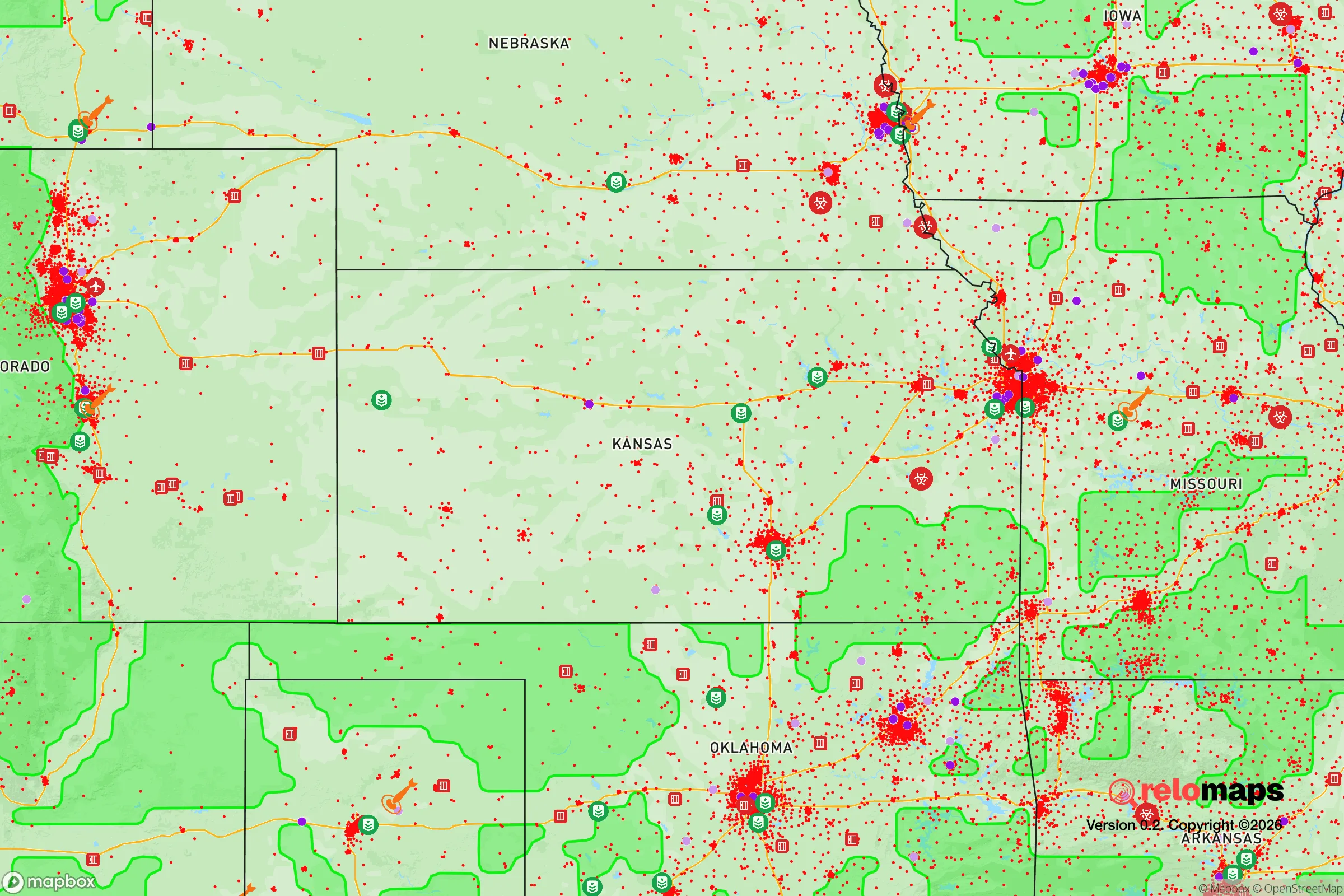
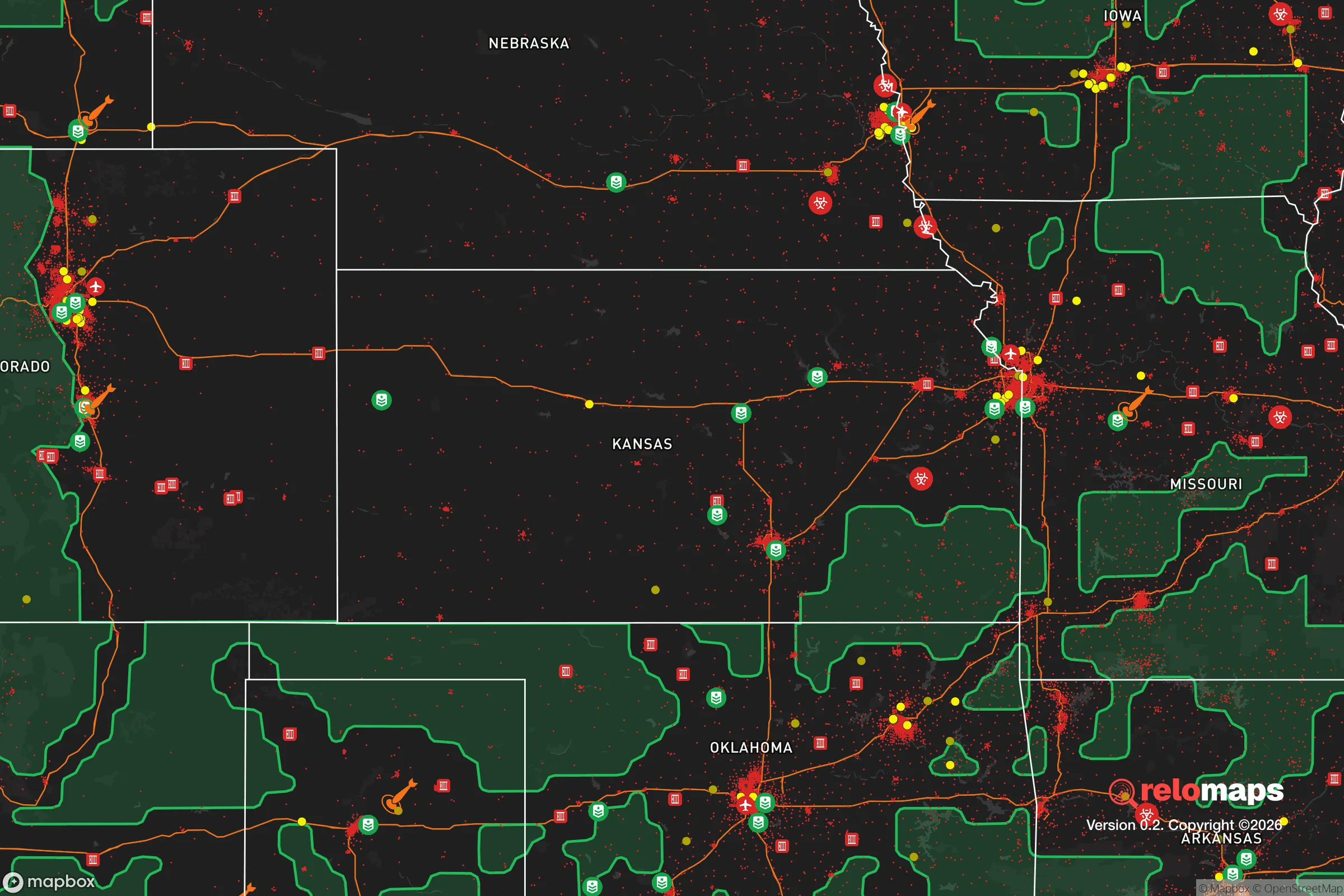


Important Note: For informational purposes only. This does not mean nothing bad ever happens in the green zones. Please use common sense. This is based on public data and modeled with AI. We tried to take a conservative approach but mistakes happen. We update this regularly as new information becomes available.
Solar Generator Recommendations
Backup power matters more here than in safer locations. We've picked three solar generators across budgets and capacity tiers — start with the budget unit if you only need a few essentials, or step up if you want to run a fridge and HVAC for days at a time.

Jackery Portable Power Station Explorer 300
Budget OptionPower on the Go: Weighing only 11 lbs, it's convenient to set up and store with book-sized foldable solar panels

BLUETTI Portable Power Station AC180
Designed for both indoor and outdoor scenarios, AC180 is highly capable as it has a robost capacity and continuous output power.

EF ECOFLOW DELTA Pro Ultra Power Station
Upgraded PickEcoFlow DELTA Pro Ultra is a whole-home energy system designed to grow with your family. Integrated with the Smart Home Panel 2, it scales to meet your evolving energy needs — keeping your home powered, intelligent, and secure through every stage of life.
We earn a commission, at no additional cost to you.
Strategic Assessment Analysis
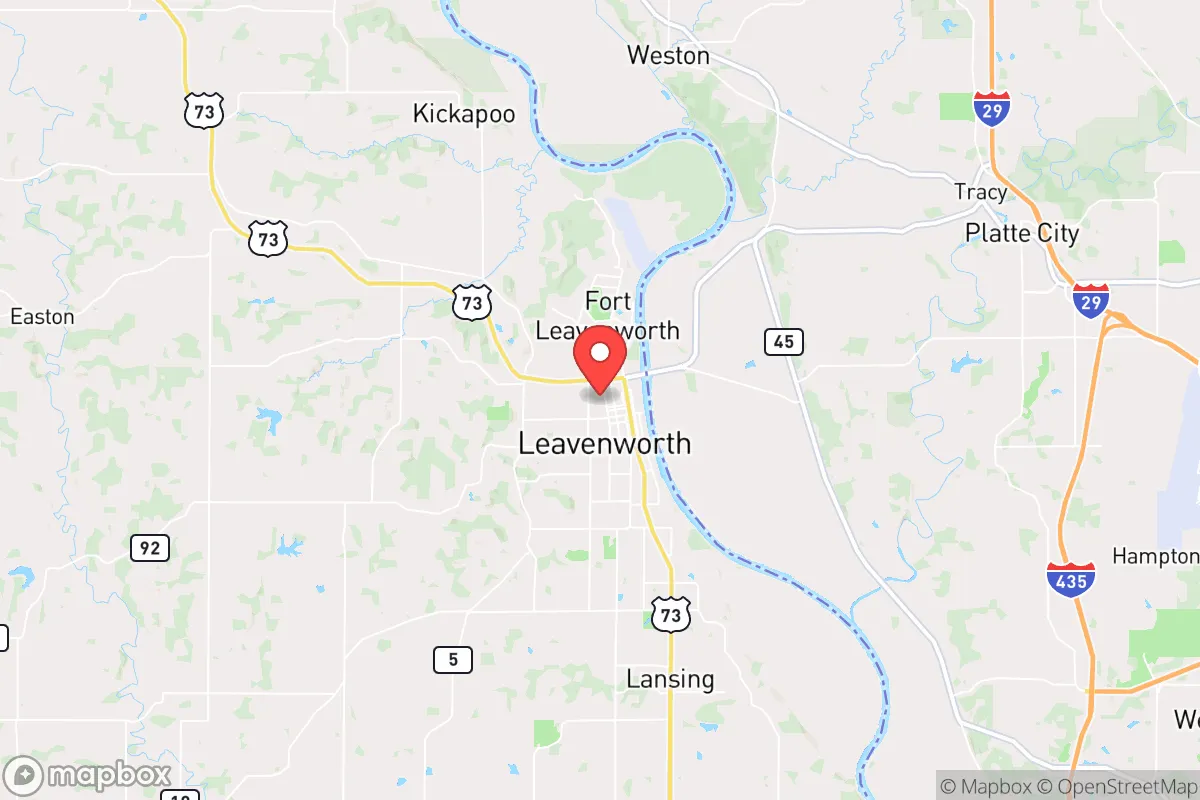
Leavenworth, Kansas, occupies a strategic position that balances proximity to the Kansas City metro with a degree of separation that matters for those thinking about long-term resilience. The city sits roughly 30 miles northwest of downtown Kansas City, placing it close enough for economic access but far enough to avoid the immediate blast radius or civil chaos that could engulf a major urban center during a crisis. Its location along the Missouri River and near the junction of Interstates 70 and 435 gives it logistical advantages for supply movement, while the presence of Fort Leavenworth—a major U.S. Army installation—adds a layer of institutional stability that few other towns of its size can claim. For a relocator weighing civic unrest, mass casualty events, or natural disasters, Leavenworth offers a mix of hard infrastructure, geographic buffers, and community character that deserves a hard look.
Geographic position and natural advantages for long-term survival
Leavenworth sits on the western bank of the Missouri River, which provides a reliable water source—critical for any extended disruption of municipal services. The surrounding terrain is rolling hills and farmland, not flat prairie, which offers some natural defensibility and limits line-of-sight threats. The city is roughly 800 feet above sea level, so flooding risks are confined to the immediate river bottoms, not the main residential areas. To the west and south, open agricultural land stretches for miles, creating a buffer zone that would slow any uncontrolled movement from the Kansas City side. The area's climate is four-season, with hot summers and cold winters, which means a relocator must plan for both extremes, but it also supports year-round food production if you have the land and know-how. The Missouri River corridor also serves as a natural transportation and trade route, useful for barter or supply runs if roads become impassable. Compared to a place like Topeka or Lawrence, Leavenworth is less exposed to interstate choke points—you have multiple secondary routes out of town via Kansas 7, 92, and 73, which reduces the risk of being trapped by a single blocked highway.
Risks, exposures, and proximity to fallout-relevant landmarks
The biggest strategic downside is Leavenworth's proximity to the Kansas City metropolitan area, home to over 2 million people. In a mass casualty event—whether from a pandemic, economic collapse, or coordinated attack—that population mass could become a liability. Refugees, looters, or simply desperate people could flow west along I-70 or north along I-435, and Leavenworth sits right in that funnel. The city itself has a population of about 36,000, which is manageable, but it would be a natural destination for evacuees from the east. Fort Leavenworth is a double-edged sword: it houses the U.S. Army Combined Arms Center and a military prison, meaning it's a high-value target for any adversary. A conventional or asymmetric strike on the base could produce secondary effects—shrapnel, fires, or even a radiological release if a nearby rail or truck shipment were involved. The base also means a significant military police and security presence, which could be stabilizing in a crisis, but it could also draw unwanted attention. There are no nuclear power plants within 50 miles, but the area is crisscrossed by rail lines carrying hazardous materials, including crude oil from the Bakken fields and industrial chemicals. The Missouri River itself is a flood risk—major floods in 1993 and 2019 caused significant damage to low-lying areas, and climate models suggest heavier rainfall events are becoming more common. Tornadoes are a real threat; Leavenworth County averages about 12 tornado warnings per year, and a direct hit could level a neighborhood in minutes. For a prepper, these are manageable risks if you choose higher ground, reinforce your structure, and keep a bug-out plan for the river corridor.
Practical resilience for a relocator: food, water, energy, and defensibility
Water is Leavenworth's strongest card. The Missouri River is a massive, year-round source, but you'll need treatment capability—boiling, filtration, or chemical purification—since raw river water carries pathogens and industrial runoff. The city's municipal water comes from the river and is treated, but in a prolonged grid-down scenario, that system could fail. A well is the gold standard here; the water table in the area is generally 20-50 feet deep, so a hand pump or solar-powered well is feasible. Food production is viable: the surrounding farmland grows corn, soybeans, and wheat, and there are local livestock operations. The Leavenworth Farmers Market operates seasonally, but for serious self-sufficiency, you'd want acreage outside city limits. The city itself has limited gardening space in most residential lots, but community gardens exist. Energy is a weak point. The local grid is served by Evergy, and outages are common during storms—typically a few hours, but a major ice storm or derecho could knock power out for days. Solar with battery backup is a smart investment; the area gets about 200 sunny days per year, which is decent but not Southwest-level. Natural gas is available in most of the city, which is useful for heating and cooking if the grid goes down, but you'd need a generator to run the furnace blower. Defensibility is mixed. The city's layout is a traditional grid, with older neighborhoods having narrow streets that could be barricaded. The newer subdivisions on the west side are more spread out, which makes them harder to secure but also harder for an outsider to approach unseen. The presence of Fort Leavenworth means a large number of current and former military personnel live in the area—that's a human resource for community defense, but it also means some neighbors may have skills and gear that attract unwanted attention. For a single individual or a family, the best play is to buy on the western edge of town, near the farmland, with good sight lines and multiple egress routes. Avoid the river bottoms and the areas directly adjacent to the base.
Overall, Leavenworth is a solid B+ for a strategic relocation. It's not a remote mountain redoubt, and it's not a self-sufficient homestead in the middle of nowhere. What it offers is a realistic middle ground: a small city with institutional stability, a reliable water source, decent agricultural access, and a population that's more likely to pull together than tear apart in a crisis. The proximity to Kansas City is a risk, but it's a manageable one if you have a plan for the first 72 hours—the window when the worst of the chaos usually hits. The military presence is a wildcard, but in most scenarios, it's a net positive. If you're looking for a place that balances access to urban resources with a fighting chance at riding out a major disruption, Leavenworth deserves a spot on your short list. Just don't expect it to be a secret—too many people in the prepper community already know about it.

* Values derived from national, state, county, city and local statistics and may differ in a specific area. Last updated: 2026-04-30T01:44:47.000Z
Narrative content on this page is AI-generated and may contain mistakes. Verify any details that matter before acting on them.
ReloMaps may earn a commission from affiliate links at no extra cost to you.

