Photo: Wikipedia
Political ClimatePolitical Climate in Leavenworth, KS
District shown is the primary district for this city’s centroid. Cities may span multiple districts.
Local Political AnalysisPolitical Analysis of Leavenworth, KS
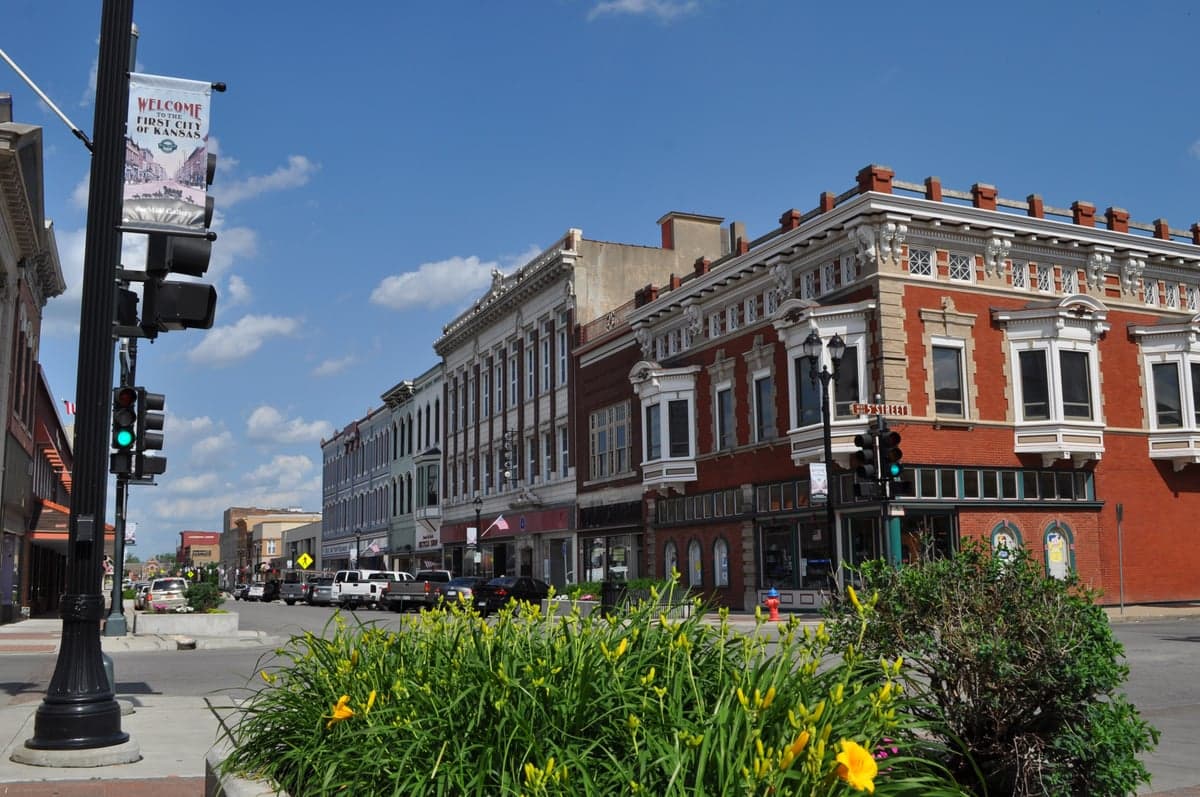
Leavenworth, Kansas, has long been a solidly conservative community, and that hasn't changed much. The Cook PVI of R+10 tells you the math, but the real story is the culture. This is a town where folks still wave the flag, go to church on Sunday, and believe in the Second Amendment without apology. The military presence at Fort Leavenworth keeps a steady stream of patriotic, law-and-order types cycling through, which reinforces the local values. You don't see a lot of political hand-wringing here; people tend to vote their conscience and expect their government to stay out of their business.
How it compares
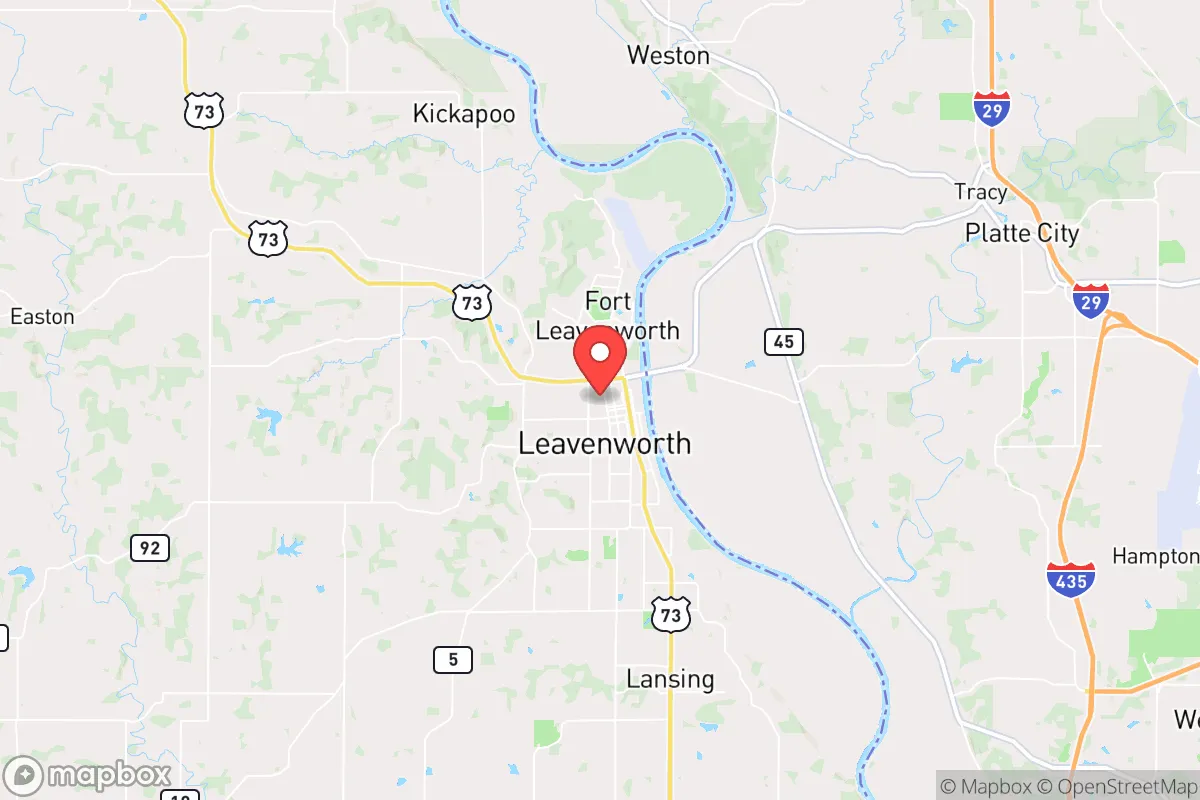
Drive ten miles south to Lansing, and you'll find a similar vibe—conservative, family-oriented, with a strong blue-collar backbone. But head east across the Missouri River into Platte County, and you start feeling the suburban creep of Kansas City's influence. Places like Parkville or Liberty have a more mixed political flavor, with younger transplants and commuters bringing in some progressive leanings. Leavenworth itself, though, remains a bit of an island. It's not as deeply red as rural towns like Atchison or Hiawatha, but it's noticeably more conservative than the Johnson County suburbs, which have drifted leftward in recent years. The contrast is stark: Johnson County votes blue in statewide races now, while Leavenworth County stays reliably red. That's a big reason why locals here feel like they're holding the line against the tide.
What this means for residents
For someone who values personal freedom and limited government, Leavenworth is a breath of fresh air. You won't find the kind of overreach you see in more progressive cities—no mask mandates that drag on for years, no heavy-handed business closures, no city council debates about defunding the police. The local government tends to take a hands-off approach, trusting residents to make their own choices. Property taxes are reasonable, and there's no push for the kind of zoning or land-use restrictions that drive up housing costs elsewhere. That said, there are signs of change. A few new developments and a younger demographic moving in have brought some pressure for more "progressive" policies, like bike lanes and density bonuses. So far, the old guard has held firm, but it's something to keep an eye on. If you're looking for a place where your rights aren't treated as negotiable, Leavenworth still delivers.
Culturally, Leavenworth is distinct in a few ways. The prison and the military base give it a unique character—there's a respect for order and discipline that you don't find in every small city. The local politics reflect that: law enforcement is supported, and there's little tolerance for the kind of social experimentation you see on the coasts. The biggest policy distinction is probably the city's stance on firearms. Leavenworth is a gun-friendly town, with no local ordinances that infringe on the Second Amendment. That's a big deal for residents who see that right as foundational. Looking ahead, the concern is whether the growing influence of Kansas City's metro area will start to erode that independence. For now, though, Leavenworth remains a place where conservative values aren't just tolerated—they're the norm.

State Political ClimatePolitical Climate in Kansas
State Political AnalysisPolitical Environment in the State
Kansas has long been a reliably Republican state in presidential elections, but its internal politics tell a more nuanced story of a conservative heartland wrestling with moderate and progressive influences. Over the past 20 years, the state has shifted from a solidly red bastion to a more contested battleground, with the Kansas City suburbs and college towns like Lawrence and Manhattan pulling left, while the vast rural expanse and Wichita’s outer rings keep the state firmly in GOP control. The 2022 gubernatorial race, where Democrat Laura Kelly won a second term, underscores that Kansas isn’t a lock for either party—it’s a state where fiscal conservatism and social moderation can sometimes trump hardline ideology.
Urban vs. rural divide
The political map of Kansas is a textbook study in the urban-rural split. The Kansas City metro area, particularly Johnson County (Overland Park, Olathe, Leawood), has become the state’s Democratic engine, flipping from a Republican stronghold to a purple-to-blue county over the past decade. In 2020, Johnson County voted for Joe Biden by a slim margin, a seismic shift from its 2012 support for Mitt Romney. Meanwhile, Lawrence (Douglas County) is the state’s liberal anchor, home to the University of Kansas and a reliably blue island. Wichita (Sedgwick County) remains a swing county, but its suburbs like Andover and Derby lean conservative. The rest of the state—places like Garden City, Dodge City, and the rural Flint Hills—votes overwhelmingly Republican, often by 70-80% margins. This divide means that statewide elections are often decided by turnout in Johnson County and the Wichita suburbs, while rural areas provide a solid but shrinking base for the GOP.
Policy environment
Kansas’s policy environment is a mixed bag for conservatives. The state’s flat income tax rate of 5.7% (as of 2026) is a product of the 2012 Brownback tax cuts, which were partially rolled back in 2017 after budget shortfalls. Property taxes are relatively low, but sales taxes can be high in some cities (e.g., 8.5% in Wichita). On education, the state has a long history of school funding lawsuits, with the Kansas Supreme Court often mandating increased spending, which frustrates fiscal conservatives. Healthcare policy is a flashpoint: Kansas has not expanded Medicaid under the Affordable Care Act, a win for limited-government advocates, but the state also has some of the strictest abortion laws in the nation, including a 2022 “Value Them Both” amendment that affirmed no constitutional right to abortion. Election laws are moderately restrictive—voter ID is required, and the state has a 20-day advance voting window. However, the 2021 election integrity law (HB 2332) tightened absentee ballot rules, a move that pleased conservatives but drew criticism from voting rights groups.
Trajectory & freedom
Kansas has seen a tug-of-war between expanding and contracting personal freedoms. On the positive side for conservatives, the state passed a constitutional carry law in 2015, allowing permitless concealed carry, and has strong Second Amendment protections. The 2022 “Parental Bill of Rights” (HB 2560) gave parents more say in their children’s education, including the right to review curriculum and opt out of certain materials. However, the state has also seen government overreach in the form of COVID-19 mandates—Governor Kelly’s 2020 executive orders closing businesses and mandating masks were challenged by the legislature, leading to a 2021 law (SB 40) that limited the governor’s emergency powers. On medical freedom, Kansas has not passed any broad vaccine mandate bans, but local school boards have largely avoided mandates. The biggest concern for liberty-minded residents is the state’s property tax system, where valuations have risen sharply in Johnson County, leading to higher tax bills without a vote—a creeping government overreach that frustrates homeowners. Overall, Kansas is trending more free on gun and parental rights, but less free on taxation and local control.
Civil unrest & political movements
Kansas has not seen the level of civil unrest seen in coastal states, but there have been notable flashpoints. In 2020, protests in Wichita and Kansas City over George Floyd’s death were largely peaceful, though some property damage occurred in the Westport area near the state line. The most visible political movement in recent years has been the rise of the “Moms for Liberty” chapter in Johnson County, which has pushed for book bans and curriculum transparency in school board meetings. Immigration politics are less heated than in border states, but Garden City and Dodge City have seen tensions over meatpacking plant workers, with some local ordinances targeting undocumented immigrants. Election integrity remains a hot-button issue: after the 2020 election, a group of Republican legislators pushed for a forensic audit of the 2020 results in Johnson County, though it was never conducted. The 2022 primary saw a surge in “election integrity” candidates, many of whom lost in the general election. A new resident would notice the strong presence of church-affiliated political groups, particularly in the Wichita area, and the absence of large-scale protests—Kansas is a state where political energy is channeled into school board races and county commission meetings, not street demonstrations.
Projection
Over the next 5-10 years, Kansas is likely to become more politically competitive, driven by in-migration to the Kansas City suburbs. Johnson County is expected to continue trending blue, while rural areas will shrink in population and political influence. This could lead to a state that is more purple at the statewide level, with Democrats winning occasional gubernatorial and Senate races. However, the state legislature will remain firmly Republican due to gerrymandered districts. The biggest wildcard is the state’s fiscal health: if property taxes continue to rise, it could spark a populist revolt that benefits either anti-tax conservatives or progressive tax reformers. On social issues, expect continued battles over school curriculum, transgender rights, and abortion access, with the legislature likely to pass more restrictions. For a conservative moving in now, the state will remain a safe bet for gun rights and low regulation, but the cultural and political center of gravity will shift toward the suburbs, making it less reliably conservative than it was 20 years ago.
For a new resident, the bottom line is this: Kansas offers a low-cost, low-regulation environment with strong Second Amendment protections and a conservative-leaning legislature, but the political winds are shifting in the Kansas City suburbs. If you’re moving to a rural area or Wichita’s outskirts, you’ll find a deeply red community. If you’re heading to Overland Park or Lawrence, expect a more mixed political landscape. The state’s freedom trajectory is positive on gun and parental rights, but concerning on property taxes and local control. Keep an eye on Johnson County—it will decide the state’s future direction.
* Values derived from national, state, county, city and local statistics and may differ in a specific area. Last updated: 2026-04-30T01:44:47.000Z
Narrative content on this page is AI-generated and may contain mistakes. Verify any details that matter before acting on them.
ReloMaps may earn a commission from affiliate links at no extra cost to you.

