Photo: Wikipedia
Demographics of Lebanon, NH
Affluence Level in Lebanon, NH
A middle-class area roughly in line with national averages across income, home values, education, and employment.
People of Lebanon, NH
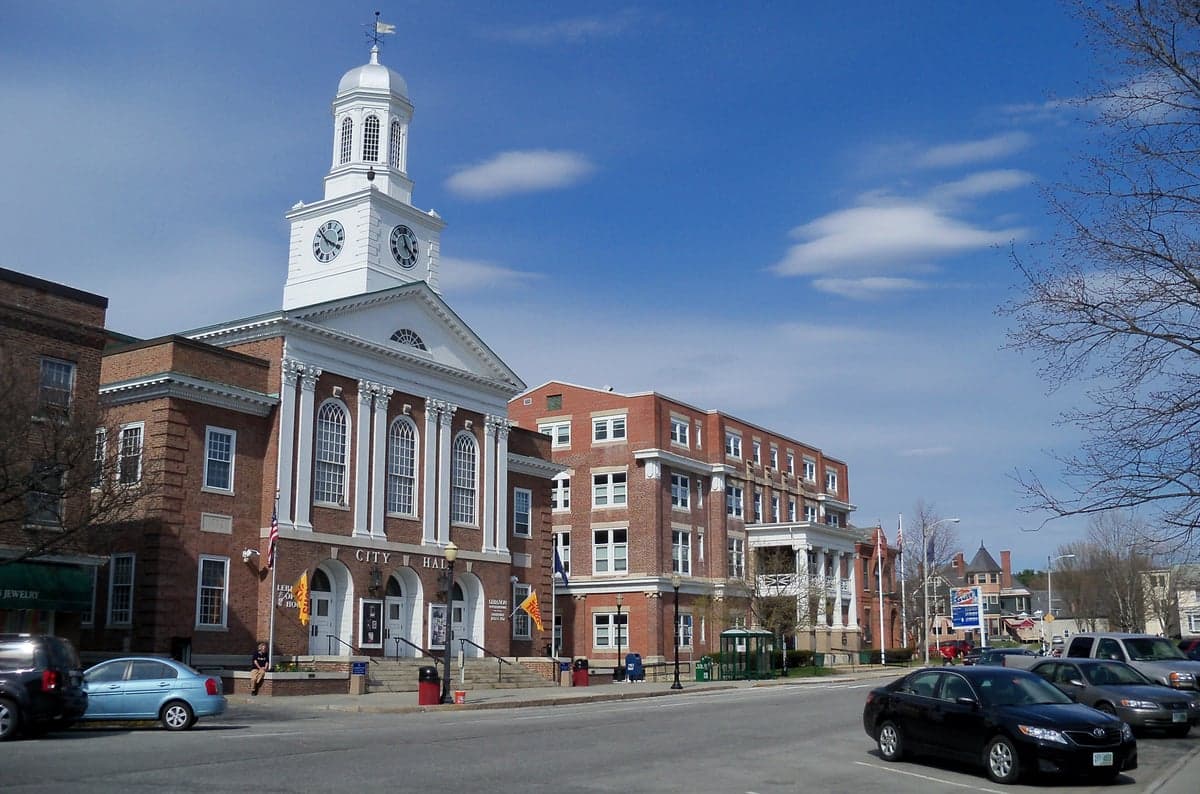
The people of Lebanon, New Hampshire, today form a compact, highly educated community of 14,759 residents, characterized by a distinctly white-collar professional base and a notably high college attainment rate of 56.4%. The city’s identity is shaped by its role as a regional medical and tech hub, anchored by the Dartmouth-Hitchcock Medical Center, which draws a population that is 85.0% white, with small but significant Asian (4.7%) and Indian subcontinent (2.7%) communities, and a foreign-born share of 5.1%. This is a place where a historic Yankee core has been overlaid by successive waves of medical professionals, engineers, and service workers, creating a stable, low-diversity environment that is more cosmopolitan than rural New England but far less diverse than major metropolitan areas.
How the city was settled and grew
Lebanon’s original population was shaped by its 1761 charter as a farming and mill town along the Mascoma River. The first settlers were primarily English Protestants from coastal Massachusetts and Connecticut, drawn by land grants offered by Governor Benning Wentworth. These families established the Downtown Lebanon and West Lebanon districts, building sawmills, gristmills, and later textile factories. The arrival of the Northern Railroad in the 1840s transformed the city, bringing Irish and French-Canadian laborers to work in the machine shops and woolen mills that clustered along the river. These groups settled in Mechanic Street and the Mascoma Street corridor, forming dense ethnic enclaves that persisted through the early 20th century. By 1900, the population had grown to roughly 3,500, with a strong Catholic presence from the French-Canadian and Irish waves. The city’s industrial base peaked in the 1920s, but the Great Depression and post-war deindustrialization led to a gradual decline in manufacturing employment, setting the stage for a demographic shift toward healthcare and education.
Modern era (post-1965)
The post-1965 era fundamentally reshaped Lebanon’s population, driven not by immigration reform but by the explosive growth of the Dartmouth-Hitchcock Medical Center, which relocated to Lebanon in 1991. This anchor institution drew a wave of highly educated professionals from across the United States, many of whom settled in the River Ridge and Glenwood neighborhoods, areas of newer single-family homes and townhouses built in the 1990s and 2000s. The city’s foreign-born population, at 5.1%, is modest but concentrated: the Asian community (4.7%) is largely composed of East and Southeast Asian medical researchers and engineers, many affiliated with Dartmouth-Hitchcock or the nearby Dartmouth College campus in Hanover. The Indian subcontinent community (2.7%) is similarly professional, with many families living in the Hillside and Sachem Village areas. The Hispanic (2.3%) and Black (0.6%) populations remain small, reflecting the city’s limited service-sector employment base and high housing costs. The white population, while still dominant, has shifted from its historic Yankee and French-Canadian roots to a more transient professional class, with many residents moving in for jobs and leaving after retirement.
The future
Lebanon’s population is heading toward continued stability with slow, selective diversification. The city’s growth has been modest—the population has hovered around 14,000-15,000 for two decades—constrained by limited housing supply and strict zoning. The Asian and Indian subcontinent communities are likely to grow slowly as Dartmouth-Hitchcock continues to recruit internationally, but they will remain small enclaves rather than forming large ethnic neighborhoods. The white professional class will remain the dominant group, with the city becoming more homogenized in terms of education and income, even as its ethnic composition shifts slightly. The historic French-Canadian and Irish neighborhoods of Mechanic Street and Mascoma Street are gentrifying, with older mill housing being renovated for young professionals. The next 10-20 years will likely see Lebanon become a more expensive, more educated, and slightly more diverse version of itself, but it will not experience the rapid demographic change seen in larger New England cities like Manchester or Nashua.
For someone moving in now, Lebanon is becoming a stable, professional-class city where the population is defined more by occupation and education than by ethnicity or national origin. The city offers a safe, well-served environment with excellent schools and a strong sense of community, but it is not a place of rapid demographic change or ethnic vibrancy. New residents will find a population that is welcoming but homogeneous, where the biggest divides are between long-term locals and transient medical professionals, not between racial or ethnic groups.

* Values derived from national, state, county, city and local statistics and may differ in a specific area. Last updated: 2026-05-02T02:47:55.000Z
Narrative content on this page is AI-generated and may contain mistakes. Verify any details that matter before acting on them.
ReloMaps may earn a commission from affiliate links at no extra cost to you.

