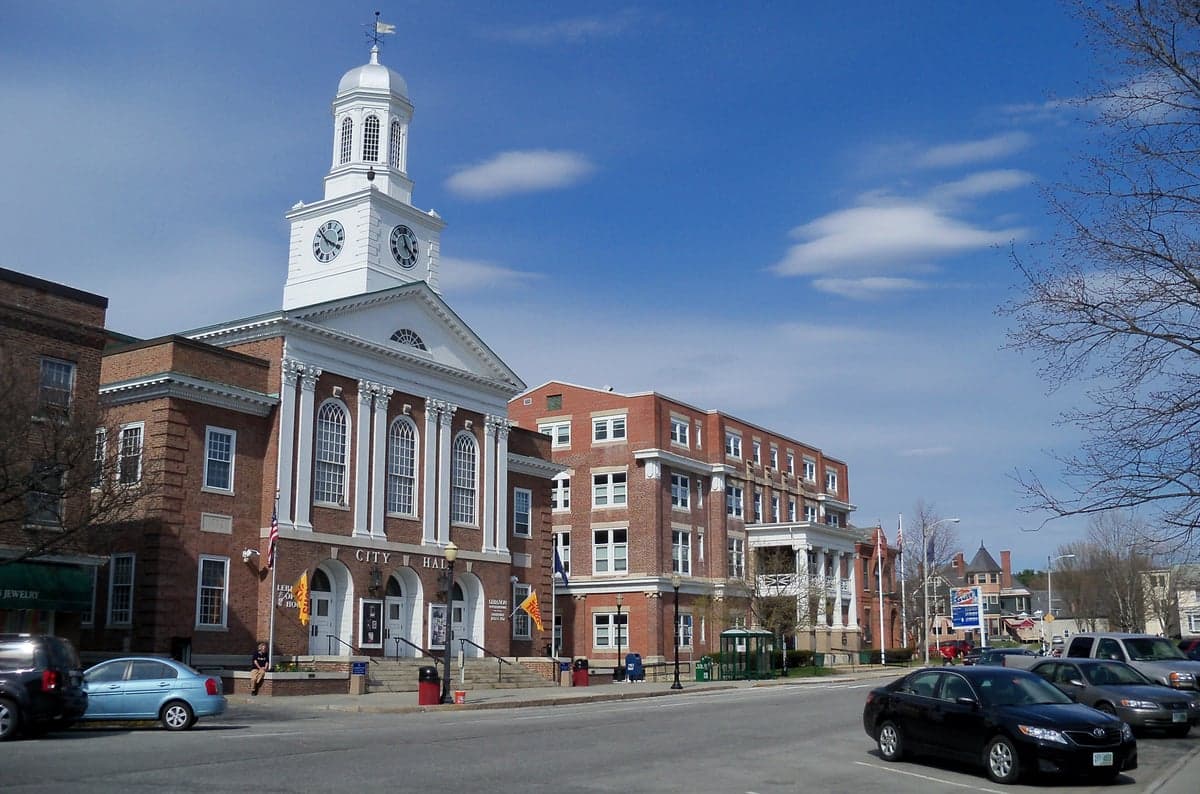
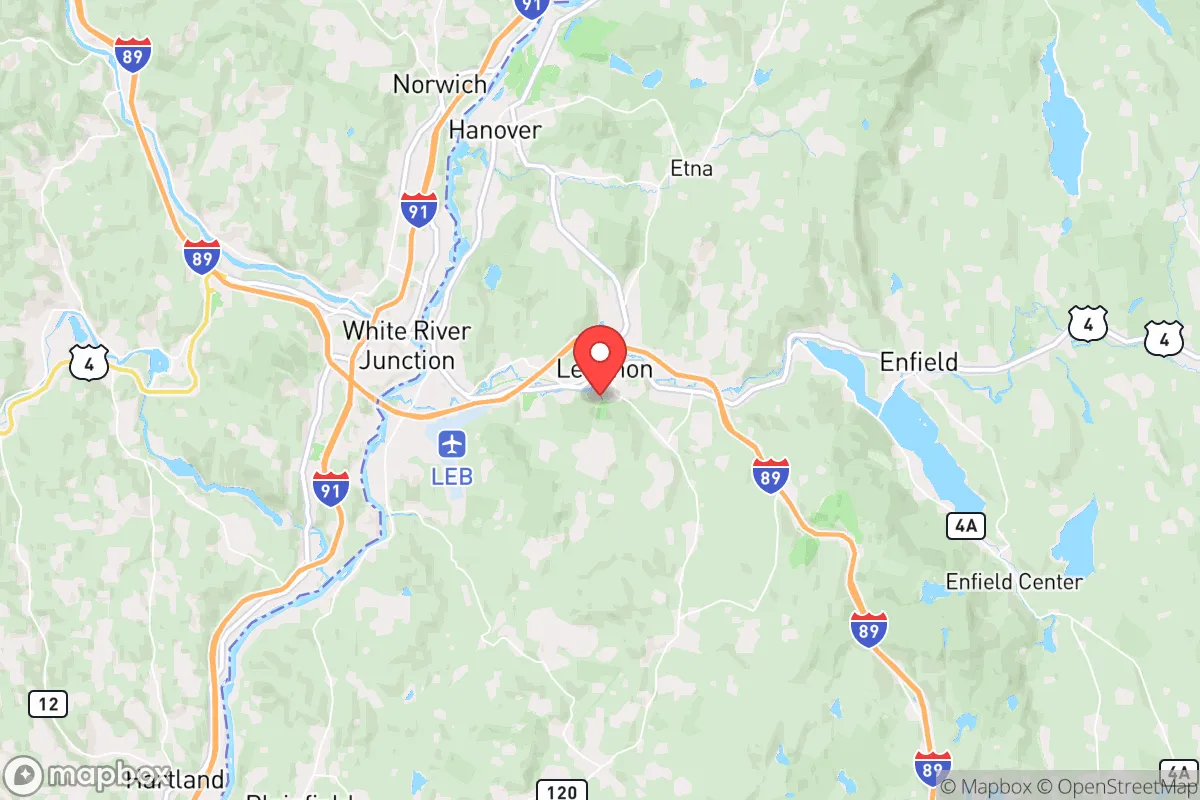
Photo: Wikipedia
Quality of Life in Lebanon, NH
A high quality of life with strong walkability, manageable living costs, healthy neighborhood signals, and solid amenity access.
What does Quality of Life tell us?
Quality of Life blends cost of living, nearby amenities, socioeconomic signals, and neighborhood character. City-level scores represent the whole municipality; individual neighborhoods can differ.
What does this tell us?
Quality of Life blends cost of living, nearby amenities, socioeconomic signals, and neighborhood character. City-level scores represent the whole municipality; individual neighborhoods can differ.
Cost of Living
38% above national average
The Real Cost of Living in Lebanon, NH for 2026
| Tier | Individual | Family (4) |
|---|---|---|
| Survival | $28k | $52k |
| Comfortable | $67k | $99k |
| Luxury | $153k+ | $237k+ |
| Elite (Top 5%) | $180k+ | $279k+ |
94%
The Area Signal
A metric tracking the socioeconomic signals of the area.
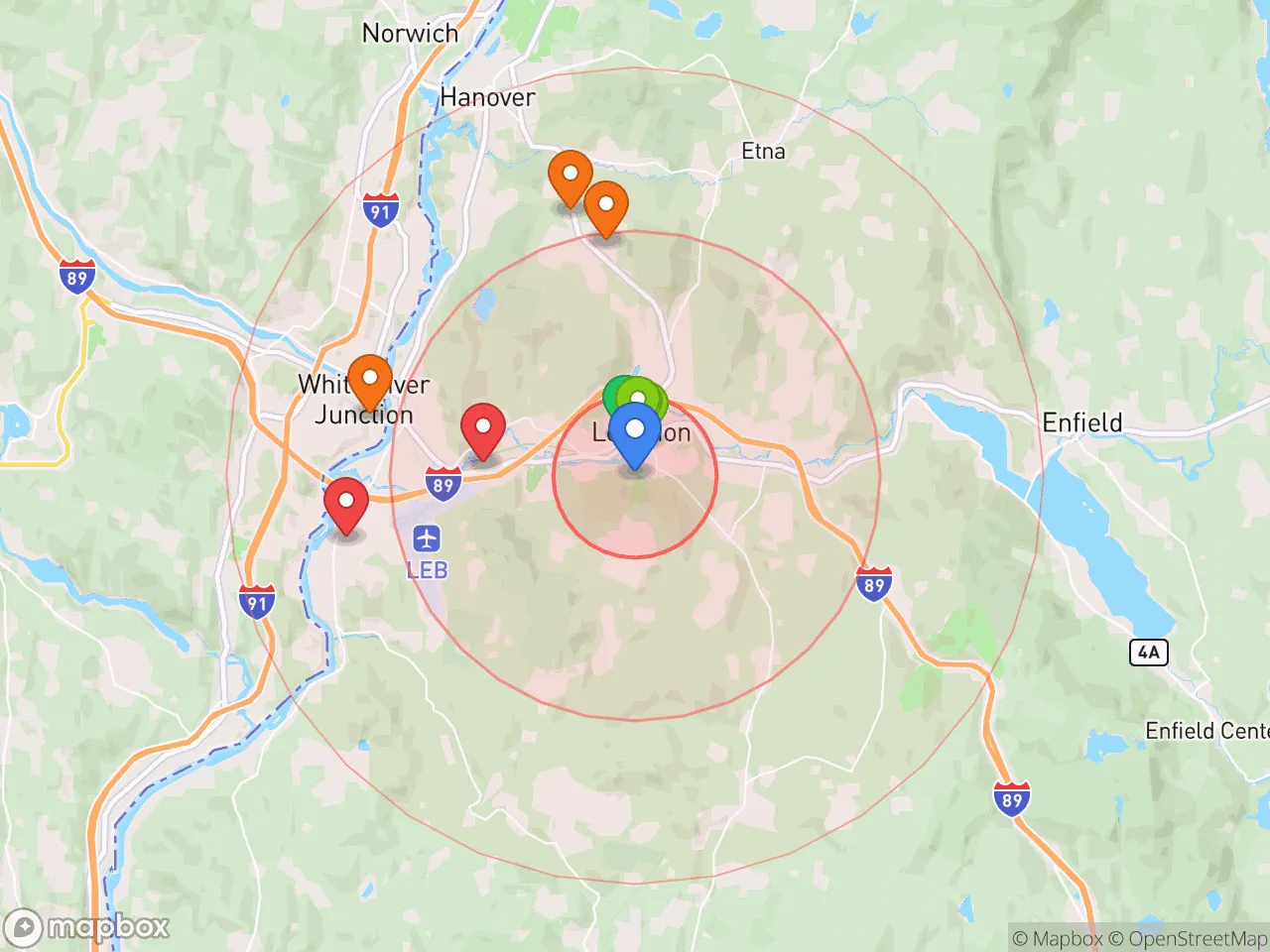
Hobbies
Explore the areaGroceries
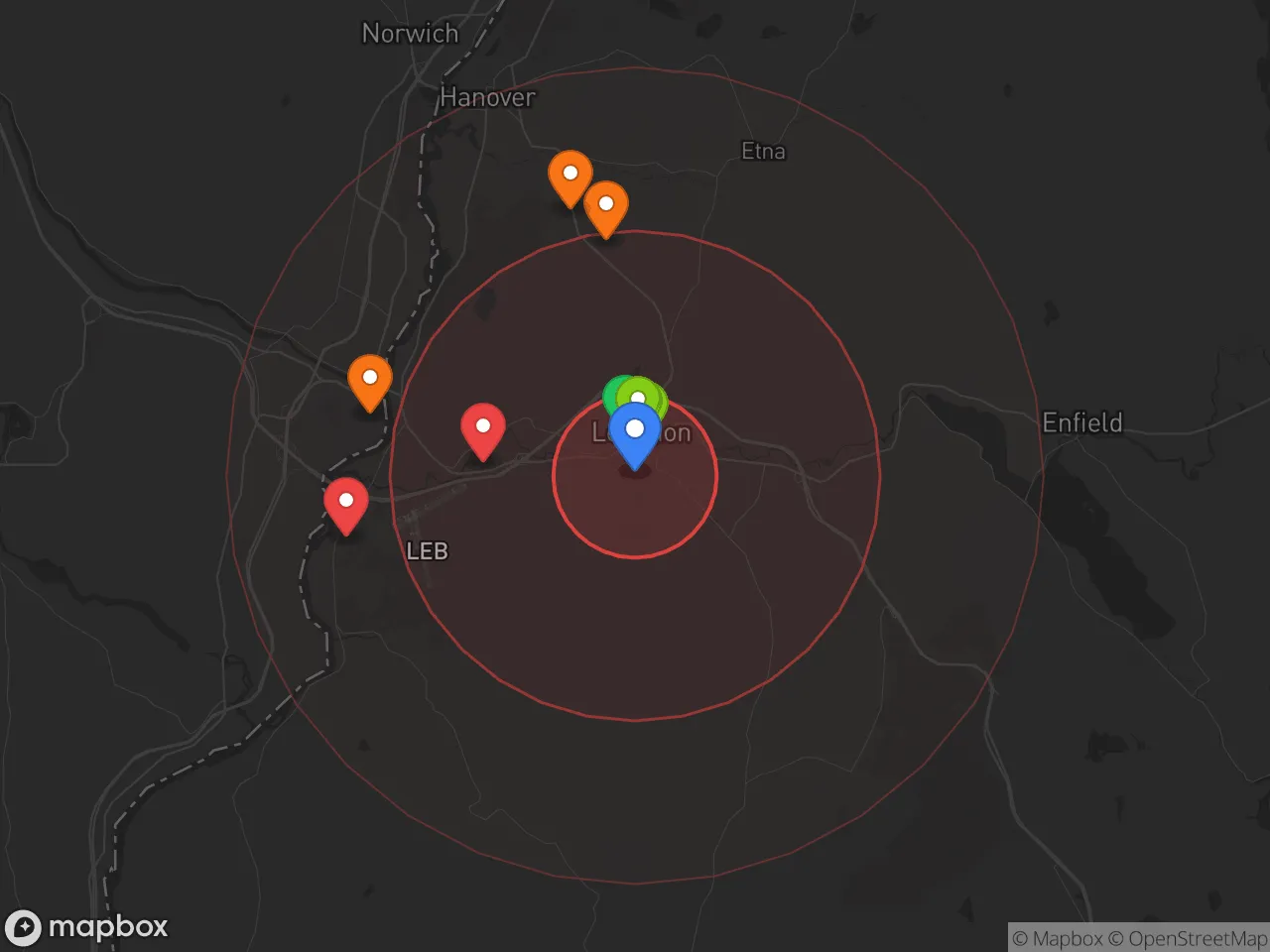
5 within 10 miles
Gas
20 within 10 miles
Hospital
7 within 20 miles
Airport
PDX — Portland International Jetport
Post Office
USPS — Lebanon, NH
Critical Amenities
Quality-of-Life Analysis
Lebanon, New Hampshire, is an affluent, educated community anchored by the Dartmouth-Hitchcock Medical Center and the broader Upper Valley economy, drawing a population of healthcare professionals, engineers, and remote workers who value small-city convenience with rural access. The city’s cost of living index of 138 (100 = U.S. average) places it well above the national norm, reflecting a housing market that has tightened considerably since 2020. With a median home value of $345,100 and a median rent of $1,732, Lebanon is notably more expensive than nearby Claremont or White River Junction, but remains cheaper than Hanover or Norwich, Vermont, just across the Connecticut River.
Cost of living, housing affordability, and how Lebanon compares to nearby towns
Lebanon’s housing costs are the primary driver of its elevated cost of living. The median home value of $345,100 is roughly 30% higher than the New Hampshire state median, and the median rent of $1,732 consumes about 30% of a typical household’s gross income—a figure that aligns with the federal affordability threshold. Compared to Hanover (median home value ~$600,000) or Norwich (~$500,000), Lebanon offers a relative discount, but it still prices out many service workers and young families who might look to Enfield or Canaan for cheaper options. The average commute of 26.8 minutes is longer than the national average of 26 minutes, largely because many workers live in outlying towns and drive into Lebanon’s medical and tech corridor. Property taxes in Lebanon run about $5,200 annually on a median home, which is moderate for New Hampshire but high relative to the rest of the country.
What daily life is like: schools, amenities, and the local rhythm
Lebanon’s daily rhythm is shaped by its role as the Upper Valley’s commercial and medical hub. The Lebanon School District serves roughly 2,200 students, with Lebanon High School earning a 9/10 rating on GreatSchools and a strong track record for college placement, particularly into Dartmouth College and University of Vermont. The city’s amenities include the Lebanon Opera House, a restored 1920s venue hosting live performances, and the Northern Rail Trail, a 58-mile multi-use path popular for biking and walking. Retail and dining cluster around the Route 120 corridor, with national chains like Walmart and Hannaford alongside local spots like Salt Hill Pub and the Skunk Hollow Tavern. The Colburn Park farmers market runs May through October, drawing vendors from across the region. For outdoor recreation, residents have quick access to Mount Cardigan, the Appalachian Trail, and the Connecticut River for kayaking. The presence of Dartmouth-Hitchcock Medical Center, Dartmouth College, and several tech firms (including Hypertherm and Fujifilm Dimatix) means the local job market is stable and high-wage, but the social scene is quieter than in larger cities—most evening activity revolves around dinner out, community theater, or outdoor sports.
Lebanon is best suited for professionals and families who prioritize strong public schools, reliable healthcare access, and outdoor recreation over nightlife or urban density. The high cost of housing and property taxes will challenge lower-income households, but for those employed in the medical, tech, or academic sectors, the trade-off is a safe, well-resourced community with a genuine four-season lifestyle. Remote workers with coastal salaries will find Lebanon’s slower pace and natural setting a compelling alternative to Boston or New York, provided they can secure housing in a competitive market.

Crime in Lebanon, NH
Lower crime rates than 83% of comparable U.S. locations.
Violent CrimeViolent Crime Analysis
Property CrimeProperty Crime Analysis
Crime Analysis
Lebanon, New Hampshire, presents a mixed safety profile for prospective residents. While the city’s violent crime rate of 134 incidents per 100,000 residents is notably lower than the national average, its property crime rate of 1,748 per 100,000 exceeds both state and national benchmarks, making property-related offenses the primary safety concern for most households.
Crime in context
Lebanon’s violent crime rate sits well below the U.S. average of roughly 380 per 100,000, aligning with the generally safer profile of the Upper Valley region. However, the property crime rate is a significant outlier. It is roughly 40% higher than the New Hampshire state average of about 1,200 per 100,000 and also exceeds the national property crime rate of approximately 1,950 per 100,000. This elevated property crime figure is driven largely by thefts from vehicles and retail establishments, a pattern common in smaller cities that serve as regional commercial hubs. A critical factor for readers to consider is the influence of progressive judicial philosophies in Grafton County. The area’s district attorneys and judges have, in recent years, emphasized diversion programs and reduced sentencing for non-violent property offenders. While intended to reduce recidivism, this approach has been criticized for placing a lower priority on victim restitution and public deterrence, potentially contributing to repeat offenses and a perception that property crimes carry minimal consequences.
What residents experience
For daily life, the tangible risk of violent crime in Lebanon is low. Residents are far more likely to encounter issues like package theft, bicycle theft, or a vehicle break-in than an assault or robbery. The downtown area and the commercial corridors along Route 12A see the highest concentration of reported thefts, often linked to transient populations and easy access to parked cars. Neighborhood watch programs are active in several residential subdivisions, and the Lebanon Police Department maintains a visible presence, particularly during peak shopping hours. However, the underlying concern for many is the legal environment: a system perceived as lenient toward offenders can erode trust in public safety. When property criminals are quickly returned to the street through progressive bail reform or plea deals, it creates a cycle where residents feel their personal security is secondary to offender rehabilitation, a dynamic that directly impacts quality of life and property values.
Neighborhood-level variation is notable. The more affluent, single-family-home areas west of I-89, such as the neighborhoods near Storrs Hill, report very low crime rates. In contrast, the multi-family and rental-heavy districts closer to the Dartmouth-Hitchcock Medical Center and the downtown core experience a higher density of property crime incidents. Prospective renters and homebuyers should specifically inquire about recent theft trends in their target block, as the difference between adjacent streets can be stark. Overall, while Lebanon is not a high-violence community, the combination of above-average property crime and a justice system that many residents feel prioritizes offender leniency over public protection warrants careful consideration for anyone prioritizing safety in a relocation decision.
* Values derived from national, state, county, city and local statistics and may differ in a specific area. Last updated: 2026-05-02T02:47:55.000Z
Narrative content on this page is AI-generated and may contain mistakes. Verify any details that matter before acting on them.
ReloMaps may earn a commission from affiliate links at no extra cost to you.

