Photo: Wikipedia
Political ClimatePolitical Climate in Lewisburg, WV
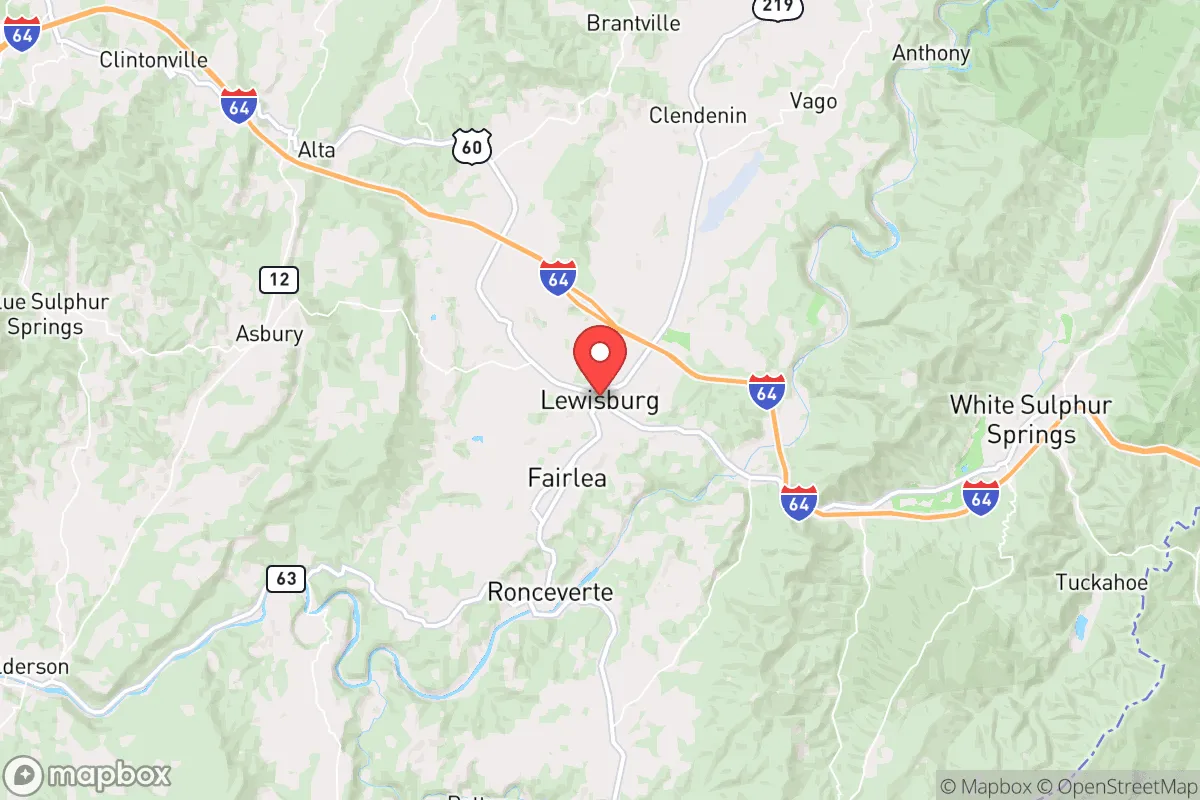
District shown is the primary district for this city’s centroid. Cities may span multiple districts.
Local Political AnalysisPolitical Analysis of Lewisburg, WV
Lewisburg, West Virginia, sits in a deeply conservative pocket of the state, with a Cook PVI of R+22 that reflects a solid Republican lean. This isn't a new development—the area has long been a stronghold for traditional values, with most folks voting for smaller government and local control. But like a lot of places, you can feel the winds shifting, and it's worth keeping an eye on how that plays out in a town that's historically been a bit of a blue dot in a red county.
How it compares
If you drive thirty minutes north to Beckley, you'll find a similar conservative vibe, though Beckley's coal history gives it a more working-class, union-tied flavor that sometimes bucks the party line. Head east toward Covington, Virginia, and you cross into a state that's trending purple, but Lewisburg itself remains reliably red. The real contrast is with places like Morgantown or Charleston, where university influence and state government jobs pull the politics left. Here in Greenbrier County, the old-timers still run the show, and they're not shy about pushing back against anything that smells like federal overreach. That said, Lewisburg's artsy downtown and tourist draw bring in folks from outside, and you'll see a few more "Black Lives Matter" signs than you'd expect in a town this size—a reminder that even in R+22 territory, the culture war is alive and well.
What this means for residents
For those of us who've been here a while, the political climate means we can mostly live our lives without the government breathing down our necks. Property taxes stay low, gun rights are respected, and the local school board isn't pushing radical curriculum changes—yet. But there's a creeping concern: as Lewisburg grows, especially with remote workers and retirees from blue states moving in, you see more pressure to adopt progressive policies. The city council has debated things like "equity" initiatives and zoning changes that sound harmless but often lead to more regulations and less freedom for homeowners and small businesses. The real worry is that these shifts happen slowly—a new ordinance here, a diversity training requirement there—until suddenly you're living in a place that feels more like Charlottesville than the Lewisburg you moved to for the peace and quiet.
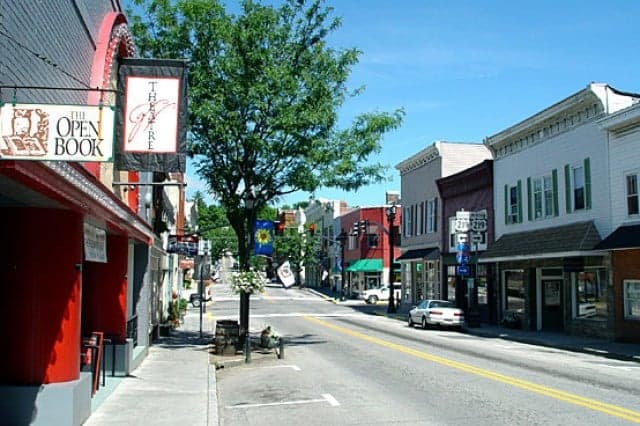
One thing that sets Lewisburg apart is its balancing act. The town has a strong historic preservation ethic and a vibrant arts scene, which attracts a certain type of liberal-leaning resident, but the surrounding county is overwhelmingly rural and conservative. This creates a tension you can feel at public meetings, where debates over mask mandates or library book content get heated. The long-term trajectory depends on who moves in next. If the newcomers respect the local culture and don't try to remake Lewisburg in the image of their old hometowns, we'll keep our character. But if the trend toward progressive governance continues, you might see more folks heading to places like White Sulphur Springs or even farther out into the country, where the government stays out of your business and the neighbors wave when you drive by. For now, Lewisburg is still a good place to raise a family without constant political noise—but keep your ear to the ground.

State Political ClimatePolitical Climate in West Virginia
State Political AnalysisPolitical Environment in the State
West Virginia has long been one of the most reliably Republican states in the nation, but that wasn’t always the case. As recently as the 1990s, it was a Democratic stronghold at the state and local level, but a seismic shift began in the early 2000s and accelerated after 2012. Today, the state is deeply red: Donald Trump won it by nearly 39 points in 2020, and every statewide office is held by a Republican. The dominant coalition is a mix of rural, working-class voters, energy-sector workers, and culturally conservative families who have abandoned the national Democratic Party over gun rights, energy policy, and social issues. The trajectory over the last 20 years has been a steady march rightward, with the state legislature flipping in 2014 and the governorship following in 2016.
Urban vs. rural divide
The political map of West Virginia is starkly divided between a handful of small urban centers and the vast rural expanse. The state’s largest city, Charleston, and its surrounding Kanawha County are a microcosm of the split: the city itself leans Democratic, but the county as a whole votes Republican by a comfortable margin. Morgantown, home to West Virginia University, is the most liberal pocket in the state, with Monongalia County often being one of the few to vote Democratic in statewide races. Huntington and Cabell County are more competitive but have trended red in recent cycles. Meanwhile, the rural counties—like Mingo, Logan, and McDowell in the southern coalfields—are among the most Republican in the nation, often delivering 80%+ margins for GOP candidates. The divide isn’t just about population density; it’s about economic identity. The urban centers have more college-educated professionals and service-sector workers, while the rural areas are dominated by extraction industries, manufacturing, and agriculture. This geographic split means that a new resident moving to Morgantown will experience a very different political atmosphere than someone settling in Beckley or Parkersburg.
Policy environment
West Virginia’s policy environment is aggressively conservative, especially compared to its neighbors in Virginia, Maryland, and Ohio. The state has no personal income tax on Social Security benefits and has been phasing down its personal income tax rate—currently at 3.99% and dropping to 3.93% in 2026—with a goal of full elimination. Property taxes are among the lowest in the nation, and there is no state-level estate or inheritance tax. The regulatory posture is business-friendly, particularly for energy, manufacturing, and agriculture. Education policy has been a flashpoint: the state passed a robust school choice law in 2021, creating the Hope Scholarship, which allows families to use state funds for private school tuition, homeschooling, or other educational expenses. This was a major win for parental rights. On healthcare, West Virginia has not expanded Medicaid in a way that satisfies the left, but it did accept federal expansion under the ACA—a pragmatic move that many conservatives opposed. Election laws are strict: voter ID is required, early voting is limited to 10 days, and absentee voting requires an excuse. The state also passed a law in 2023 banning ranked-choice voting and requiring hand-counted paper ballots in some counties, a move aimed at election integrity.
Trajectory & freedom
West Virginia is becoming more free in several key areas, though not without controversy. The most significant recent legislation is the Second Amendment Preservation Act (2021), which prohibits state and local law enforcement from enforcing federal gun laws that infringe on the right to keep and bear arms. This is a direct challenge to federal overreach and has been a model for other states. On parental rights, the state passed the Parental Bill of Rights in 2023, requiring schools to notify parents of any medical or mental health services offered to their children and to obtain consent before any gender-related counseling. This was a direct response to the growing influence of progressive ideology in schools. Medical autonomy has seen a mixed record: the state banned nearly all abortions in 2022 after the Dobbs decision, but it also passed a law protecting medical professionals who refuse to participate in procedures they find morally objectionable. Property rights were strengthened with the Private Property Protection Act (2022), which limits eminent domain for economic development. On the downside, the state has not yet passed a universal school voucher program, and the income tax phase-down is slower than many conservatives would like. Overall, the trajectory is toward greater personal liberty, especially for gun owners, parents, and property holders.
Civil unrest & political movements
West Virginia has a long history of labor activism, but in recent years, the most visible political movements have been on the right. The 2021 teacher strike was a notable exception—a rare left-leaning protest that shut down schools for weeks over pay and benefits. But the dominant grassroots energy is from conservative groups like the West Virginia Citizens Defense League (gun rights) and Moms for Liberty (parental rights in education). Immigration politics are relatively quiet because the state has a very small foreign-born population (about 1.5%), but there have been local flashpoints over sanctuary policies. In 2023, the legislature passed a law banning sanctuary cities, requiring local law enforcement to cooperate with federal immigration authorities. Election integrity has been a hot topic: after the 2020 election, the state conducted a full audit of its voting machines and found no irregularities, but the legislature still passed stricter voter ID laws and banned private funding of election administration. There have been no major secession or nullification movements, but the state’s attorney general has joined multi-state lawsuits against federal vaccine mandates and environmental regulations. A new resident in Martinsburg or Shepherdstown in the Eastern Panhandle might notice more political activity due to proximity to the D.C. suburbs, while the rest of the state is quieter and more uniformly conservative.
Projection
Over the next 5-10 years, West Virginia is likely to become even more conservative, driven by two demographic trends. First, the state is losing population overall, but the people leaving tend to be younger, more educated, and more liberal—often moving to Virginia, North Carolina, or Ohio for jobs. Second, the state is seeing a small but steady influx of conservatives from high-tax, high-regulation states like California, New York, and Illinois, who are drawn by low taxes, gun-friendly laws, and a slower pace of life. This in-migration is concentrated in the Eastern Panhandle (Jefferson and Berkeley counties) and around Morgantown, but it’s still a trickle compared to the out-migration. The state’s Republican supermajority in the legislature is likely to persist, and we can expect further tax cuts, expanded school choice, and continued resistance to federal overreach. The biggest wildcard is the energy transition: if coal and natural gas decline faster than expected, the state’s economy could take a hit, which might shift political priorities. But for now, the trajectory is clear: West Virginia is doubling down on conservative governance, and anyone moving here should expect a state that values individual liberty, low taxes, and traditional social norms.
Bottom line for a new resident: If you’re a conservative looking for a state that respects your gun rights, your parental authority, and your wallet, West Virginia is a strong bet. You’ll find a welcoming community in most places outside of Morgantown and downtown Charleston. Just be prepared for a slower pace of life, limited job opportunities in some fields, and a political culture that is unapologetically red. The state is not perfect—infrastructure and healthcare access are real concerns—but on the core issues of freedom and limited government, it’s heading in the right direction.
* Values derived from national, state, county, city and local statistics and may differ in a specific area. Last updated: 2026-04-19T13:09:00.000Z
Narrative content on this page is AI-generated and may contain mistakes. Verify any details that matter before acting on them.
ReloMaps may earn a commission from affiliate links at no extra cost to you.

