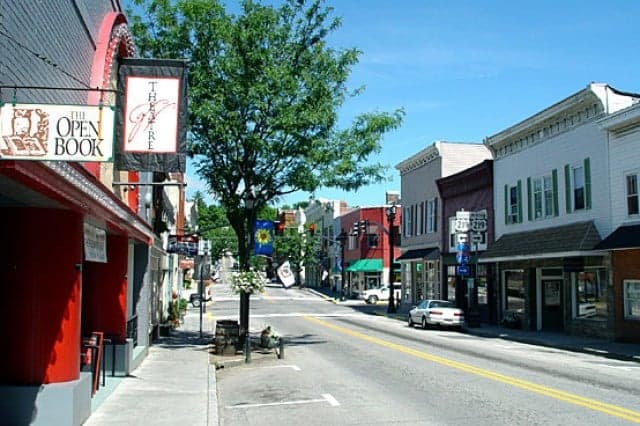
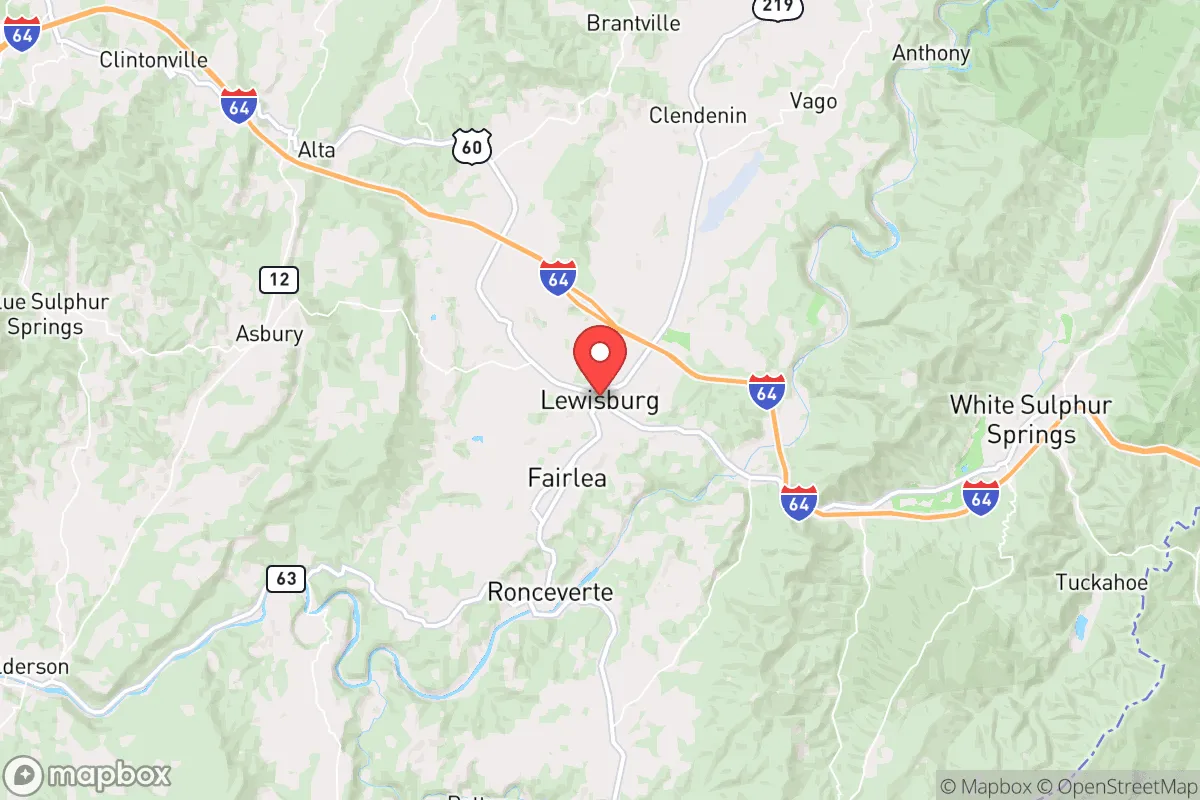
Photo: Wikipedia
Strategic Assessment of Lewisburg, WV
Meaningful friction. Expect exposure to either population pressure, blast zones, or natural disaster risk. Consider buying a retreat property.
What does the Strategic Assessment tell us?
Our Strategic Assessment grades tactical survivability of an area. Major population centers, military targets, fallout zones, natural disasters, and border exposure all drive risk — lower exposure means a more defensible position in a crisis.
This is heavily inspired by Joel Skousen's Strategic Relocation book. Highly recommended you checkout the book ($)What does this tell us?
Our Strategic Assessment grades tactical survivability of an area. Major population centers, military targets, fallout zones, natural disasters, and border exposure all drive risk — lower exposure means a more defensible position in a crisis.
This is heavily inspired by Joel Skousen's Strategic Relocation book. Highly recommended you checkout the book ($)Strategic Pillars

Key Distances
Regional Safe Places
Below is our recommended "safe zones" in West Virginia and the surrounding area based on our strategic heuristics. For most people, it's unrealistic to live in a “safe zone” full-time due to work, family or other personal reasons. They tend to be more rural. However, many of these areas are perfect for second homes and retreat properties that double as a vacation home or even a short-term rental.
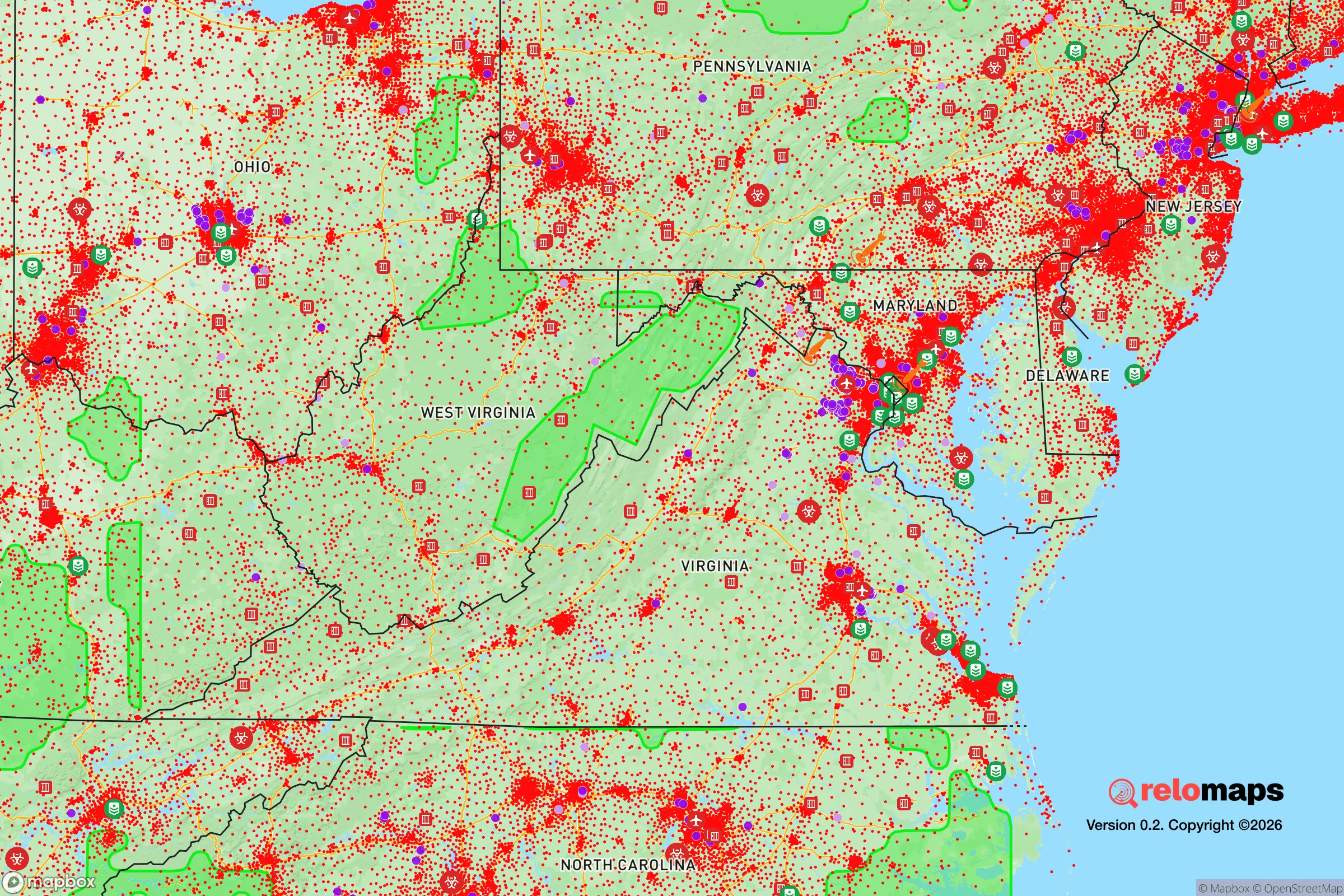
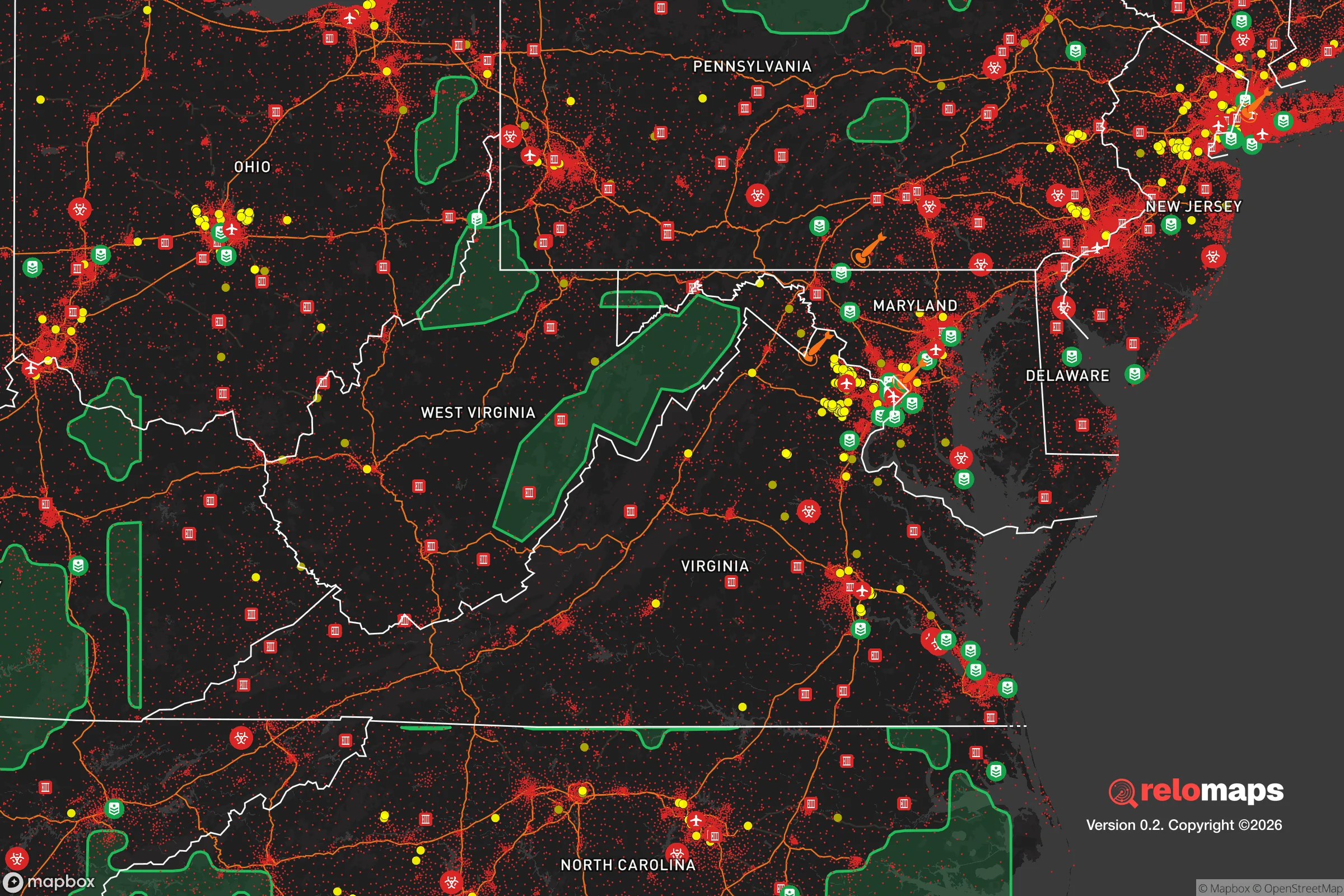


Important Note: For informational purposes only. This does not mean nothing bad ever happens in the green zones. Please use common sense. This is based on public data and modeled with AI. We tried to take a conservative approach but mistakes happen. We update this regularly as new information becomes available.
Solar Generator Recommendations
Backup power matters more here than in safer locations. We've picked three solar generators across budgets and capacity tiers — start with the budget unit if you only need a few essentials, or step up if you want to run a fridge and HVAC for days at a time.

Jackery Portable Power Station Explorer 300
Budget OptionPower on the Go: Weighing only 11 lbs, it's convenient to set up and store with book-sized foldable solar panels

BLUETTI Portable Power Station AC180
Designed for both indoor and outdoor scenarios, AC180 is highly capable as it has a robost capacity and continuous output power.

EF ECOFLOW DELTA Pro Ultra Power Station
Upgraded PickEcoFlow DELTA Pro Ultra is a whole-home energy system designed to grow with your family. Integrated with the Smart Home Panel 2, it scales to meet your evolving energy needs — keeping your home powered, intelligent, and secure through every stage of life.
We earn a commission, at no additional cost to you.
Strategic Assessment Analysis
Lewisburg, West Virginia, presents a compelling strategic relocation option for those prioritizing resilience, offering a blend of geographic isolation and functional infrastructure that is rare in the modern United States. Nestled in the Greenbrier Valley, this town of roughly 3,800 people sits at a critical intersection of natural defensibility and practical self-sufficiency, far enough from major population centers to avoid the worst of cascading failures, yet connected enough to maintain supply lines and community support. For the conservative-minded prepper or survivalist, Lewisburg’s key advantage is its position as a low-profile, high-resilience hub in a state that has historically valued individual liberty and local governance, making it a viable base for weathering both natural disasters and man-made crises.
Geographic position and natural advantages for long-term survival
Lewisburg’s location in southeastern West Virginia is its primary strategic asset, sitting in a valley ringed by the Allegheny Mountains. This topography provides natural barriers against large-scale movement, making the area inherently defensible against civil unrest or mass migration from coastal cities. The town is roughly 100 miles from Roanoke, Virginia, and 120 miles from Charleston, West Virginia—close enough for occasional supply runs or medical access, but far enough that a major urban collapse would not immediately overwhelm the region. The Greenbrier River and numerous springs offer reliable water sources, and the surrounding hardwood forests provide abundant fuel and building materials. The climate is temperate, with four distinct seasons, reducing the risk of extreme weather events like hurricanes or wildfires that plague other regions. For a relocator, this means a lower likelihood of being caught in a disaster’s direct path, and a higher chance of maintaining self-sufficiency when supply chains falter.
Risks, exposures, and proximity to fallout-relevant landmarks
No location is without vulnerabilities, and Lewisburg has several that a strategic relocator must weigh. The most significant is its proximity to the Greenbrier Resort’s decommissioned government bunker, a Cold War-era facility designed to house Congress during a nuclear attack. While the bunker is now a tourist attraction, its existence signals that the area was historically considered a target—or at least a designated safe zone—which could attract unwanted attention in a major conflict. Additionally, the town lies within 150 miles of the Blue Ridge Mountains’ major transportation corridors, including Interstates 64 and 81, which could become chokepoints for fleeing populations during a crisis. The nearby Greenbrier Valley Airport is a small regional facility, but its presence could make the area a secondary target if air mobility becomes critical. For the prepper, these risks are manageable but require awareness: avoid drawing attention to your property, and plan for the possibility of transient populations passing through. The area’s low population density (roughly 35 people per square mile in Greenbrier County) mitigates many of these concerns, as there are simply fewer people to compete with for resources.
Practical resilience for a relocator: food, water, energy, and defensibility
Lewisburg’s practical resilience is strong, particularly for those willing to invest in off-grid infrastructure. The region’s agricultural heritage means fertile soil and a growing season that supports gardens, orchards, and small livestock operations. Local farmers’ markets and co-ops are active, providing a buffer against supermarket shortages. Water is abundant: the Greenbrier River and its tributaries offer year-round flow, and groundwater is generally accessible via wells, though testing for mineral content is advisable. Energy resilience is a mixed bag—the area is served by Appalachian Power, which has a moderate reliability record, but frequent winter storms can cause outages. Solar potential is decent, with roughly 200 sunny days per year, and wood heating is a practical backup given the surrounding forests. Defensibility is excellent for a rural town: the valley’s limited entry points can be monitored, and the mountainous terrain provides natural cover. However, the town itself is not a fortress—its historic downtown is walkable and charming, but a relocator should prioritize a property with a clear line of sight to access roads and a defensible perimeter. The local culture is self-reliant and gun-friendly, with a strong tradition of hunting and marksmanship, which aligns with a prepper mindset. The Greenbrier County Sheriff’s Office is professional but small, so community-based security is the norm.
The overall strategic picture for Lewisburg is one of balanced opportunity. It is not a hardened bunker or a remote wilderness retreat, but a functioning small town with the infrastructure to support a resilient lifestyle without the isolation that can lead to resource scarcity. For the conservative relocator concerned with societal collapse, mass casualty events, or government overreach, Lewisburg offers a middle path: enough distance from urban chaos to breathe, but enough community to share the load. The key is to arrive prepared—stockpile supplies, build local relationships, and secure your water and energy sources before a crisis hits. In a world where the next disaster is always around the corner, Lewisburg stands as a quiet, capable option for those who value preparedness over panic.

* Values derived from national, state, county, city and local statistics and may differ in a specific area. Last updated: 2026-04-19T13:09:00.000Z
Narrative content on this page is AI-generated and may contain mistakes. Verify any details that matter before acting on them.
ReloMaps may earn a commission from affiliate links at no extra cost to you.

