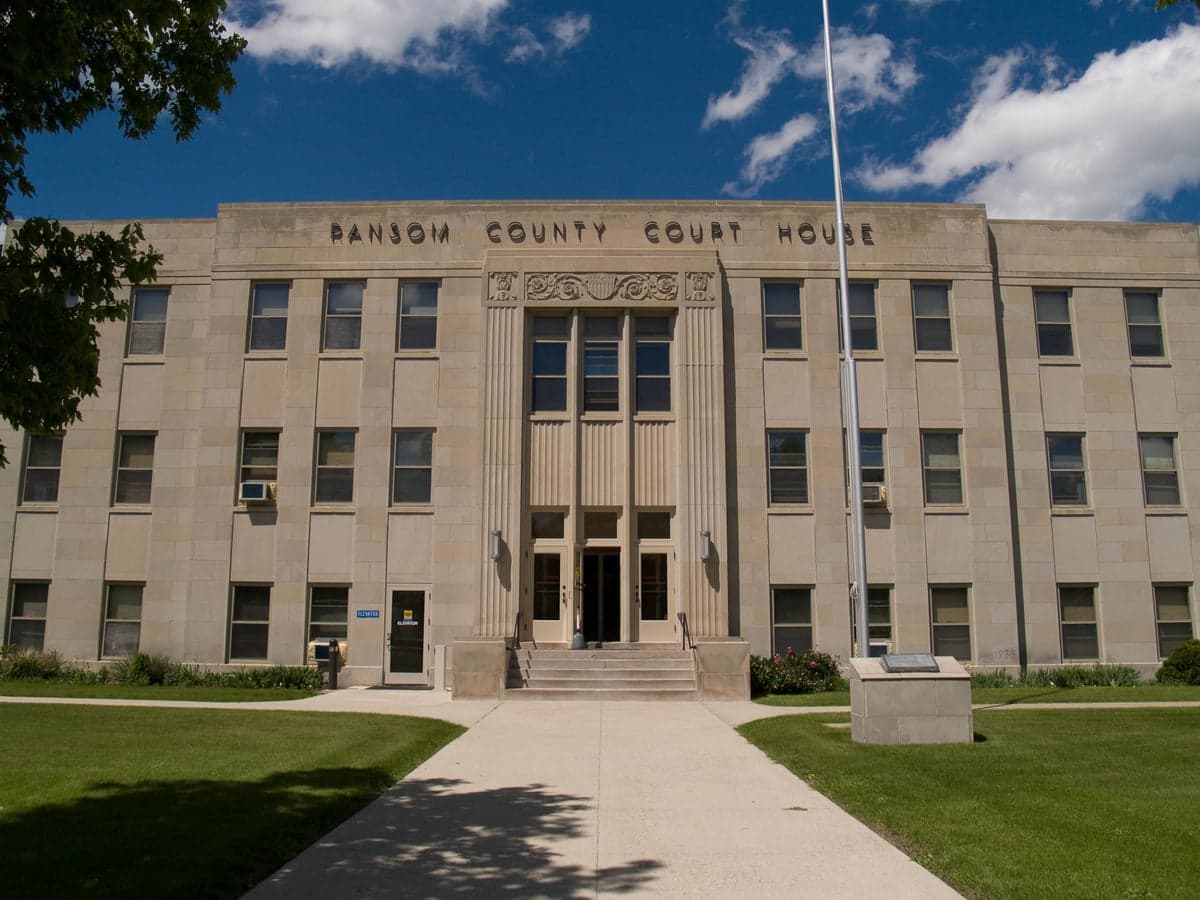
Photo: Wikipedia
Political ClimatePolitical Climate in Lisbon, ND
District shown is the primary district for this city’s centroid. Cities may span multiple districts.
Inherited from parent state — no local data available.
Local Political AnalysisPolitical Analysis of Lisbon, ND
Lisbon, North Dakota, leans solidly Republican, with a Cook PVI of R+18 that places it firmly in the conservative column. This isn't a recent shift—the area has long been a stronghold for traditional values, with local elections often decided in the primary and national candidates routinely carrying the county by wide margins. If you're looking at the political landscape here, you're seeing a community that values personal responsibility, limited government, and a way of life that hasn't been overly complicated by the kind of progressive overreach you see in bigger cities. The trajectory has been steady, though there's a quiet concern among longtime residents that outside influences—whether from state-level policies or national trends—could start chipping away at the local character.
How it compares
Compared to nearby cities like Fargo, which leans more moderate and has seen a noticeable uptick in progressive activism, Lisbon feels like a different world. Fargo's politics have drifted leftward in recent years, with city council debates over things like sanctuary city policies and diversity initiatives that would never gain traction here. Even smaller towns like Valley City or Jamestown, while still conservative, have shown signs of a more moderate streak, especially on economic issues. Lisbon, by contrast, remains a place where the Second Amendment is a given, not a debate, and where the idea of government overreach into personal freedoms—like property rights or school choice—is met with immediate skepticism. The contrast is stark: drive 60 miles east, and you're in a different political universe.
What this means for residents
For folks living here, the political climate means a lot of things stay simple. You don't have to worry about your local school board pushing critical race theory or your county commissioners imposing mask mandates that last longer than a bad winter. The tax burden is relatively low, and there's a general trust that local leaders will keep their hands off your business. That said, there's a growing unease about state-level trends—like the push for more centralized control over land use or energy regulations—that could trickle down. The long-term worry is that as North Dakota's population grows and diversifies, especially around the oil patch or in the Red River Valley, Lisbon could find itself fighting to preserve the kind of local autonomy that's always been the norm. For now, though, residents enjoy a political environment where their values are reflected in everything from the local paper's editorial page to the conversations at the coffee shop.
Culturally, Lisbon stands out for its no-nonsense approach to policy. There's no city-wide plastic bag ban, no noise ordinances that stifle small-town life, and no push to turn Main Street into a bike lane paradise. The local government tends to focus on the basics: roads, water, and keeping the library open. If you're looking for a place where the government stays out of your way and lets you live your life, Lisbon is about as close as it gets in the region. The only real policy distinction worth noting is the strong support for agricultural and energy rights—things like wind turbine siting and carbon pipeline easements are hot-button issues here, with residents generally favoring property owner control over corporate or state interests. It's a community that still believes the best government is the one closest to the people, and they're not shy about saying so.

State Political ClimatePolitical Climate in North Dakota
State Political AnalysisPolitical Environment in the State
North Dakota has long been one of the most reliably Republican states in the nation, but don’t let the red-on-red map fool you—the political climate here is more layered than a simple party label suggests. Over the past 20 years, the state has shifted from a moderate, agrarian conservatism toward a harder-edged, culturally conservative posture, driven largely by the oil boom in the western half and a growing distrust of federal overreach. In 2024, Donald Trump carried the state by over 20 points, but the real story is the internal tension between the libertarian-leaning, energy-driven west and the more establishment, government-dependent east.
Urban vs. rural divide
The political map of North Dakota is essentially a tale of two regions. The eastern corridor, anchored by Fargo and Grand Forks, leans Republican but in a more pragmatic, chamber-of-commerce way—think lower taxes but also support for public universities and agricultural subsidies. Fargo’s Cass County voted about 58% for Trump in 2024, which is solidly red but notably less enthusiastic than the rest of the state. The real conservative engine is the western oil patch, centered on Williston, Watford City, and Dickinson. These towns have exploded in population since the Bakken boom, bringing in a wave of younger, more culturally conservative workers who are deeply skeptical of government regulation. McKenzie County, home to Watford City, gave Trump over 85% of the vote in 2024—one of the highest percentages in the nation. The rural counties in between, like Bottineau and Towner, are reliably red but more concerned with farm policy and ethanol mandates than with culture war issues. The only real blue dot is Fargo’s downtown core and the campus area around Grand Forks, where younger voters and university faculty occasionally push the needle left, but it’s a drop in a very red bucket.
Policy environment
North Dakota’s policy environment is aggressively pro-business and low-tax, but with a strong populist streak that sometimes surprises outsiders. There is no state income tax on individuals, and the corporate income tax rate is a flat 4.31%—one of the lowest in the nation. Property taxes are relatively high by regional standards, but the state offers a homestead credit for homeowners over 65. The regulatory posture is light-touch, especially in the energy sector, where the Department of Mineral Resources is famously industry-friendly. On education, the state has embraced school choice through a robust open enrollment system and a new Education Savings Account program passed in 2023, allowing parents to use state funds for private or homeschool expenses. Healthcare policy is a mixed bag: the state expanded Medicaid under the Affordable Care Act in 2013, a move that still rankles many conservatives, but it has also passed laws protecting conscience rights for medical providers and banning nearly all abortions after six weeks. Election laws are among the most secure in the nation—voter ID is required, same-day registration is not allowed, and the state uses paper ballots audited by hand. There is no mail-in voting unless you have a valid excuse, which keeps election integrity concerns low.
Trajectory & freedom
If you’re tracking freedom in North Dakota, the trajectory over the past five years has been decidedly positive, especially on the cultural front. The 2023 legislative session was a landmark for parental rights: the state passed a Parents’ Bill of Rights that requires school districts to notify parents of any curriculum involving sexuality or gender identity, and it banned transgender athletes from competing in girls’ sports. Gun rights are robust—North Dakota is a constitutional carry state, meaning no permit is needed to carry a concealed firearm, and there are no magazine capacity limits or red flag laws. In 2021, the legislature passed a Second Amendment Preservation Act that prohibits state cooperation with federal gun confiscation efforts. On the medical autonomy front, the state has resisted COVID-19 vaccine mandates and never imposed a statewide mask mandate, though some local health districts tried. Property rights are strong, with the state having a long history of fighting federal land grabs—the Little Missouri National Grassland disputes are a perennial flashpoint. The one area where freedom has contracted is in the realm of local control: the state legislature has increasingly preempted city and county ordinances on everything from plastic bag bans to rental regulations, which some see as a necessary check on progressive localism and others as government overreach.
Civil unrest & political movements
North Dakota is not a state known for street protests, but it has had its share of political flashpoints. The most famous is the Standing Rock protests in 2016-2017, where thousands of activists from across the country descended on Morton County to oppose the Dakota Access Pipeline. That event was a watershed moment, pitting local law enforcement and energy workers against a coalition of Native American tribes, environmentalists, and out-of-state left-wing activists. The aftermath left deep scars, with many locals still resentful of what they saw as federal overreach and outside interference. On the right, the North Dakota Republican Party has seen a rise in populist, anti-establishment factions, particularly in the western counties, where groups like the Bakken Backers push for even less regulation on oil and gas. There is also a small but vocal secessionist sentiment in the western part of the state, with some residents floating the idea of joining Montana or forming a new state called “Liberty” due to frustration with Fargo-dominated state politics. Immigration politics are relatively quiet—the state has a small but growing immigrant population, mostly in the meatpacking plants of Grand Forks and Wahpeton, but there is no sanctuary city movement, and local law enforcement cooperates fully with federal immigration authorities.
Projection
Looking ahead 5-10 years, North Dakota is likely to become even more conservative, but with a twist. The oil patch is maturing, and while production is still strong, the boomtown energy is cooling. That means the western counties may lose some of their demographic momentum, while the eastern cities continue to grow slowly. The biggest wildcard is in-migration: the state is seeing a small but steady influx of remote workers and retirees from high-tax states like California and Illinois, drawn by the low taxes and conservative culture. These newcomers tend to be even more culturally conservative than native-born North Dakotans, which could push the state further right on social issues. However, the state’s aging population and brain drain among young people could create pressure for more government spending on healthcare and education, potentially moderating the fiscal conservatism. The most likely scenario is a state that remains deeply red but becomes more internally divided between the libertarian-leaning oil patch and the more pragmatic, subsidy-dependent east. For a new resident, expect a place where your personal freedoms are broadly respected, your taxes are low, and your neighbors will leave you alone—as long as you don’t try to tell them how to live.
For someone moving to North Dakota, the bottom line is this: you’re coming to a state that values individual liberty, low taxes, and a hands-off government, but you need to be comfortable with a slower pace of life and a climate that demands resilience. The politics are stable and predictable, with no real threat of a progressive takeover anytime soon. If you’re looking for a place where your rights are protected, your voice matters, and the government stays out of your business, North Dakota is about as good as it gets in 2026. Just pack a warm coat and a willingness to drive an hour for a decent grocery store.
* Values derived from national, state, county, city and local statistics and may differ in a specific area. Last updated: 2026-04-19T08:56:51.000Z
Narrative content on this page is AI-generated and may contain mistakes. Verify any details that matter before acting on them.
ReloMaps may earn a commission from affiliate links at no extra cost to you.

