 Popular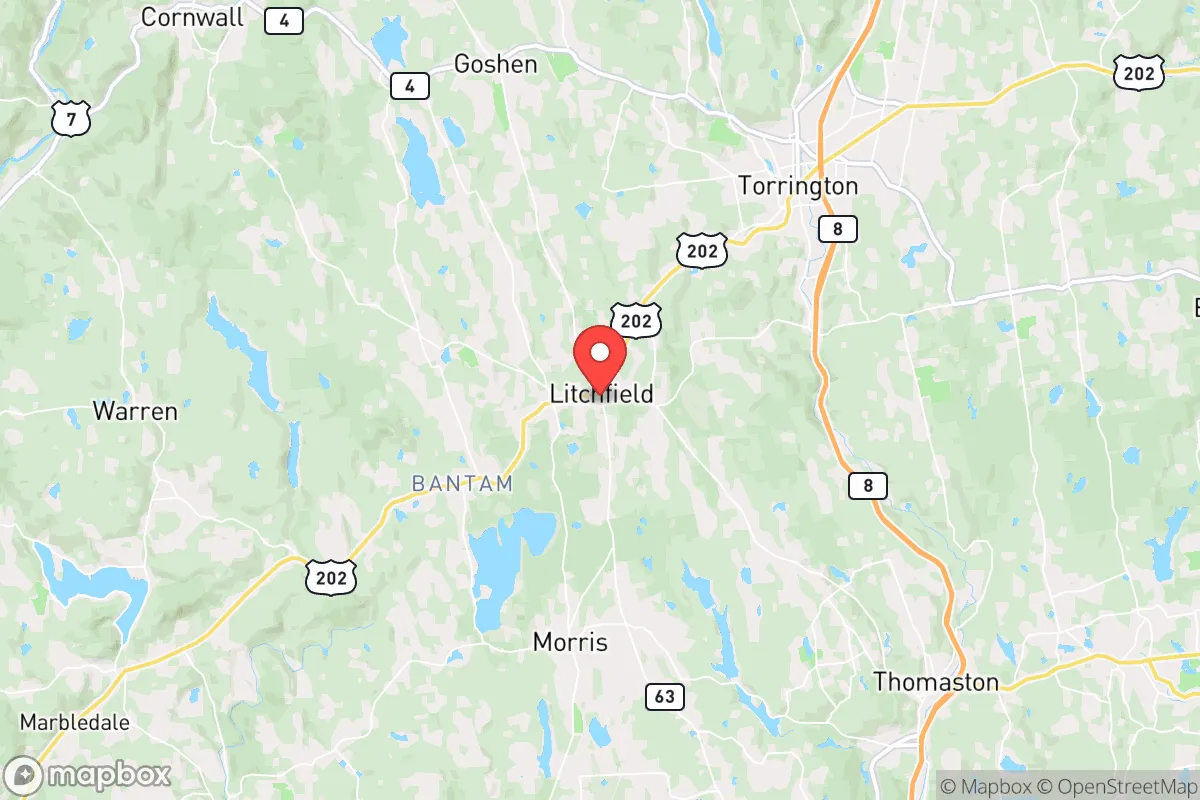
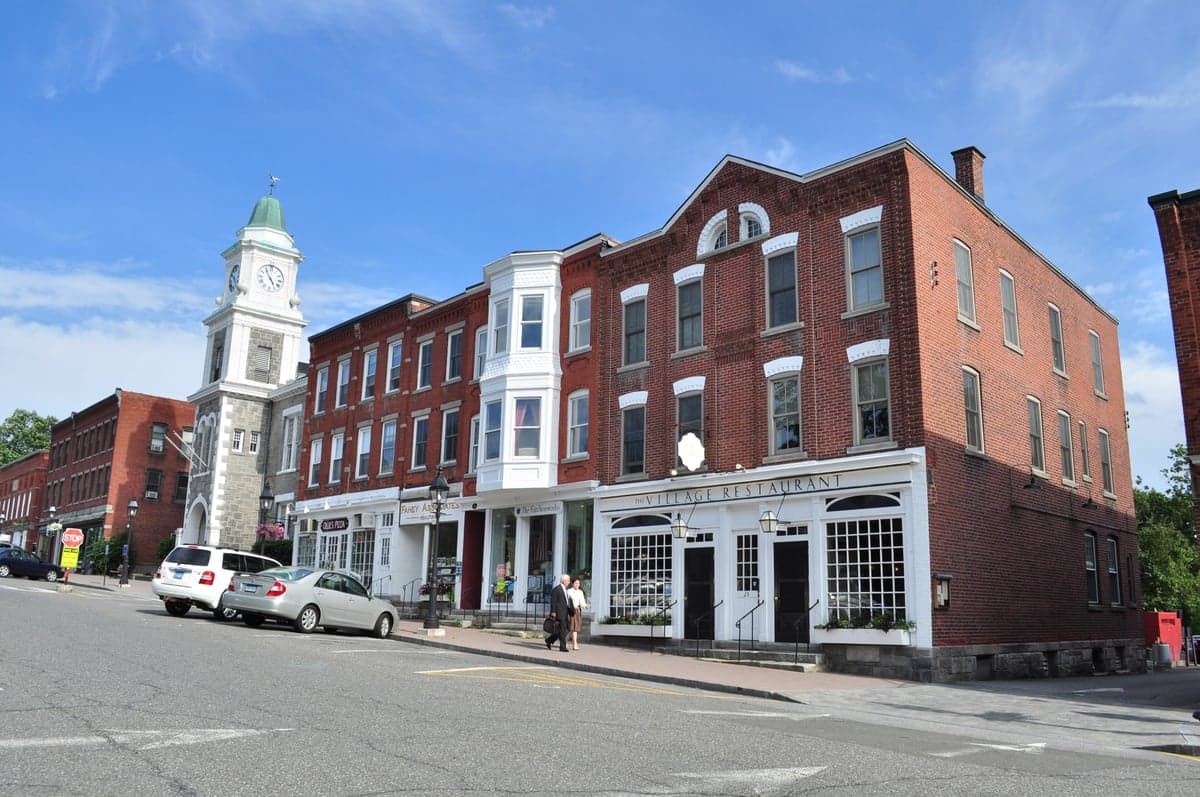
Photo: Wikipedia
Demographics of Litchfield, CT
Affluence Level in Litchfield, CT
A middle-class area roughly in line with national averages across income, home values, education, and employment.
People of Litchfield, CT
Today, Litchfield, Connecticut is a small, predominantly white community of 1,274 residents, characterized by its high educational attainment (64.8% college-educated) and a distinctive East/Southeast Asian presence (8.1%) that is notably higher than the state average. The population is relatively stable, with a foreign-born share of 7.5% that reflects a mix of long-established families and newer professional arrivals. The town’s identity is shaped by its historic village center, preserved 18th-century architecture, and a quiet, family-oriented atmosphere that appeals to those seeking a traditional New England setting with access to Hartford and New York City.
How the city was settled and grew
Litchfield was settled in 1719 by English colonists from Hartford and Windsor, drawn by the fertile lands of the Bantam River valley and the promise of agricultural self-sufficiency. The original population was almost entirely of English Puritan stock, and the town was laid out around a central green, with the Northfield and South Farms districts emerging as early farming hamlets. By the late 18th century, Litchfield became a regional legal and educational hub, home to the Litchfield Law School and the Litchfield Female Academy, which attracted a small but influential cohort of students from across the colonies. The 19th century saw modest growth from Irish and German immigrants who worked in the town’s clock-making and brass industries, settling primarily in the Bantam area, a village within Litchfield that developed around manufacturing. The population remained overwhelmingly white and Protestant through the early 20th century, with little change until the post-World War II era.
Modern era (post-1965)
The 1965 Hart-Cellar Act had a limited direct impact on Litchfield, as the town did not experience the large-scale immigration seen in urban centers. However, the late 20th century brought a gradual diversification through domestic in-migration, particularly from professionals employed at nearby corporate campuses and hospitals. The most notable demographic shift has been the growth of East/Southeast Asian communities, now at 8.1% of the population, who have concentrated in the Litchfield Hills area and the newer subdivisions off Route 202. These residents are largely employed in technology, finance, and healthcare sectors in Hartford and Waterbury, drawn by Litchfield’s highly ranked public schools and low crime rates. The Hispanic population (3.4%) and Black population (1.9%) remain small, with Hispanic families more visible in the Bantam village area, where rental housing is more available. The Indian subcontinent population is recorded at 0.0%, meaning no measurable community exists. The white population, while still the majority at 76.7%, has declined slightly from near-total homogeneity in the 1970s, as younger families move to more affordable towns and older residents age in place.
The future
Litchfield’s population is likely to remain small and stable, with modest growth driven by continued in-migration of affluent professionals seeking a rural lifestyle with strong schools. The East/Southeast Asian community is expected to grow slowly, as word-of-mouth and existing social networks attract more families to the Litchfield Hills area, but the town’s high housing costs (median home values well above $400,000) will limit broader diversification. The white population will continue to age, with a growing share of retirees, while younger families—both white and Asian—will fill in as older homeowners sell. The Hispanic and Black populations are projected to plateau, as Litchfield lacks the rental stock and employment base to attract larger numbers. The town is not homogenizing into a single identity but rather developing distinct enclaves: the historic village center remains overwhelmingly white and older, while the Route 202 corridor and Litchfield Hills subdivisions are becoming more diverse, particularly with East/Southeast Asian families. Over the next 10-20 years, Litchfield will likely become a slightly more diverse, highly educated, and economically stratified community, with a clear divide between long-established families and newer professional arrivals.
For someone moving in now, Litchfield offers a stable, safe, and academically strong environment, but it is not a place of rapid demographic change or cultural diversity. The town is becoming a quiet, affluent enclave where East/Southeast Asian professionals are the most visible minority group, and where the social fabric remains rooted in traditional New England values. New residents should expect a community that values privacy, property, and education, with limited but growing diversity in specific neighborhoods.

* Values derived from national, state, county, city and local statistics and may differ in a specific area. Last updated: 2026-04-21T09:21:31.000Z
Narrative content on this page is AI-generated and may contain mistakes. Verify any details that matter before acting on them.
ReloMaps may earn a commission from affiliate links at no extra cost to you.

