 Popular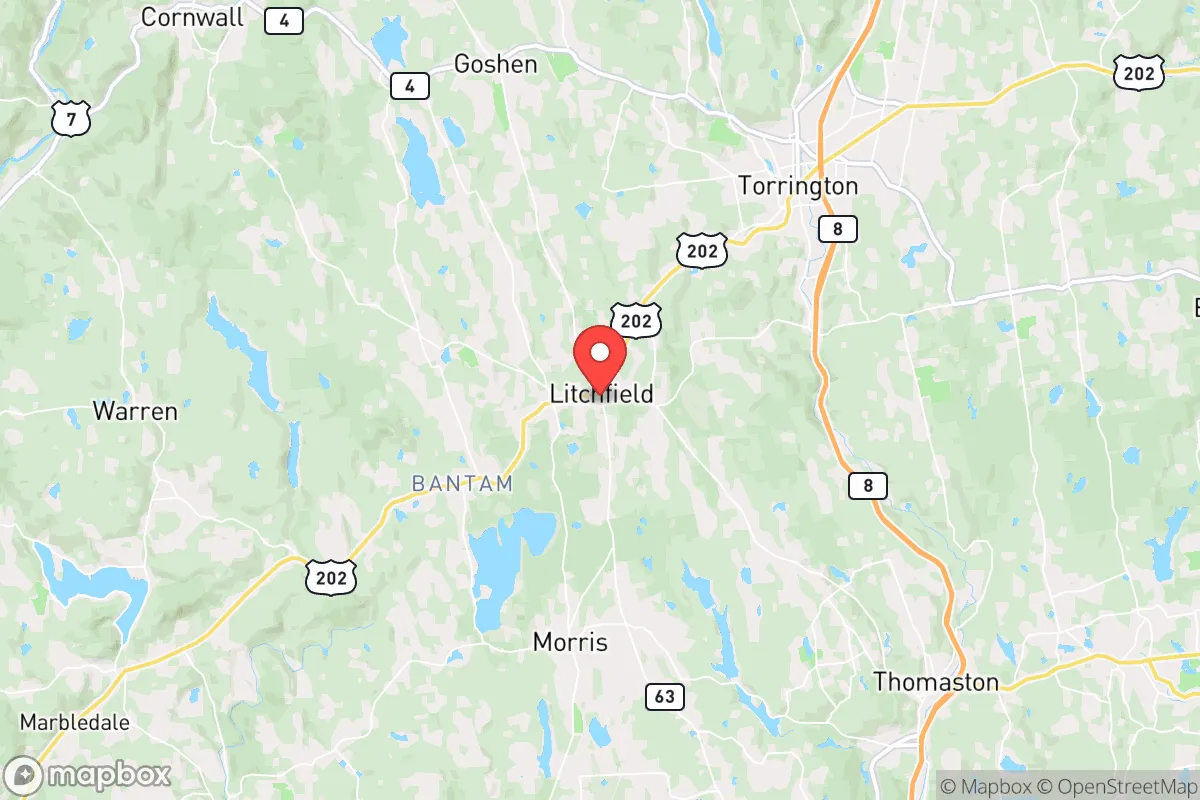
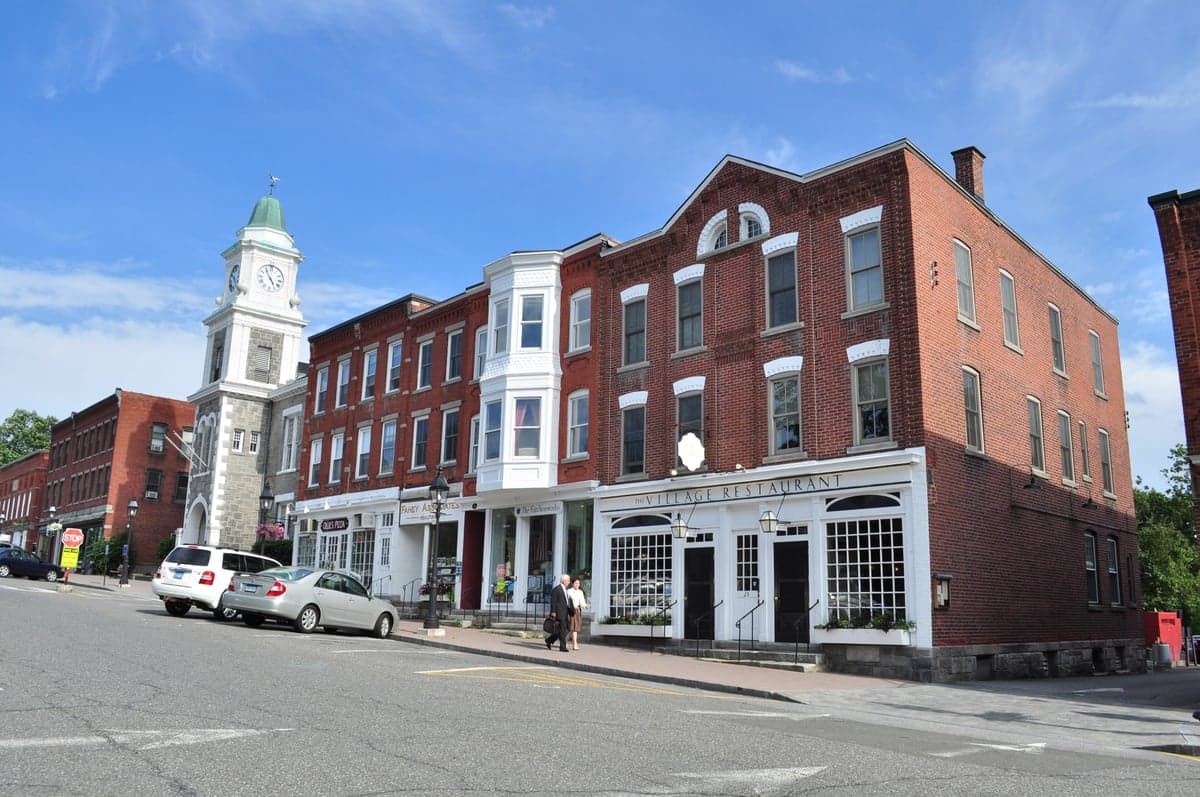
Photo: Wikipedia
Political ClimatePolitical Climate in Litchfield, CT
District shown is the primary district for this city’s centroid. Cities may span multiple districts.
Local Political AnalysisPolitical Analysis of Litchfield, CT
Litchfield, Connecticut, has a Cook PVI of D+3, meaning it leans slightly Democratic in federal elections, but that number doesn't tell the whole story. If you've been around here long enough, you remember when this town was a rock-solid conservative stronghold, where folks minded their own business and the town government stayed out of your hair. Over the last decade or so, you've seen a slow but steady shift, with more progressive newcomers moving in from New York and Fairfield County, bringing their politics with them. It's not a full-blown takeover yet, but the trajectory is concerning for anyone who values personal freedoms and limited government interference.
How it compares
Drive ten minutes east to Torrington, and you'll find a place that still feels like the old Litchfield—working-class, more skeptical of big government, and reliably red in local races. Head south to New Milford, and it's a similar story, with a more independent, live-and-let-live vibe. But Litchfield itself? It's become the liberal outlier in the northwest corner. The contrast is stark when you look at the town's own voting patterns: the rural outskirts still lean conservative, but the village center and the newer subdivisions near the green are trending hard left. You'll see more Harris-Walz signs than Trump-Pence ones these days, which would have been unthinkable twenty years ago. The local Democratic Town Committee is more active and organized than ever, pushing for things like "equity" initiatives in the schools and zoning changes that sound good on paper but often mean more rules and less freedom for property owners.
What this means for residents
For a long-time resident, the biggest red flag is how the town government has started to creep into areas it used to stay out of. There's been a push for stricter regulations on short-term rentals, which hits homeowners who just want to rent out a cottage for extra income. The school board has gotten tangled up in curriculum debates that feel more about social engineering than teaching kids to read and do math. And the annual budget fights? They're getting louder, with more pressure to raise taxes for programs that don't always sit right with folks who just want lower taxes and less red tape. If you value the right to use your property as you see fit, or if you don't want your kids exposed to ideological lessons at school, you're starting to feel like a minority in your own town. The local elections are where the real battle is, and it's getting harder to find candidates who'll stand up for traditional freedoms.
On the cultural side, Litchfield still has its charms—the historic green, the independent shops, the sense of community at the farmers market. But there's a growing divide between the "old guard" and the newcomers that you can feel at town hall meetings. The long-term worry is that if this trend continues, Litchfield could become another West Hartford or New Canaan, where progressive policies and high taxes squeeze out the middle class and the independent spirit that made this town special. For now, it's still a great place to live if you keep your head down, but the political winds are shifting, and not in a direction that favors personal liberty. Keep an eye on the next few town council and board of education races—that's where the future of Litchfield will really be decided.

State Political ClimatePolitical Climate in Connecticut
State Political AnalysisPolitical Environment in the State
Connecticut has shifted from a classic swing state to a reliably blue stronghold over the past two decades, with Democrats now holding every statewide office and a supermajority in the legislature. The state voted for Hillary Clinton by 13 points in 2016 and Joe Biden by 20 points in 2020, a dramatic leftward lurch from 2000 when George W. Bush lost it by just 5 points. For a conservative considering relocation, the key takeaway is that the state’s political center of gravity is firmly in the progressive camp, driven by the wealthy, educated suburbs of Fairfield County and the urban cores of Hartford and New Haven.
Urban vs. rural divide
The political map of Connecticut is a tale of three distinct regions. The southwestern corner, anchored by Stamford, Greenwich, and Norwalk, is the engine of Democratic dominance—these are among the wealthiest and most liberal communities in the nation, with Greenwich voting 65% for Biden. The state’s two largest cities, Hartford and New Haven, are deep blue strongholds where Democrats routinely win 80-90% of the vote. In contrast, the eastern half of the state—places like Litchfield County and the Quiet Corner around Pomfret and Woodstock—still lean Republican, but their populations are too small to counterbalance the urban and suburban vote. The 2020 election saw Fairfield County alone deliver a net margin of over 100,000 votes for Biden, effectively deciding the state before rural areas even reported. The divide isn’t just geographic; it’s cultural, with the rural towns fighting a rear-guard action against Hartford’s one-party rule.
Policy environment
Connecticut’s policy environment is a textbook case of progressive governance. The state has the highest combined state and local tax burden in the nation, with a progressive income tax that tops out at 6.99% and property taxes that average over 2% of home value annually. The regulatory climate is dense: the state has its own paid family leave program, a $15 minimum wage, and some of the strictest environmental regulations in the country. On education, Connecticut spends more per pupil than almost any other state, yet its achievement gap between wealthy suburbs and struggling cities like Bridgeport and Waterbury is among the widest in the nation. Election laws are fully blue: no-excuse absentee voting, automatic voter registration, and a Democratic secretary of state who has pushed for mail-in ballot expansions. For a conservative, the policy environment feels like a permanent tax-and-regulate machine, with little appetite for restraint.
Trajectory & freedom
On personal freedom, Connecticut has been moving decisively in one direction: less. The 2023 passage of SB 1100 banned the open carry of firearms and raised the minimum age for rifle purchases to 21, making it one of the toughest gun law states in the country. The 2021 HB 6669 expanded the state’s paid family leave program to include medical leave for abortion, effectively codifying a progressive social agenda into labor law. On parental rights, the state’s 2023 HB 5410 mandated that schools cannot notify parents if a child changes their gender identity or pronouns, a direct blow to family autonomy. Property rights are constrained by strict zoning laws that make it nearly impossible to build new housing in many suburbs, driving up costs. The state’s Public Act 21-5 also banned police from using no-knock warrants in most cases, a move that critics say handcuffs law enforcement. The trajectory is clear: each legislative session brings new restrictions on guns, new mandates on employers, and new expansions of government’s role in family life.
Civil unrest & political movements
Connecticut hasn’t seen the kind of violent protests seen in Portland or Seattle, but it has its own flashpoints. The 2020 Black Lives Matter protests in New Haven and Hartford were large and occasionally destructive, leading to curfews and property damage. The state’s sanctuary city policies—New Haven declared itself a sanctuary city in 2013, and Hartford followed in 2017—have created tension with federal immigration enforcement, though the state’s relatively small immigrant population means the issue is less explosive than in border states. On the right, the Connecticut Citizens Defense League has been a persistent force, organizing annual rallies at the state capitol that draw thousands of gun rights advocates. The 2022 election saw a minor Republican resurgence in the state House, but it was quickly reversed in 2024. Election integrity concerns have been raised by conservatives over the state’s widespread use of drop boxes and no-excuse absentee voting, but no major scandals have emerged. The overall atmosphere is one of low-boil tension, with the left firmly in control and the right organizing but outnumbered.
Projection
Looking five to ten years out, Connecticut’s political trajectory is unlikely to reverse. The state’s population is aging and shrinking—it lost a congressional seat after the 2020 census—and the people leaving are disproportionately conservative-leaning residents moving to Florida, Texas, or the Carolinas. The in-migration is largely from New York City, bringing more progressive voters to Fairfield County. The Democratic supermajority in the legislature is secure, and the state’s tax-and-spend model shows no signs of reform. The only wild card is a potential federal shift: if a conservative Supreme Court or Congress were to limit state-level gun laws or mandate parental notification, it could create a legal collision. But for the foreseeable future, expect more of the same: higher taxes, tighter regulations, and a cultural environment that is increasingly hostile to traditional values. A conservative moving here now should expect to be a permanent minority voter, with little chance of changing the state’s direction.
For a conservative considering Connecticut, the bottom line is this: you are moving into a state where your vote will rarely matter in statewide elections, where your tax dollars will fund programs you likely oppose, and where your personal freedoms—especially on guns and parenting—are under constant legislative assault. The state’s natural beauty, excellent schools in certain suburbs, and proximity to New York City are real draws, but they come at a steep political price. If you value being part of a community that shares your values, Connecticut is a tough sell. If you’re willing to be a political minority in exchange for other benefits, places like Litchfield or Mystic offer a more conservative-friendly enclave, but the state-level headwinds are relentless.
* Values derived from national, state, county, city and local statistics and may differ in a specific area. Last updated: 2026-04-21T09:21:31.000Z
Narrative content on this page is AI-generated and may contain mistakes. Verify any details that matter before acting on them.
ReloMaps may earn a commission from affiliate links at no extra cost to you.

