 Popular
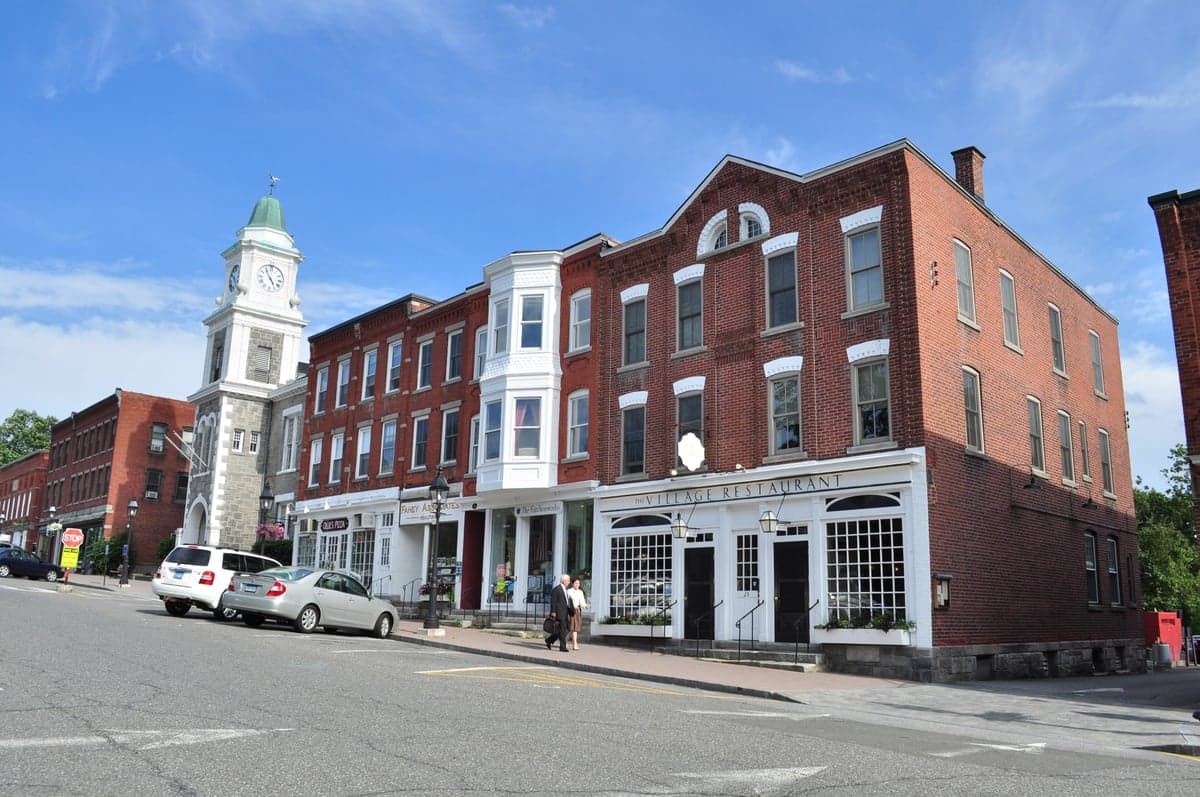
Photo: Wikipedia
Quality of Life in Litchfield, CT
A high quality of life with strong walkability, manageable living costs, healthy neighborhood signals, and solid amenity access.
What does Quality of Life tell us?
Quality of Life blends cost of living, nearby amenities, socioeconomic signals, and neighborhood character. City-level scores represent the whole municipality; individual neighborhoods can differ.
What does this tell us?
Quality of Life blends cost of living, nearby amenities, socioeconomic signals, and neighborhood character. City-level scores represent the whole municipality; individual neighborhoods can differ.
Cost of Living
18% above national average
The Real Cost of Living in Litchfield, CT for 2026
| Tier | Individual | Family (4) |
|---|---|---|
| Survival | $20k | $37k |
| Comfortable | $74k | $108k |
| Luxury | $176k+ | $274k+ |
| Elite (Top 5%) | $208k+ | $322k+ |
99%
The Area Signal
A metric tracking the socioeconomic signals of the area.
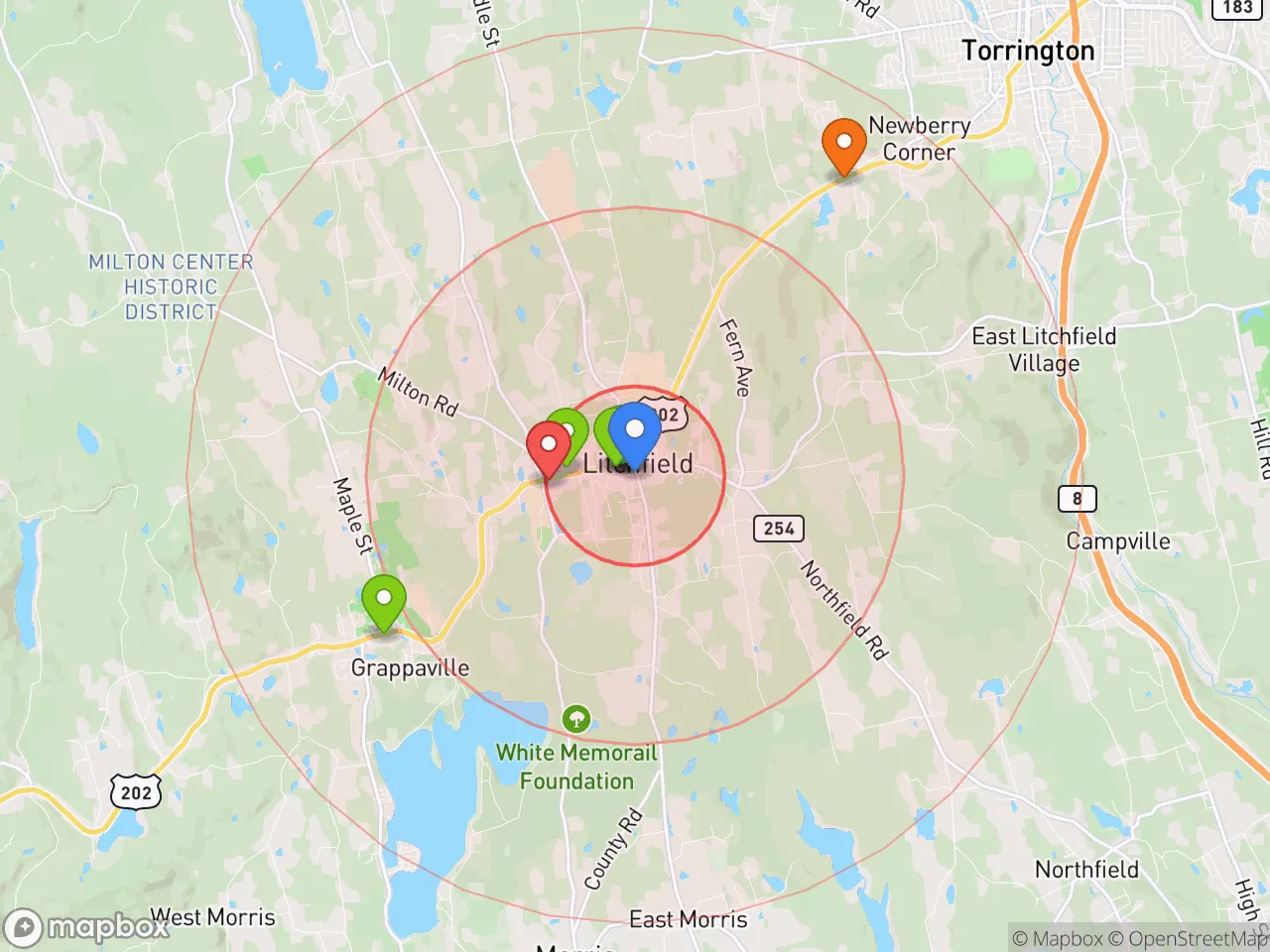
Hobbies
Explore the areaGroceries
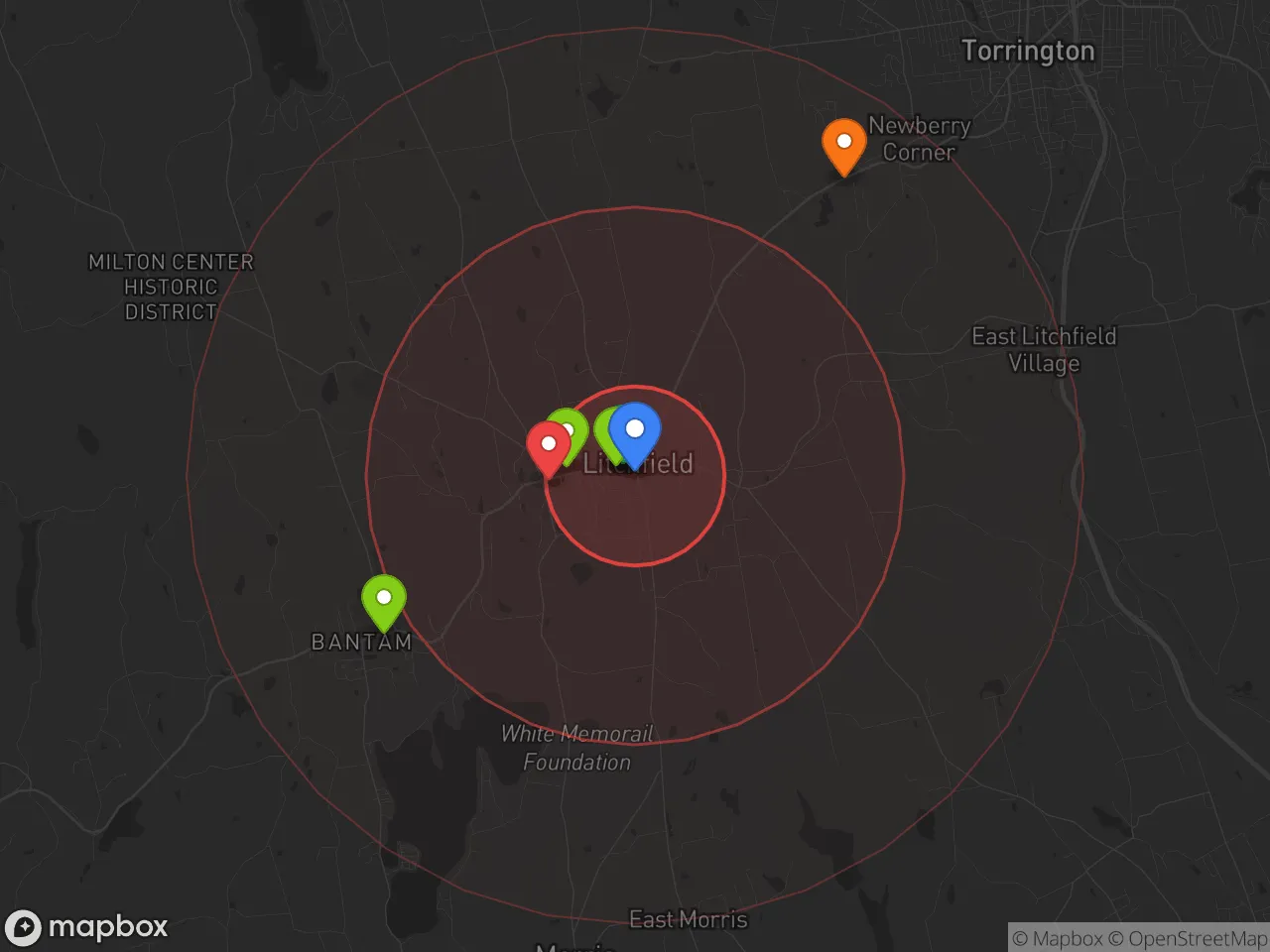
5 within 10 miles
Gas
15 within 10 miles
Hospital
10 within 20 miles
Airport
JFK — John F. Kennedy International
Post Office
USPS — Morris, CT
Critical Amenities
Quality-of-Life Analysis
Litchfield, Connecticut, is a historically affluent Litchfield Hills town where the population skews toward established professionals, empty-nesters, and families drawn by top-ranked schools and a preserved New England village aesthetic. With a cost of living index of 118 (18% above the U.S. average), the area attracts residents who prioritize quality of life over urban convenience, trading longer commutes for open space, low crime, and a strong sense of community. The town's character is defined by its white-steepled green, antique-filled streets, and a demographic that values privacy, tradition, and outdoor recreation.
Cost of living, housing affordability, and how Litchfield compares to nearby towns
Litchfield's cost of living is notably higher than the national average but remains competitive within the Litchfield Hills region. The median home value of $378,900 is significantly lower than in neighboring affluent towns like Washington ($550,000+) or Kent ($480,000), yet it is roughly 30% higher than in Torrington, just 10 minutes north. Median rent of $1,246 is moderate for the area, offering a more attainable entry point than the $1,600+ averages seen in New Milford or Woodbury. The average commute of 25 minutes is shorter than the state average of 30 minutes, reflecting that many residents work locally in professional services, healthcare, or education, or commute to Hartford (40 minutes) or Danbury (35 minutes). Property taxes in Litchfield run about 2.1% of assessed value, which is typical for the region but a factor for budget-conscious buyers. For those seeking a balance of historic charm and relative affordability compared to the priciest Litchfield County towns, Litchfield offers a solid middle ground.
What daily life is like: schools, amenities, and local rhythm
Daily life in Litchfield centers on the town green, which hosts seasonal farmers' markets, concerts, and the annual Litchfield Jazz Festival. The Litchfield Public Schools system is a major draw, with Litchfield High School consistently ranking among the top 20% of Connecticut high schools for college readiness and a student-teacher ratio of 11:1. The town lacks a major hospital but is served by Charlotte Hungerford Hospital in Torrington (10 minutes) and Yale New Haven Health affiliates within 30 minutes. Retail and dining are concentrated along West Street and the green, with independent bookstores, farm-to-table restaurants, and boutique shops replacing big-box chains. Outdoor amenities include Topsmead State Forest, Bantam Lake (the state's largest natural lake), and the Litchfield Hills hiking trails. The rhythm is distinctly seasonal: fall foliage draws tourists, winter brings skiing at Mohawk Mountain (15 minutes), and summer is defined by lake activities and outdoor dining. The town's walkability is limited to the village center, so a car is essential for errands and commuting.
Litchfield is best suited for families seeking a top-tier public school system in a historic, low-crime setting, as well as for professionals who can afford the premium for space and nature without needing a daily commute to New York City (which runs 2+ hours). Empty-nesters downsizing from larger homes in the region also find the village's walkable core and cultural calendar appealing. Those who thrive here value quiet, community engagement, and access to the outdoors over nightlife or urban density. For renters or first-time buyers on a tighter budget, the higher cost of living and property taxes may be a stretch, making nearby Torrington or Winsted more practical alternatives.

Crime in Litchfield, CT
Generally safer than 72% of comparable U.S. locations.
Violent CrimeViolent Crime Analysis
Property CrimeProperty Crime Analysis
Crime Analysis
Litchfield, Connecticut, is a notably safe rural town, with violent crime rates far below both state and national averages. The town recorded a violent crime rate of 107.9 incidents per 100,000 residents, compared to the Connecticut state average of roughly 220 per 100,000 and the U.S. national average of about 380 per 100,000. This low rate reflects Litchfield’s character as a small, affluent community in Litchfield County, where serious offenses like homicide, rape, robbery, and aggravated assault are rare events.
Crime in context
Property crime in Litchfield stands at 1,139.8 per 100,000 residents, which is slightly below the Connecticut state average of approximately 1,400 per 100,000 but above the national average of roughly 1,950 per 100,000. Theft, including larceny from vehicles and homes, accounts for the majority of these incidents. While Litchfield’s property crime rate is moderate, it is important to note that the town benefits from a relatively low population density and a strong sense of community, which helps deter opportunistic crime. However, as with many towns in the region, residents should remain vigilant about securing vehicles and outbuildings, as these are common targets.
What residents experience
Residents of Litchfield generally report feeling very safe, particularly in the town’s historic center and residential neighborhoods. The Litchfield Police Department maintains a visible presence, and community policing efforts are well-regarded. The town’s location in a largely conservative and rural county means that local law enforcement and the judicial system tend to prioritize public safety and victim rights, contrasting with the more progressive, offender-focused approaches seen in larger Connecticut cities like Hartford or New Haven. For readers concerned about the impact of liberal prosecutorial policies on crime, Litchfield offers a reassuring environment where justice is typically swift and community-oriented.
Neighborhood-level variation is minimal, though the more remote, wooded areas on the outskirts of town may experience slightly higher rates of vehicle break-ins and trespassing. The downtown area, centered around the Litchfield Green, is exceptionally safe, with low foot traffic crime. Overall, Litchfield’s crime profile aligns with that of a well-managed, low-risk community, making it an attractive option for families and retirees seeking a secure, small-town lifestyle in Connecticut.
* Values derived from national, state, county, city and local statistics and may differ in a specific area. Last updated: 2026-04-21T09:21:31.000Z
Narrative content on this page is AI-generated and may contain mistakes. Verify any details that matter before acting on them.
ReloMaps may earn a commission from affiliate links at no extra cost to you.

