
Photo: Wikipedia
Demographics of Llano, TX
Affluence Level in Llano, TX
A below-average socioeconomic profile. Incomes, home values, and educational attainment trail the U.S., with higher poverty and unemployment.
People of Llano, TX
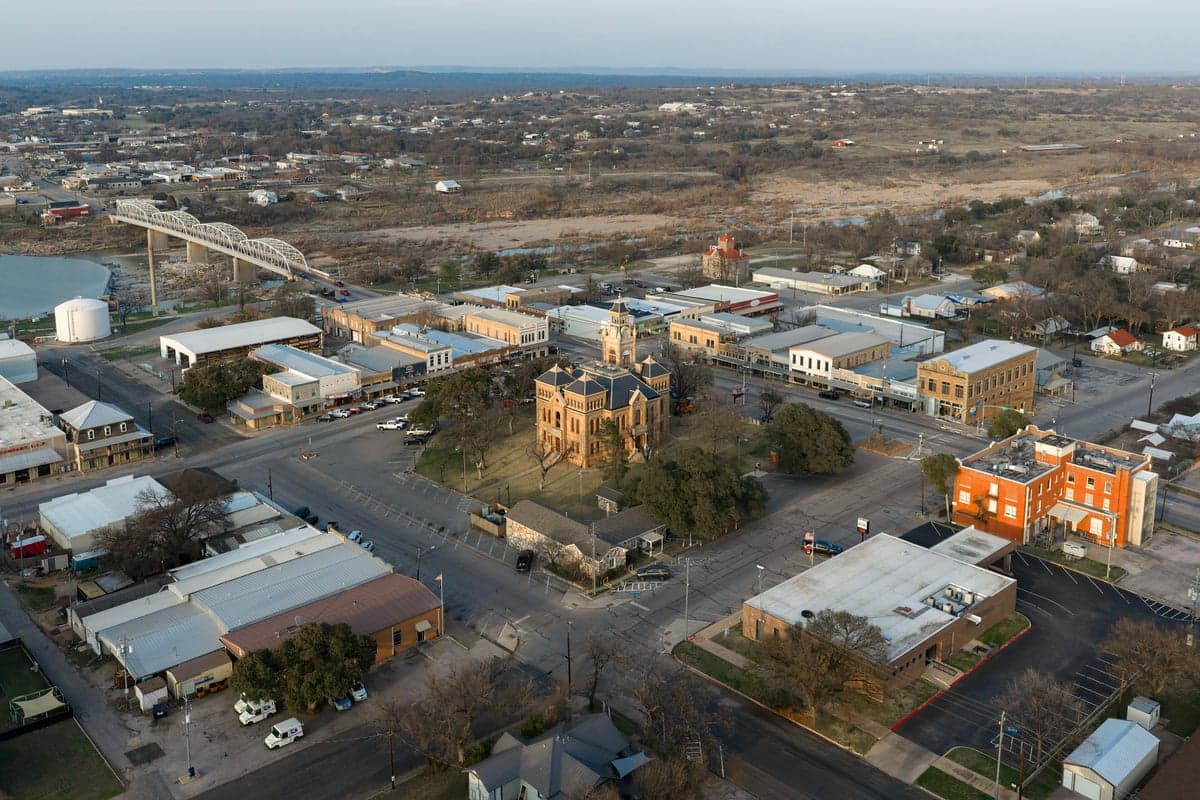
Llano, Texas, is a small Hill Country city of 3,411 residents where the population remains overwhelmingly White (85.3%) with a modest Hispanic minority (11.2%) and very few foreign-born residents (1.9%). The city's character is defined by its granite quarrying heritage, a strong sense of local history, and a quiet, family-oriented atmosphere that attracts retirees and those seeking a slower pace. With a college education rate of 22.4%, Llano's workforce is rooted in local government, healthcare, and the granite industry, giving the city a stable, working-to-middle-class identity.
How the city was settled and grew
Llano was founded in the 1850s as a frontier county seat, drawing its earliest Anglo settlers from the southern United States and a smaller wave of German immigrants who moved west from the Texas Hill Country. The arrival of the Austin and Northwestern Railroad in 1880 transformed the town into a shipping hub for granite, wool, and cattle, and the Llano Historic District — the original grid of streets around the courthouse square — became the commercial and residential core for these early merchants, ranchers, and railroad workers. By the early 1900s, the granite quarries on the city's outskirts created a distinct working-class neighborhood known locally as Granite Hill, where quarry laborers and their families lived in modest frame houses. A separate Mexican-American community began forming in East Llano during the 1910s and 1920s, as families arrived from South Texas to work in the quarries, on ranches, and as railroad section hands. These three historic neighborhoods — the downtown Historic District, Granite Hill, and East Llano — established the city's basic social geography, with Anglo and German-descended families concentrated west of the Llano River and Hispanic families settling east of the river near the railroad tracks.
Modern era (post-1965)
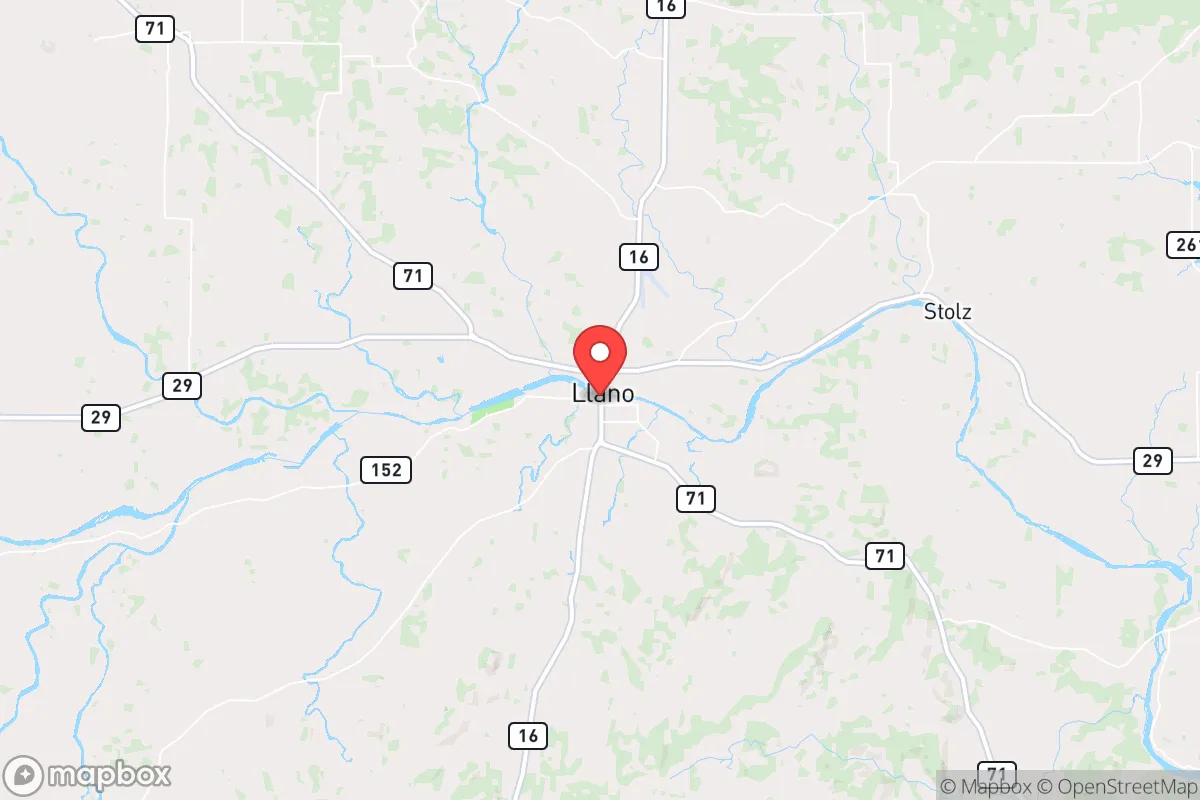
After the Hart-Cellar Act of 1965, Llano experienced virtually no new international immigration — the foreign-born share remains just 1.9% — and the city's demographic story since then has been one of domestic in-migration and internal shifts. The Hispanic population grew slowly from natural increase and some migration from the Rio Grande Valley, but East Llano remains the primary Hispanic enclave, with a few families also settling in the newer Southside neighborhood built in the 1970s and 1980s. The White population, which makes up 85.3% of residents, has been sustained by retirees and telecommuters moving from Austin (about 65 miles east) and other Texas cities, many of whom have built homes in the North Llano subdivisions developed since the 1990s. The Indian subcontinent population (0.9%) is very small and likely consists of a handful of professionals in healthcare or education, with no identifiable ethnic enclave. East and Southeast Asian communities are absent (0.0%), and the Black population (0.8%) is negligible. The city's overall population has remained nearly flat for decades, hovering around 3,400, as out-migration of young adults seeking jobs in larger cities has roughly balanced in-migration of retirees.
The future
Llano's population is aging, with a median age above the state average, and the next 10-20 years will likely see continued slow growth driven by retirement migration from the Austin-San Antonio corridor. The Hispanic share may rise gradually from 11.2% toward 15-18% through natural increase, but East Llano is unlikely to expand significantly as a distinct ethnic enclave; younger Hispanic families are increasingly moving into North Llano and the newer River Oaks subdivision, reflecting a pattern of assimilation rather than tribalization. The White majority will remain dominant, and the city is not expected to attract significant immigrant communities due to its remote location and limited job base. The college education rate (22.4%) may tick up slightly as more educated retirees arrive, but Llano will remain a predominantly blue-collar and service-oriented town.
For someone moving to Llano today, the city offers a stable, predominantly White community with a strong local identity and a quiet, family-friendly environment. The demographic future points to slow, steady growth with a gradually increasing Hispanic presence, but the city's core character as a tight-knit, heritage-minded Hill Country town is likely to persist, making it a predictable choice for those seeking continuity rather than rapid change.

* Values derived from national, state, county, city and local statistics and may differ in a specific area. Last updated: 2026-05-14T18:25:51.000Z
Narrative content on this page is AI-generated and may contain mistakes. Verify any details that matter before acting on them.
ReloMaps may earn a commission from affiliate links at no extra cost to you.

