
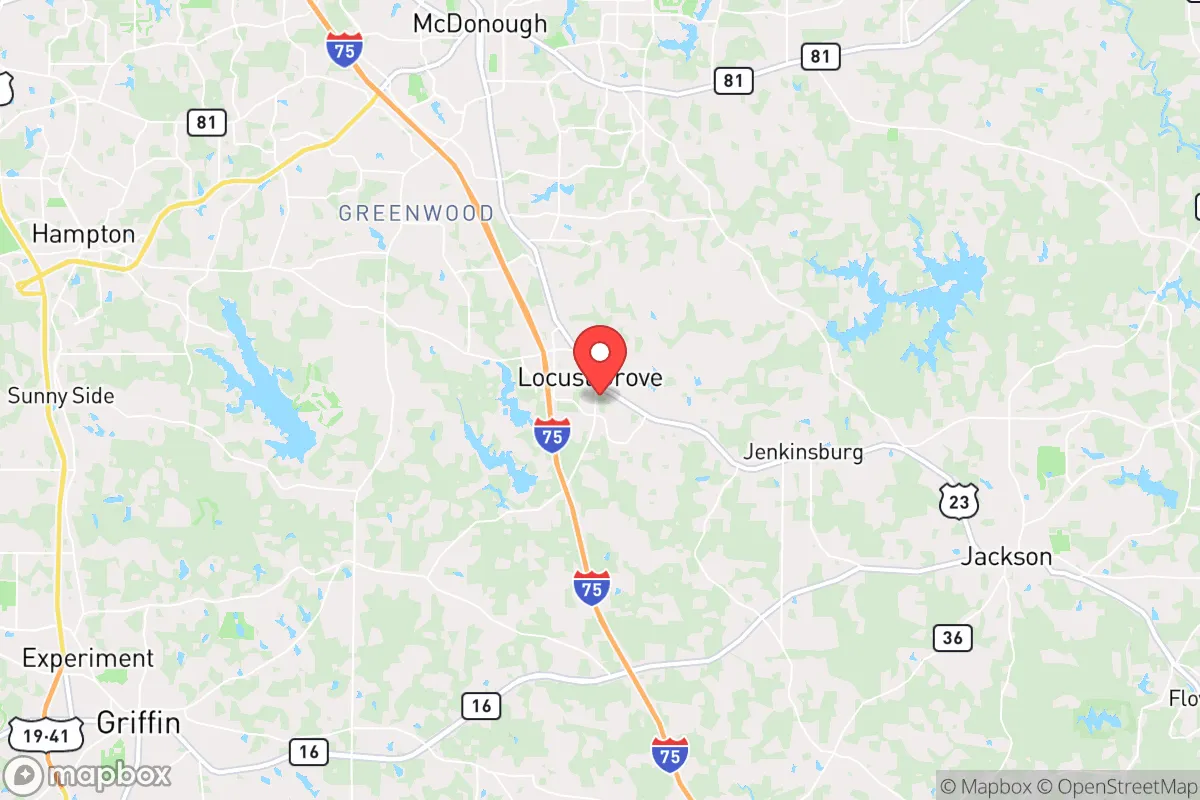
Photo: Wikipedia
Quality of Life in Locust Grove, GA
Above-average quality of iife. The area offers a reasonable cost of living, decent mobility, and a mix of neighborhood amenities.
What does Quality of Life tell us?
Quality of Life blends cost of living, nearby amenities, socioeconomic signals, and neighborhood character. City-level scores represent the whole municipality; individual neighborhoods can differ.
What does this tell us?
Quality of Life blends cost of living, nearby amenities, socioeconomic signals, and neighborhood character. City-level scores represent the whole municipality; individual neighborhoods can differ.
Cost of Living
14% above national average
The Real Cost of Living in Locust Grove, GA for 2026
| Tier | Individual | Family (4) |
|---|---|---|
| Survival | $24k | $45k |
| Comfortable | $51k | $75k |
| Luxury | $131k+ | $203k+ |
| Elite (Top 5%) | $162k+ | $252k+ |
97%
The Area Signal
A metric tracking the socioeconomic signals of the area.
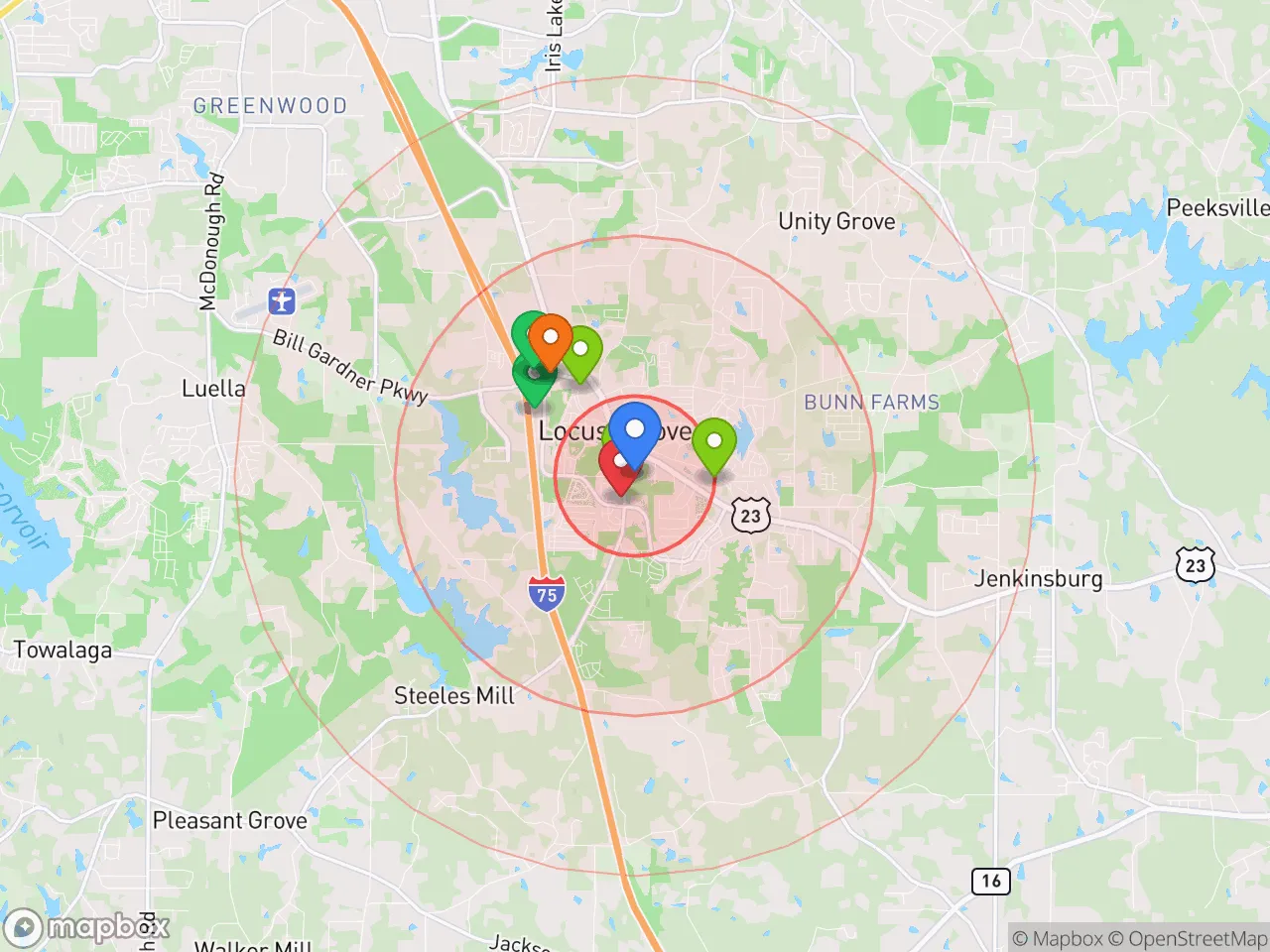

Hobbies
Explore the areaGroceries
6 within 10 miles
Gas
20 within 10 miles
Hospital
4 within 20 miles
Airport
ATL — Hartsfield–Jackson Atlanta International
Post Office
USPS — Locust Grove, GA
Critical Amenities
Quality-of-Life Analysis
Locust Grove, Georgia, presents a distinctly affluent quality of life within the Atlanta metropolitan orbit, drawing primarily established families, professionals, and long-term homeowners who prioritize space, newer housing stock, and a quieter suburban rhythm over urban proximity. With a cost of living index of 114—14 points above the national average—the area commands a premium that reflects its high median home values and relatively new residential developments, creating a community where the typical resident is a homeowner with a substantial commute rather than a renter or young professional seeking nightlife.
Cost of living, housing affordability, and how it compares to nearby areas
Locust Grove’s housing market is the primary driver of its above-average cost of living. The median home value sits at $261,500, significantly higher than the national median of roughly $200,000 and notably above neighboring towns like McDonough ($245,000) and Hampton ($230,000). This premium reflects the town’s concentration of newer subdivisions and larger single-family homes built in the last two decades. Renters face a median monthly rent of $1,490, which is competitive with McDonough ($1,520) but higher than Hampton ($1,350) and Stockbridge ($1,400). The affordability challenge is compounded by an average commute of 34.4 minutes—longer than the national average of 26 minutes—as most residents drive to jobs in Henry County, Atlanta, or along the I-75 corridor. For comparison, McDonough’s average commute is 31 minutes, while Stockbridge’s is 29 minutes. While Locust Grove offers more square footage per dollar than intown Atlanta neighborhoods like Decatur or East Atlanta, it is less affordable than rural Henry County areas like Jenkinsburg, where median home values dip below $200,000.
Schools, amenities, and what daily life is like for families
Daily life in Locust Grove revolves around its highly rated Henry County School District, with Locust Grove Elementary and Locust Grove Middle School both earning above-average state ratings. The town’s amenity base is anchored by the Locust Grove Town Center, a mixed-use development featuring retail, dining, and a public green space that hosts seasonal farmers markets and concerts. For outdoor recreation, residents use the 40-acre Locust Grove Park, which includes sports fields, walking trails, and a splash pad popular with young families. The community lacks a traditional downtown core; instead, commercial activity clusters along Bill Gardner Parkway and Highway 155, with big-box retailers like Walmart and Home Depot serving daily needs. Healthcare access is provided by Piedmont Henry Hospital in nearby Stockbridge, about 15 minutes north. The daily rhythm is car-dependent and family-oriented: school drop-offs, errands at strip centers, and weekend youth sports dominate. The town has no major entertainment venues or nightlife, so residents typically drive 35–40 minutes to Atlanta for concerts, museums, or professional sports.
Locust Grove is best suited for families and mid-career professionals who value newer, spacious homes, good public schools, and a low-crime suburban environment over walkability or cultural density. Empty-nesters downsizing from larger Atlanta suburbs also find the area appealing due to its relative affordability compared to north metro counties like Cobb or Gwinnett. However, single young professionals or renters seeking urban amenities, short commutes, or a vibrant social scene will likely find the 34-minute drive to Atlanta and the lack of local entertainment options a significant drawback. The town’s steady population growth—up 12% since 2020—suggests it will continue attracting those who prioritize space and school quality over convenience and cost savings.

Crime in Locust Grove, GA
Crime rates similar to the national median for U.S. locations.
Violent CrimeViolent Crime Analysis
Property CrimeProperty Crime Analysis
Crime Analysis
Locust Grove, Georgia, presents a mixed safety profile for potential residents. The city’s violent crime rate of 256.1 per 100,000 residents is below the national average, but its property crime rate of 2,368.6 per 100,000 is significantly elevated, signaling a heightened risk of theft and burglary. As a small city within the Atlanta metropolitan area, Locust Grove’s crime dynamics are influenced by broader regional trends, including the policies of progressive prosecutors in nearby jurisdictions that can affect regional crime patterns.
Crime in context
Locust Grove’s violent crime rate is roughly 27% lower than the national average, offering a degree of reassurance for those concerned about serious offenses like assault and robbery. However, the property crime rate is approximately 50% higher than the national average, placing it above many comparably sized Georgia towns. This disparity is typical of communities on the suburban fringe of a large metro area, where transient populations and easy highway access (I-75 runs through Locust Grove) can contribute to property crime. The city’s location within Henry County places it under the jurisdiction of local law enforcement, but the broader Atlanta region has seen debates over progressive prosecutorial policies in Fulton and DeKalb counties. While Locust Grove itself is policed by a traditional department, the spillover effect of lenient sentencing and reduced incarceration in the metro area can embolden offenders who travel between jurisdictions, a concern for residents who value strict accountability.
What residents experience
In daily life, Locust Grove residents are far more likely to encounter property crime than violent crime. Theft from vehicles, package theft, and burglaries are the most common complaints, particularly in apartment complexes and neighborhoods near commercial corridors like Bill Gardner Parkway. Violent incidents are rare but not unheard of, often tied to domestic disputes or isolated altercations rather than random attacks. The city’s police department maintains a visible presence, but the high property crime rate suggests that prevention—such as home security systems and neighborhood watch programs—is a practical necessity. For families and retirees, the low violent crime rate is a clear positive, but the property crime numbers warrant caution, especially for those moving from areas with lower theft rates.
Neighborhood-level variation
Safety in Locust Grove varies noticeably by area. Newer subdivisions on the city’s west side, such as those near Tanger Outlets, tend to report fewer incidents due to higher home values and active homeowners’ associations. Older neighborhoods closer to the historic downtown core and along Highway 42 see more property crime, likely due to easier foot traffic and older housing stock. Gated communities and apartment complexes with controlled access generally fare better. Prospective residents should check local crime maps for specific streets, as blocks can differ sharply. The city’s proximity to Atlanta means that regional crime trends—including those influenced by progressive district attorneys in the metro core—can ripple outward, making it wise to stay informed about county-level judicial policies that affect recidivism and offender release rates.
* Values derived from national, state, county, city and local statistics and may differ in a specific area. Last updated: 2026-08-26T02:26:25.000Z
Narrative content on this page is AI-generated and may contain mistakes. Verify any details that matter before acting on them.
ReloMaps may earn a commission from affiliate links at no extra cost to you.

