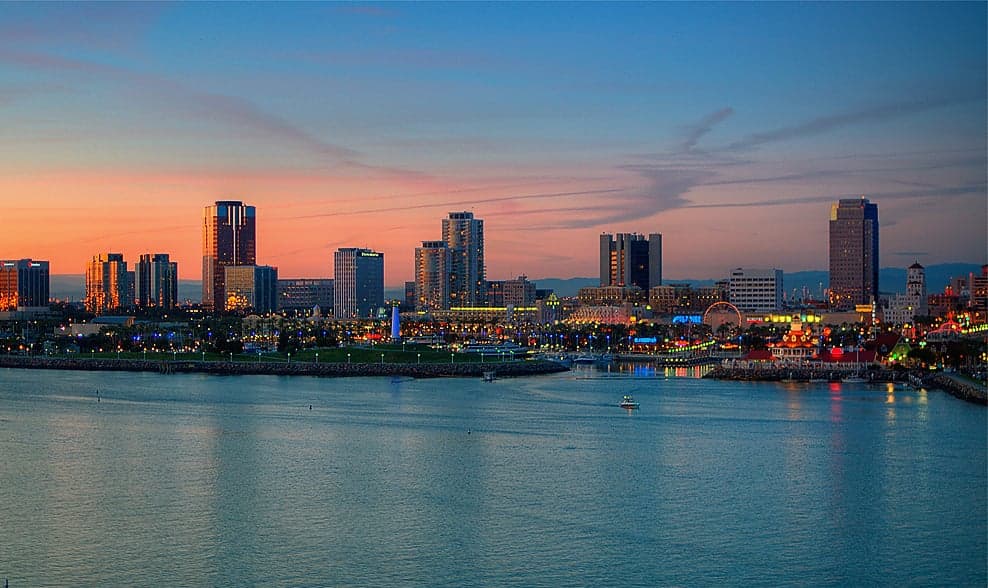
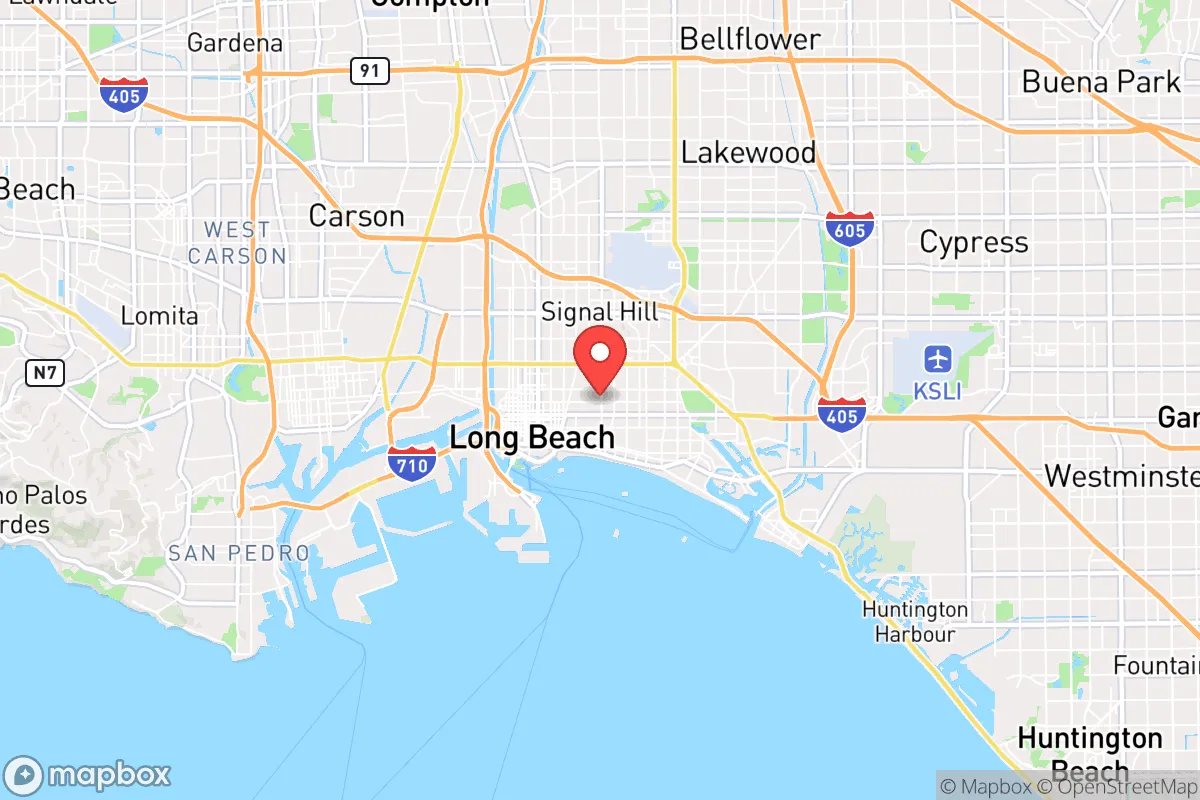
Photo: Wikipedia
Personal Sovereignty in Long Beach, CA
Moderate friction. Expect trade-offs in some aspect of personal liberty and independence.
What does Personal Sovereignty tell us?
Personal Sovereignty measures your capacity for self-reliance and independence with minimal government friction. Higher scores mean fewer barriers between you and the way you want to live... but it assumes you have the space you need and good neighbors.
What does this tell us?
Personal Sovereignty measures your capacity for self-reliance and independence with minimal government friction. Higher scores mean fewer barriers between you and the way you want to live... but it assumes you have the space you need and good neighbors.
State Policy
Energy independence: Importer (33% of energy produced in-state)
Personal Liberty
Homesteading

Personal Liberty Analysis
Long Beach, California, presents a complex and often contradictory environment for personal sovereignty, where the promise of coastal individualism clashes with one of the nation's most interventionist state governments. For the strategic relocator—whether a single prepper or a family seeking to insulate themselves from systemic instability—the city's autonomy landscape is heavily constrained by Sacramento's regulatory reach. While local culture offers pockets of libertarian-leaning tolerance, the overarching legal and tax framework systematically erodes the self-reliance and decision-making power that conservative-minded individuals prioritize. This analysis examines the specific levers of control and remaining areas of personal discretion within Long Beach, measured against the baseline of a free society.
Tax burden and regulatory posture: the cost of operating freely
California's tax structure is a primary obstacle to personal sovereignty, and Long Beach residents bear its full weight. The state's progressive income tax tops out at 13.3%, the highest in the nation, applied to income over $1 million—a threshold that catches many small business owners and high-earning professionals. Sales tax in Long Beach is 10.25%, among the highest in the country, directly taxing every purchase and reducing disposable income for savings, supplies, or land. Property taxes, while capped at 1% of assessed value under Proposition 13, are assessed on purchase price, meaning recent buyers face significantly higher bills than long-term owners. The regulatory posture is equally burdensome: California's California Environmental Quality Act (CEQA) can be weaponized to delay or kill any construction project, including personal homestead improvements or off-grid installations. The state's energy mandates, such as the 2026 ban on new gas-powered appliances, directly limit a homeowner's ability to choose their own energy infrastructure. For the prepper, this means every major decision—from installing solar panels to building a workshop—requires navigating a thicket of permits, fees, and potential lawsuits, eroding the very autonomy that self-reliance demands.
Self-defense and gun law specifics: navigating a restrictive regime
Long Beach sits within a state that treats the Second Amendment as a privilege, not a right, and the city's local ordinances add another layer of restriction. California requires a 10-day waiting period for all firearm purchases, a background check through the state's Dealer Record of Sale (DROS) system, and a Firearm Safety Certificate (FSC) test. The state's roster of approved handguns limits choices to models with microstamping and other mandated features, effectively banning many popular self-defense pistols. Long Beach itself has a local ordinance prohibiting the discharge of firearms within city limits, even on private property, which eliminates any practical defensive use of a firearm for home protection beyond brandishing. The state's "may-issue" concealed carry regime was effectively replaced by a "shall-issue" system after the Bruen decision, but California's response—SB 2 (2023)—created "sensitive places" so broad (including all public transit, parks, and any business open to the public unless explicitly posted) that carrying a concealed weapon in Long Beach is practically impossible without constant legal risk. Magazine capacity is capped at 10 rounds, and "assault weapon" bans cover common rifles like the AR-15. For the survivalist, this means defensive capability is severely limited, and any stockpiling of ammunition or parts must comply with state-level purchase limits and background checks. The legal environment actively discourages armed self-reliance, pushing residents toward non-lethal options or reliance on law enforcement—a risky bet in a city with response times that can exceed 15 minutes in some neighborhoods.
Self-reliance and homesteading viability: lot sizes, zoning, and off-grid feasibility
Long Beach's dense urban character makes traditional homesteading nearly impossible, but creative self-reliance is still achievable within strict limits. The typical single-family lot in Long Beach is 5,000 to 6,000 square feet, with many homes on lots under 4,000 square feet. Zoning codes are restrictive: keeping chickens is allowed (up to 4 hens, no roosters) with a permit, but goats, pigs, or any livestock are prohibited in residential zones. Beekeeping is permitted with registration, but neighbors can easily object. Off-grid feasibility is extremely low: California law requires grid connection for any habitable structure, and solar panels must be tied to the grid unless you obtain a rare "off-grid" exemption from the California Public Utilities Commission. Rainwater collection is legal but limited to 200 gallons per property without a permit, and greywater systems require a permit and must meet strict plumbing codes. The city's zoning code prohibits any "accessory dwelling unit" (ADU) from being used as a primary residence if it lacks a kitchen, effectively banning tiny houses or converted sheds as permanent dwellings. For the prepper, this means food production is limited to container gardening and small raised beds, water storage is capped, and energy independence is a bureaucratic nightmare. The best strategy is to focus on urban survival skills: canning, dehydrating, seed saving, and building a community network—rather than attempting rural-style self-sufficiency within city limits.
Personal liberties: parental rights, medical autonomy, speech, and property
California's expansive government reach directly impacts parental rights, medical choice, and property control. On parental rights, the state's 2019 "parental rights" law (AB 1955) prohibits school districts from requiring teachers to notify parents if a child changes their gender identity or pronouns, effectively overriding parental authority in favor of school officials. This is a significant erosion of family sovereignty. Medical autonomy is similarly constrained: California mandates COVID-19 and other vaccines for school attendance, and the state's SB 277 (2015) eliminated personal belief exemptions for school vaccinations. While medical marijuana is legal, the state's strict testing and licensing regime makes home cultivation a legal gray area for those without a medical card. Free speech is protected under the First Amendment, but California's "hate speech" laws and workplace harassment statutes create a chilling effect on certain political or religious expressions, particularly around gender and sexuality. Property rights are severely limited: the California Coastal Commission has jurisdiction over any development within the coastal zone (which includes most of Long Beach), and the state's rent control laws (AB 1482) cap annual rent increases at 5% plus inflation, limiting a landlord's ability to manage their own property. For the conservative individual, these policies represent a systematic transfer of decision-making authority from the family and the individual to the state, making Long Beach a poor fit for those who prioritize parental control, medical choice, or unfettered property use.
Overall, Long Beach offers a low sovereignty environment compared to states like Texas, Florida, or Arizona, where tax burdens are lower, gun laws are more permissive, and parental rights are legally protected. The city's dense urban layout and California's regulatory apparatus create a system where self-reliance is actively discouraged through taxation, permitting, and legal constraints. For the strategic relocator, Long Beach may be acceptable as a temporary base for those who can navigate the bureaucracy and focus on community-based resilience, but it is fundamentally incompatible with a long-term survivalist or prepper lifestyle that demands maximum personal autonomy. The trade-off is access to a diverse economy and coastal amenities, but the price is a significant surrender of individual sovereignty to state control.

* Values derived from national, state, county, city and local statistics and may differ in a specific area. Last updated: 2026-04-24T11:52:30.000Z
Narrative content on this page is AI-generated and may contain mistakes. Verify any details that matter before acting on them.
ReloMaps may earn a commission from affiliate links at no extra cost to you.

