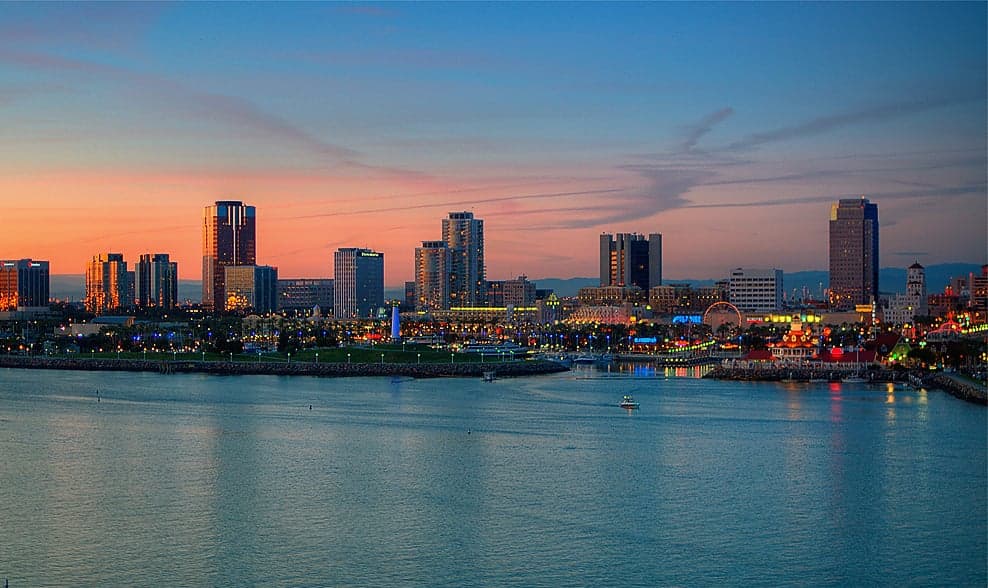
Photo: Wikipedia
Political ClimatePolitical Climate in Long Beach, CA
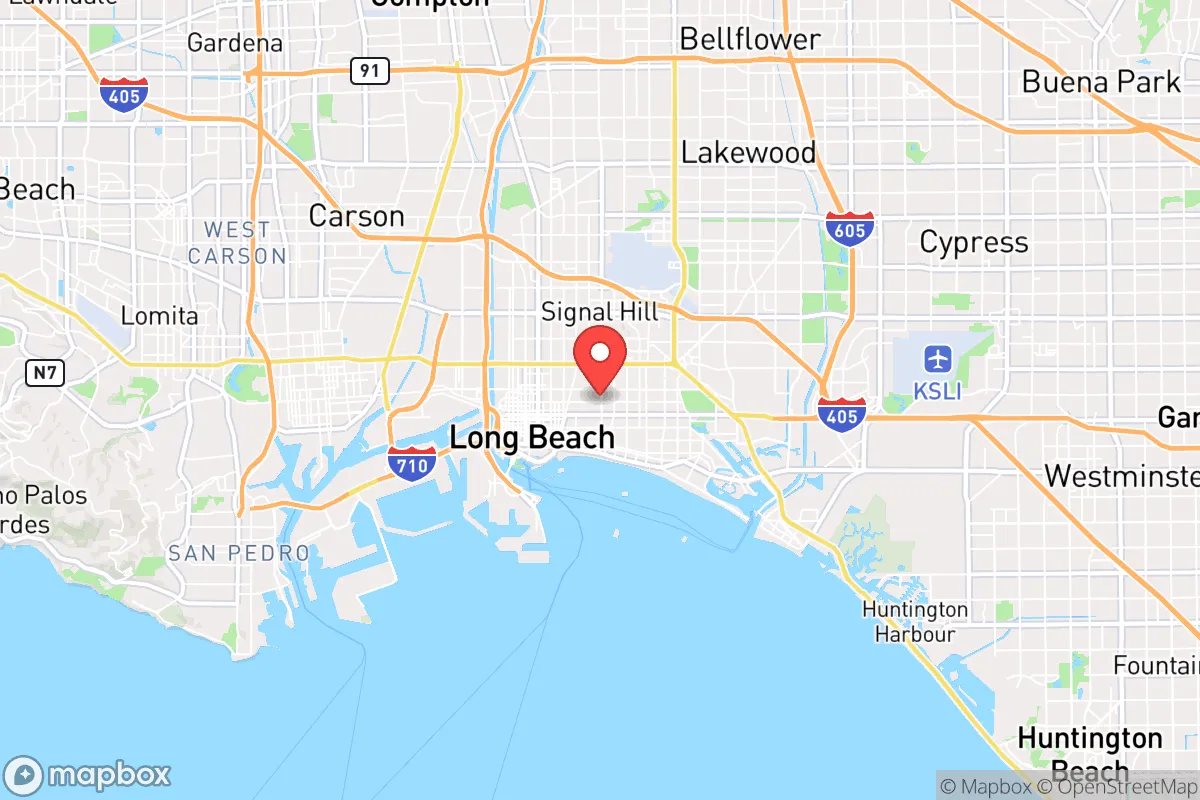
District shown is the primary district for this city’s centroid. Cities may span multiple districts.
Local Political AnalysisPolitical Analysis of Long Beach, CA
Long Beach has been a reliably blue city for decades, but the political climate here has shifted noticeably leftward even by its own standards. The Cook PVI of D+18 tells you the basics — this is a Democratic stronghold — but what that number doesn't capture is how much the local government has embraced progressive policies that many of us who've lived here a while find increasingly intrusive. It wasn't always this way; Long Beach used to have a more moderate, pragmatic vibe, but the last few election cycles have pushed the city council and mayor's office into territory that feels less about representing everyone and more about pushing a specific agenda.
How it compares
If you drive a few miles inland to Los Alamitos or up the coast to Huntington Beach, you'll find a completely different political reality. Those areas lean conservative, with Huntington Beach even passing its own voter-ID requirement and pushing back on state-level mandates. Long Beach, by contrast, has gone all-in on things like sanctuary city policies, strict rent control measures, and a local minimum wage that's higher than the state's. The contrast is stark: you can live in a neighborhood in east Long Beach that feels moderate, but the city government as a whole is more aligned with the progressive wing of the Democratic Party than with the old-school labor Democrats who used to run things. Surrounding towns like Seal Beach and Signal Hill have their own conservative pockets, but they're islands in a sea of blue.
What this means for residents
For those of us who value personal freedom and limited government, the trend is concerning. The city has expanded its regulatory reach into areas that used to be private decisions — from how landlords can set rents to what kinds of businesses can operate in certain zones. There's a growing sense that the local government sees itself as a manager of daily life rather than a protector of rights. If you're a small business owner, you've probably felt the squeeze from new fees, permitting delays, and labor mandates that make it harder to just run a shop. Property owners face an increasingly tenant-friendly legal environment, and homeowners have seen their ability to remodel or add units restricted by new zoning rules. The long-term trajectory, if it continues, points toward more government involvement in housing, employment, and even how you use your own land.
One cultural distinction that stands out is Long Beach's embrace of "progressive policing" reforms, which has led to reduced enforcement of quality-of-life issues like street camping and public drug use. While the intent was to reduce over-policing, the practical effect for residents is that some public spaces feel less safe and less maintained than they did a decade ago. The city also passed a measure to create a citizen oversight board for the police, which sounds good on paper but has added another layer of bureaucracy without clear results. For anyone who remembers Long Beach in the 1990s or early 2000s, the shift is noticeable — and not necessarily for the better. If you're considering a move here, just know that the political culture is actively moving away from the kind of live-and-let-live ethos that used to define this port city.

State Political ClimatePolitical Climate in California
State Political AnalysisPolitical Environment in the State
California is a one-party Democratic superstate where Republicans have been reduced to a permanent minority, holding zero statewide offices and just 11 of 52 congressional seats as of 2025. The state’s political trajectory over the last 20 years has been a steady march leftward, driven by massive population growth in coastal metros and a shrinking rural base. While the state still votes blue by about 30 points in presidential elections, the real story is the internal tension between the progressive coastal machine and the increasingly frustrated inland and rural counties that feel ignored and overregulated.
Urban vs. rural divide
The political map of California is a tale of two states. The coastal corridor from San Francisco down through Los Angeles and San Diego generates the overwhelming Democratic majorities, with San Francisco County delivering 85% of its vote to Biden in 2020 and Los Angeles County adding over 2 million Democratic votes. In contrast, the Central Valley and interior counties are reliably red, with places like Bakersfield (Kern County) and Redding (Shasta County) voting Republican by 20-30 points. The Inland Empire, including Riverside and San Bernardino counties, has been a political battleground—Riverside County flipped from red to blue in 2020, but only by 5 points, and many suburban communities like Temecula and Murrieta remain conservative strongholds. The real shocker was Orange County, once the heart of Reagan country, which flipped blue in 2018 and hasn’t looked back, though cities like Huntington Beach and Yorba Linda still fly the GOP flag proudly. The divide isn’t just geographic—it’s cultural, with coastal urbanites embracing progressive policies while inland residents fight for property rights, lower taxes, and local control.
Policy environment
California’s policy environment is a textbook case of government overreach. The state has the highest income tax rate in the nation at 13.3% for top earners, a 7.25% sales tax that balloons to over 10% in many cities, and some of the highest gas taxes in the country—currently 68 cents per gallon. Regulatory burdens are crushing: the California Environmental Quality Act (CEQA) is weaponized by activists to block housing, energy, and infrastructure projects for years. Education policy is dominated by the California Teachers Association, with school choice virtually nonexistent—only about 10% of students attend private or charter schools. Healthcare is heavily regulated, with the state pushing toward a single-payer system that would eliminate private insurance. Election laws are among the most progressive: universal mail-in voting, same-day registration, and no voter ID requirement, which has fueled ongoing concerns about election integrity. The state’s sanctuary law (SB 54) prohibits local law enforcement from cooperating with federal immigration authorities, creating a de facto open-borders policy that strains public resources.
Trajectory & freedom
California is becoming less free by the year, with Sacramento tightening its grip on nearly every aspect of life. On gun rights, the state has some of the strictest laws in the nation—an assault weapons ban, a 10-day waiting period, and a “may issue” concealed carry regime that was recently upheld by the 9th Circuit. In 2023, the legislature passed AB 28, an 11% excise tax on guns and ammunition, effectively pricing out many law-abiding citizens. Parental rights took a hit with AB 1955 (2024), which prohibits schools from notifying parents if a child changes their gender identity, overriding local school board decisions. Medical autonomy is under assault with the state’s COVID-19 vaccine mandates for schoolchildren and healthcare workers, though some have been rolled back. Property rights are eroded by rent control laws (AB 1482) and the Costa-Hawkins Rental Housing Act, which limits landlords’ ability to set market rates. The state’s high-speed rail boondoggle, now projected to cost over $100 billion, is a symbol of Sacramento’s willingness to spend taxpayer money on vanity projects while basic infrastructure crumbles.
Civil unrest & political movements
California has been a flashpoint for political unrest, particularly since 2020. The George Floyd protests in Los Angeles and San Francisco resulted in billions in property damage, with many businesses never reopening. The state’s sanctuary policies have created tension with the Trump administration, leading to legal battles over immigration enforcement. Organized activist movements like the “Recall Newsom” effort in 2021, which garnered over 1.7 million signatures, showed the depth of frustration, though the governor survived by a 24-point margin. Secessionist rhetoric is alive in the “Calexit” movement, which has failed to gain traction but reflects the deep alienation felt by conservatives. Election integrity controversies have been persistent, with the 2020 and 2022 elections marred by reports of ballot harvesting and irregularities in Los Angeles County. In cities like San Francisco, open-air drug markets and homeless encampments have become visible flashpoints, with voters recently passing Proposition 36 to reclassify some drug offenses as felonies—a rare pushback against progressive criminal justice reforms.
Projection
Over the next 5-10 years, California’s political trajectory is likely to continue leftward, but with growing internal friction. Demographic trends are not kind to conservatives: the state’s population is aging, with the median age now 37, and younger voters are overwhelmingly progressive. However, the exodus of over 700,000 residents between 2020 and 2023, many of them middle-class families and conservatives fleeing to Texas and Arizona, is reshaping the electorate. The remaining population is increasingly concentrated in coastal urban centers, while rural and inland areas lose representation. The state’s high cost of living and regulatory environment will continue to drive out businesses and jobs, but the progressive machine in Sacramento shows no signs of moderating. A new resident moving in now should expect higher taxes, more regulations, and a political climate where conservative voices are marginalized. The only wildcard is a potential economic downturn that could force the state to reconsider its spending habits, but don’t hold your breath.
For a conservative-leaning individual or family considering a move to California, the bottom line is this: you will be a political minority, paying some of the highest taxes in the nation for services that are often subpar. Your children will attend schools that prioritize social justice over academics, and your Second Amendment rights will be severely restricted. If you value personal freedom, local control, and a government that stays out of your life, California is likely not the place for you. The state’s beauty and economic opportunities are real, but they come at a steep price—both financially and in terms of your liberty. If you do move here, consider inland areas like Temecula or Rocklin, where conservative communities still exist, but be prepared to fight for your values every step of the way.
* Values derived from national, state, county, city and local statistics and may differ in a specific area. Last updated: 2026-04-24T11:52:30.000Z
Narrative content on this page is AI-generated and may contain mistakes. Verify any details that matter before acting on them.
ReloMaps may earn a commission from affiliate links at no extra cost to you.

