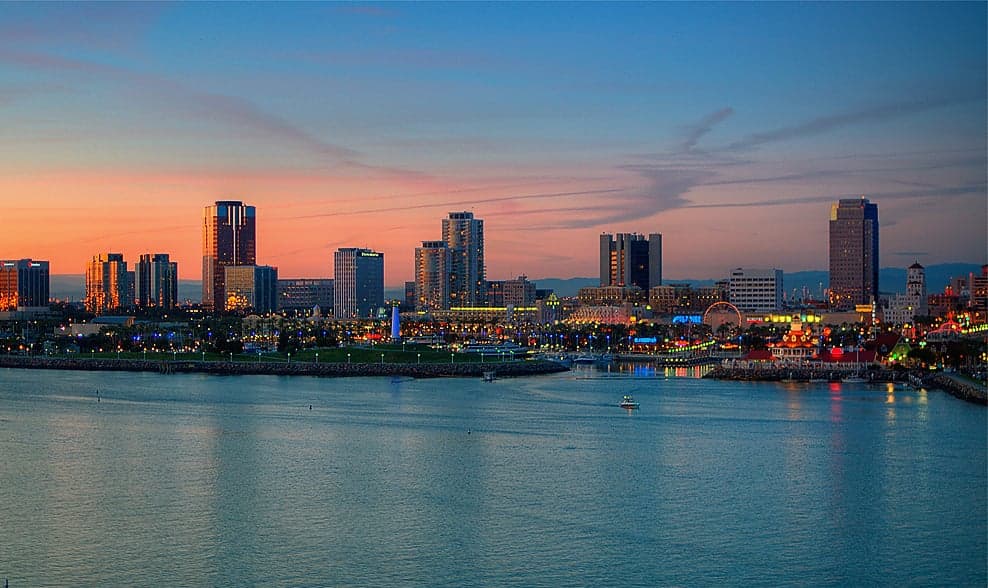
Photo: Wikipedia
Strategic Assessment of Long Beach, CA
High tactical risk. This location is likely close to major population centers, strategic targets, or sits in a high-disaster corridor. A retreat property and careful exit planning is required.
What does the Strategic Assessment tell us?
Our Strategic Assessment grades tactical survivability of an area. Major population centers, military targets, fallout zones, natural disasters, and border exposure all drive risk — lower exposure means a more defensible position in a crisis.
This is heavily inspired by Joel Skousen's Strategic Relocation book. Highly recommended you checkout the book ($)What does this tell us?
Our Strategic Assessment grades tactical survivability of an area. Major population centers, military targets, fallout zones, natural disasters, and border exposure all drive risk — lower exposure means a more defensible position in a crisis.
This is heavily inspired by Joel Skousen's Strategic Relocation book. Highly recommended you checkout the book ($)Strategic Pillars

Key Distances
Regional Safe Places
Below is our recommended "safe zones" in California and the surrounding area based on our strategic heuristics. For most people, it's unrealistic to live in a “safe zone” full-time due to work, family or other personal reasons. They tend to be more rural. However, many of these areas are perfect for second homes and retreat properties that double as a vacation home or even a short-term rental.

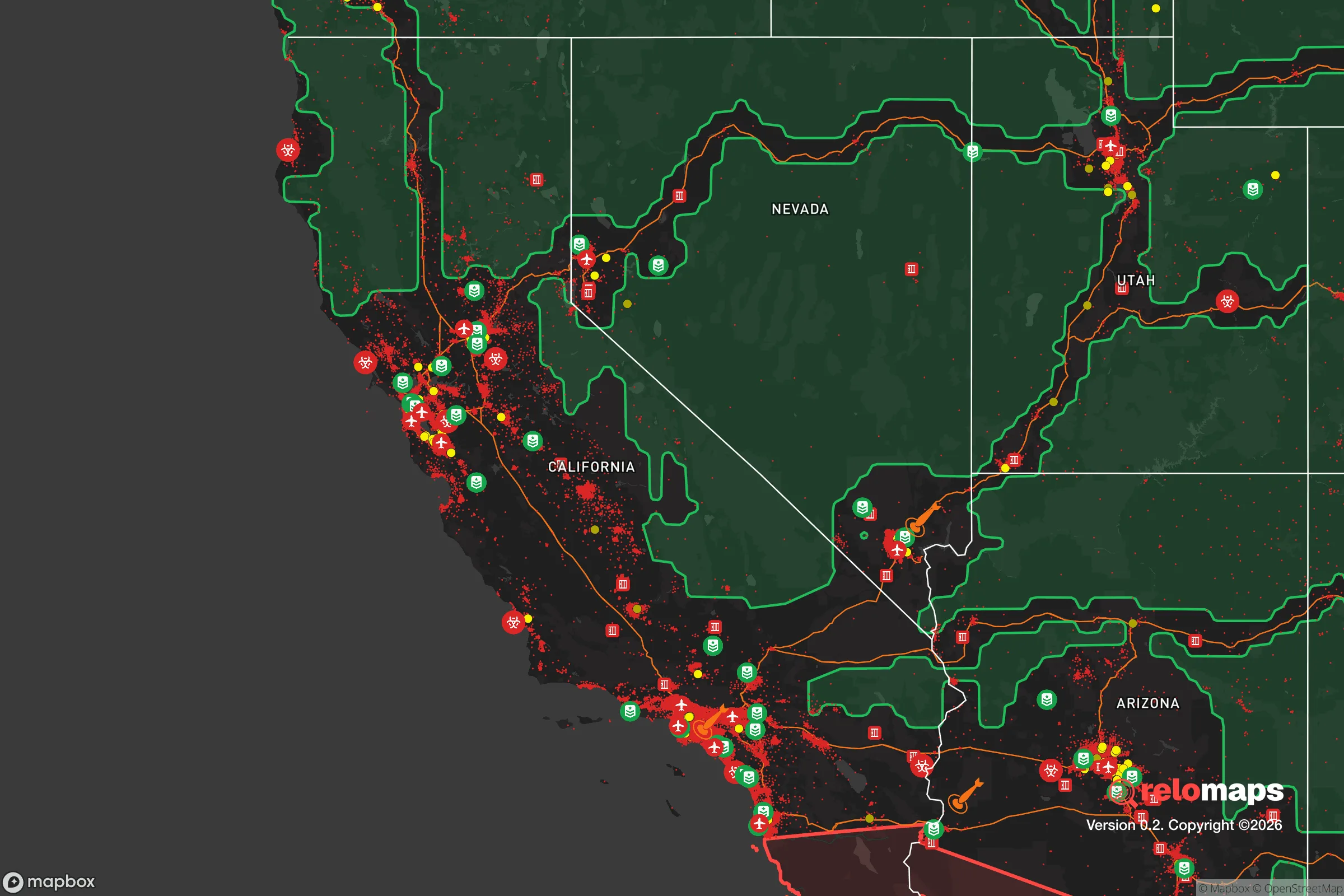


Important Note: For informational purposes only. This does not mean nothing bad ever happens in the green zones. Please use common sense. This is based on public data and modeled with AI. We tried to take a conservative approach but mistakes happen. We update this regularly as new information becomes available.
Solar Generator Recommendations
Backup power matters more here than in safer locations. We've picked three solar generators across budgets and capacity tiers — start with the budget unit if you only need a few essentials, or step up if you want to run a fridge and HVAC for days at a time.

Jackery Portable Power Station Explorer 300
Budget OptionPower on the Go: Weighing only 11 lbs, it's convenient to set up and store with book-sized foldable solar panels

BLUETTI Portable Power Station AC180
Designed for both indoor and outdoor scenarios, AC180 is highly capable as it has a robost capacity and continuous output power.

EF ECOFLOW DELTA Pro Ultra Power Station
Upgraded PickEcoFlow DELTA Pro Ultra is a whole-home energy system designed to grow with your family. Integrated with the Smart Home Panel 2, it scales to meet your evolving energy needs — keeping your home powered, intelligent, and secure through every stage of life.
We earn a commission, at no additional cost to you.
Strategic Assessment Analysis
Long Beach, California, presents a complex strategic picture for the conservative prepper. Its coastal location and massive port infrastructure offer undeniable logistical advantages, but these same features place it squarely in the crosshairs of multiple high-consequence risks. For the individual or family prioritizing resilience, Long Beach is less a sanctuary and more a high-value, high-exposure asset that demands a clear-eyed assessment of its vulnerabilities before any relocation decision is made.
Geographic position and natural advantages: a double-edged sword on the Pacific
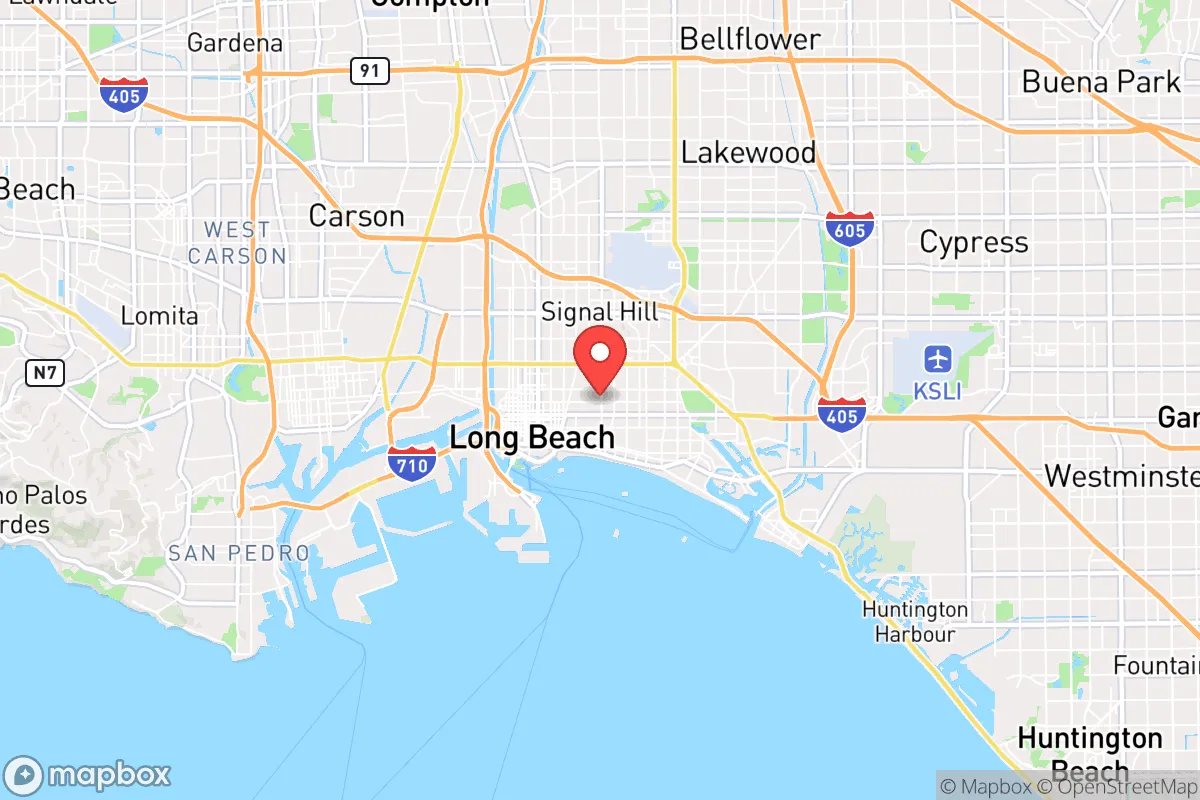
Long Beach sits at the southern edge of Los Angeles County, anchored by one of the busiest ports in the Western Hemisphere. From a prepper’s standpoint, the geography is a mixed bag. The city’s location on San Pedro Bay provides direct access to the Pacific, which could be a critical lifeline for maritime resupply or evacuation if overland routes become compromised. The Port of Long Beach, handling roughly $200 billion in trade annually, is a strategic chokepoint for the entire U.S. supply chain. In a crisis, this port becomes a target—but also a potential source of goods, fuel, and heavy equipment for those who can navigate the chaos. The city’s flat coastal plain and mild Mediterranean climate (average highs in the 70s year-round) reduce the risk of extreme weather events like blizzards or deep freezes, which is a genuine plus for long-term sustainability. However, that same flat terrain offers little natural defensibility; there are no hills, ridges, or forests to provide cover or a tactical advantage. The San Gabriel Mountains lie about 30 miles north, but getting there requires traversing dense urban sprawl and major freeways like the 405 and 710, which would become parking lots in a grid-down scenario.
Risks, exposures, and proximity to fallout-relevant landmarks
The most glaring vulnerability for Long Beach is its proximity to high-value, high-risk targets. The Port of Long Beach and the adjacent Port of Los Angeles are prime objectives for any adversary seeking to cripple the U.S. economy. A conventional strike, cyber attack on port operations, or even a well-coordinated terror event could shut down the entire Southern California logistics network, triggering immediate shortages of food, fuel, and medical supplies. The city is also within 20 miles of Los Angeles International Airport (LAX), a major civilian and military airlift hub, and within 30 miles of the sprawling Los Angeles urban core—a region with over 10 million people that would experience catastrophic civil unrest in any major disaster. The San Onofre Nuclear Generating Station, though decommissioned, sits about 60 miles south, and while the spent fuel pools are considered secure, any incident there would place Long Beach in the downwind fallout zone depending on prevailing westerly winds. Additionally, the city’s extensive oil refineries and storage facilities (the Wilmington oil field and nearby refineries in Carson and Torrance) are industrial hazards that could become secondary targets or sources of toxic releases. For the prepper, the density of potential fallout-relevant landmarks within a 50-mile radius is alarmingly high. The 1992 Los Angeles riots, which saw looting and arson spread to Long Beach, are a historical reminder that civil unrest here is not hypothetical—it’s a recurring pattern.
Practical resilience for a relocator: food, water, energy, and defensibility
When assessing day-to-day survivability, Long Beach presents serious challenges. The city relies almost entirely on imported water from the Colorado River and the California Aqueduct, both of which are vulnerable to earthquake disruption, drought politics, and infrastructure failure. A major quake on the San Andreas Fault—which has a 60% probability of a 6.7+ magnitude event in the next 30 years—could cut off water for weeks or months. Local groundwater is brackish and requires desalination, which is energy-intensive. Food security is equally fragile: the city has minimal agricultural land, and most groceries are supplied via the same port and highway system that would be disrupted. Community gardens exist but are nowhere near sufficient for the population of roughly 460,000. Energy is a mixed picture: the city has access to the grid, but rolling blackouts during heat waves (like those in 2020 and 2022) are already common. Solar adoption is growing, but many homes are rentals or HOA-bound, limiting off-grid capability. Defensibility is the weakest link. Long Beach is a dense, urban environment with a high crime rate (violent crime is roughly 50% above the national average, per 2023 FBI data). Securing a single-family home in a neighborhood like Bixby Knolls or Belmont Shore is possible, but the surrounding areas—like North Long Beach or Westside—have gang activity and higher property crime. The city’s layout, with its grid of streets and limited chokepoints, makes it difficult to establish a perimeter or control access. For a family, the best-case scenario is a well-fortified home with a reliable water storage system, solar panels, and a deep pantry, but even then, the risk of being overrun by a desperate population during a prolonged crisis is significant.
The overall strategic picture for Long Beach is one of high risk with limited upside for the conservative prepper. The city’s port and coastal access are genuine assets for those with maritime skills or connections, but the concentration of critical infrastructure, dense population, and proximity to multiple fallout-relevant targets make it a poor choice for a primary relocation. If you already own property here or have family ties that keep you in the area, the smart play is to invest in robust home security, a multi-month food and water supply, and a bug-out plan that gets you inland or north toward less populated areas like the Sierra Nevada foothills within the first 48 hours of a major event. For anyone looking to relocate with resilience as a priority, Long Beach is best viewed as a temporary staging point—not a long-term haven. The math is simple: the same factors that make it economically vital also make it a magnet for disaster. Prepare accordingly, or look elsewhere.

* Values derived from national, state, county, city and local statistics and may differ in a specific area. Last updated: 2026-04-24T11:52:30.000Z
Narrative content on this page is AI-generated and may contain mistakes. Verify any details that matter before acting on them.
ReloMaps may earn a commission from affiliate links at no extra cost to you.

