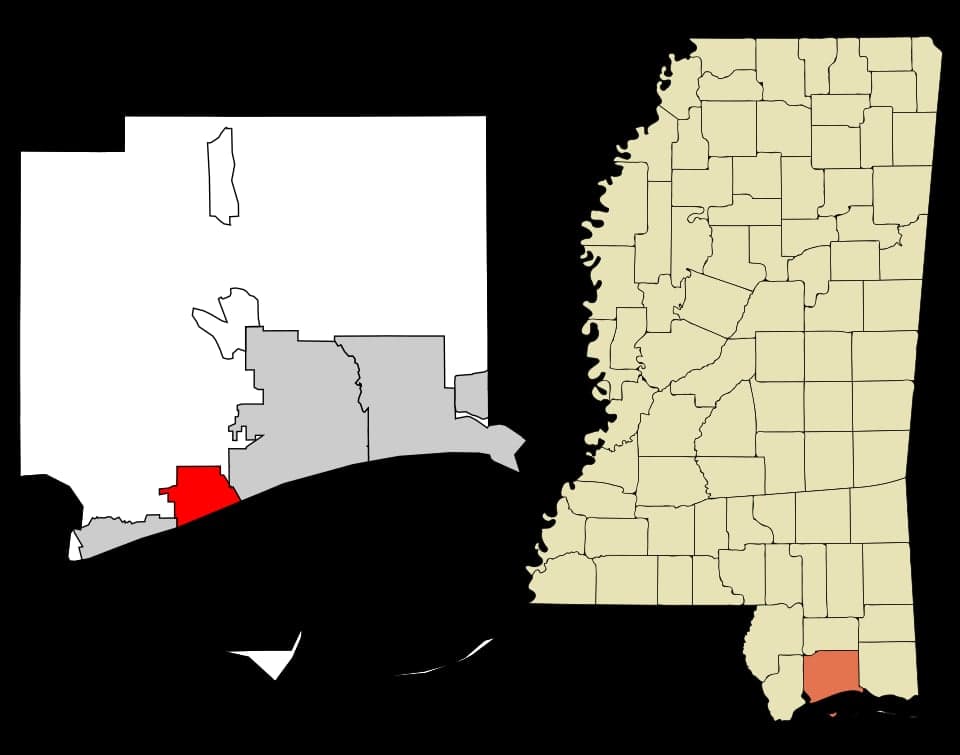
Photo: Wikipedia
Strategic Assessment of Long Beach, MS
Meaningful friction. Expect exposure to either population pressure, blast zones, or natural disaster risk. Consider buying a retreat property.
What does the Strategic Assessment tell us?
Our Strategic Assessment grades tactical survivability of an area. Major population centers, military targets, fallout zones, natural disasters, and border exposure all drive risk — lower exposure means a more defensible position in a crisis.
This is heavily inspired by Joel Skousen's Strategic Relocation book. Highly recommended you checkout the book ($)What does this tell us?
Our Strategic Assessment grades tactical survivability of an area. Major population centers, military targets, fallout zones, natural disasters, and border exposure all drive risk — lower exposure means a more defensible position in a crisis.
This is heavily inspired by Joel Skousen's Strategic Relocation book. Highly recommended you checkout the book ($)Strategic Pillars

Key Distances
Regional Safe Places
Below is our recommended "safe zones" in Mississippi and the surrounding area based on our strategic heuristics. For most people, it's unrealistic to live in a “safe zone” full-time due to work, family or other personal reasons. They tend to be more rural. However, many of these areas are perfect for second homes and retreat properties that double as a vacation home or even a short-term rental.
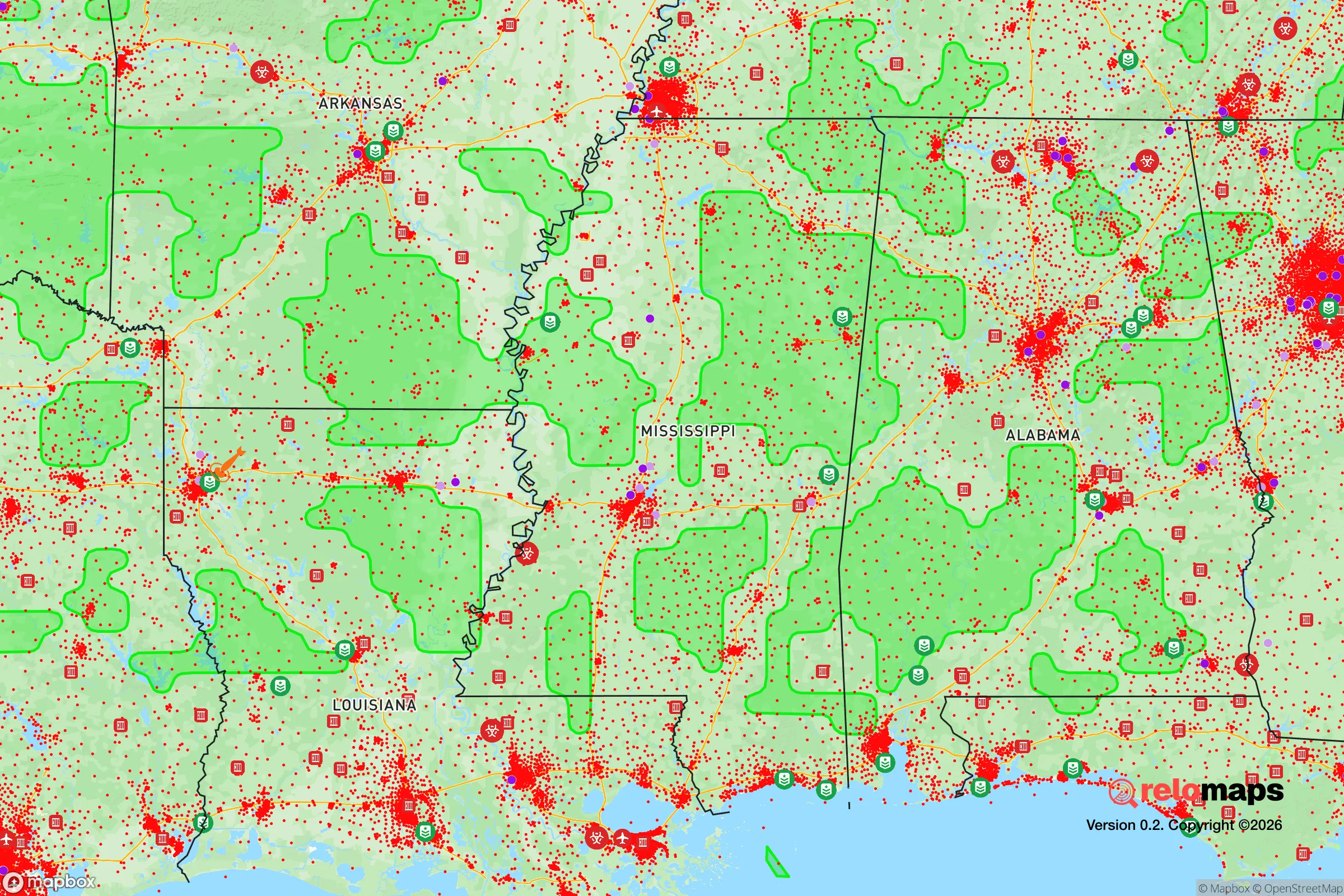
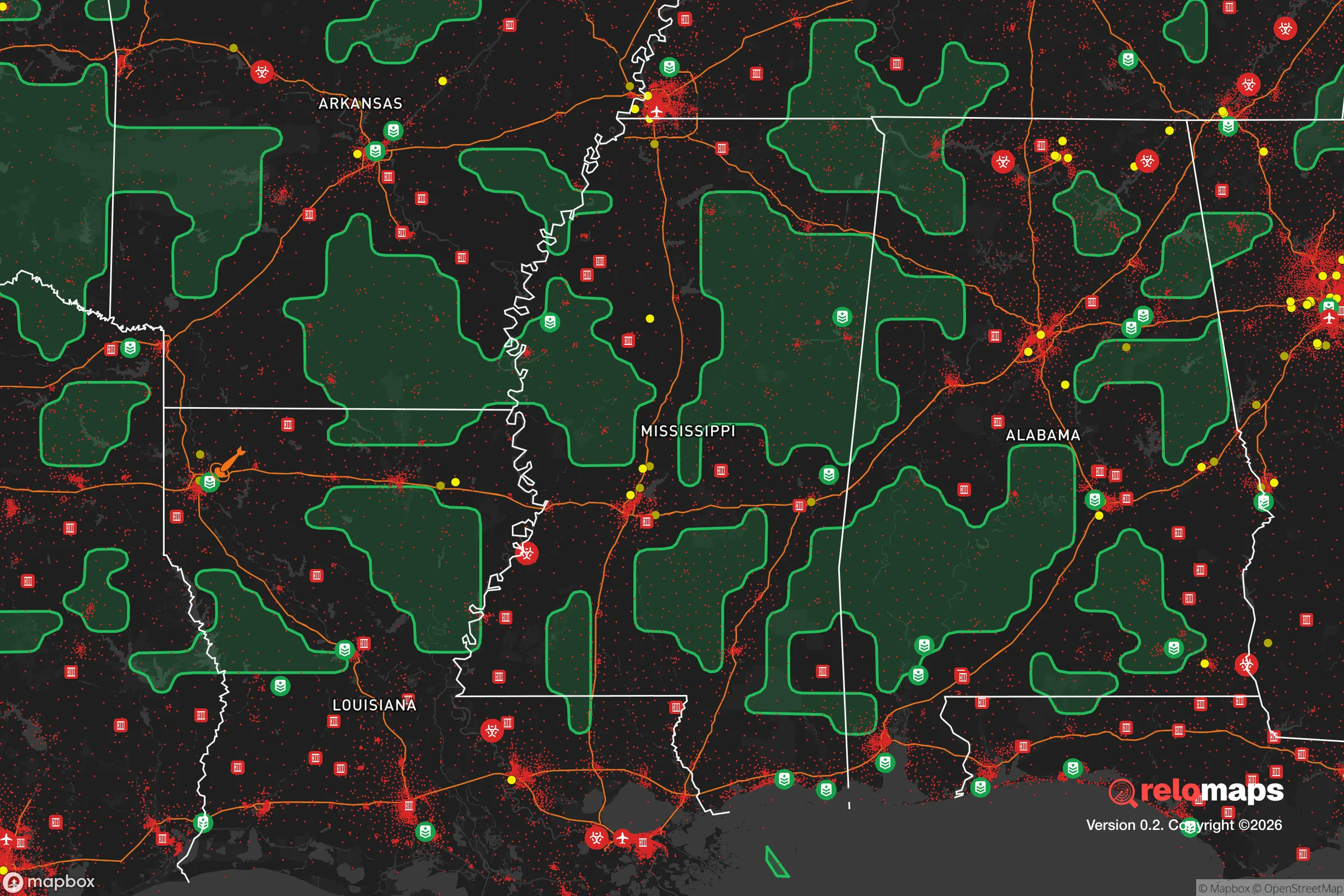


Important Note: For informational purposes only. This does not mean nothing bad ever happens in the green zones. Please use common sense. This is based on public data and modeled with AI. We tried to take a conservative approach but mistakes happen. We update this regularly as new information becomes available.
Solar Generator Recommendations
Backup power matters more here than in safer locations. We've picked three solar generators across budgets and capacity tiers — start with the budget unit if you only need a few essentials, or step up if you want to run a fridge and HVAC for days at a time.

Jackery Portable Power Station Explorer 300
Budget OptionPower on the Go: Weighing only 11 lbs, it's convenient to set up and store with book-sized foldable solar panels

BLUETTI Portable Power Station AC180
Designed for both indoor and outdoor scenarios, AC180 is highly capable as it has a robost capacity and continuous output power.

EF ECOFLOW DELTA Pro Ultra Power Station
Upgraded PickEcoFlow DELTA Pro Ultra is a whole-home energy system designed to grow with your family. Integrated with the Smart Home Panel 2, it scales to meet your evolving energy needs — keeping your home powered, intelligent, and secure through every stage of life.
We earn a commission, at no additional cost to you.
Strategic Assessment Analysis
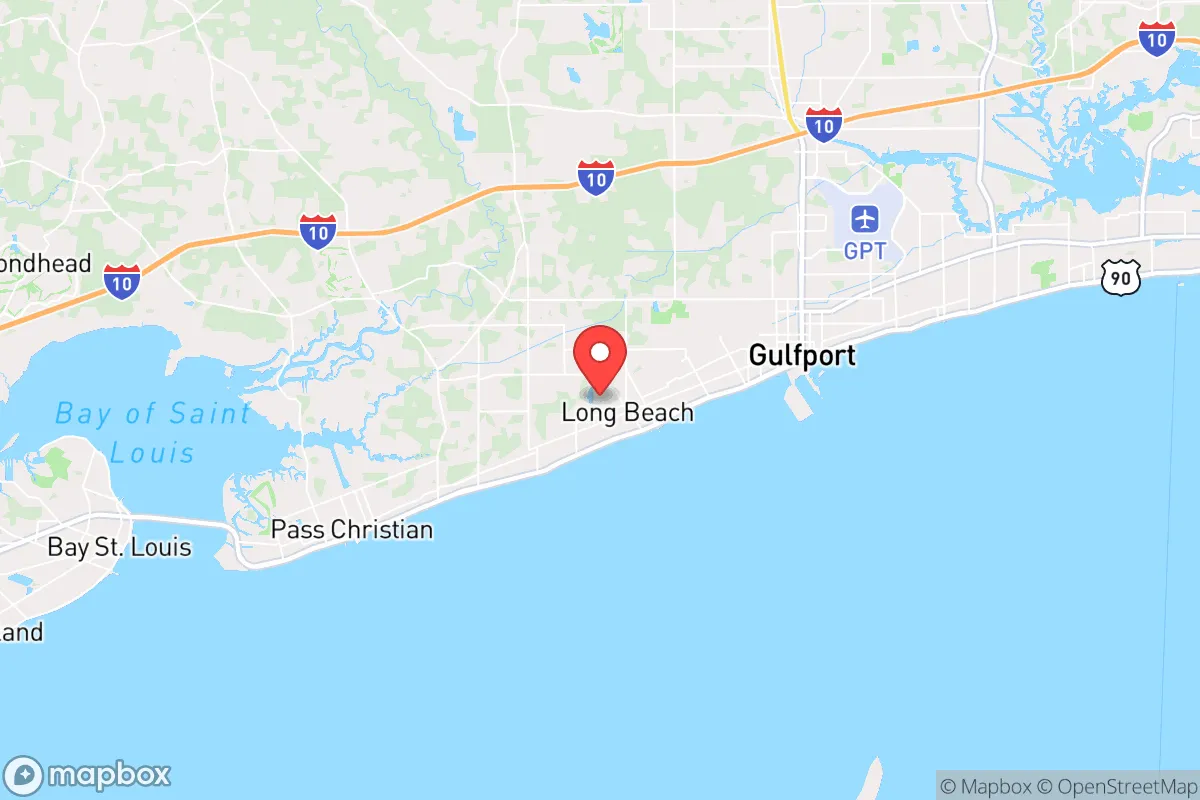
Long Beach, Mississippi, sits as a narrow strip of land between the Gulf of Mexico and the Interstate 10 corridor, offering a strategic paradox for the conservative relocator: it provides immediate access to coastal resources and a small-town feel, but its very geography makes it a chokepoint in any crisis scenario. The city’s resilience is tied directly to its ability to function as a self-contained unit when the outside world falters, yet its proximity to New Orleans (about 50 miles west) and the sprawling military-industrial complex of the Gulf Coast means it is not insulated from the fallout of larger societal breakdowns. For the prepper or survivalist weighing relocation, Long Beach demands a clear-eyed assessment of its natural advantages against its exposure to cascading risks.
Geographic position and natural advantages for long-term survival
Long Beach’s location on the Mississippi Sound gives it a unique set of natural assets that are hard to replicate inland. The city sits on a narrow coastal plain, with the Gulf to the south and the Bay of St. Louis to the west, creating a natural buffer zone that limits approach vectors for any potential threat—whether that’s civil unrest spilling out of Gulfport or Biloxi, or a mass casualty event originating from the nearby Port of Gulfport. The area’s mild subtropical climate allows for year-round food production, with a growing season that stretches from March to November, and the proximity to the Gulf means a reliable protein source if you know how to fish, crab, or trap. The soil here is sandy and well-draining, which is a double-edged sword: it’s great for root vegetables and raised beds, but it requires amendment for heavy feeders like corn or squash. For the relocator focused on water security, the aquifer underlying the region is deep and generally clean, but the city’s municipal supply is vulnerable to storm surge and saltwater intrusion, meaning a private well with a hand pump is a non-negotiable investment. The natural topography is flat and low—elevation averages around 20 feet—which is a liability for flooding but an asset for defensibility, as there are few natural hiding spots for anyone approaching your property.
Risks, exposures, and proximity to fallout-relevant landmarks
The most glaring vulnerability for Long Beach is its position relative to the Keesler Air Force Base in Biloxi, just 15 miles east. In any scenario involving a major power outage, EMP event, or civil unrest, Keesler becomes a primary target for both state actors and domestic looters seeking military-grade supplies. The base’s presence also means the I-10 corridor, which runs directly north of Long Beach, will be a primary evacuation and reinforcement route, turning it into a potential chokepoint for traffic and military checkpoints. Additionally, the Port of Gulfport, 10 miles east, is a major shipping hub for containerized cargo and military equipment, making it a high-value target for any coordinated attack or disruption. The city itself is not a primary target, but it sits in the blast radius of secondary effects: if the port or base is compromised, expect a refugee flow westward along Highway 90, which runs right through Long Beach’s main drag. Hurricane risk is the most predictable threat, with the Gulf Coast averaging a direct hit every 5-7 years, but the real danger for the prepper is the storm surge that can push 15-20 feet inland, wiping out low-lying neighborhoods and contaminating freshwater sources with salt and sewage. The 2005 Hurricane Katrina demonstrated this brutally—Long Beach saw a 28-foot storm surge that destroyed 90% of homes within a mile of the coast. For the conservative relocator, this means any property south of the CSX railroad tracks (roughly 1.5 miles inland) is a high-risk zone that requires a second-story safe room and a boat for post-storm mobility.
Practical resilience for a relocator: food, water, energy, and defensibility
Building a resilient setup in Long Beach requires a shift from suburban convenience to rural self-sufficiency, even within city limits. The city’s zoning allows for backyard chickens and small livestock (check local ordinances for goats or bees), and the proximity to the Gulf means you can supplement protein with cast-net fishing for mullet and shrimp year-round. For water, the municipal supply is treated with chlorine and fluoride, which is fine for washing but not ideal for long-term storage; a Berkey filter or equivalent gravity system is essential, along with a 55-gallon rain barrel setup for garden irrigation. The area’s high humidity and frequent thunderstorms make solar power a viable but maintenance-heavy option—panels need regular cleaning from salt spray and pollen, and battery banks must be stored in a climate-controlled space to avoid degradation. For defensibility, the flat terrain works against you: there are few natural chokepoints or high ground, so a perimeter fence with motion-sensor lighting and a reinforced safe room (preferably a concrete storm shelter) is the baseline. The local population is a mixed bag—Long Beach has a strong veteran and law enforcement presence, which is a positive for community resilience, but also a significant transient population tied to the casino and tourism industries, which can be a liability in a crisis when those workers become desperate. The closest major medical facility is Memorial Hospital in Gulfport, 12 miles east, which is a Level II trauma center but will be overwhelmed in any mass casualty event; having a trauma kit and basic EMT training is non-negotiable. For fuel, the I-10 corridor has multiple gas stations, but they will be drained within 48 hours of any disruption, so a propane generator with a 500-gallon tank and a solar trickle charger for vehicle batteries is the smart play.
The overall strategic picture for Long Beach is one of calculated risk: it offers genuine natural advantages in food, water, and climate, but its position between two major military and industrial targets makes it a secondary fallout zone in any large-scale disruption. For the conservative relocator who values coastal living and is willing to invest in serious hardening—elevated structures, redundant water systems, and a community network of like-minded neighbors—it can be a viable long-term base. But for anyone seeking true isolation from the chaos of the Gulf Coast’s urban spine, the inland pine forests of Pearl River County or the hill country of southern Mississippi offer a lower-risk alternative. Long Beach is a place to hold the line, not to disappear—and that distinction matters when you’re planning for the worst.

* Values derived from national, state, county, city and local statistics and may differ in a specific area. Last updated: 2026-04-23T05:32:34.000Z
Narrative content on this page is AI-generated and may contain mistakes. Verify any details that matter before acting on them.
ReloMaps may earn a commission from affiliate links at no extra cost to you.

