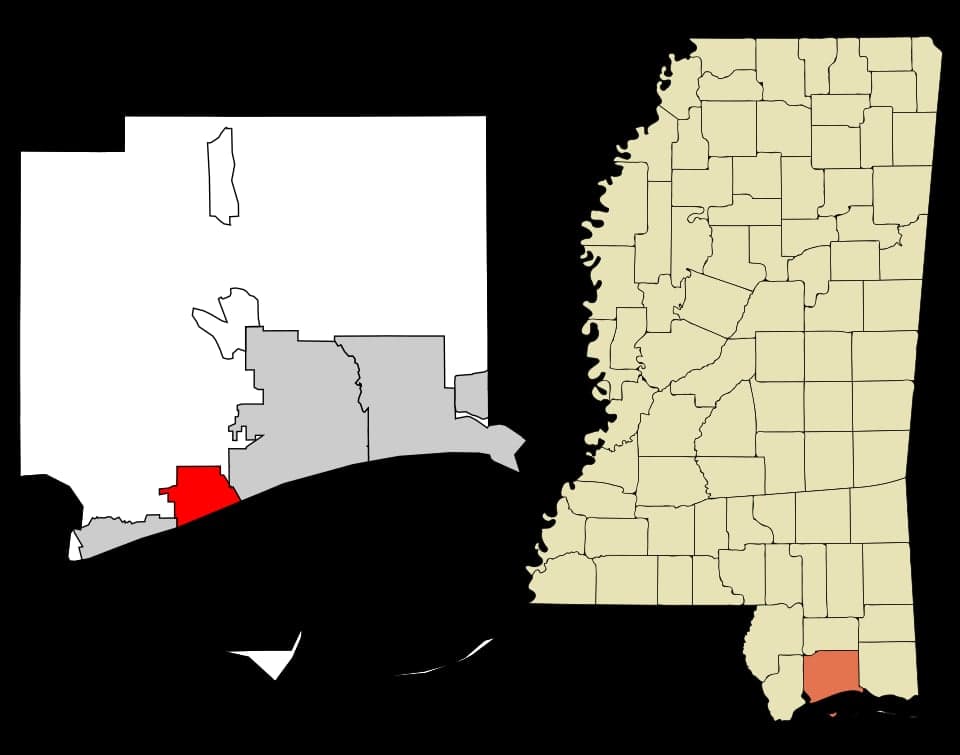
Photo: Wikipedia
Political ClimatePolitical Climate in Long Beach, MS
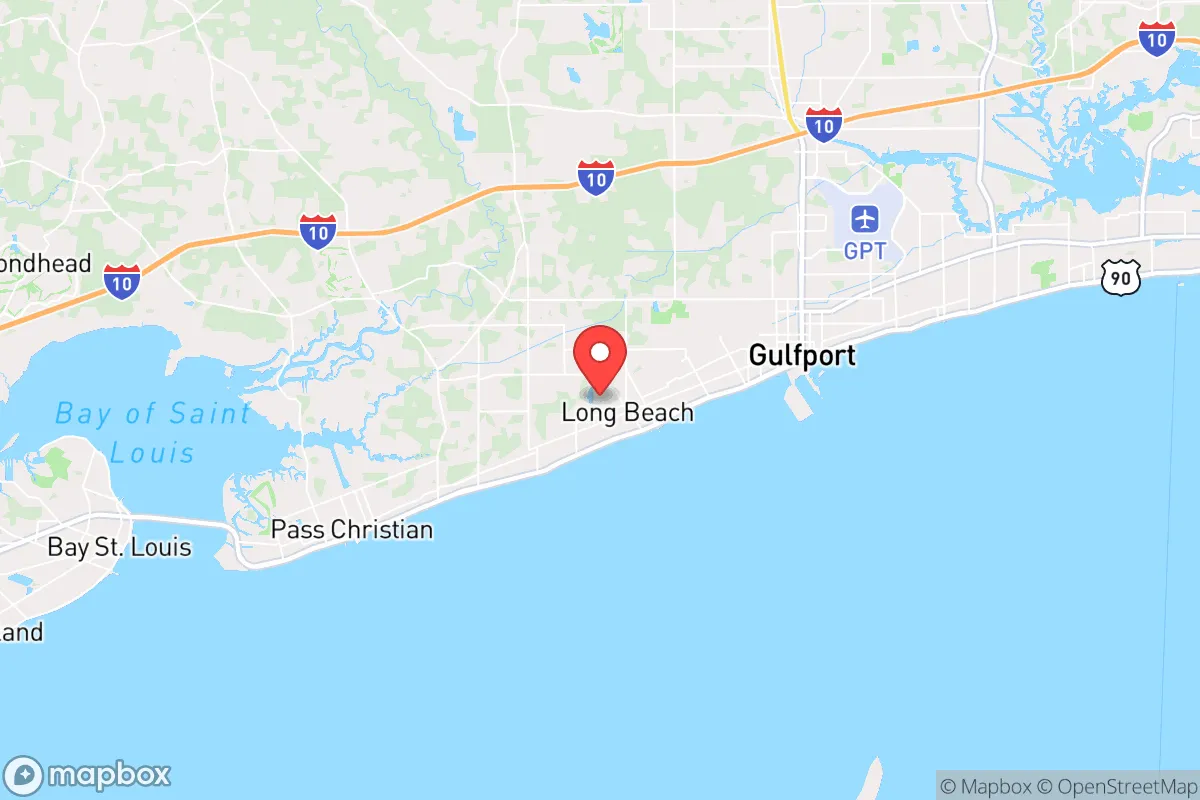
District shown is the primary district for this city’s centroid. Cities may span multiple districts.
Local Political AnalysisPolitical Analysis of Long Beach, MS
Long Beach, Mississippi, has long been a solidly conservative community, and the numbers back that up with a Cook PVI of R+21. That means the area votes about 21 points more Republican than the national average, and in my years here, I’ve seen that lean hold steady through thick and thin. The political trajectory here isn’t swinging left—if anything, folks are doubling down on local control and personal freedoms, wary of any top-down mandates that might creep in from Jackson or Washington. You won’t find much appetite for progressive experiments in this part of the Gulf Coast; the vibe is more about keeping government out of your business and your backyard.
How it compares
When you stack Long Beach against its neighbors, the contrast is telling. Head west to Pass Christian or Bay St. Louis, and you’ll find a similar conservative bent, though Bay St. Louis has a slightly more artsy, laid-back feel that can attract a few more independents. Drive east to Gulfport or Biloxi, and you’ll see a mix—Biloxi’s casino economy brings in a transient workforce that can lean a bit more moderate, but it’s still deep red territory overall. The real shocker is if you go north to Hattiesburg, where the university influence pulls things noticeably left. Here in Long Beach, we don’t have that college-town dynamic; it’s mostly families, retirees, and small business owners who value their Second Amendment rights and don’t want anyone telling them how to run their lives. The R+21 rating isn’t just a number—it reflects a community that consistently votes for limited government and personal responsibility.
What this means for residents
For anyone moving here, the political climate means you can expect a low-tax, low-regulation environment that respects individual freedoms. Property taxes are reasonable, zoning is minimal, and you won’t see the kind of overreach you might in more progressive coastal towns like Ocean Springs, which has flirted with stricter development rules and a more woke city council in recent years. The local schools and city government here tend to focus on practical issues—infrastructure, storm recovery, public safety—rather than social engineering. That said, there’s a growing concern among longtime residents about outside influences creeping in, especially from state-level pushes for things like expanded Medicaid or environmental regulations that could hit small businesses. The general sentiment is: we’ve managed fine on our own, and we’d rather keep it that way. If you value being left alone to live your life without a bunch of bureaucratic red tape, this is a good fit.
Culturally, Long Beach stands out for its quiet, family-oriented pace and a strong sense of community self-reliance. You won’t find the big-city political theater here—no flashy protests or divisive council meetings. Instead, the local discourse revolves around practical matters like rebuilding after hurricanes or keeping the beaches clean. There’s a deep skepticism of any policy that feels like a power grab, whether it’s mask mandates or land-use restrictions. Looking ahead, I’d say the near future stays conservative, but the long-term risk is if developers or transplants from blue states start pushing for changes. For now, though, this is a place where your rights are respected, your voice matters, and the government stays in its lane. That’s the kind of politics that keeps folks here for generations.

State Political ClimatePolitical Climate in Mississippi
State Political AnalysisPolitical Environment in the State
Mississippi is one of the most reliably conservative states in the nation, with a deep-rooted Republican lean that has only solidified over the past two decades. The state has not voted for a Democratic presidential candidate since 1976, and in 2024, Donald Trump carried it by over 17 points. The dominant coalition is a blend of rural, evangelical, and working-class voters, with the GOP holding supermajorities in both chambers of the legislature and every statewide office. Over the last 10-20 years, the shift has been away from the old "Blue Dog" Democrat tradition and toward a solid, unapologetic conservative majority, especially as suburban and exurban areas around Jackson, the Gulf Coast, and the Memphis suburbs have turned sharply red.
Urban vs. rural divide
The political map of Mississippi is a classic story of deep-red rural counties versus a handful of blue urban islands. The state’s largest metro, the Jackson metropolitan area, is the primary Democratic stronghold, driven by the majority-Black city of Jackson itself and its inner-ring suburbs. However, even here, the surrounding suburbs like Madison and Ridgeland are heavily Republican, creating a stark contrast within the same metro. The Gulf Coast, anchored by Biloxi and Gulfport, leans Republican but with a more moderate, business-friendly flavor, while the northeastern corner around Tupelo and Oxford (home to the University of Mississippi) is reliably red, though Oxford itself has a small, educated liberal pocket. The Mississippi Delta, including towns like Greenville and Clarksdale, remains one of the few rural areas that votes Democratic due to high Black populations, but these counties have shrinking populations and little statewide influence. The real engine of conservative power is the sprawling rural and small-town landscape—counties like DeSoto (just south of Memphis), Rankin, and Lamar—where Republican margins routinely exceed 70%.
Policy environment
Mississippi’s policy environment is among the most conservative in the country, with a strong emphasis on limited government and traditional values. The state has no state income tax on Social Security benefits and has been phasing down its personal income tax, with a plan to eliminate it entirely by 2026. Sales tax is around 7%, but local options can push it higher. The regulatory posture is business-friendly, with a right-to-work law and minimal zoning restrictions outside of major cities. Education policy includes a robust school choice movement: the state has a voucher-like program for special needs students and a growing charter school sector, though most districts remain traditional public. Healthcare is a mixed bag—Mississippi did not expand Medicaid under the Affordable Care Act, leaving many low-income adults uninsured, but the state has some of the most protective laws for religious freedom and conscience rights for medical providers. Election laws are strict: voter ID is required, early voting is limited (no-excuse absentee voting was only expanded in 2020), and the state has purged inactive voters regularly. There is no ballot initiative process, meaning major policy changes must go through the legislature, which keeps progressive proposals at bay.
Trajectory & freedom
Mississippi is trending more free in several key areas, particularly on economic liberty and gun rights. In 2023, the legislature passed a permitless carry law, allowing any law-abiding adult to carry a concealed firearm without a license. The state also enacted a "Second Amendment Preservation Act" that prohibits state and local cooperation with federal gun confiscation efforts. On parental rights, Mississippi passed a "Parents' Bill of Rights" in 2022, giving parents explicit authority over their children's education and medical decisions. The state has also banned nearly all abortions after 6 weeks (the "Heartbeat Law") and has no exceptions for rape or incest, reflecting a strong pro-life stance. However, there are areas where freedom is constrained: the state maintains a strict medical marijuana program (legalized in 2022 but heavily regulated), and recreational cannabis remains illegal. Property rights are generally strong, with no statewide rent control and low property taxes, but eminent domain has been used aggressively for economic development projects. The trajectory is toward more personal liberty on cultural and economic fronts, but with a heavy hand on social issues like abortion and drug policy.
Civil unrest & political movements
Mississippi has a quieter political landscape than many states, but it has seen its share of flashpoints. The most visible recent unrest was in Jackson, where water system failures and crime spikes led to protests and a state takeover of the city's water utility in 2022. The Black Lives Matter movement had a presence in Jackson and Oxford, but it was smaller and less sustained than in other states. On the right, the "Mississippi Freedom Caucus" in the legislature has pushed hard on election integrity, passing a law in 2023 that bans private funding of election administration (a response to "Zuckerbucks" controversies). Immigration politics are muted—Mississippi has a very small foreign-born population (under 3%), but the state passed a law requiring E-Verify for all employers and banning sanctuary cities. There is no serious secessionist movement, but nullification rhetoric surfaces occasionally around federal gun laws and vaccine mandates. Election integrity has been a hot topic: the state's 2020 election was not contested, but the legislature tightened absentee ballot rules in 2021. A new resident would notice that political activism is mostly channeled through churches and local civic groups, not street protests.
Projection
Over the next 5-10 years, Mississippi is likely to become even more conservative, driven by two trends: the continued exodus of Democrats from Jackson and the Delta, and the in-migration of conservatives from higher-tax states like California and Illinois. The state's population is aging and slowly declining overall, but the northern suburbs of Jackson (Madison, Ridgeland) and the Gulf Coast are growing. The income tax elimination will accelerate this trend, attracting remote workers and retirees. The political balance will shift further right as the remaining moderate Democrats in the legislature retire or lose primaries. The biggest wild card is the Black population, which is still around 37% of the state—if turnout among Black voters increases, it could make statewide races closer, but the GOP's supermajorities are likely safe for the foreseeable future. A new resident moving in now should expect a state that is stable, predictable, and deeply conservative, with little chance of a political shift toward the center or left.
For a conservative individual or family considering relocation, Mississippi offers a low-tax, low-regulation environment where traditional values are enshrined in law. The trade-offs are real: public services are thin, infrastructure in rural areas is aging, and the healthcare system has gaps. But if you value gun rights, school choice, and a government that mostly stays out of your business, Mississippi is one of the few states where that vision is not just promised but delivered. The politics are stable, the people are friendly, and the cost of living is among the lowest in the nation. Just know that you're moving to a place that is unapologetically red, and that's exactly how most folks here like it.
* Values derived from national, state, county, city and local statistics and may differ in a specific area. Last updated: 2026-04-23T05:32:34.000Z
Narrative content on this page is AI-generated and may contain mistakes. Verify any details that matter before acting on them.
ReloMaps may earn a commission from affiliate links at no extra cost to you.

