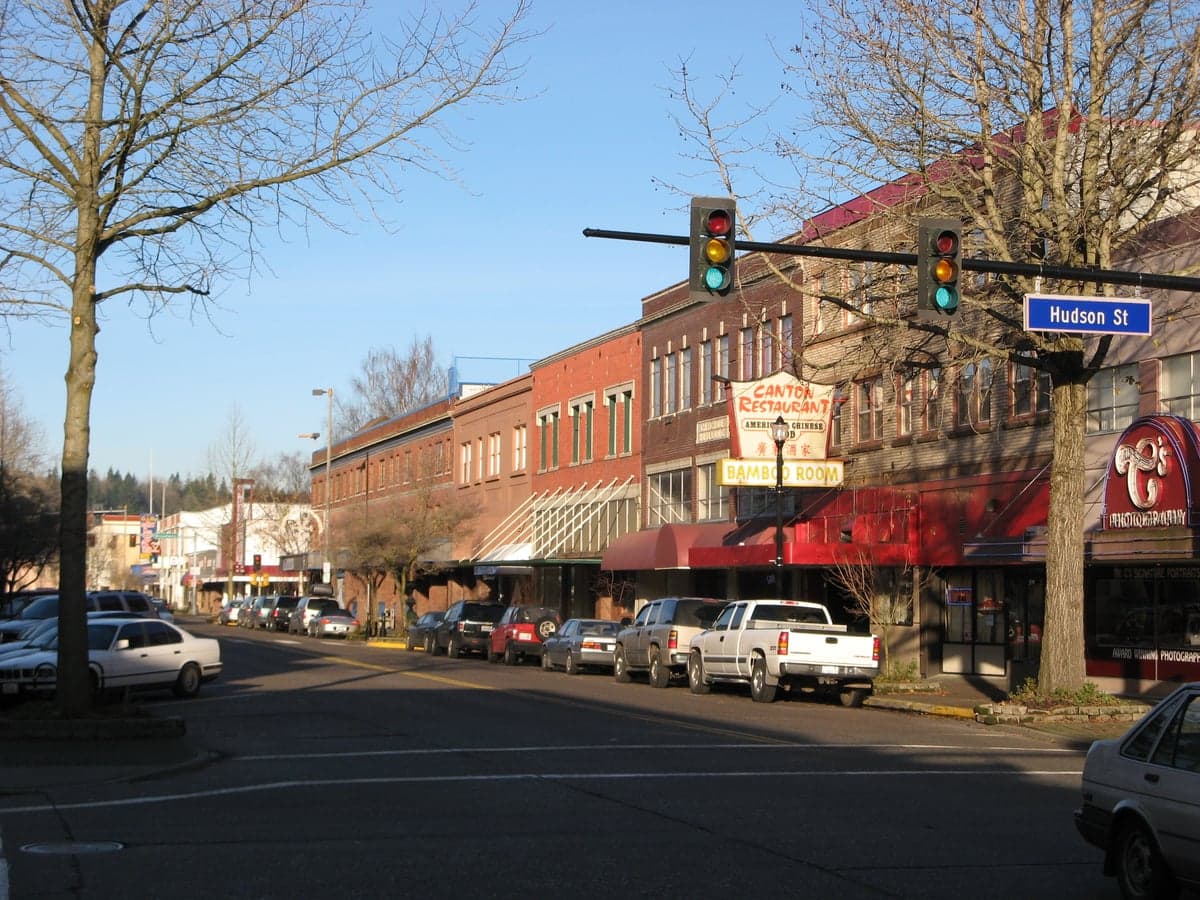
Photo: Wikipedia
Strategic Assessment of Longview, WA
Meaningful friction. Expect exposure to either population pressure, blast zones, or natural disaster risk. Consider buying a retreat property.
What does the Strategic Assessment tell us?
Our Strategic Assessment grades tactical survivability of an area. Major population centers, military targets, fallout zones, natural disasters, and border exposure all drive risk — lower exposure means a more defensible position in a crisis.
This is heavily inspired by Joel Skousen's Strategic Relocation book. Highly recommended you checkout the book ($)What does this tell us?
Our Strategic Assessment grades tactical survivability of an area. Major population centers, military targets, fallout zones, natural disasters, and border exposure all drive risk — lower exposure means a more defensible position in a crisis.
This is heavily inspired by Joel Skousen's Strategic Relocation book. Highly recommended you checkout the book ($)Strategic Pillars

Key Distances
Regional Safe Places
Below is our recommended "safe zones" in Washington and the surrounding area based on our strategic heuristics. For most people, it's unrealistic to live in a “safe zone” full-time due to work, family or other personal reasons. They tend to be more rural. However, many of these areas are perfect for second homes and retreat properties that double as a vacation home or even a short-term rental.
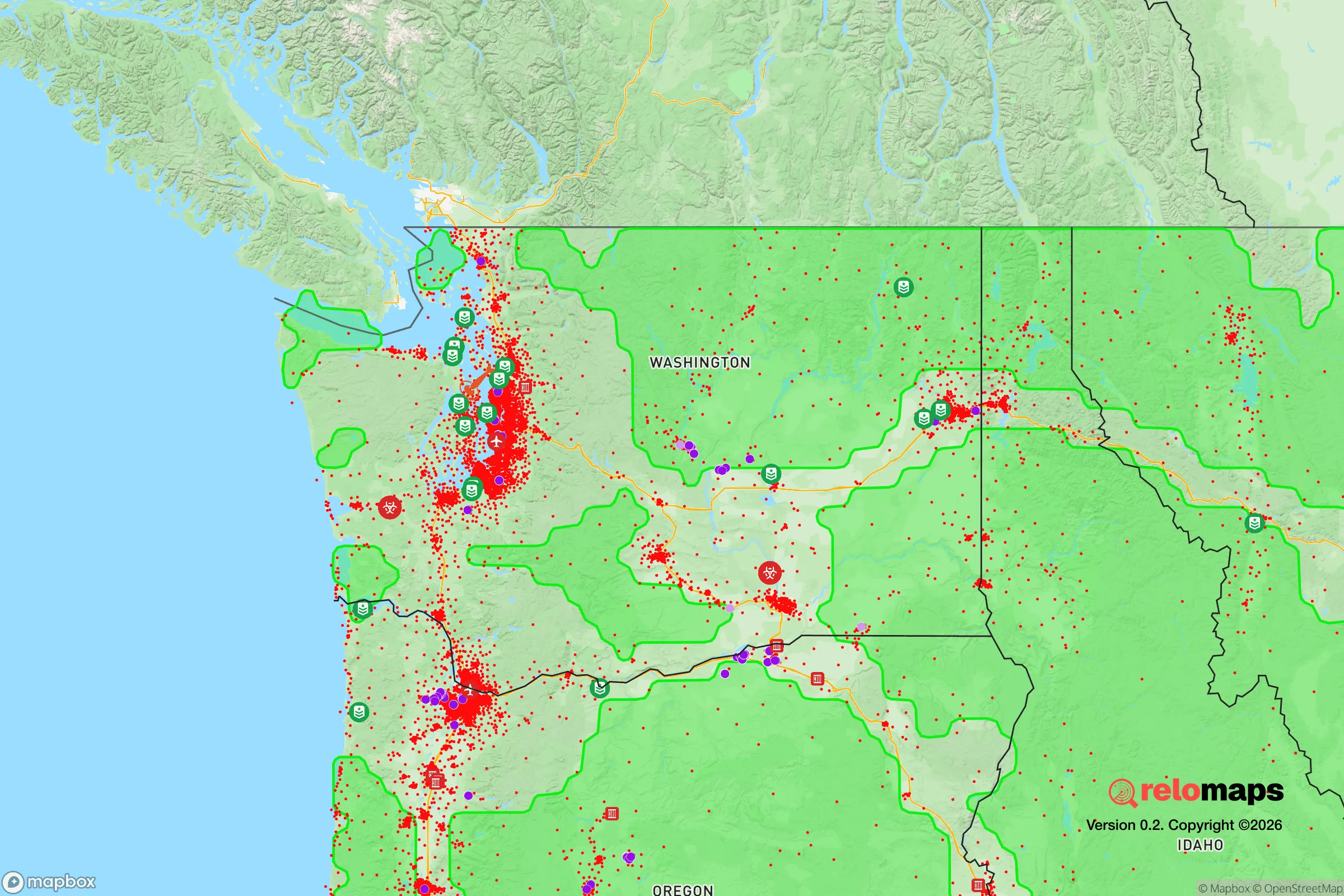
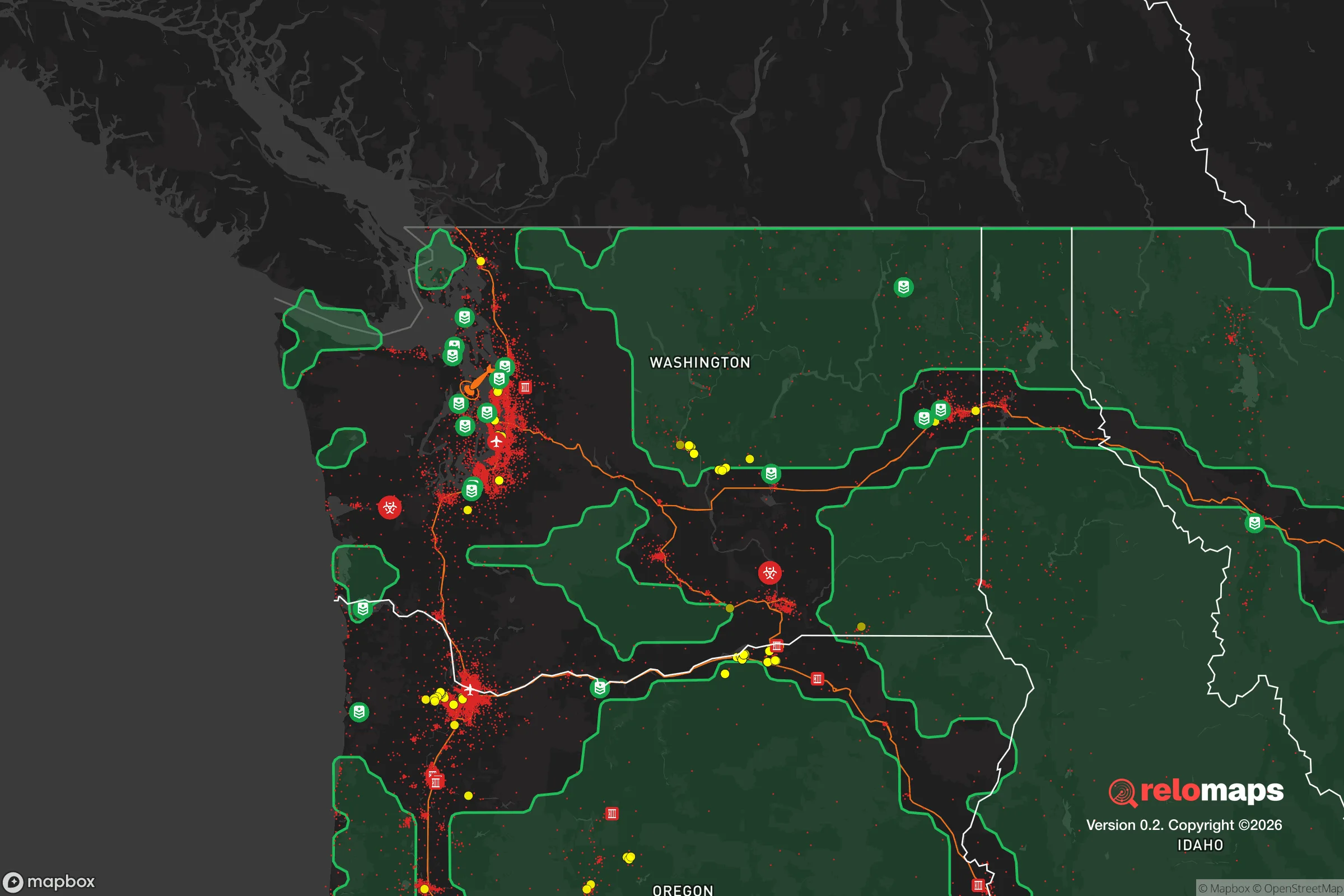


Important Note: For informational purposes only. This does not mean nothing bad ever happens in the green zones. Please use common sense. This is based on public data and modeled with AI. We tried to take a conservative approach but mistakes happen. We update this regularly as new information becomes available.
Solar Generator Recommendations
Backup power matters more here than in safer locations. We've picked three solar generators across budgets and capacity tiers — start with the budget unit if you only need a few essentials, or step up if you want to run a fridge and HVAC for days at a time.

Jackery Portable Power Station Explorer 300
Budget OptionPower on the Go: Weighing only 11 lbs, it's convenient to set up and store with book-sized foldable solar panels

BLUETTI Portable Power Station AC180
Designed for both indoor and outdoor scenarios, AC180 is highly capable as it has a robost capacity and continuous output power.

EF ECOFLOW DELTA Pro Ultra Power Station
Upgraded PickEcoFlow DELTA Pro Ultra is a whole-home energy system designed to grow with your family. Integrated with the Smart Home Panel 2, it scales to meet your evolving energy needs — keeping your home powered, intelligent, and secure through every stage of life.
We earn a commission, at no additional cost to you.
Strategic Assessment Analysis
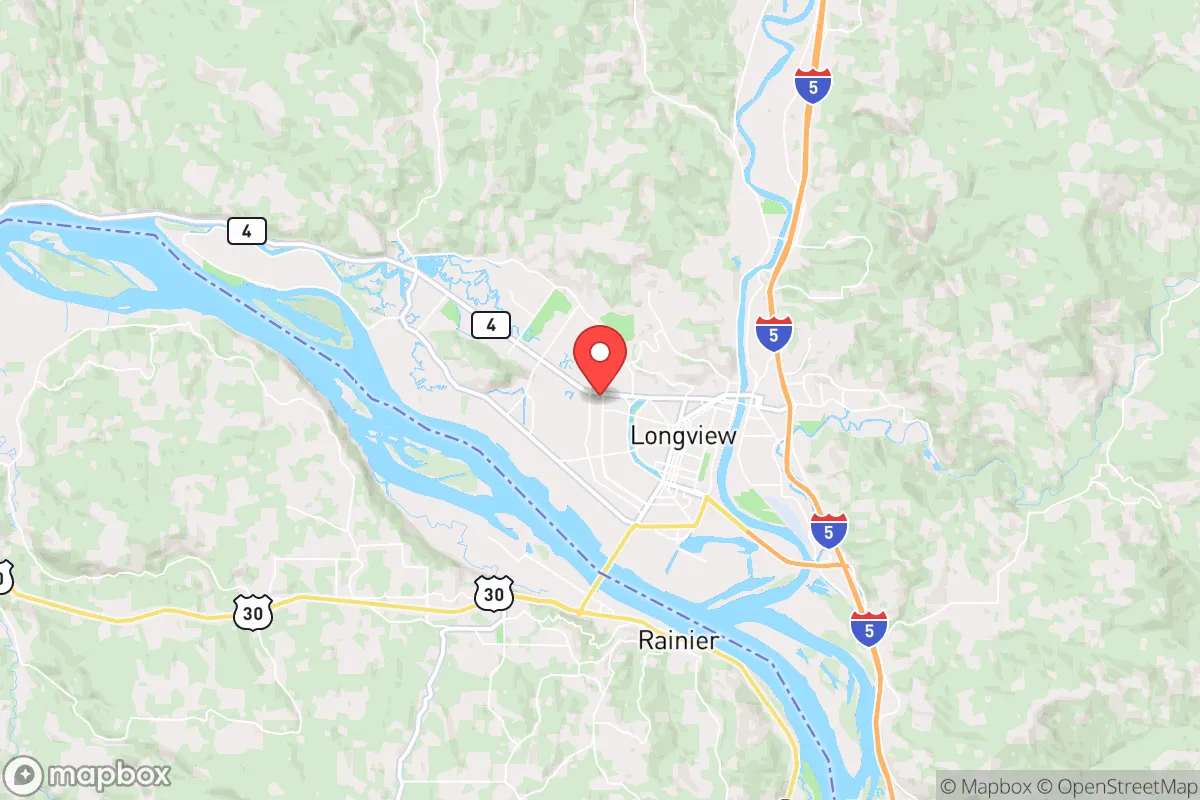
Longview, Washington, sits at a strategic crossroads that offers a rare blend of industrial utility and geographic buffer, making it a serious candidate for anyone thinking long-term about resilience. Located at the confluence of the Columbia and Cowlitz Rivers, roughly 45 miles north of Portland and 120 miles south of Seattle, this working-class city of about 38,000 people has a history rooted in timber and shipping that gives it a practical, no-nonsense character. For a relocator with a prepper mindset, the key question isn't whether Longview is perfect—it's whether its advantages outweigh the risks in a deteriorating national picture. The answer is nuanced, but the area's position as a secondary hub, away from the immediate blast zones of major metros, makes it worth a hard look.
Geographic position and natural advantages for long-term security
Longview's location is its strongest card. The city is tucked into the southwest corner of Washington, shielded from the Pacific coast by the Coast Range and from the Cascades by the Willamette Valley. This means it avoids the direct tsunami risk of coastal towns while still having access to major river systems that can serve as both transport corridors and water sources. The Columbia River is a massive, reliable freshwater artery—over 1,200 miles long—and the Cowlitz River adds a secondary source. For a prepper, water security is non-negotiable, and Longview has it in spades. The surrounding terrain is a mix of lowland forests and rolling hills, offering decent defensibility without the isolation that makes resupply impossible. The climate is mild, with wet winters and dry summers, which supports year-round gardening and foraging. The area's timber industry means fuel for heating is abundant, and the local economy is rooted in heavy industry—paper mills, a steel plant, and a port—which gives it a working infrastructure that won't collapse overnight. The Port of Longview is a deep-water port handling cargo, which could be a lifeline for trade or supply runs if coastal ports get locked down. For a relocator, this isn't a bug; it's a feature.
Risks, exposures, and proximity to fallout-relevant landmarks
No strategic assessment is honest without flagging the downsides, and Longview has real ones. The biggest exposure is its proximity to Portland, Oregon, just 45 miles south. In a scenario of civic unrest, mass casualty events, or a major disaster, Portland's population of 650,000 (metro area over 2.5 million) could become a source of refugee flow, resource competition, and security threats. Interstate 5 runs straight through Longview, making it a natural choke point for anyone fleeing north. That same highway is a double-edged sword: it's your route out, but it's also everyone else's. The city itself has industrial targets that could be problematic. The Weyerhaeuser paper mill and the nearby Kalama methanol plant (if it ever gets built) are potential hazards in a conventional conflict or terrorist attack—chemical releases, fires, or targeted strikes could render parts of the area uninhabitable temporarily. Longview is also within 100 miles of the Hanford Nuclear Reservation, a massive cleanup site with radioactive waste. A catastrophic event there—earthquake, sabotage, or war—could send a plume down the Columbia River corridor. The Cascadia Subduction Zone earthquake risk is real; a 9.0 quake would devastate the coast and cause liquefaction in the river valleys, though Longview's buildings are generally newer than Seattle's and built to code. For a prepper, these risks mean you need a plan for evacuation or shelter-in-place, not a reason to write the area off entirely.
Practical resilience for a relocator: food, water, energy, and defensibility
For a single individual or family looking to set up a resilient household, Longview offers a mix of urban convenience and rural access that's hard to beat in the Pacific Northwest. Water is the easy win: the Columbia River is a year-round source, and the local water utility draws from deep aquifers. A simple Berkey filter or a well-drilling permit can secure potable water for a household indefinitely. Food security is solid. The Cowlitz County area has fertile soil, and the growing season runs from April to October. Local farmers' markets and U-pick operations are common, and the nearby Willamette Valley is one of the most productive agricultural regions in the country. For long-term storage, the area's cool, damp climate is actually good for root cellars and canned goods. Energy is a mixed bag. The grid is fed by hydroelectric dams on the Columbia, which are relatively resilient but vulnerable to earthquake or sabotage. Solar is viable—the region gets about 1,500 hours of sunshine per year, less than the Southwest but enough for a modest off-grid setup with battery storage. Wood heat is the backup of choice; the timber industry means firewood is cheap and plentiful. Defensibility is where Longview gets interesting. The city itself is flat and open near the rivers, but the surrounding hills—Kelso, Castle Rock, and the Toutle River valley—offer rural properties with natural chokepoints, limited road access, and good visibility. A relocator should target land east of I-5, away from the river floodplains, on higher ground. The local gun culture is present but not extreme; Cowlitz County is more rural than urban, and concealed carry permits are straightforward. The sheriff's office is generally pro-Second Amendment, which matters if things go sideways.
The overall strategic picture for a conservative relocator
Longview is not a survivalist paradise—it's a working-class town with real vulnerabilities, including its proximity to Portland, its industrial targets, and its earthquake risk. But for a conservative-leaning relocator who wants to be prepared for civic unrest, mass casualty events, or a slow-motion collapse, it offers a pragmatic middle ground. You're close enough to major resources (Portland's medical centers, Seattle's supply chains) to tap them in good times, but far enough away to have a buffer when things go bad. The local economy is blue-collar and self-reliant, not dependent on tech or government contracts. The community is older, more stable, and less likely to riot than a coastal city. The natural advantages—water, timber, farmland, and a mild climate—are the foundation of long-term resilience. The risks are manageable with planning: a bug-out route east toward the Cascades, a well-stocked pantry, and a network of like-minded neighbors. If you're looking for a place to ride out the storm without going full hermit, Longview deserves a spot on your shortlist. Just don't expect it to stay quiet forever—nowhere will.

* Values derived from national, state, county, city and local statistics and may differ in a specific area. Last updated: 2026-04-21T11:02:09.000Z
Narrative content on this page is AI-generated and may contain mistakes. Verify any details that matter before acting on them.
ReloMaps may earn a commission from affiliate links at no extra cost to you.

