Photo: Wikipedia
Political ClimatePolitical Climate in Longview, WA
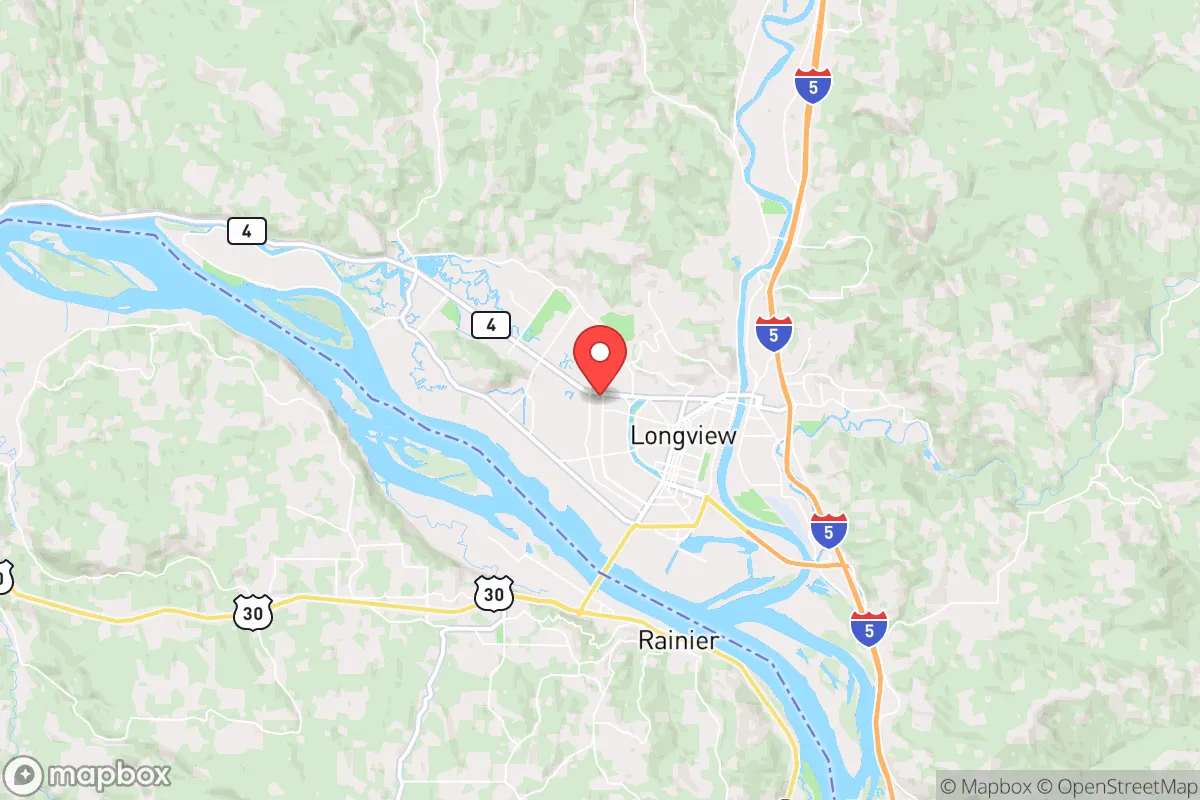
District shown is the primary district for this city’s centroid. Cities may span multiple districts.
Local Political AnalysisPolitical Analysis of Longview, WA
Longview, Washington, sits in a political sweet spot that’s been shifting under our feet. The Cook PVI clocks it at R+2, meaning it leans slightly Republican compared to the nation, but that’s a thin margin—and it’s getting thinner. For decades, this was a solid blue-collar conservative town, tied to the timber and paper mills, where folks kept their politics simple: work hard, keep the government out of your business, and don’t mess with the Second Amendment. But over the last ten years, you’ve seen the progressive creep from Portland and Seattle start to seep in, especially through new transplants and younger folks moving up from the metro areas. The 2020 election was a wake-up call—Cowlitz County went for Trump by about 10 points, but Longview itself was closer, and the city council races have gotten more contentious. If you’re looking for a place where conservative values still hold the line, Longview is it, but you’ll need to keep an eye on the edges.
How it compares
Drive 15 minutes north to Kelso, and you’ll find a similar vibe—working-class, gun-friendly, and skeptical of big government—but Kelso’s a bit more rural and a bit more red. Head south 40 miles to Portland, and you’re in a whole different universe: a progressive stronghold where taxes are high, regulations are thick, and the city council has openly embraced defunding the police. That contrast is what makes Longview feel like a last stand for common sense. To the east, places like Woodland and Battle Ground (in Clark County) are more reliably conservative, but they’re also getting swallowed by Vancouver’s suburban sprawl. Longview’s R+2 rating puts it in a narrow band—it’s not as deep red as the rural towns east of the Cascades, but it’s a world away from the coastal liberal bubbles. The real worry is that as Portland’s housing crisis pushes people north, we’re seeing a slow demographic shift. Newcomers bring their politics with them, and that’s how you end up with zoning fights and mask mandates that nobody asked for.
What this means for residents
For folks who value personal freedom, Longview is still a decent place to live, but you have to stay engaged. The city council has flirted with progressive policies—like a 2021 resolution on police reform that felt more symbolic than substantive, but still raised eyebrows. Property taxes are moderate compared to King County, but they’ve crept up as the city tries to fund new parks and bike lanes that feel like a Portland import. The real red flag is the school board. In 2023, there was a push to adopt critical race theory-inspired curriculum materials, and it took a loud parent group to shut it down. That’s the kind of government overreach that starts small—a book here, a training there—and before you know it, your kid’s being taught that America is fundamentally evil. On the plus side, the local sheriff’s office is still solidly pro-Second Amendment, and there’s no talk of red flag laws being enforced aggressively here. But if you’re moving to Longview expecting a conservative haven, you’ll need to get involved in local elections. The margins are tight, and apathy is how you lose your rights.
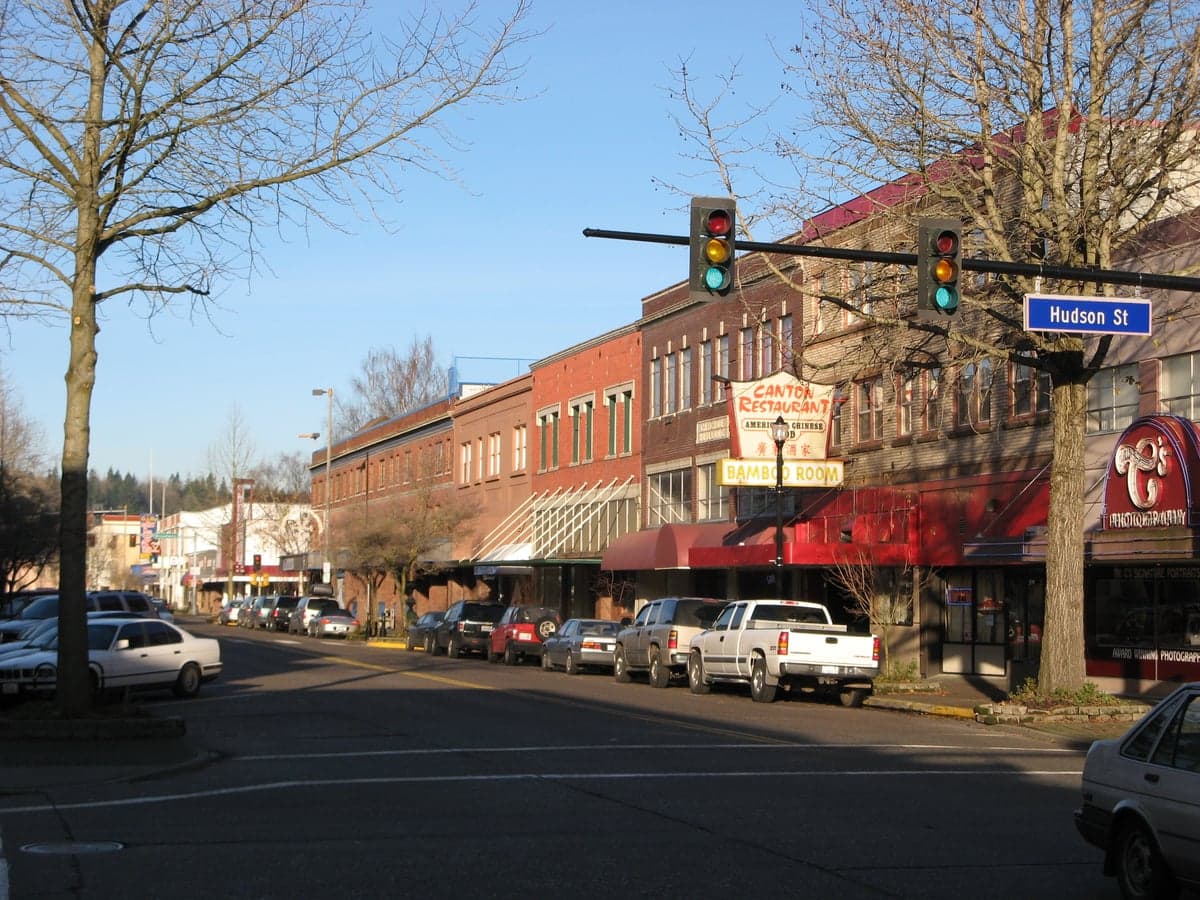
Culturally, Longview still feels like a timber town at heart. The big employers—Weyerhaeuser, KapStone, and the local hospital—tend to attract a pragmatic, no-nonsense crowd. You won’t see many pride flags on Main Street, and the annual “Go Fourth” celebration is about as traditional as it gets. But there’s a growing tension between the old guard and the new arrivals who want to turn the downtown into a mini-Portland with breweries and art walks. The policy distinction that matters most is land use: Longview has resisted the kind of upzoning and density mandates that have wrecked housing affordability in bigger cities. For now, you can still buy a house with a yard and a garage without a six-figure income. That’s worth protecting. The long-term trajectory depends on whether the transplants assimilate or try to transform the place. My bet is that Longview holds the line for another decade, but only if conservatives show up to vote in every local election—not just the presidential ones.

State Political ClimatePolitical Climate in Washington
State Political AnalysisPolitical Environment in the State
Washington State has shifted from a purple battleground to a solidly blue stronghold over the past two decades, with Democrats controlling the governorship, both U.S. Senate seats, and both chambers of the state legislature since 2017. The state hasn't voted for a Republican presidential candidate since 1984, and in 2024, Kamala Harris carried it by roughly 19 points. However, that top-line number hides a deeply fractured electorate: the Puget Sound corridor—Seattle, Bellevue, Tacoma, and Olympia—drives the state's leftward tilt, while vast swaths of Eastern Washington and rural counties remain reliably conservative. For a conservative considering relocation, the key question isn't whether the state is liberal—it's whether you can find a pocket where your values and lifestyle aren't under constant assault.
Urban vs. rural divide
The political map of Washington is a tale of two states. King County, home to Seattle and its sprawling suburbs, casts about 30% of the state's total vote and delivers margins of 70-75% for Democrats. That alone is enough to cancel out the rest of the state. Neighboring Snohomish and Pierce counties (Everett, Tacoma) have trended blue over the last decade, though Pierce still shows some purple streaks. Meanwhile, the eastern half of the state—Spokane, the Tri-Cities (Kennewick, Pasco, Richland), Yakima, and Wenatchee—votes reliably Republican, often by 15-20 points. The rural coastal counties like Grays Harbor and Pacific are more mixed, but they're losing population. The real story is the suburban ring: places like Issaquah, Redmond, and Sammamish have become Democratic strongholds as tech workers flooded in, while exurbs like North Bend and Enumclaw still lean right but are under pressure. If you're a conservative looking for like-minded neighbors, your best bets are Spokane Valley, the Tri-Cities, or the smaller towns in the Columbia Basin—but even there, the cultural tide is shifting as Seattle's influence spreads via remote work and state policy.
Policy environment
Washington's policy landscape is aggressively progressive and shows no signs of moderating. The state has no personal income tax—a rare bright spot—but it compensates with some of the highest sales taxes in the nation (state rate 6.5%, but local add-ons push it to 10%+ in many cities) and a business gross receipts tax (B&O) that punishes small businesses. Property taxes are moderate but rising fast as home values explode. The regulatory climate is hostile to traditional industries: the state's cap-and-trade program (Climate Commitment Act) drives up gas and energy costs, and a new long-term care payroll tax (WA Cares) took effect in 2023, taking 0.58% of every paycheck with no opt-out for most workers. Education policy is a flashpoint: the state has a "sex ed" mandate that includes LGBTQ+ content from kindergarten, and parental rights in schools are weak compared to states like Florida or Texas. Healthcare is dominated by the state's public option (Cascade Care) and strict insurance mandates. Election laws are among the most convenient in the country—universal mail-in voting with no voter ID requirement—which conservatives view as ripe for fraud, though the system has been in place since 2011 without major scandals. Gun laws are among the strictest nationally: a 2023 law bans many semi-automatic rifles, requires a 10-day waiting period, and imposes a training requirement for purchase. Magazine capacity is capped at 10 rounds. These policies are unlikely to be reversed given Democratic supermajorities in the legislature.
Trajectory & freedom
Washington is on a clear trajectory toward less personal freedom, especially for gun owners, parents, and taxpayers. The 2023 ban on "assault weapons" (HB 1240) was the most significant gun control measure in state history, and a 2024 law (HB 1903) bans carrying firearms in public parks and transit stations. Parental rights took a hit with the 2023 "shield law" (SB 5599) that allows minors to access gender-affirming care without parental consent, and a 2024 law (HB 1231) prohibits schools from notifying parents if a child changes their gender identity or pronouns. On the economic freedom front, the 2024 capital gains tax (SB 5096) was upheld by the state Supreme Court, opening the door to a future income tax. The state's "public health emergency" powers were expanded during COVID and never fully rolled back, giving the governor broad authority to shut down businesses and mandate vaccines. On the positive side, Washington has strong property rights protections against eminent domain abuse, and the state's initiative process remains a check on the legislature—voters recently rejected a carbon tax and upheld a ban on income taxes. But the overall trend is unmistakable: the legislature is pushing further left every session, and the courts are generally deferential.
Civil unrest & political movements
Washington has been a national flashpoint for political unrest. The 2020 CHOP/CHAZ occupation in Seattle's Capitol Hill neighborhood—where activists took over several blocks, established a "no police zone," and two teenagers were killed—remains a defining image of the state's progressive governance. Seattle's city council has repeatedly voted to defund the police, though some funding has been restored. On the right, the "Three Percenters" and other militia groups have a presence in Eastern Washington, and the 2016 occupation of the Malheur National Wildlife Refuge had Washington connections. Immigration politics are heated: Washington is a "sanctuary state" (2019's Keep Washington Working Act), and Seattle has some of the strongest "sanctuary city" policies in the nation, limiting cooperation with ICE even for violent criminals. The state's election integrity is a persistent concern for conservatives: with universal mail-in voting and no voter ID, there have been isolated cases of ballot harvesting and duplicate voting, though no widespread fraud has been proven. The secessionist "State of Jefferson" movement has some support in rural counties like Ferry and Stevens, but it's more symbolic than practical. A new resident will notice the political tension most in the suburbs: yard signs for progressive candidates dominate in King County, while Trump flags still fly in the exurbs.
Projection
Over the next 5-10 years, Washington will likely become even more Democratic and more progressive. The tech industry's continued growth in Seattle, Redmond, and Bellevue brings in a steady stream of left-leaning professionals from California and abroad. Remote work is allowing some urbanites to move to smaller towns, but they bring their politics with them—places like Leavenworth and Port Townsend are seeing rapid demographic change. The state's population growth is concentrated in the already-blue Puget Sound region, while rural counties are stagnant or declining. The Republican Party in Washington is weak and fractured, unable to win statewide office or break the Democratic supermajority in the legislature. The most likely scenario is continued expansion of gun control, higher taxes (possibly a full income tax), and further erosion of parental rights. The one wild card is a potential economic downturn: Washington's economy is heavily dependent on tech and aerospace (Boeing), and a recession could shift priorities. But for a conservative moving in now, the realistic expectation is that the state will be less free in a decade than it is today.
For a conservative considering Washington, the bottom line is this: you can find a community that shares your values in places like Spokane Valley, the Tri-Cities, or the smaller towns east of the Cascades, but you will be fighting an uphill battle against state policy. Your gun rights will be restricted, your tax burden will be high, and your parental authority will be challenged by state law. If you're willing to accept those trade-offs for the state's natural beauty and strong economy, it's possible to make it work. But if personal freedom and limited government are your top priorities, you'll find a better fit in Idaho, Montana, or Texas. Washington is a beautiful state, but it's no longer a free one.
* Values derived from national, state, county, city and local statistics and may differ in a specific area. Last updated: 2026-04-21T11:02:09.000Z
Narrative content on this page is AI-generated and may contain mistakes. Verify any details that matter before acting on them.
ReloMaps may earn a commission from affiliate links at no extra cost to you.

