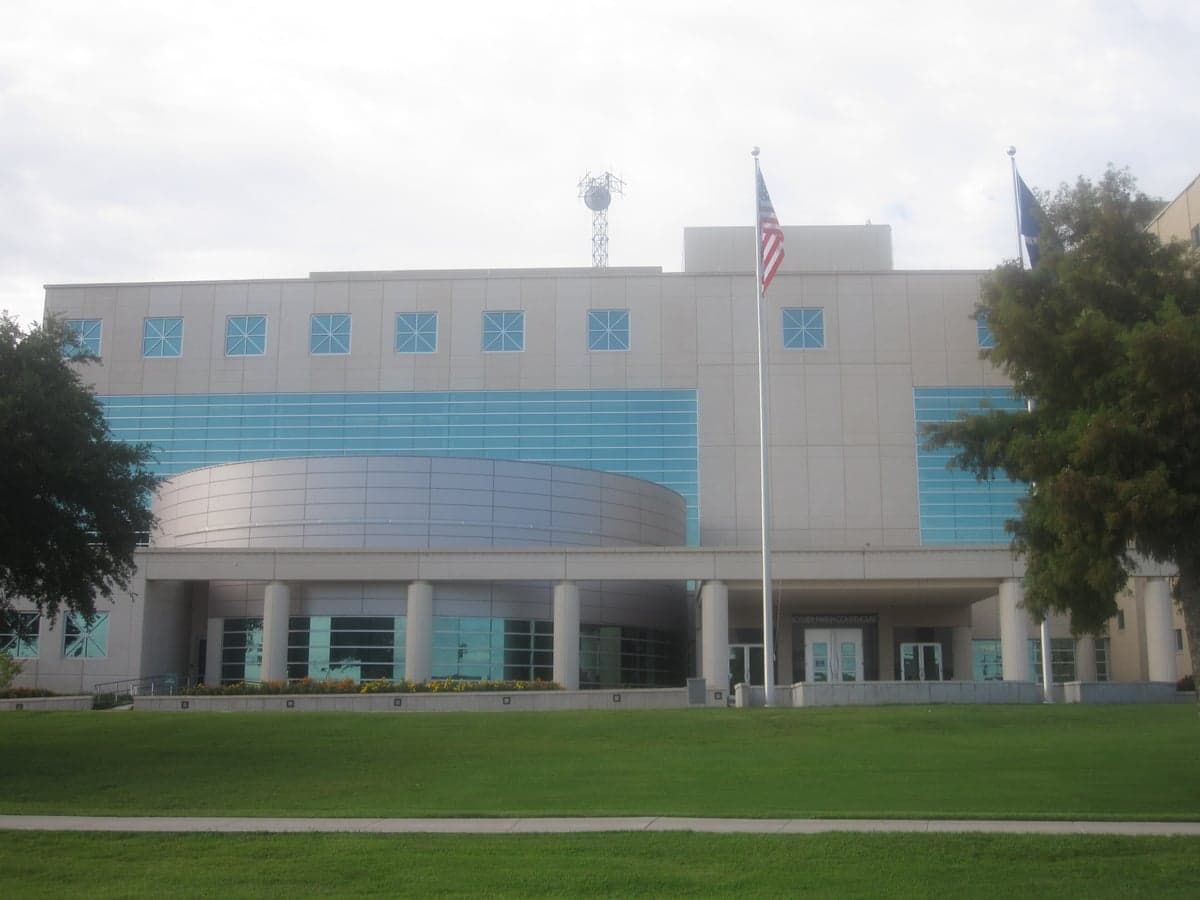
Photo: Wikipedia
Political ClimatePolitical Climate in Bossier County
Showing district-level results — no local-only data available.
Local Political AnalysisPolitical Analysis of Bossier County
Bossier County, Louisiana, is one of the most reliably Republican strongholds in the state, carrying a Cook Partisan Voting Index of R+26. That means the county votes about 26 points more Republican than the national average, making it a deep red anchor in northwest Louisiana. The trajectory has been steadily conservative for decades, with no signs of a shift toward the center. In the 2024 presidential election, Bossier Parish (the county's official name) gave Donald Trump over 75% of the vote, a margin that has only widened since the 2010s as the area's population grew with military and energy-sector transplants who lean heavily right.
How it compares
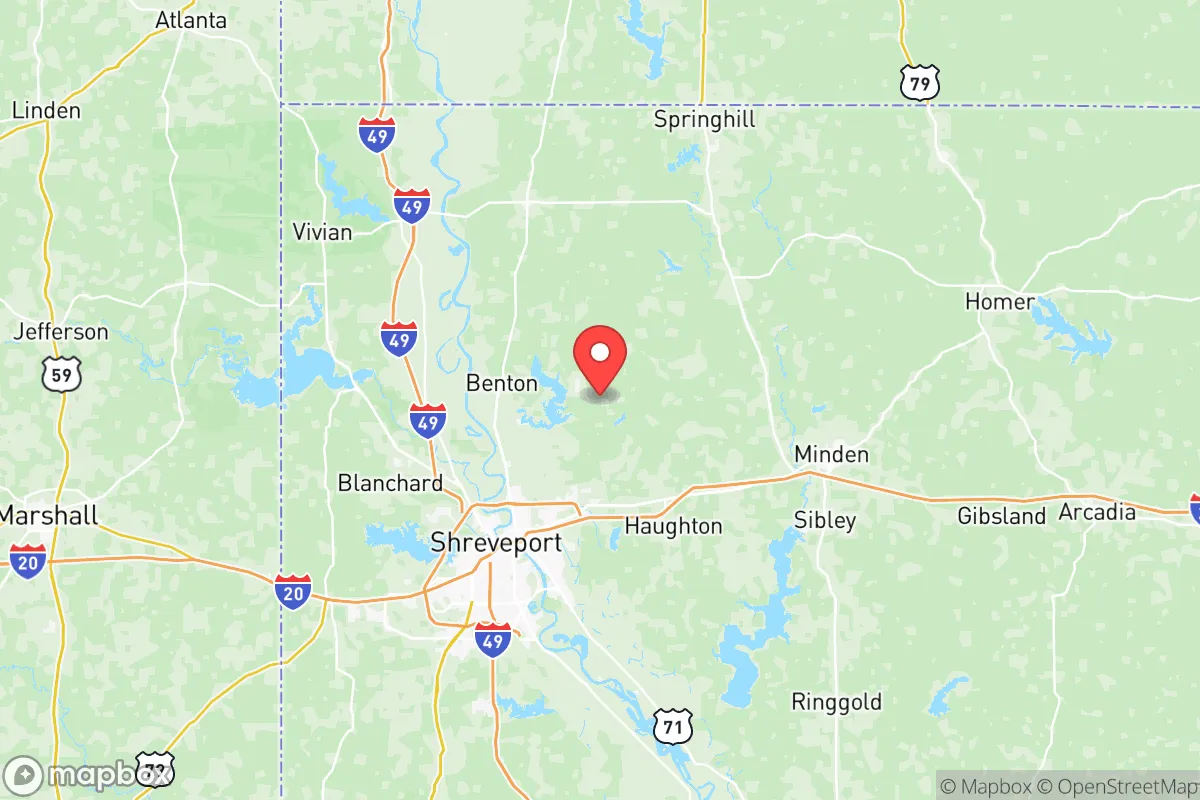
Compared to Louisiana as a whole, Bossier County is significantly more conservative. The state of Louisiana is itself a red state—it voted for Trump by about 19 points in 2024—but Bossier's R+26 rating puts it well to the right of the state average. For context, neighboring Caddo Parish, which includes Shreveport, is a Democratic-leaning area with a Cook PVI around D+6, creating a stark political divide along the Red River. Within Bossier County itself, there's some variation: the city of Bossier City, the county seat, is solidly red but contains a handful of precincts near Barksdale Air Force Base that trend slightly more moderate due to a younger, more transient military population. The unincorporated communities of Haughton and Benton are among the most conservative in the parish, regularly delivering 80%+ Republican margins. The only precincts that ever show a hint of blue are in the southernmost parts of Bossier City near the Shreveport border, where some working-class neighborhoods and a small number of minority-majority blocks occasionally vote Democratic in local races. But even those precincts typically break 60-40 Republican in presidential years.
What this means for residents
For conservative residents, Bossier County offers a political environment where their values are the clear majority. Local government, school boards, and law enforcement are overwhelmingly Republican, and policy debates tend to center on tax cuts, Second Amendment rights, and economic development rather than social spending or progressive reforms. Conservative newcomers from blue states often describe the area as a relief from what they see as overreach elsewhere. For liberal residents, the reality is different: they are a distinct minority. While no one faces open hostility for their political views in day-to-day life, progressive candidates rarely win local office, and issues like abortion access or environmental regulation get little traction in public discourse. Liberal residents often find their political engagement limited to national elections or niche advocacy groups, and many choose to cross the river to Shreveport for more like-minded social circles. The practical effect is that Bossier County's policies consistently reflect a conservative agenda, from low property taxes to limited zoning regulations.
Culturally, Bossier County stands apart from Louisiana's more famous regions like Cajun Country or New Orleans. The area's identity is shaped more by its military presence at Barksdale Air Force Base and its proximity to the Ark-La-Tex region than by the bayou traditions found south of Alexandria. You'll see fewer crawfish boils and more barbecue joints, and the local dialect leans toward a general Southern drawl rather than the distinctive Cajun French influence. Politically, this means the county's conservatism is of a practical, business-friendly variety rather than the populist strain found in some rural parts of the state. The county commission focuses on infrastructure for the base and attracting defense contractors, and there's a noticeable lack of the culture-war intensity that dominates politics in more evenly divided areas. For anyone moving here, the takeaway is simple: if you're conservative, you'll feel at home; if you're liberal, you'll find your voice but likely not your voting bloc.

State Political ClimatePolitical Climate in Louisiana
State Political AnalysisPolitical Environment in the State
Louisiana has been a reliably Republican state in federal elections since 2000, but its political reality is far more complex than a simple red-state label suggests. The state leans roughly +15 points Republican in presidential races, but Democrats still hold significant down-ballot power, particularly in New Orleans and Baton Rouge, creating a unique hybrid where conservative cultural values coexist with a deep-rooted populist and often anti-establishment streak. Over the last 20 years, the shift has been dramatic: in 1996, Bill Clinton carried the state, but by 2004, George W. Bush won it by 15 points, and the GOP has only solidified its grip since, though the margins have tightened slightly in recent cycles as suburban voters have become more volatile.
Urban vs. rural divide
The political map of Louisiana is a textbook case of the urban-rural split, but with a few local twists. New Orleans (Orleans Parish) is the state's deep-blue anchor, consistently delivering 80%+ of its vote to Democrats, driven by its large African American population and progressive white liberals. Baton Rouge (East Baton Rouge Parish) is a battleground within itself: the city proper leans Democratic, but the surrounding suburbs like Prairieville and Central are heavily Republican, making the parish as a whole a purple swing area. Lafayette and Shreveport are more moderate, with Lafayette trending redder as its oil-and-gas economy attracts conservative professionals, while Shreveport remains a Democratic-leaning city due to its union history and Black population. The rural "Acadiana" region—places like Crowley, Ville Platte, and the bayou parishes—is deeply conservative, culturally Cajun, and reliably Republican, though with a populist edge that sometimes backs Democrats who talk tough on oil and agriculture. The Florida Parishes (north of Lake Pontchartrain), including Slidell and Mandeville, are among the most Republican areas in the state, driven by white flight from New Orleans and a strong evangelical presence.
Policy environment
Louisiana's policy environment is a mix of low taxes and high fees, with a regulatory posture that is generally business-friendly but uneven. The state has no personal income tax on Social Security benefits and a flat 4.25% income tax rate, but sales taxes are among the highest in the nation, often exceeding 10% in some parishes when local taxes are added. Property taxes are low, which appeals to homeowners, but the state relies heavily on oil and gas severance taxes, making its budget volatile. Education policy is a flashpoint: Louisiana has one of the largest school voucher programs in the country (the Louisiana Scholarship Program), and charter schools are widespread, especially in New Orleans, which has the highest percentage of charter school students in the nation. Healthcare is a mixed bag: the state expanded Medicaid under the Affordable Care Act in 2016, a move pushed by then-Democratic Governor John Bel Edwards, but it still ranks near the bottom in health outcomes. Election laws are moderately restrictive: voters must present a photo ID, and early voting is available for 7 days, but no-excuse absentee voting is limited to specific categories like military and elderly voters.
Recent policy direction
Over the last five years, Louisiana has moved decisively to the right on most cultural and legal fronts, though with some surprising exceptions. In 2024, the state passed a near-total abortion ban with no exceptions for rape or incest, triggering immediately after the Dobbs decision. Gun laws have been loosened: in 2021, Louisiana became a permitless carry (constitutional carry) state, allowing any adult 21 or older to carry a concealed firearm without a permit. On education, the state passed a Parents' Bill of Rights in 2023, requiring schools to notify parents of any changes to a student's mental or physical health, effectively targeting LGBTQ+ curriculum and pronoun policies. Property rights are strong, with no statewide zoning in many rural areas, but the state's coastal erosion crisis has led to increasing government intervention in land use near the coast. On privacy and surveillance, Louisiana has been aggressive: in 2022, it passed a law requiring age verification for adult websites, and it has one of the strictest anti-doxxing laws in the country. Voting access has tightened: in 2024, the state banned ballot drop boxes and shortened the early voting window, moves that Democrats argue suppress turnout. On the libertarian side, the state has no personal income tax on retirement income, which is a major draw for conservative retirees.
Civil unrest & political movements
Louisiana has a long history of political turbulence, but recent years have been quieter than the national average, though not without flashpoints. The 2020 Black Lives Matter protests in New Orleans and Baton Rouge were large but largely peaceful, with the most notable incident being the toppling of a Confederate statue in Baton Rouge. Immigration politics are less heated here than in border states, but the state has seen a small influx of Central American migrants in recent years, and the legislature passed a bill in 2023 requiring local law enforcement to cooperate with ICE. There is a vocal secessionist movement in the Acadiana region, though it's more cultural than serious—groups like the "Republic of West Florida" are mostly symbolic. Election integrity has been a recurring theme: after the 2020 election, Louisiana's Republican Secretary of State Kyle Ardoin faced pressure from the right to audit the results, but no significant fraud was found. The most visible political movement on the ground is the rise of the "MAGA" wing of the GOP, which has pushed the state party further right, particularly on education and gun rights, and has led to primary challenges against more moderate Republicans like Senator Bill Cassidy.
Projection
Over the next 5-10 years, Louisiana is likely to become even more Republican, but the margin of that shift will depend on two factors: the continued exodus of Black residents from New Orleans to other states (a trend that has been accelerating since Hurricane Katrina) and the in-migration of conservative retirees from California and the Northeast, who are drawn to the low property taxes and gun-friendly laws. The suburbs of Baton Rouge and New Orleans—places like Denham Springs, Mandeville, and Covington—will become the political battlegrounds, as they fill with newcomers who are culturally conservative but fiscally pragmatic. The Democratic Party in Louisiana will continue to shrink, becoming almost entirely dependent on the Black vote in New Orleans and Baton Rouge, with little hope of winning statewide office unless a moderate white Democrat emerges. The biggest wildcard is climate change: as coastal erosion and hurricane risk worsen, the state may see a population shift northward, which could further entrench rural conservatism. For a relocator, the Louisiana of 2035 will likely feel more like Texas or Mississippi than the quirky, populist state it is today.
For a new resident, the bottom line is this: Louisiana offers a genuinely low-tax, low-regulation environment with strong gun rights and a culturally conservative tilt, but it comes with trade-offs. Public services are weak, infrastructure is crumbling, and the state's reliance on oil and gas means economic booms and busts are the norm. If you're a conservative who values individual liberty over government services, you'll find a lot to like. If you're a liberal, you'll find a small but resilient community in New Orleans and Baton Rouge, but you'll be swimming against a strong tide. Either way, the politics here are personal, local, and often surprising—don't expect to fit into a neat national box.
* Values derived from national, state, county, city and local statistics and may differ in a specific area. Last updated: 2026-08-08T11:32:22.000Z
Narrative content on this page is AI-generated and may contain mistakes. Verify any details that matter before acting on them.
ReloMaps may earn a commission from affiliate links at no extra cost to you.

