Demographics of St Mary County
Affluence Level in St Mary County
A below-average socioeconomic profile. Incomes, home values, and educational attainment trail the U.S., with higher poverty and unemployment.
People of St Mary County
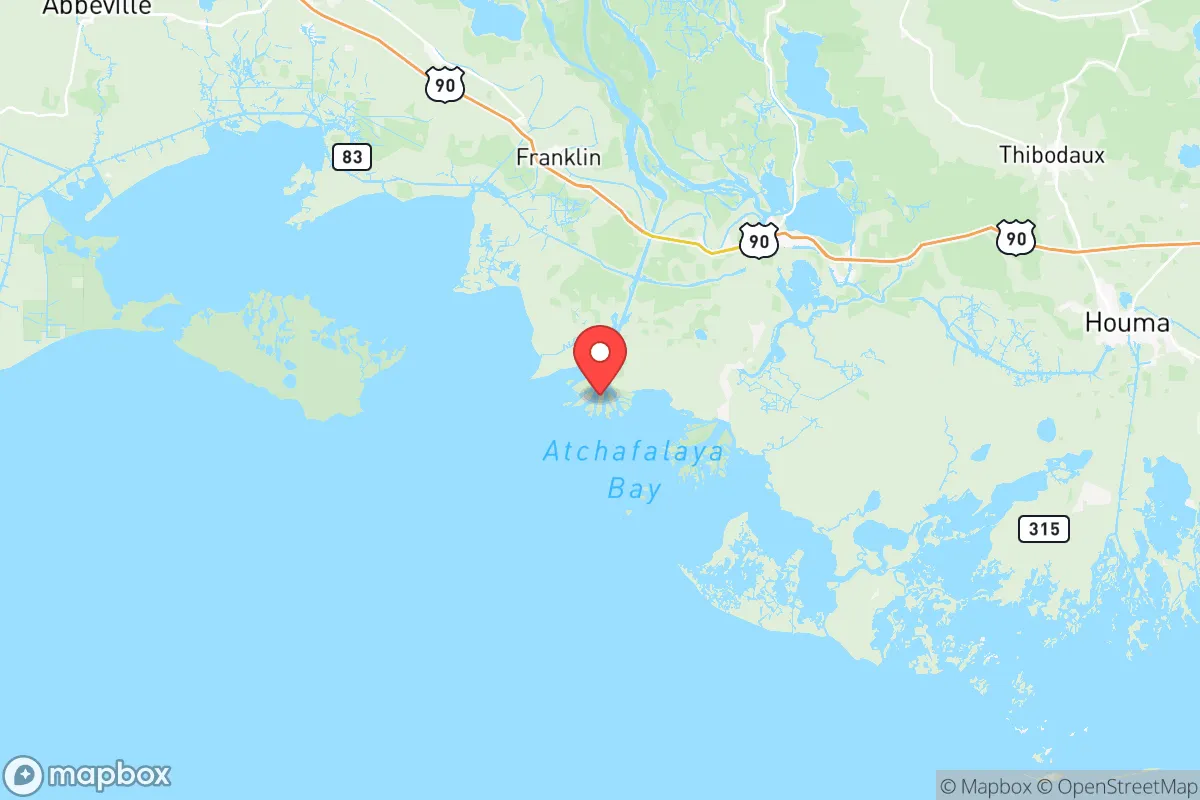
St Mary County, Louisiana, is home to 48,455 residents, a population shaped by centuries of plantation agriculture, Cajun and Creole culture, and the modern petrochemical industry. The county’s character is defined by a majority-white population (53.9%) alongside a substantial Black community (28.9%) and a growing Hispanic presence (9.4%), with a notably low foreign-born share of just 3.0%. Its people are concentrated in the towns of Morgan City, Franklin, and Berwick, where a strong sense of local identity, rooted in the Atchafalaya Basin and Gulf Coast industries, persists despite economic shifts.
Settlement & growth (pre-1960)
Long before European arrival, the area now known as St Mary County was inhabited by the Chitimacha and Atakapa peoples, who lived along the bayous and marshes for thousands of years. French explorers and traders began entering the region in the late 1600s, but permanent European settlement did not take hold until the 1700s, when French and Acadian (Cajun) refugees—displaced from Nova Scotia after 1755—established small farms and fishing camps along Bayou Teche and the lower Atchafalaya River. These early settlers founded the communities of Franklin (incorporated 1808) and Jeanerette, which became the cultural heart of the Cajun population in the parish.
The 19th century brought a dramatic transformation with the rise of sugar cane plantations. Wealthy Anglo-American planters from the East Coast and the Caribbean moved into the region after the Louisiana Purchase (1803), acquiring vast tracts of land along Bayou Teche and the Mississippi River delta. They brought enslaved Africans to work the sugar fields, and by 1860, St Mary Parish had a Black population exceeding 60%, concentrated on plantations near Franklin, Morgan City, and Patterson. After the Civil War and emancipation, many freedmen remained as sharecroppers and laborers, forming the foundation of the parish’s enduring Black communities in towns like Baldwin and Charenton.
The late 19th and early 20th centuries saw the arrival of Italian and Irish immigrants, who came to work on the expanding railroad lines and in the emerging seafood and canning industries. These groups settled primarily in Morgan City and Berwick, where they established Catholic parishes and small businesses. The oil and gas boom of the 1930s–1950s brought a wave of domestic migrants from Texas, Oklahoma, and other parts of Louisiana, drawn by jobs in drilling, refining, and pipeline construction. This influx swelled the population of Morgan City, which became the parish’s commercial and industrial hub, and shifted the local economy away from agriculture toward energy.
Modern era (post-1965)
The 1965 Hart-Cellar Act had a limited direct impact on St Mary Parish, as the region’s foreign-born population remains just 3.0%—far below the national average. However, the post-1965 period saw significant domestic migration patterns reshape the parish. The decline of sugar cane farming and the consolidation of the petrochemical industry led to a slow out-migration of younger residents to Baton Rouge, Lafayette, and Houston, while retirees and workers from other parts of Louisiana moved into the parish for lower housing costs and a slower pace of life.
The Hispanic population, now 9.4%, grew primarily from Mexican and Central American laborers recruited by the oil and gas industry and the seafood processing plants in the 1990s and 2000s. These workers settled in Morgan City and Franklin, where they formed small but visible enclaves, often working in construction, offshore support, and food service. The Asian population (East/Southeast Asian) stands at 1.3%, largely Vietnamese and Filipino families who arrived after the Vietnam War and found work in the fishing and shrimping industries, concentrated in Morgan City and Patterson. The Indian-subcontinent population is negligible at 0.0%.
The Black population, at 28.9%, has remained stable but aging, as younger Black residents have moved to larger cities for education and employment. Suburbanization has been modest, limited to new subdivisions around Bayou Vista and Amelia, where white and Hispanic families have sought newer housing away from the older, at times, flood-prone older neighborhoods. The college-educated share is just 13.1%, reflecting a workforce heavily oriented toward blue-collar trades, oilfield services, and maritime industries.
The future
St Mary Parish is likely to continue its slow population decline, as younger residents leave for urban centers and the birth rate remains below replacement. The Hispanic population is expected to grow gradually, driven by continued labor demand in energy and seafood, but will likely remain a minority share. The Black and white populations are both aging, with the white share (53.9%) projected to shrink slightly as older residents pass away and out-migration continues.
The parish is not tribalizing into distinct ethnic enclaves; rather, it is homogenizing around a shared working-class identity tied to the oil and gas economy. Immigrant communities—Hispanic and Vietnamese—are assimilating into the broader Cajun and Creole culture, with second-generation residents often speaking English as a first language and adopting local customs. The next 10–20 years will likely see a smaller, older, and slightly more Hispanic population, with the parish’s cultural identity remaining rooted in its Cajun and Creole heritage, albeit with a more diverse flavor in Morgan City and Franklin.
For someone moving in now, St Mary Parish offers a stable, low-cost environment with a strong sense of community, but limited economic diversity and educational opportunities. The population is becoming more homogeneous in terms of class and outlook, even as its ethnic makeup slowly shifts. It is a place where tradition and industry still define daily life, and where newcomers will find a welcoming but insular culture shaped by the bayou and the Gulf.

* Values derived from national, state, county, city and local statistics and may differ in a specific area. Last updated: 2026-05-19T06:32:12.000Z
Narrative content on this page is AI-generated and may contain mistakes. Verify any details that matter before acting on them.
ReloMaps may earn a commission from affiliate links at no extra cost to you.

