Strategic Assessment of St Mary County
Workable tactical position. Some exposure to population density or targets, but generally defensible in a crisis.
What does the Strategic Assessment tell us?
Our Strategic Assessment grades tactical survivability of an area. Major population centers, military targets, fallout zones, natural disasters, and border exposure all drive risk — lower exposure means a more defensible position in a crisis.
This is heavily inspired by Joel Skousen's Strategic Relocation book. Highly recommended you checkout the book ($)What does this tell us?
Our Strategic Assessment grades tactical survivability of an area. Major population centers, military targets, fallout zones, natural disasters, and border exposure all drive risk — lower exposure means a more defensible position in a crisis.
This is heavily inspired by Joel Skousen's Strategic Relocation book. Highly recommended you checkout the book ($)Strategic Pillars

Key Distances
Strategic Assessment Analysis
St Mary County, Louisiana, offers a strategic paradox for the conservative prepper: it sits far enough from the major hurricane landfall zones and urban meltdown corridors to provide a genuine buffer, yet its location along the Atchafalaya River and near the Gulf Intracoastal Waterway gives it a logistical spine that most rural counties lack. The parish’s population hovers around 50,000, with the largest town, Morgan City, acting as a service hub for the offshore oil and gas industry. For someone thinking about long-term resilience—civic unrest, supply chain collapse, or a mass casualty event—this area’s combination of water access, low population density, and industrial infrastructure makes it worth a hard look, provided you understand the trade-offs.
Geographic position and natural advantages for long-term security
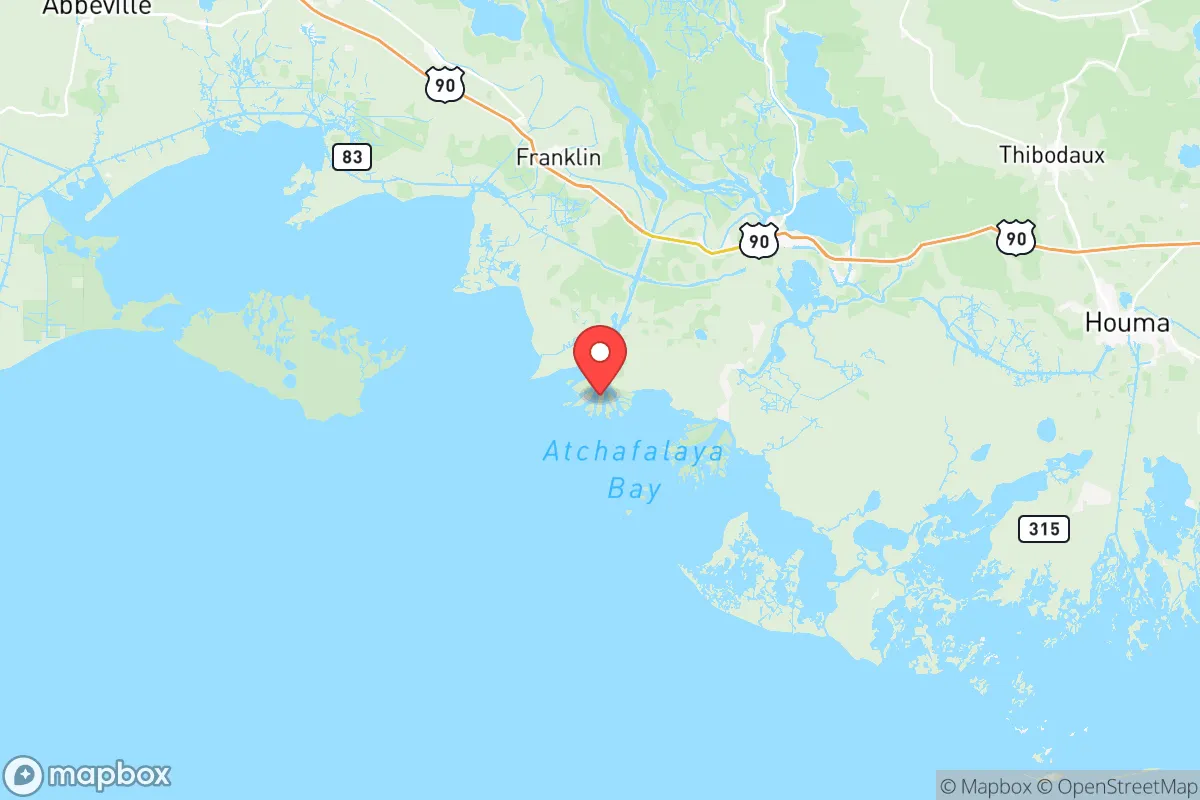
St Mary County sits at the southern edge of Louisiana’s Cajun heartland, roughly 90 miles west of New Orleans and 60 miles southeast of Baton Rouge. That distance is critical: it’s close enough to reach major medical centers or supply runs in a normal year, but far enough that a city-scale evacuation or riot won’t wash over you. The parish is bounded by the Atchafalaya Basin to the west and the Gulf of Mexico to the south, creating a natural funnel that limits approach routes. The Intracoastal Waterway runs right through Morgan City, meaning you’ve got barge access for moving bulk goods—fuel, grain, building materials—if roads get locked down. The area also sits atop the Louisiana salt domes, which have been used for strategic petroleum storage for decades; that’s not something you’ll tap into personally, but it signals that the federal government considers this corridor critical infrastructure. For a relocator, the key takeaway is that St Mary is a secondary node—not a primary target, but connected enough to matter.
Risks, exposures, and proximity to fallout-relevant landmarks
You can’t talk resilience here without acknowledging the elephant in the room: the Mississippi River chemical corridor and the Louisiana Offshore Oil Port (LOOP) are both within 50 miles. The LOOP, located about 20 miles south of Grand Isle, is the largest deepwater oil port in the U.S., and the refineries in St Charles and St John the Baptist parishes are prime targets for any state-level actor or terrorist group looking to cripple energy supply. St Mary itself has its own industrial exposure—the Morgan City port handles significant oilfield traffic, and there are natural gas processing plants scattered along the bayous. A major event at the LOOP or a refinery upriver could send a toxic plume or a refugee wave southward. On the plus side, the parish’s geography works in your favor: the Atchafalaya Basin acts as a massive buffer zone, and the prevailing winds tend to push Gulf weather systems inland, not out. Hurricane risk is real—St Mary was hit hard by Hurricane Ida in 2021, with storm surge flooding parts of Morgan City and Berwick—but the parish has rebuilt with stricter elevation codes. For a prepper, the calculus is: you’re not in the blast radius of a refinery explosion, but you’re in the secondary fallout zone. That means having a go-bag for a 72-hour evacuation east toward Lafayette or north toward Alexandria is non-negotiable.
Practical resilience for a relocator: food, water, energy, and defensibility
Water is abundant here—the Atchafalaya River and dozens of bayous provide surface water year-round, and the aquifer is deep and clean. For a homesteader, that’s a massive advantage over the arid West or even parts of Texas. Rainwater catchment is straightforward given the 60 inches of annual precipitation, and the soil in the river bottoms is rich for gardening, though you’ll need raised beds to deal with the clay. Food-wise, the parish is a net producer: crawfish, shrimp, and catfish come straight from the basin, and there are small-scale cattle operations in the northern part of the parish near Franklin. The energy picture is mixed—Entergy Louisiana runs the grid, and outages are common after storms, but natural gas is cheap and widely available for backup generators. Solar works, but you’ll need to factor in hurricane-rated mounting. Defensibility is where St Mary shines: the parish is a patchwork of bayous, canals, and two-lane roads that create natural chokepoints. A determined group could secure a rural property near Patterson or Baldwin with a single access road and a good view of the approaches. The downside is that law enforcement presence is thin—the St Mary Parish Sheriff’s Office has about 100 deputies for the whole county, so you’re largely on your own for security. That’s fine for a prepper, but it means you need to be comfortable with a rifle and a radio.
The overall strategic picture for a conservative relocator
St Mary County isn’t a bug-out paradise—it’s a working parish with industrial risk and a humid climate that will test your gear and your patience. But for someone who wants to be within a day’s drive of the Gulf Coast’s energy infrastructure without living on top of it, this is a solid middle-ground option. The conservative culture is real: churches outnumber gas stations, hunting and fishing are the default weekend activities, and the local politics lean heavily Republican in a state that’s already red. You won’t find a Whole Foods or a liberal enclave here, which for the intended audience is a feature, not a bug. The biggest strategic risk is that a major event in the refinery corridor could turn St Mary into a staging ground for FEMA or military operations, which would bring unwanted attention. Mitigate that by choosing a property with good cover and multiple egress routes—ideally one with water access to the Atchafalaya Basin, where you can disappear into the swamp if needed. If you’re looking for a place that’s off the beaten path but not out of the game, St Mary County deserves a spot on your shortlist.

* Values derived from national, state, county, city and local statistics and may differ in a specific area. Last updated: 2026-05-19T06:32:12.000Z
Narrative content on this page is AI-generated and may contain mistakes. Verify any details that matter before acting on them.
ReloMaps may earn a commission from affiliate links at no extra cost to you.

