
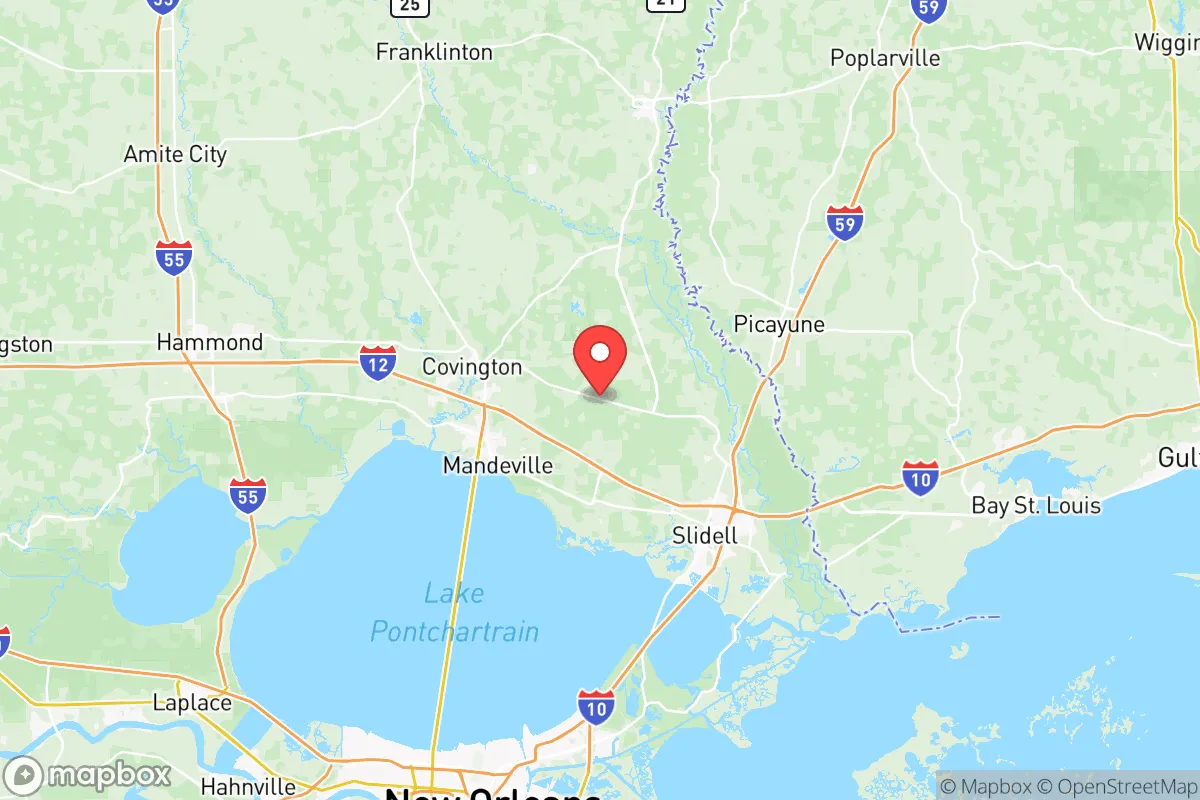
Photo by Joshua J. Cotten on Unsplash
Political ClimatePolitical Climate in St Tammany County
Showing district-level results — no local-only data available.
Local Political AnalysisPolitical Analysis of St Tammany County
St Tammany Parish is one of the most reliably Republican strongholds in Louisiana, with a Cook Partisan Voting Index (PVI) of R+19, meaning it votes about 19 points more Republican than the national average. This isn't a recent shift—the parish has been trending red for decades, but the margin has actually widened since 2016 as the New Orleans suburbs have grown more conservative. In the 2024 presidential election, St Tammany gave the Republican ticket roughly 68% of the vote, compared to Louisiana's statewide average of about 58%, making it one of the few parishes where the GOP share actually exceeds the state's already solidly red baseline.
How it compares to Louisiana as a whole
While Louisiana as a state is reliably Republican in presidential elections (voting R+12 in 2024), St Tammany is significantly more conservative than the state average. The key difference is consistency: Louisiana's statewide numbers are pulled down by Democratic strongholds like Orleans Parish (New Orleans) and East Baton Rouge Parish, which vote heavily blue. St Tammany, by contrast, has no major urban Democratic base—its largest city, Slidell, votes Republican by about 20 points, while the smaller towns like Covington and Mandeville are even redder. The only precincts that lean Democratic are in a few pockets of southern Slidell near the lakefront and a small cluster around downtown Covington, but these are tiny islands in a sea of red. Statewide, Louisiana has a competitive Democratic primary for some local offices; in St Tammany, the real contest is almost always the Republican primary.
What this means for residents
For conservative residents, St Tammany offers a political environment where their views are the clear majority—local school board meetings, city council races, and parish commission elections are dominated by Republican candidates, and conservative policy priorities like low taxes and limited regulation are baked into the local governance. For liberal or moderate residents, the reality is more isolating: there are no elected Democrats at the parish level, and progressive candidates rarely break 35% in any race. That said, the political homogeneity means less gridlock on local issues—roads, drainage, and school funding tend to get addressed without the partisan fights seen in more competitive parishes. The trade-off is that residents who lean left often feel they have no real voice in local government, and social issues like abortion or gun rights are debated almost entirely from a conservative perspective.
Culturally, St Tammany's politics reflect its identity as a bedroom community for New Orleans professionals and a retirement destination for conservative-leaning transplants from other states. The parish has stricter zoning and land-use regulations than much of rural Louisiana, which appeals to residents who want to preserve the area's pine forests and lakefront character. At the same time, the local GOP is more establishment and business-friendly than the populist wing seen in some other parts of the state—think Chamber of Commerce conservatism rather than firebrand activism. This means that while the parish votes overwhelmingly red, the actual policy debates tend to center on growth management, infrastructure, and school quality rather than culture war flashpoints. For anyone moving here, the political climate is stable, predictable, and deeply conservative—but with a pragmatic, suburban flavor that sets it apart from the more rural, populist parishes to the north and west.

State Political ClimatePolitical Climate in Louisiana
State Political AnalysisPolitical Environment in the State
Louisiana has been a reliably Republican state in federal elections for over two decades, but its state-level politics tell a more complicated story. The state voted for Donald Trump by 18 points in 2024, continuing a trend where no Democratic presidential candidate has won Louisiana since Bill Clinton in 1996. However, the state still elects a Democratic governor (Jeff Landry, a Republican, took office in 2024, so this is a shift—the previous governor, John Bel Edwards, was a Democrat), and down-ballot races often feature competitive Democrats, especially in New Orleans and Baton Rouge. Over the last 10-20 years, the GOP has consolidated power in the state legislature and congressional delegation, but the state’s unique blend of Cajun, Creole, and African American cultures creates a political landscape that defies simple red-state labels.
Urban vs. rural divide
The political map of Louisiana is sharply divided between its urban centers and vast rural areas. New Orleans and its surrounding Jefferson Parish are the state’s Democratic strongholds, with Orleans Parish consistently voting 70-80% Democratic in recent elections. Baton Rouge is more competitive—East Baton Rouge Parish leans Democratic, but the suburban areas like Livingston Parish are deeply Republican. Lafayette and Shreveport are mixed: Lafayette’s core is moderate, while its outskirts trend conservative; Shreveport’s Caddo Parish is reliably Democratic, but the surrounding Bossier Parish is solidly red. The rural parishes—like Allen, Beauregard, and Washington—vote Republican by margins of 30-40 points. The Acadiana region (around Lafayette) is culturally distinct, with a strong independent streak that sometimes votes Democratic for local offices but Republican for president. The Florida Parishes (north of Lake Pontchartrain) have been trending redder as suburban sprawl from New Orleans pushes conservative voters outward.
Policy environment
Louisiana’s policy environment is a mix of conservative governance and pragmatic deal-making. The state has no state income tax on corporate income (since 2024), and individual income tax rates were cut to a flat 3% in 2024, making it one of the more tax-friendly states in the South. Sales taxes are high, averaging around 9.5% with local add-ons. The regulatory posture is generally business-friendly, especially in oil and gas, but the state’s legal system is famously plaintiff-friendly, with high insurance rates as a result. Education policy includes a robust school choice program—the Louisiana Scholarship Program—and charter schools are widespread, especially in New Orleans, which has one of the highest charter school rates in the nation. Healthcare is a mixed bag: the state expanded Medicaid under the Affordable Care Act in 2016, but rural hospital closures remain a problem. Election laws are moderately restrictive: voter ID is required, and early voting is available for 7 days. The state uses a unique jungle primary system for most offices, where all candidates run together regardless of party, and the top two advance to a general election if no one gets 50%.
Recent policy direction
Under Governor Jeff Landry (elected in 2023), Louisiana has moved sharply right on several fronts. In 2024, the state passed a near-total abortion ban with no exceptions for rape or incest, only to save the mother’s life. Gun laws have been loosened: constitutional carry (permitless carry of concealed handguns) was signed into law in 2024. On education, the state passed a Parents’ Bill of Rights in 2023, requiring schools to notify parents about curriculum changes and medical services. On speech and privacy, Louisiana enacted a law requiring age verification for adult websites and restricted drag performances in public spaces. Property rights remain strong, with no statewide rent control and low property taxes (average 0.55% of home value). Voting access saw a tightening: the state banned ballot drop boxes and limited absentee voting to specific categories. Medical and bodily autonomy is restricted by the abortion ban, but the state has a medical marijuana program that has expanded steadily since 2015. Surveillance and privacy are less protected—Louisiana has no comprehensive data privacy law, and law enforcement can access license plate reader data without a warrant.
Civil unrest & political movements
Louisiana has a history of political activism, though large-scale protests are less common than in other Southern states. The Black Lives Matter protests in 2020 were significant in New Orleans and Baton Rouge, particularly after the killing of Alton Sterling in 2016. On the right, the Louisiana Republican Party has been energized by cultural issues, with groups like the Louisiana Family Forum pushing for conservative legislation on abortion and LGBTQ+ rights. Immigration politics are less heated than in border states—Louisiana has a relatively small foreign-born population (around 4%), but there have been local debates about sanctuary policies, with the state legislature passing a law in 2024 requiring local law enforcement to cooperate with ICE. Secession and nullification rhetoric is minimal, though some rural parishes have passed symbolic resolutions against federal gun control. Election integrity controversies flared after 2020, with the state GOP pushing for stricter voter ID laws, but no major fraud was found. The most visible flashpoint for new residents might be the Confederate monument debates in New Orleans and Baton Rouge, which have largely subsided after removals in 2017.
Projection
Over the next 5-10 years, Louisiana is likely to become more Republican at the state level, but the margin of GOP dominance may narrow slightly due to demographic shifts. The state’s population is aging and growing slowly, with out-migration of younger, more liberal residents to Texas and other states. In-migration is modest and tends to be conservative-leaning, especially retirees and oil-and-gas workers moving to the Lafayette and Lake Charles areas. The New Orleans metro area will remain a Democratic island, but its influence is waning as the city’s population declines. The Baton Rouge area may become more competitive as suburban sprawl pushes conservative voters into previously Democratic precincts. The Acadiana region’s independent streak could keep some local offices in Democratic hands, but presidential and statewide races will stay solidly red. Climate change and coastal erosion will become bigger political issues, potentially shifting some voters toward candidates who prioritize infrastructure and disaster relief. A new resident moving in now should expect a state that is culturally conservative, tax-friendly, and increasingly focused on cultural and education battles, but with a vibrant Democratic minority that holds power in the cities and in some local offices.
For a new resident, the bottom line is that Louisiana offers a low-tax, business-friendly environment with strong gun rights and school choice, but with high sales taxes, a plaintiff-friendly legal system, and a hot, humid climate that shapes daily life. Conservative families will find a welcoming political culture, especially in suburban and rural areas, while liberal residents will feel most at home in New Orleans or parts of Baton Rouge and Lafayette. The state’s unique culture—Cajun food, Mardi Gras, and a laid-back pace—transcends politics, and most residents find common ground in their love for the state’s traditions and natural beauty. Just be prepared for the humidity and the insurance rates.
* Values derived from national, state, county, city and local statistics and may differ in a specific area. Last updated: 2026-08-08T14:13:58.000Z
Narrative content on this page is AI-generated and may contain mistakes. Verify any details that matter before acting on them.
ReloMaps may earn a commission from affiliate links at no extra cost to you.

