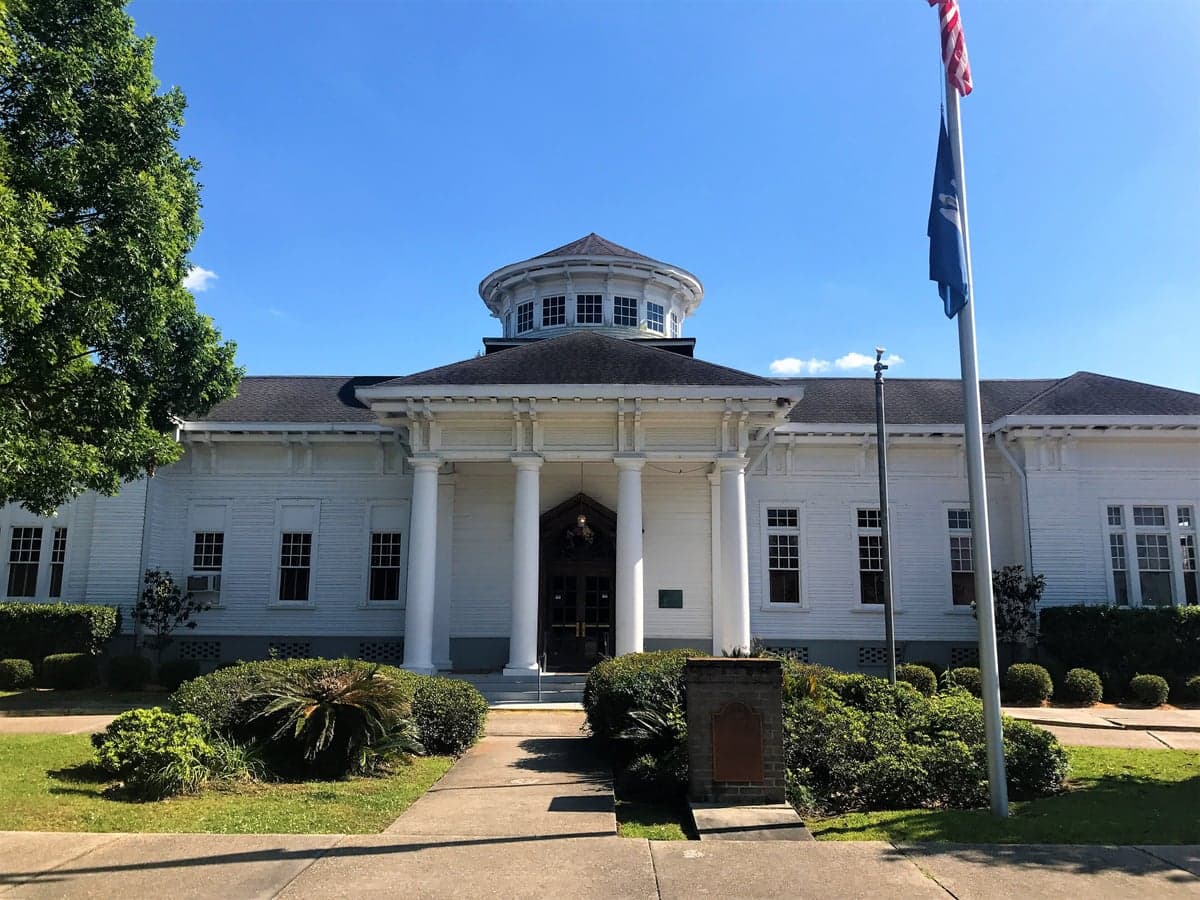
Photo: Wikipedia
Demographics of Washington County
Affluence Level in Washington County
A low-income area with significant economic hardship. Household wealth and educational attainment are well below national averages.
People of Washington County
The people of Washington Parish, Louisiana, today number 45,238, forming a community that is predominantly White (63.6%) with a significant Black population (29.7%) and a very small Hispanic (3.2%) and foreign-born (0.5%) presence. This is a deeply rooted, rural population with a strong sense of local identity, shaped by centuries of settlement patterns that have left a distinct cultural imprint. The parish is characterized by its low population density, a high rate of religious affiliation, and a notably low college attainment rate of 12.7%, reflecting an economy historically tied to timber, agriculture, and small-scale manufacturing rather than knowledge industries.
Settlement & growth (pre-1960)
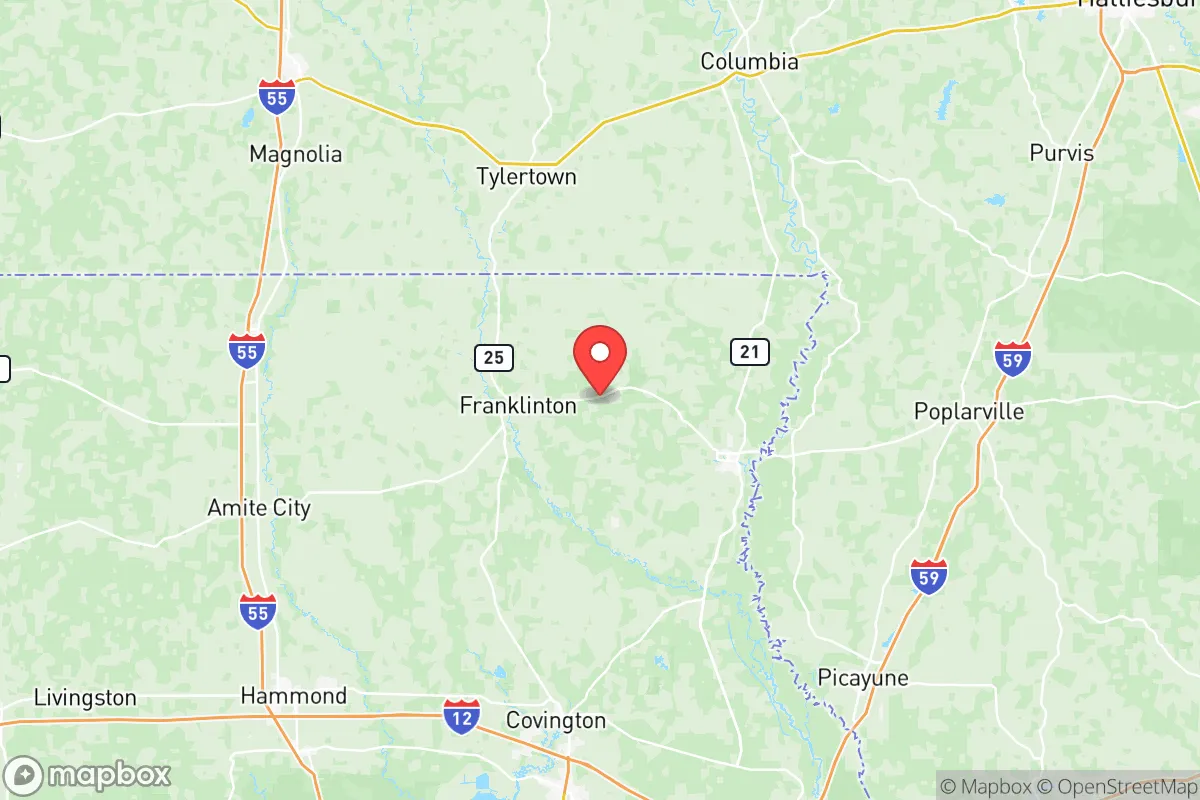
Long before European contact, the area now known as Washington Parish was inhabited by the Choctaw people, who used the region's rivers and forests for hunting and trade. The first European settlers were primarily of English and Scots-Irish descent, moving into the area from the British colonies to the east in the late 1700s and early 1800s. These early pioneers were drawn by the promise of cheap, fertile land along the Bogue Chitto and Pearl River watersheds, establishing small farming communities like Franklinton (the parish seat, founded 1819) and Bogalusa (founded 1906).
The single most transformative event in the parish's human history was the founding of Bogalusa in the early 20th century. The Great Southern Lumber Company established the town as a company town, building the world's largest yellow pine sawmill there. This industrial boom drew a massive wave of workers: White laborers from the rural Deep South, and a very large number of Black workers from across Louisiana and Mississippi, who were recruited to work in the mill and its associated industries. This created a biracial working-class community that was starkly segregated by law and custom, with Black residents concentrated in neighborhoods like East Bogalusa and Pleasant Hill. The timber industry also spurred the growth of smaller mill towns like Angie and Varnado, which served as supply and residential hubs for the logging camps.
Outside of Bogalusa, the rest of the parish remained overwhelmingly rural and agricultural. Small communities like Mount Hermon and Sheridan were settled by subsistence farmers and sharecroppers, both White and Black, who worked the land for cotton, corn, and livestock. The parish's population peaked in the mid-20th century, with the 1960 census recording over 44,000 residents, a number that has remained remarkably stable for over 60 years. This stability is a key demographic fact: Washington Parish did not experience the dramatic post-war suburban boom of other Southern regions, nor did it see a major out-migration after the decline of timber.
Modern era (post-1965)
The post-1965 era in Washington Parish is defined not by the arrival of new immigrant groups, but by the persistence of its existing population and the slow, steady effects of domestic migration. The 1965 Hart-Cellar Act, which reshaped American immigration nationwide, had virtually no impact here. The foreign-born population remains at just 0.5%, and the Hispanic share is only 3.2%, a fraction of the state average. The parish did not attract the Vietnamese, Laotian, or Mexican immigrants who settled in other parts of Louisiana, such as New Orleans or the Acadiana region.
Instead, the major demographic shift has been internal. The decline of the timber industry in the late 20th century led to a gradual out-migration of younger residents seeking jobs in Baton Rouge, New Orleans, and Houston. This has left an aging population, with a median age higher than the state average. The Black population share has remained relatively stable at around 30%, though the community has experienced significant economic challenges. The end of legal segregation and the decline of the mill economy led to a dispersal of the Black population within the parish, with many moving from historic enclaves into more integrated but still economically distressed areas of Bogalusa and Franklinton.
Suburbanization has been minimal. Unlike the rapid growth of St. Tammany Parish to the south, Washington Parish has not become a bedroom community for New Orleans. The lack of interstate highway access and the distance from major employment centers have kept the parish isolated. The small amount of new housing construction has been concentrated in the unincorporated areas around Franklinton and along the Highway 21 corridor, attracting a modest number of retirees and commuters willing to trade convenience for lower property taxes and a slower pace of life.
The future
The demographic trajectory of Washington Parish points toward continued stability and gradual decline. The population is projected to remain flat or shrink slightly over the next 10-20 years, as out-migration of young adults continues to outpace in-migration. The parish is not becoming more diverse; the White and Black shares are expected to remain largely unchanged, with only a very slow increase in the Hispanic population as a few families move in for agricultural and service-sector work. The Asian and Indian populations will likely remain negligible.
The cultural identity of the parish is likely to become more pronounced as the surrounding region changes. As St. Tammany Parish becomes more suburban and diverse, Washington Parish may increasingly be seen as a refuge for those seeking a more traditional, rural, and racially homogeneous environment. The political character, already deeply conservative, will likely solidify. The economic future hinges on whether the parish can attract new industry to replace the lost timber jobs, or whether it will continue to rely on a shrinking base of agriculture, healthcare, and local government employment. The lack of a college-educated workforce (12.7%) will remain a significant barrier to attracting knowledge-economy employers.
For someone moving in now, Washington Parish offers a place where the population is stable, the pace is slow, and the community is deeply rooted. It is not a place of rapid change or new opportunity, but rather a place where the past is still very present. The people are defined by their continuity, not their transformation.

* Values derived from national, state, county, city and local statistics and may differ in a specific area. Last updated: 2026-07-30T03:11:44.000Z
Narrative content on this page is AI-generated and may contain mistakes. Verify any details that matter before acting on them.
ReloMaps may earn a commission from affiliate links at no extra cost to you.

