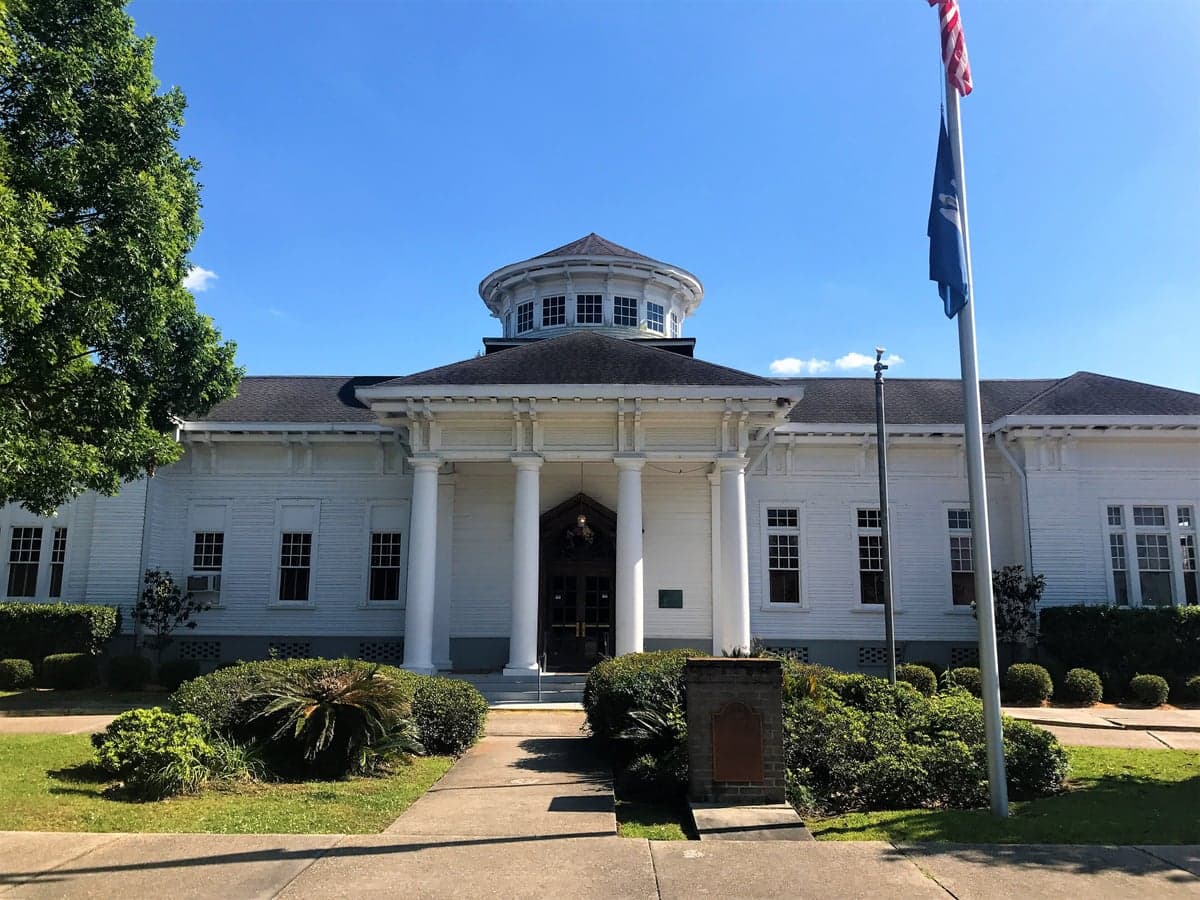
Photo: Wikipedia
Political ClimatePolitical Climate in Washington County
Showing district-level results — no local-only data available.
Local Political AnalysisPolitical Analysis of Washington County
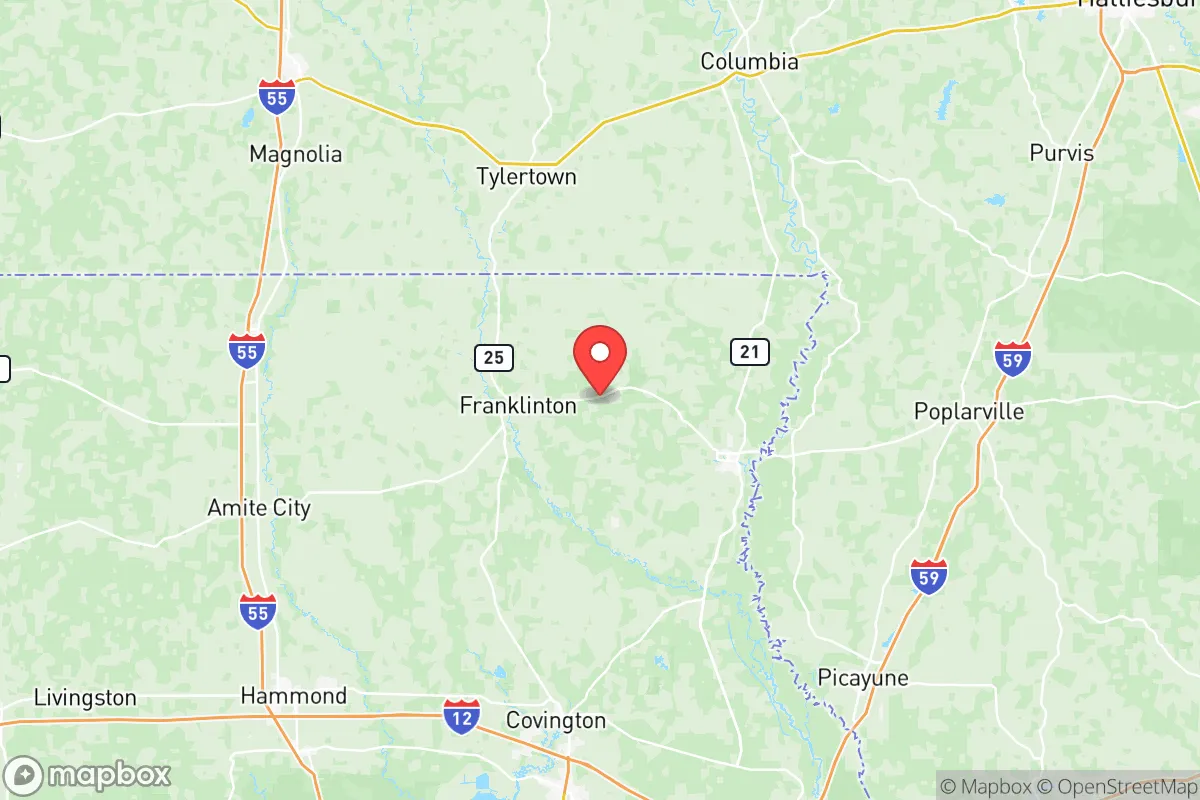
Washington County, Louisiana, is a deeply conservative corner of the state, with a Cook Partisan Voting Index of R+18 that puts it among the most reliably Republican parishes in Louisiana. The county has been trending redder for decades, a shift that accelerated after the 2000s as the rural, timber-and-oil economy held steady while the state's more urban centers drifted left. If you're looking at the map, the whole parish is a solid block of red, but there are subtle shades: the county seat, Franklinton, is the most reliably Republican town, often delivering 75-80% of its vote to GOP candidates, while the smaller community of Bogalusa shows a bit more Democratic resistance, particularly in its older, union-heavy precincts tied to the paper mill. The swing precincts are almost nonexistent—you'd have to squint at the rural crossroads like Angie or Varnado to find any real variation, and even those lean heavily red.
How it compares
Compared to Louisiana as a whole, Washington County is a stark outlier. The state's Cook PVI is unknown, but statewide elections have been competitive in recent cycles—John Bel Edwards, a Democrat, won the governor's mansion twice, and the state has a mixed record on ballot measures. Washington County, by contrast, hasn't voted for a Democratic presidential candidate since 1996, and even then it was a squeaker. In the 2024 election, the parish gave Donald Trump over 75% of the vote, while the state overall hovered around 58%. That gap is driven by the parish's demographics: it's overwhelmingly white (about 65%), with a smaller Black population (around 30%) than the state average, and its economy is anchored in forestry, manufacturing, and small-scale agriculture—industries that tend to favor conservative fiscal and social policies. The nearby city of Covington, in St. Tammany Parish, is similarly conservative but more suburban and affluent; Washington County feels more like a rural cousin, with a slower pace and a stronger distrust of Baton Rouge.
What this means for residents
For conservative residents, the political climate is a comfortable fit. Local offices—from the parish council to the school board—are dominated by Republicans, and the county's tax policies reflect that, with relatively low property taxes and a resistance to new spending. The local GOP is active but not factionalized; you'll find more unity around issues like gun rights and energy development than in some neighboring parishes. For liberal residents, life here can feel isolating. There's no organized Democratic party presence to speak of, and progressive candidates rarely bother to campaign in the parish. That said, the county's small size means politics doesn't dominate daily life the way it might in a more polarized suburb. Most folks are neighborly regardless of party, and the biggest local debates tend to be about road maintenance and school funding, not national culture wars.
Culturally, Washington County stands apart from Louisiana's more famous regions. You won't find the Cajun influence of Lafayette or the jazz-and-tourism vibe of New Orleans. Instead, the parish is deeply rooted in a rural Protestant tradition, with a strong Baptist presence and a quieter, more reserved social scene. The biggest annual event is the Washington Parish Free Fair, a 100-year-old tradition that draws crowds for livestock shows and carnival rides—a reflection of the county's agricultural backbone. Policy-wise, the parish has been a leader in the state's push for stricter abortion laws and Second Amendment protections, and it's one of the few places in Louisiana where you'll see "In God We Trust" displayed prominently in government buildings. For newcomers, the key takeaway is that Washington County is a place where political and cultural conservatism isn't just a voting pattern—it's woven into the fabric of everyday life, from the church potlucks to the local gun shows.

State Political ClimatePolitical Climate in Louisiana
State Political AnalysisPolitical Environment in the State
Louisiana has long been a reliably Republican state at the federal level, but with a deeply entrenched Democratic stronghold in New Orleans and a history of populist, often centrist, state-level politics. Over the past 20 years, the state has shifted from a competitive purple state to a solid red one in presidential elections—Donald Trump won it by nearly 20 points in 2020 and by a similar margin in 2024—while Democrats still hold a significant number of local offices, particularly in the state legislature and parish councils. The dominant coalition is a mix of conservative white voters in rural and suburban areas, combined with a shrinking but still influential Black Democratic base concentrated in New Orleans, Baton Rouge, and the Mississippi River parishes. The trajectory is a slow but steady rightward drift, driven by out-migration of liberal-leaning residents and in-migration of conservative retirees and military families, though the state’s unique Cajun and Creole cultures keep it from becoming a purely Sun Belt Republican clone.
Urban vs. rural divide
The political map of Louisiana is a textbook case of urban-rural polarization. New Orleans (Orleans Parish) is the state’s most reliably Democratic stronghold, consistently delivering 75-80% of its vote to Democratic presidential candidates, driven by its large Black population and progressive white transplants. Baton Rouge (East Baton Rouge Parish) is a swing area—the city itself leans Democratic, but the surrounding suburbs like Prairieville and Central are deeply Republican, making the parish as a whole competitive. Lafayette and Shreveport are more moderate: Lafayette’s oil-and-gas economy and Catholic culture produce a mix of conservative and libertarian voters, while Shreveport’s declining population and industrial base have made it a Democratic-leaning island in the otherwise red northwest. The rural parishes—like Winn, Franklin, and Bienville—routinely vote 80%+ Republican, while the Mississippi River parishes (e.g., St. John the Baptist, St. James) remain Democratic due to their majority-Black populations. The Northshore suburbs of New Orleans (St. Tammany Parish) are among the most Republican areas in the state, with a strong evangelical and military presence.
Policy environment
Louisiana’s policy environment is defined by a low-tax, low-service model that appeals to fiscal conservatives but frustrates those seeking robust public infrastructure. The state has no state property tax on vehicles or business inventory, and the homestead exemption shields the first $75,000 of a home’s value from parish property taxes. The state income tax is a flat 3% for individuals (as of 2025), down from a progressive 6% in 2020, thanks to a series of tax cuts championed by Governor Jeff Landry. Sales taxes are high—the average combined state and local rate is around 9.5%, among the highest in the nation—which hits lower-income residents hardest. Education policy is a mixed bag: Louisiana has a robust school choice program (the Louisiana Scholarship Program) and a growing charter school sector, but public school performance remains near the bottom nationally. Healthcare is a flashpoint: the state expanded Medicaid under the Affordable Care Act in 2016, but the Landry administration has imposed work requirements and stricter eligibility checks. Election laws are moderately restrictive—voter ID is required, early voting is limited to 7 days, and no-excuse absentee voting is not available—but the state has not seen the kind of election integrity battles that have roiled Georgia or Texas.
Recent policy direction
Under Governor Jeff Landry (elected in 2023), Louisiana has moved aggressively to the right on a broad range of issues. Gun and self-defense law is among the most permissive in the country: the state passed constitutional carry in 2024, allowing concealed carry without a permit, and has a strong “stand your ground” law. Parental and education rights have been a major focus: the 2024 “Parents’ Bill of Rights” (Act 123) requires schools to notify parents of any changes to a student’s mental, emotional, or physical health, effectively mandating parental consent for discussions of gender identity. The state also banned transgender athletes from female sports and restricted gender-affirming care for minors. Speech and privacy are generally protected, though the state has passed a law requiring age verification for adult websites. Medical and bodily autonomy is sharply restricted: Louisiana has a near-total abortion ban with no exceptions for rape or incest, and the state has criminalized the possession of abortion pills without a prescription. Property rights are strong, with no statewide rent control and a business-friendly regulatory environment, though coastal erosion and flood insurance costs are creating new tensions. Taxation is trending downward: the flat income tax was phased in alongside a reduction in the corporate franchise tax. Voting and ballot access have seen modest tightening: the state closed party primaries for non-presidential races in 2024, meaning only registered party members can vote in primary elections.
Civil unrest & political movements
Louisiana has a history of political activism that is both passionate and localized. Protest history includes the 2016 “Alton Sterling” protests in Baton Rouge, which drew national attention and led to clashes with police, and the 2020 George Floyd protests in New Orleans, which were largely peaceful but saw some property damage. Organized activist movements are split: the left is strongest in New Orleans, with groups like the Louisiana Progress Action Fund and the New Orleans Workers’ Center for Racial Justice pushing for criminal justice reform and tenant protections; the right is more diffuse, with the Louisiana Family Forum (a Christian conservative group) and the Louisiana Republican Party driving policy. Immigration politics are less heated than in border states, but the Landry administration has signed a cooperation agreement with ICE and deployed state police to assist with immigration enforcement. Sanctuary policies are nonexistent—New Orleans has a “fair policing” ordinance that limits cooperation with federal immigration authorities, but it’s rarely enforced. Secession or nullification rhetoric is minimal, though there is a small “Louisiana secession” movement that flares up during federal overreach debates. Election integrity controversies have been muted compared to other states, though the 2024 closed-primary law was controversial among independents and third-party voters. A new resident would notice the strong presence of political yard signs and bumper stickers, especially in rural areas, but actual civil unrest is rare outside of New Orleans.
Projection
Over the next 5-10 years, Louisiana is likely to become even more Republican, but with a distinct flavor that keeps it from becoming a pure Texas or Florida clone. Demographic shifts are working against Democrats: the state’s population is aging and shrinking (it lost a congressional seat after the 2020 census), and the Black population, while still a large share (about 33%), is slowly declining as younger, more educated residents move to Texas or Georgia. In-migration patterns are dominated by conservative retirees from the Midwest and Northeast, drawn by low taxes and warm weather, and by military families stationed at Fort Johnson (formerly Fort Polk) and Barksdale Air Force Base. The New Orleans metro area will remain a Democratic bastion, but its political influence will wane as its population continues to decline. The Baton Rouge suburbs and the Northshore will become even more Republican, while rural parishes will stay deep red. The wild card is climate change: as coastal erosion and hurricane risk worsen, the state may see a shift in population toward the northern and western parishes, which are more conservative. A relocator moving in now should expect a state that is increasingly conservative on social issues, increasingly business-friendly on economic issues, and increasingly frustrated with federal disaster response and environmental regulations.
Bottom-line implications for a new resident: If you’re a conservative looking for low taxes, strong gun rights, and a government that stays out of your business, Louisiana is a solid choice—just be prepared for high sales taxes, poor public schools, and a climate that demands flood insurance. If you’re a liberal, you’ll find a vibrant community in New Orleans and pockets of progressivism in Baton Rouge and Lafayette, but you’ll be living under a state government that is actively hostile to your views on abortion, LGBTQ+ rights, and voting access. The practical takeaway is that Louisiana is a state where your local parish government matters more than the state capitol—your quality of life will depend heavily on whether you live in Orleans Parish (blue), East Baton Rouge (purple), or St. Tammany (red). Choose your parish carefully, and you’ll find a place that fits your politics and your lifestyle.
* Values derived from national, state, county, city and local statistics and may differ in a specific area. Last updated: 2026-07-30T03:11:44.000Z
Narrative content on this page is AI-generated and may contain mistakes. Verify any details that matter before acting on them.
ReloMaps may earn a commission from affiliate links at no extra cost to you.

