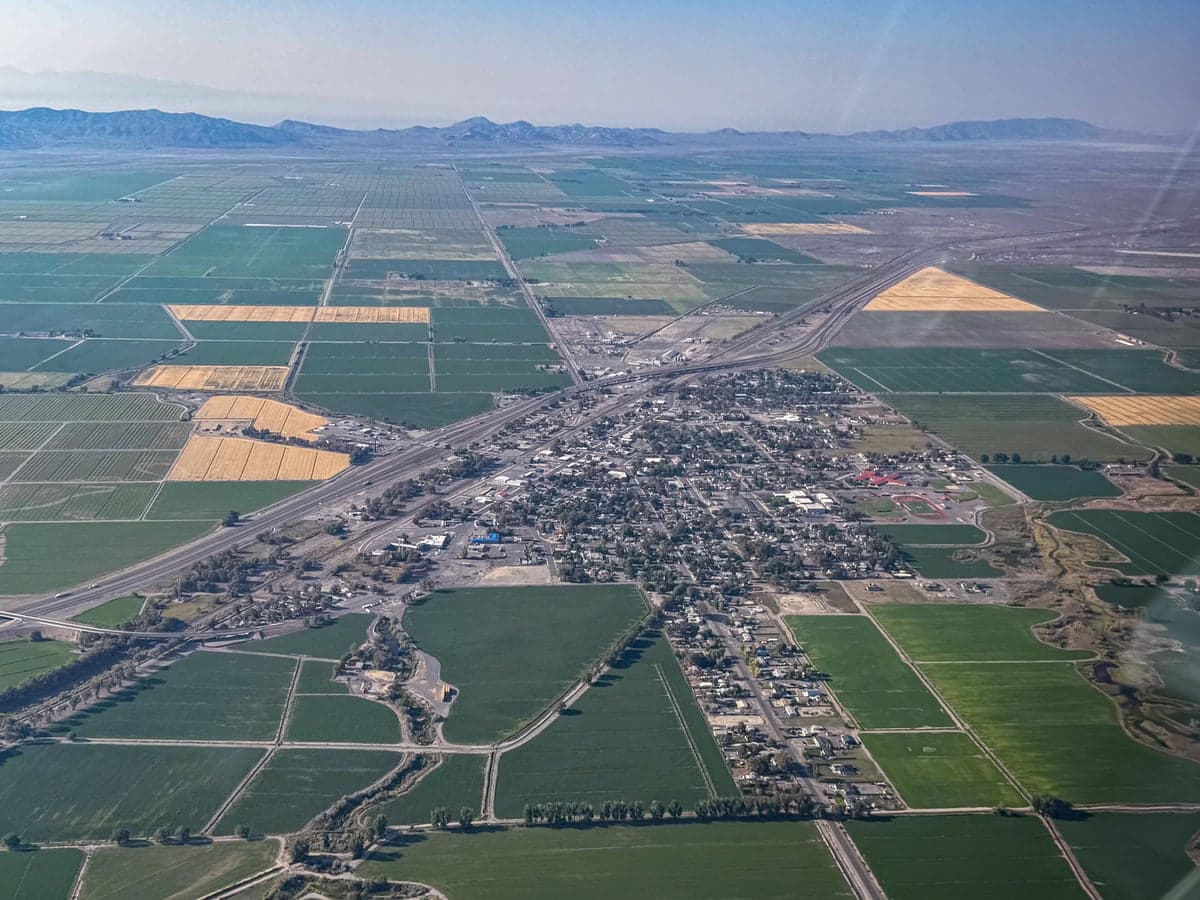
Photo: Wikipedia
Strategic Assessment of Lovelock, NV
Workable tactical position. Some exposure to population density or targets, but generally defensible in a crisis.
What does the Strategic Assessment tell us?
Our Strategic Assessment grades tactical survivability of an area. Major population centers, military targets, fallout zones, natural disasters, and border exposure all drive risk — lower exposure means a more defensible position in a crisis.
This is heavily inspired by Joel Skousen's Strategic Relocation book. Highly recommended you checkout the book ($)What does this tell us?
Our Strategic Assessment grades tactical survivability of an area. Major population centers, military targets, fallout zones, natural disasters, and border exposure all drive risk — lower exposure means a more defensible position in a crisis.
This is heavily inspired by Joel Skousen's Strategic Relocation book. Highly recommended you checkout the book ($)Strategic Pillars

Key Distances
Regional Safe Places
Below is our recommended "safe zones" in Nevada and the surrounding area based on our strategic heuristics. For most people, it's unrealistic to live in a “safe zone” full-time due to work, family or other personal reasons. They tend to be more rural. However, many of these areas are perfect for second homes and retreat properties that double as a vacation home or even a short-term rental.
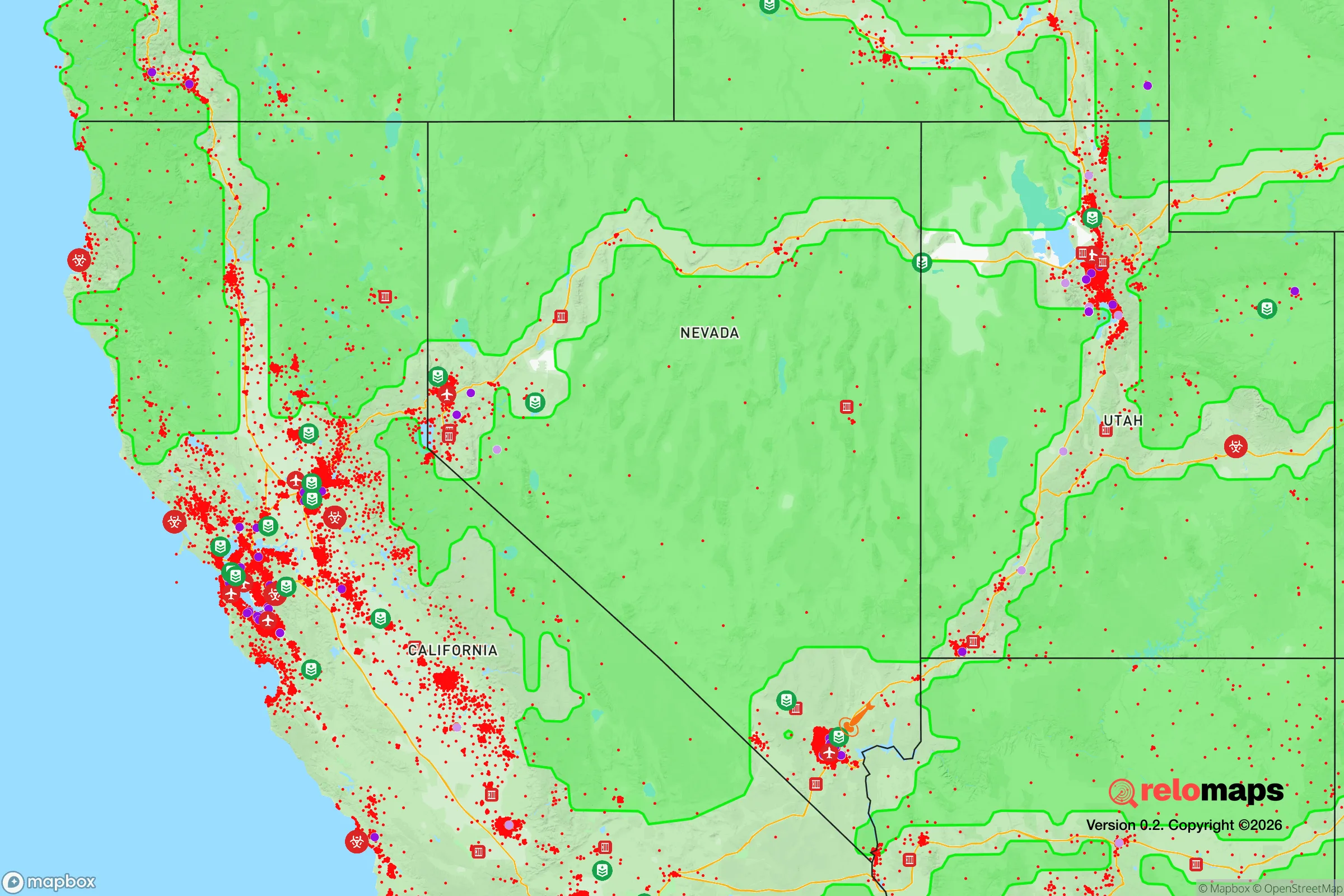
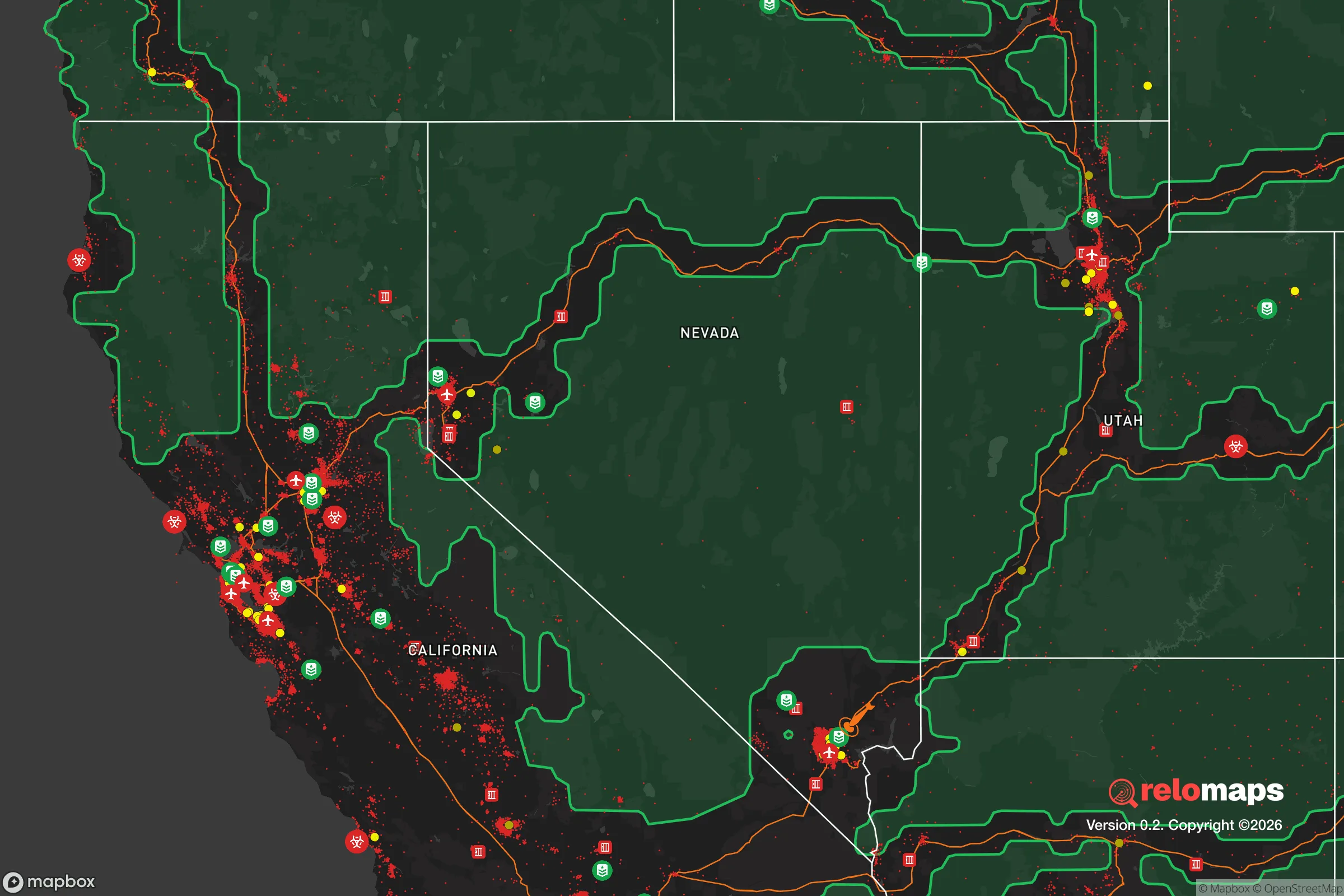


Important Note: For informational purposes only. This does not mean nothing bad ever happens in the green zones. Please use common sense. This is based on public data and modeled with AI. We tried to take a conservative approach but mistakes happen. We update this regularly as new information becomes available.
Solar Generator Recommendations
Backup power matters more here than in safer locations. We've picked three solar generators across budgets and capacity tiers — start with the budget unit if you only need a few essentials, or step up if you want to run a fridge and HVAC for days at a time.

Jackery Portable Power Station Explorer 300
Budget OptionPower on the Go: Weighing only 11 lbs, it's convenient to set up and store with book-sized foldable solar panels

BLUETTI Portable Power Station AC180
Designed for both indoor and outdoor scenarios, AC180 is highly capable as it has a robost capacity and continuous output power.

EF ECOFLOW DELTA Pro Ultra Power Station
Upgraded PickEcoFlow DELTA Pro Ultra is a whole-home energy system designed to grow with your family. Integrated with the Smart Home Panel 2, it scales to meet your evolving energy needs — keeping your home powered, intelligent, and secure through every stage of life.
We earn a commission, at no additional cost to you.
Strategic Assessment Analysis
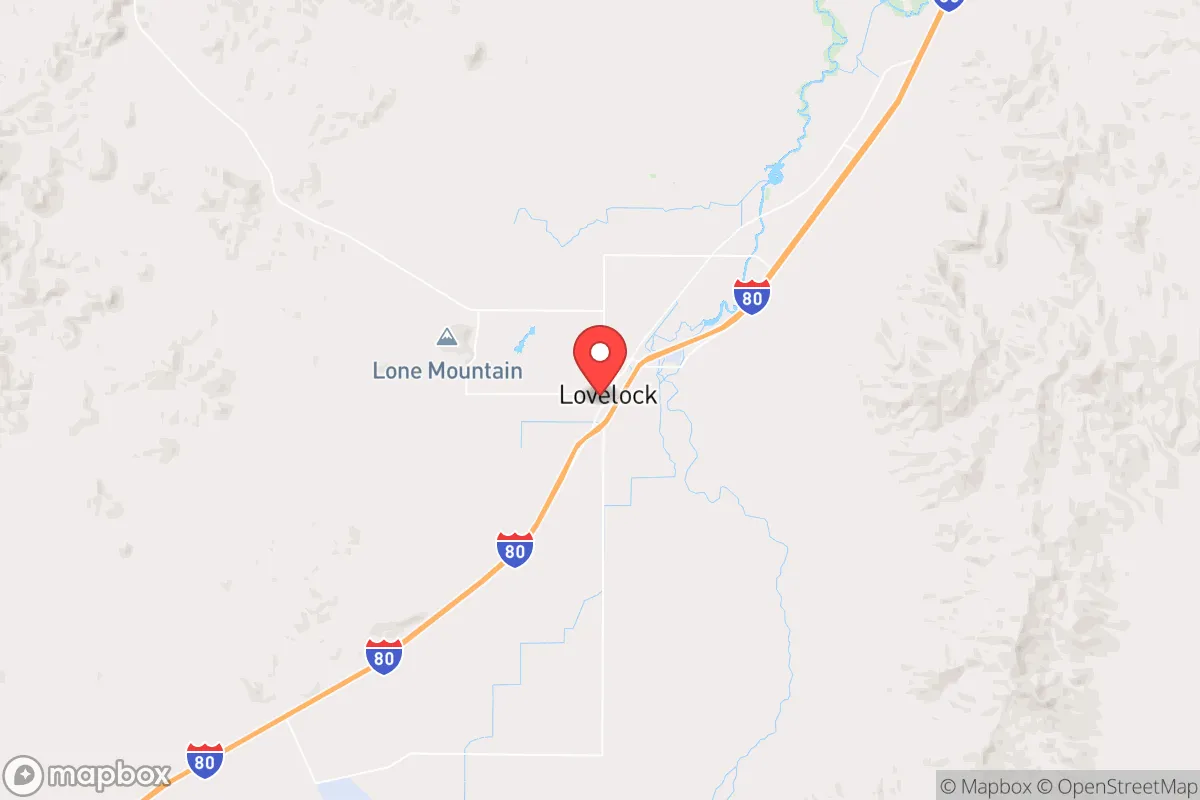
Lovelock, Nevada, offers a strategic relocation option for those prioritizing resilience and self-sufficiency, sitting at the intersection of Interstate 80 and the Humboldt River in a remote corner of Pershing County. Its isolation from major urban centers—roughly 90 miles northeast of Reno and 100 miles southwest of Winnemucca—provides a buffer against the cascading effects of civic unrest, mass casualty events, or infrastructure collapse that often radiate from dense population hubs. The town’s low profile, with a population hovering around 1,800, and its position along a major east-west corridor make it a defensible waypoint rather than a target, offering both seclusion and strategic mobility for those who plan ahead.
Geographic position and natural advantages for long-term survival
Lovelock’s location in the Lahontan Valley, surrounded by the Humboldt Range to the east and the Trinity Mountains to the west, provides natural barriers that limit easy access and create a chokepoint for any large-scale movement through the area. The Humboldt River, which runs through the town, is a perennial water source—rare in the Great Basin—and the nearby Rye Patch Reservoir (about 20 miles north) offers additional surface water storage for irrigation and emergency supply. The region’s arid climate, with less than 8 inches of annual precipitation, reduces mold, decay, and pest pressures on stored supplies, while the high desert elevation (around 3,900 feet) moderates temperatures enough to avoid extreme heat or cold that would stress off-grid systems. The surrounding BLM land and the Humboldt-Toiyabe National Forest to the west provide vast areas for hunting, foraging, and retreat, with minimal regulatory oversight compared to more populated states. For a relocator, this means the ability to establish a semi-autonomous homestead with access to water, fuel wood, and game without drawing attention.
Risks, exposures, and proximity to fallout-relevant landmarks
The primary risk in Lovelock is its proximity to Interstate 80, a major transcontinental route that could become a vector for refugees, looters, or military convoys during a collapse scenario. While the town itself is small, the highway runs directly through it, meaning any large-scale evacuation from the West Coast (Sacramento, San Francisco, Reno) would funnel past Lovelock, potentially overwhelming local resources. Additionally, the town lies about 70 miles northeast of the Hawthorne Army Depot, a massive ammunition storage facility that could be a target for sabotage or a source of secondary hazards if compromised. The nearby Nevada National Security Site (formerly the Nevada Test Site), roughly 150 miles south, is a historical nuclear testing ground, and while no active tests occur, the area’s legacy of fallout patterns means that any future nuclear event—whether accidental or deliberate—could deposit contamination depending on wind direction. The Humboldt River itself is a double-edged sword: it provides water but also concentrates wildlife and human traffic, making it a natural corridor for disease vectors or hostile groups. For the prepper, these risks are manageable with proper planning—maintaining a low profile, stockpiling filters and radiation detection gear, and establishing a secondary cache away from the highway—but they cannot be ignored.
Practical resilience for a relocator: food, water, energy, and defensibility
Water is the linchpin of any survival scenario, and Lovelock’s access to the Humboldt River and shallow groundwater aquifers gives it a significant edge over most desert towns. A simple hand pump or solar-powered well can provide a family’s daily needs, and the river’s flow, though seasonal, is reliable enough for small-scale irrigation. The surrounding agricultural land—primarily alfalfa and cattle ranches—means that local food production is already established, and with a bit of barter or land lease, a relocator can secure fresh meat and produce without relying on supply chains. Energy is straightforward: the high desert sun offers excellent solar potential, and the area’s wind patterns (especially near the Trinity Mountains) can support small wind turbines. Propane and diesel are available in town, but a prepper should plan for off-grid storage, as the single fuel station could be depleted quickly during a crisis. Defensibility is mixed: the town’s layout is compact, with a few main streets and scattered residential blocks, making it easy to monitor approaches from the highway or the surrounding hills. However, the lack of natural cover in the valley means that any armed group could be spotted from miles away, and the open terrain favors long-range optics and prepared positions over close-quarters concealment. A strategic relocator would prioritize a property on the outskirts—preferably with a view of the highway and access to a back road—rather than in the town center, to maintain escape routes and avoid being trapped. The local population is sparse and largely self-reliant, which reduces the risk of social friction but also means that mutual aid networks are thin; you’ll need to bring your own skills and supplies.
Overall, Lovelock presents a viable but not ideal strategic picture for the conservative prepper. Its strengths—water access, isolation from major targets, and low population density—are balanced by the vulnerability of the I-80 corridor and the proximity to military and nuclear infrastructure. For a single individual or a family willing to invest in off-grid systems and maintain a low profile, it offers a solid base for weathering moderate disruptions, but it is not a bug-out location for a full-scale societal collapse. The key is to treat Lovelock as a waypoint or a secondary position rather than a final redoubt: stock supplies, establish relationships with local ranchers, and keep a vehicle ready for a move deeper into the Great Basin or the Rockies if conditions deteriorate. In a world where the coasts are increasingly unstable, this dusty town in the Nevada desert is a pragmatic, unglamorous choice—one that rewards preparation and punishes complacency.

* Values derived from national, state, county, city and local statistics and may differ in a specific area. Last updated: 2026-04-30T00:19:44.000Z
Narrative content on this page is AI-generated and may contain mistakes. Verify any details that matter before acting on them.
ReloMaps may earn a commission from affiliate links at no extra cost to you.

