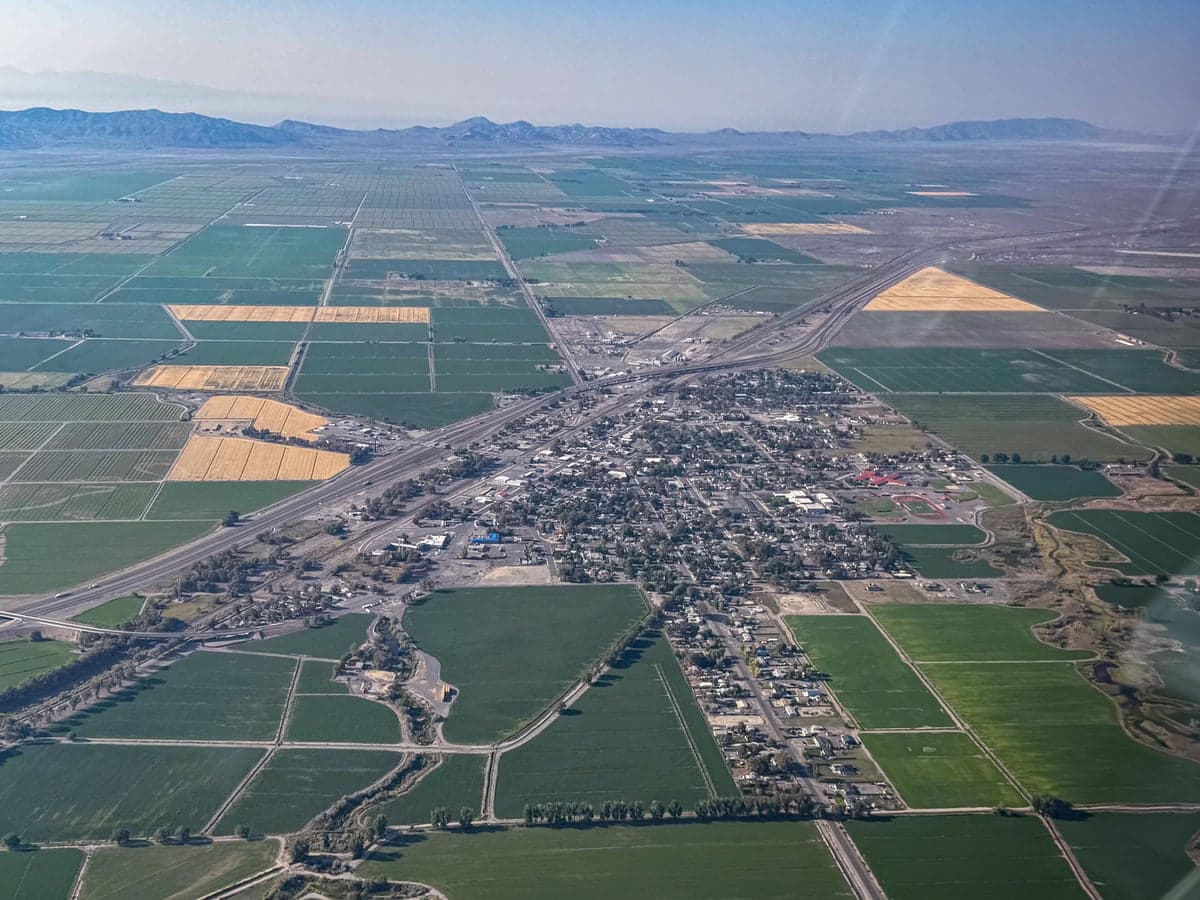
Photo: Wikipedia
Political ClimatePolitical Climate in Lovelock, NV
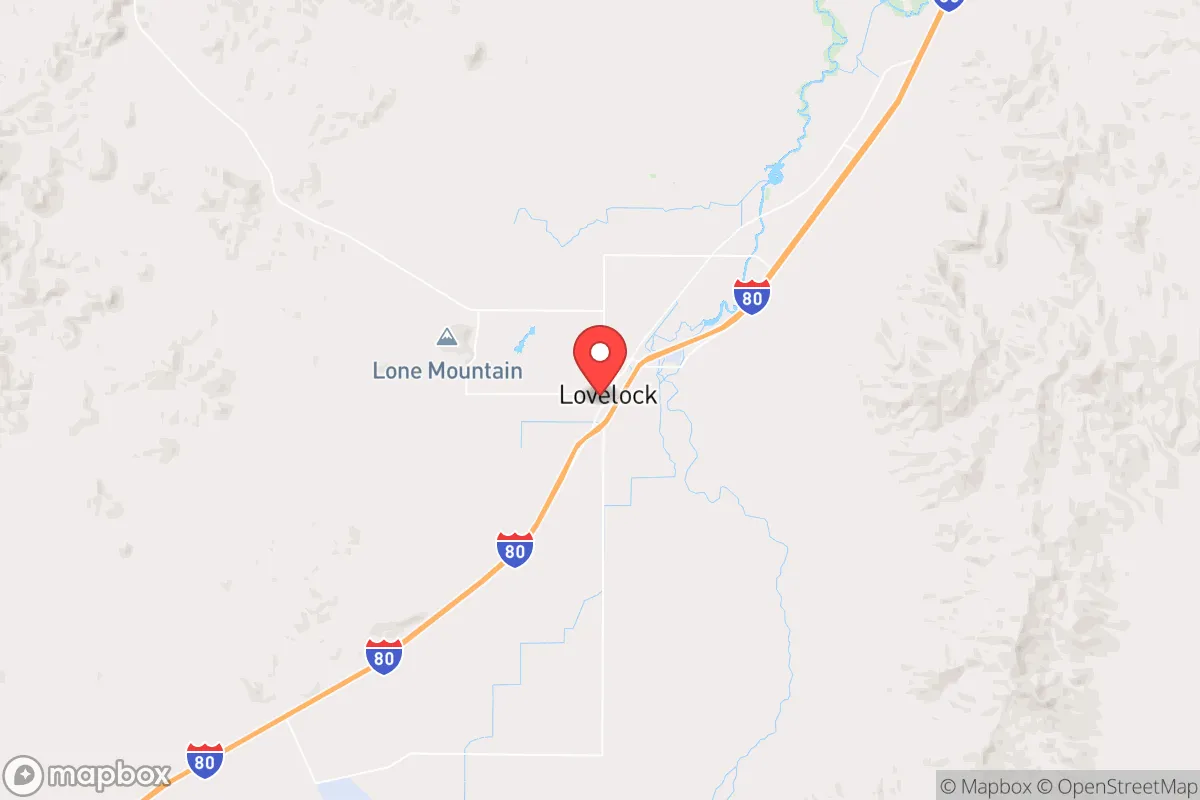
District shown is the primary district for this city’s centroid. Cities may span multiple districts.
Local Political AnalysisPolitical Analysis of Lovelock, NV
Lovelock, Nevada, has long been a place where folks value their independence and don't take kindly to being told how to live their lives. The political climate here is solidly conservative, reflected in the area's Cook PVI of R+7, meaning it votes about seven points more Republican than the national average. While that might sound like a safe bet for traditional values, I've seen the winds start to shift over the last decade, and it's something worth keeping an eye on if you're thinking of putting down roots here.
How it compares
To really understand Lovelock, you have to look at the map. We're a small, rural outpost in Pershing County, and that puts us in a different world than what you see down in Reno or over in Washoe County. Those places have been trending more progressive for years, with all the big-city politics and government overreach that comes with it—more regulations, higher taxes, and a general attitude that the state knows better than the people. Drive an hour and a half west, and you're in a completely different political universe. Even our neighbors in Winnemucca to the east, while still conservative, have a more transient, mining-driven economy that can sometimes lean toward pragmatism over principle. Lovelock, though, has held the line better than most. We're a place where the Second Amendment isn't debated, where property rights are taken seriously, and where the idea of the government sticking its nose into your personal business is met with a hard no. That said, I've noticed a few new faces in town over the last five years—folks moving in from California or the West Coast, looking for cheaper land. They're not all bad, but some bring that "we know better" attitude, and you can see it in local meetings when they start pushing for things like stricter zoning or more "sustainable" (read: restrictive) policies. It's a slow creep, but it's there.
What this means for residents
For the people who live here, this political lean means a few concrete things. First, you're not going to have a bunch of red tape when it comes to your property. Want to build a shop on your land, keep a few extra vehicles, or run a small business from your home? Generally, the county government stays out of your way. That's a big deal for anyone who values personal freedom over bureaucratic convenience. Second, taxes stay low. There's no state income tax in Nevada, and Pershing County keeps its property taxes reasonable. The trade-off is that services are minimal—don't expect a lot of public transit or fancy parks—but most folks here prefer it that way. They'd rather keep their money and handle their own business. The concerning part is watching how state-level policies from Carson City can trickle down. We've seen attempts to impose stricter environmental regulations on agriculture and mining, which are the backbone of our local economy. If those efforts gain traction, it could mean fewer jobs and more government control over how we use our land. That's the kind of overreach that makes you wonder if the state really has your best interests at heart.
Culturally, Lovelock is still a place where your word is your bond and neighbors help each other out without expecting a handout. The annual Frontier Days celebration is a good example—it's about community, not politics. But there's a quiet tension now that wasn't there twenty years ago. You see it in the way people talk about the school board or county commission meetings. There's a sense that we're fighting to keep our way of life intact against outside pressures. If you're someone who values personal responsibility, limited government, and the freedom to live your life without a bunch of bureaucratic nonsense, Lovelock is still a good bet. Just keep your eyes open, because the fight to keep it that way is far from over.

State Political ClimatePolitical Climate in Nevada
State Political AnalysisPolitical Environment in the State
Nevada is a classic swing state that has been drifting leftward over the past two decades, though it still retains a strong libertarian-conservative undercurrent, especially outside the Las Vegas metro. The state voted for Democrats in every presidential election from 2008 through 2020, but by margins that shrank from 6.7 points in 2016 to just 2.4 points in 2020, and in 2024 it flipped back to the GOP by a razor-thin 0.5 points—signaling a deeply divided electorate. The dominant coalition is a three-way tug-of-war between the heavily unionized, Hispanic-majority working class in Clark County (Las Vegas), the moderate-to-liberal transplants in Washoe County (Reno), and the deeply red, rural counties that cover 90% of the state’s landmass.
Urban vs. rural divide
The political map of Nevada is stark: Clark County (Las Vegas, Henderson, North Las Vegas) casts about 70% of the state’s votes and leans Democratic by roughly 10 points, driven by casino unions, a large Hispanic population, and a transient service-sector workforce. Washoe County (Reno, Sparks) is a true bellwether—it went for Biden by 5 points in 2020 but flipped to Trump by 2 points in 2024, reflecting its mix of tech transplants and longtime ranching families. The rural “cow counties”—Elko, Nye, Lander, White Pine, and Humboldt—routinely vote 75-80% Republican. Elko County, home to major gold mining operations, is the most reliably red large county in the state, while Nye County (Pahrump) has become a hotbed of constitutionalist and Second Amendment activism. The divide isn’t just urban vs. rural—it’s also suburban vs. exurban: Henderson, once a conservative stronghold, has trended purple as California refugees move in, while the fast-growing suburb of Spring Valley remains a swing area that both parties target heavily.
Policy environment
Nevada’s policy environment is a mixed bag that reflects its swing-state status. On the plus side for conservatives: Nevada has no state income tax, no corporate income tax, and no franchise tax—a huge draw for businesses and retirees. Property taxes are capped at 3% annual increases, and the state has a right-to-work law. However, the state has moved left on social issues: Nevada passed a broad “Red Flag” law in 2019 (SB 143) allowing courts to temporarily seize firearms from individuals deemed a risk, and in 2023 it enacted universal background checks for private gun sales (SB 171). Education policy is a flashpoint—the state’s school choice landscape is limited, with no voucher program and only a modest Education Savings Account (ESA) program that was defunded in 2021 and only partially restored in 2023. Election laws are relatively loose: Nevada automatically mails ballots to all active registered voters (enacted in 2020 as AB 4), and same-day registration is allowed, which conservatives argue increases fraud risk. Healthcare policy is mixed—the state expanded Medicaid under Obamacare and has a state-run exchange, but it also has some of the lowest insurance premiums in the West.
Trajectory & freedom
Nevada’s trajectory on personal freedom is a tale of two trends: economic freedom is high and stable, but civil liberties are eroding. On the positive side, Nevada remains a “shall issue” state for concealed carry (no permit needed for open carry), and in 2023 it passed a law (SB 163) protecting medical providers who refuse to perform gender transition procedures on minors—a win for parental rights. However, the state has tightened gun laws significantly: the 2019 Red Flag law has been used over 1,000 times, and the 2023 universal background check law (SB 171) effectively ended private gun sales without a dealer. Property rights are under pressure from the state’s aggressive renewable energy push—the “Greenlink Nevada” transmission line project, backed by the state’s Public Utilities Commission, has used eminent domain to seize private land for solar and wind corridors, sparking lawsuits from ranchers in White Pine County. On medical autonomy, Nevada legalized recreational marijuana in 2016, but the state has some of the strictest vaccine mandates in the West—SB 286 (2019) removed personal belief exemptions for school vaccinations, and COVID-era mandates were enforced aggressively in Clark County. The overall trend is toward more government intervention in personal choices, particularly around health and firearms.
Civil unrest & political movements
Nevada has seen its share of political flashpoints. The 2020 election integrity controversy was intense—the state’s automatic mail-ballot law (AB 4) was challenged in court, and the Clark County election department faced allegations of signature verification failures, leading to a 2021 audit that found minor discrepancies but no widespread fraud. The “Rural Nevada Secession” movement gained traction in 2021, with several counties (including Elko and Nye) passing resolutions to explore seceding from the state over what they saw as Clark County’s domination of state policy—though it remains symbolic. Immigration politics are a constant flashpoint: Nevada is a “sanctuary” state in practice (though not by law), with Clark County’s “Welcoming City” ordinance limiting cooperation with ICE. In 2023, the “Stand with Nevada” protests in Carson City drew thousands of conservatives opposing the universal background check law, while left-wing groups like the Culinary Union (which represents 60,000 casino workers) have staged massive rallies for pro-union and pro-immigrant policies. The 2023 legislative session saw a dramatic moment when a Republican assemblywoman was removed from the floor for refusing to wear a mask—a reminder of how raw COVID-era divisions remain.
Projection
Over the next 5-10 years, Nevada is likely to remain a battleground, but the demographic trends favor a slow leftward drift. Clark County is growing faster than the rest of the state, driven by Hispanic population growth and California transplants—both groups lean Democratic. However, the rural counties are also growing, albeit more slowly, and they are becoming more politically organized. The 2024 flip to Trump suggests the state is not a lost cause for conservatives, but it will require sustained investment in rural turnout and suburban persuasion. The biggest wild card is the influx of remote workers from California and Texas—if they bring their politics with them, the Reno-Sparks area could become more purple, while Las Vegas could become more blue. On policy, expect continued battles over gun rights (a push for constitutional carry is likely), school choice (a voucher bill nearly passed in 2023), and election integrity (a voter ID bill is a perennial priority for Republicans). The state’s water crisis in the Colorado River basin will also become a political flashpoint, potentially pitting rural agricultural interests against urban growth—a fight that could reshape the state’s political alliances.
For a conservative considering a move to Nevada, the bottom line is this: you get low taxes, no income tax, and a strong property rights tradition, but you’ll be living in a state where your gun rights are under constant assault, your school choice options are limited, and your vote is diluted by a massive, heavily unionized urban core. If you’re willing to fight—and many are—the rural counties and even some exurbs like Pahrump or Fernley offer a high degree of personal freedom and a like-minded community. But don’t expect the state to stay as free as it was 20 years ago; the trend lines are clear, and the battle for Nevada’s soul is just getting started.
* Values derived from national, state, county, city and local statistics and may differ in a specific area. Last updated: 2026-04-30T00:19:44.000Z
Narrative content on this page is AI-generated and may contain mistakes. Verify any details that matter before acting on them.
ReloMaps may earn a commission from affiliate links at no extra cost to you.

