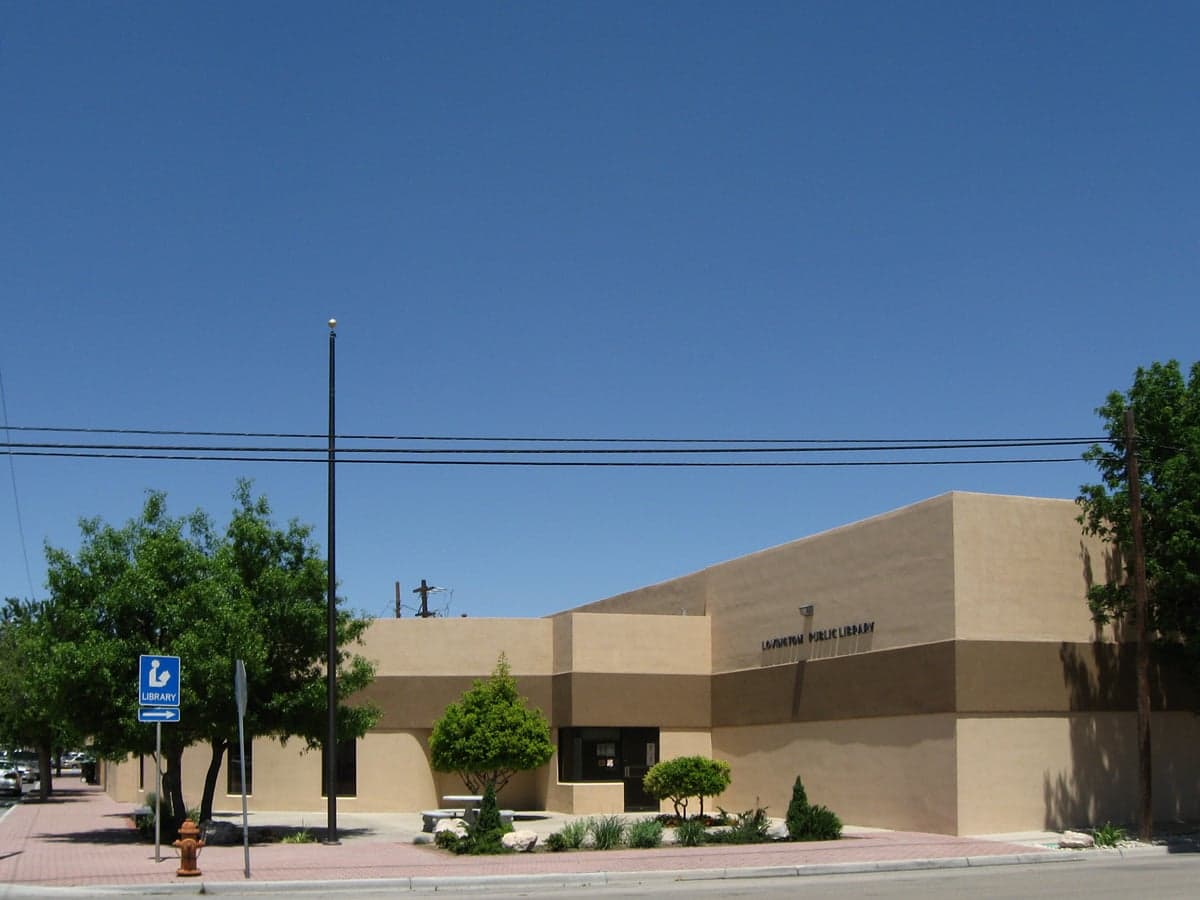
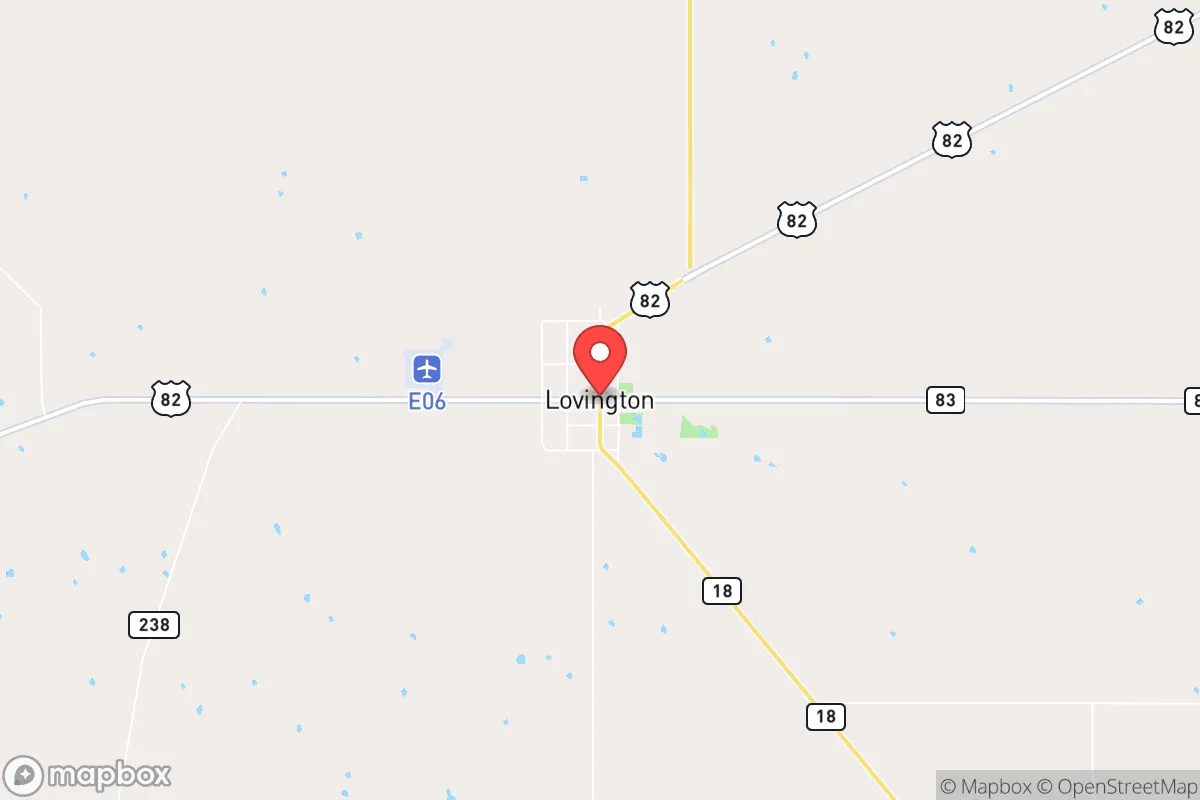
Photo: Wikipedia
Political ClimatePolitical Climate in Lovington, NM
District shown is the primary district for this city’s centroid. Cities may span multiple districts.
Local Political AnalysisPolitical Analysis of Lovington, NM
Lovington, New Mexico, has long been a place where folks value their independence and don't take kindly to being told how to live their lives, but the political winds have shifted noticeably in recent years. The area now carries a Cook PVI of D+3, meaning it leans slightly more Democratic than the national average, which is a far cry from the solidly conservative community I remember growing up here. While you'll still find plenty of pickup trucks with American flags and a strong sense of self-reliance, the local elections and policy debates have started to reflect a more progressive influence, especially compared to the surrounding towns like Hobbs or Tatum, which remain deeply red. It's a trend that has many of us long-time residents watching closely, wondering if the next few years will bring more government overreach into our personal freedoms.
How it compares
If you drive just 20 miles east to Hobbs, you'll find a place that still votes overwhelmingly Republican, with a Cook PVI of R+15 and a local government that fights tooth and nail against state-level mandates. In contrast, Lovington's D+3 rating puts it in a different league politically, more aligned with the progressive lean of Roswell or even parts of Santa Fe than with its own neighbors. This shift didn't happen overnight—it's been a slow creep, driven by new residents from out of state and a growing reliance on state funding for schools and infrastructure. The result is a community that's increasingly split, where you might hear a neighbor grumble about property taxes one minute and then defend a new county ordinance the next. It's a far cry from the days when everyone I knew voted the same way and trusted local leaders to keep their noses out of our business.
What this means for residents
For those of us who value personal liberty and limited government, the D+3 lean is a red flag that signals more state-level interference in our daily lives. We've already seen it with stricter environmental regulations on oil and gas operations, which are the lifeblood of our local economy, and with new zoning rules that make it harder to build a workshop or keep livestock on your own property. The local school board has also started pushing curriculum changes that feel more like indoctrination than education, and there's talk of expanding public health mandates that could affect everything from small business operations to how we gather with family. If you're considering a move here, understand that the political climate is in flux—you'll still find plenty of like-minded conservatives at the coffee shop or church potluck, but the local government is increasingly influenced by outside interests that don't share our values.
One cultural distinction that sets Lovington apart is its strong agricultural and oil-field heritage, which has traditionally fostered a live-and-let-live attitude among neighbors. However, the recent political shift has brought more divisive issues to the forefront, like debates over mask mandates in public buildings and the push for renewable energy projects that threaten our traditional jobs. The local sheriff's office still takes a hands-off approach to most personal matters, but the city council has become more willing to impose new fees and restrictions on everything from water usage to short-term rentals. For the long term, I worry that if this progressive trend continues, we'll lose the very character that made Lovington a great place to raise a family—where your word was your bond and the government stayed out of your way. It's not all doom and gloom yet, but it's worth keeping an eye on the ballot box if you're planning to put down roots here.

State Political ClimatePolitical Climate in New Mexico
State Political AnalysisPolitical Environment in the State
New Mexico has long been a reliably blue state in presidential elections, voting Democratic by margins of 10-11 points in 2020 and 2024, but the picture is far more complicated than a simple partisan label. The state’s political engine is driven by a coalition of urban liberals in Albuquerque and Santa Fe, combined with a large Hispanic electorate that historically leaned conservative but has shifted leftward over the past two decades. However, the rural and oil-rich southeastern corner—places like Hobbs, Carlsbad, and Roswell—votes as red as any place in Texas, creating a stark internal divide that has only widened since 2010.
Urban vs. rural divide
The political map of New Mexico is essentially a tale of two states. The Albuquerque metro area (Bernalillo County) and Santa Fe (Santa Fe County) account for roughly half the state’s population and vote overwhelmingly Democratic—Bernalillo went +17 for Biden in 2020, while Santa Fe County hit +40. These areas are home to the state’s government sector, the University of New Mexico, and a growing tech and film industry that attracts a progressive workforce. Meanwhile, the eastern plains and southeastern oil patch—Lea, Eddy, and Chaves counties—vote Republican by margins of 30 to 40 points. Lea County (Hobbs) voted +41 for Trump in 2024. The rural north, including Taos and northern Rio Arriba County, is ancestrally Hispanic and Democratic but with a libertarian streak on gun rights and land use. The key swing areas are the southern counties like Doña Ana (Las Cruces) and Sandoval (suburban Rio Rancho), which have trended left but remain competitive—Doña Ana went +11 for Biden in 2020, down from +18 for Obama in 2012. If you’re moving to New Mexico, your political experience will depend almost entirely on whether you land in Santa Fe or Hobbs.
Policy environment
New Mexico’s policy environment has shifted sharply leftward over the past decade, driven by a Democratic trifecta in Santa Fe that has held since 2019. The state’s income tax is progressive, with rates from 1.7% to 5.9%, and the gross receipts tax (a form of sales tax) can exceed 8% in some cities. Property taxes are relatively low—around 0.7% of assessed value—but the state has no right-to-work law, and union influence is strong, particularly in public education and construction. Education policy has become a flashpoint: in 2023, the legislature passed a bill requiring ethnic studies in K-12 schools, and the state has expanded pre-K and free college tuition for residents. Healthcare is dominated by the state’s Medicaid expansion, which covers roughly 40% of the population, and the 2023 Health Security Act moved the state toward a single-payer study. Election laws are among the most permissive in the country: same-day registration, no-excuse absentee voting, and automatic voter registration are all in place. For a conservative-leaning newcomer, the policy environment will feel like a blue state in miniature—progressive on taxes, education, and healthcare, but with a libertarian streak on certain issues like cannabis (fully legal since 2022) and alcohol sales.
Trajectory & freedom
On the freedom index, New Mexico is a mixed bag trending in the wrong direction. The state has seen a notable expansion of personal liberty in some areas: recreational cannabis is legal and widely available, and the state has some of the weakest blue laws in the country (liquor stores open on Sundays, no state-level ban on plastic bags). However, the trajectory on gun rights is concerning. In 2021, the legislature passed a red-flag law (HB 129) allowing courts to temporarily seize firearms from individuals deemed a risk, and in 2023, they passed a ban on carrying firearms within 100 feet of polling places and government buildings. The state also has a strict background check requirement for private sales. On parental rights, the 2023 Healthy Families Act mandated paid sick leave for all workers, and the state has resisted school choice expansion—there is no voucher program, and charter schools are limited. Property rights have been eroded by the 2019 Energy Transition Act, which mandates a rapid shift to renewable energy and has effectively killed new coal and natural gas development, impacting rural landowners. The most concerning trend for freedom-minded residents is the state’s aggressive tax and regulatory posture: the gross receipts tax applies to many services, and the state has a high minimum wage ($12.00 as of 2024, rising to $13.50 by 2025). If you value low taxes, gun rights, and school choice, New Mexico’s trajectory is heading the wrong way.
Civil unrest & political movements
New Mexico has seen its share of political flashpoints, though they tend to be lower-key than in neighboring states. The most visible movement in recent years has been the push for sanctuary policies: Albuquerque and Santa Fe are both sanctuary cities, and the state’s 2019 law (HB 84) limits local law enforcement cooperation with federal immigration authorities. This has created tension in border-adjacent areas like Las Cruces and Deming, where ICE operations are common. In 2020, the state saw significant Black Lives Matter protests in Albuquerque and Santa Fe, with some property damage and clashes with counter-protesters. On the right, the Otero County Commission (Alamogordo) made national headlines in 2022 for refusing to certify primary election results over concerns about Dominion voting machines—a move that was ultimately overruled by the state Supreme Court. The election integrity debate remains live: in 2024, the state’s Secretary of State (a Democrat) was criticized for sending unsolicited absentee ballot applications to all registered voters. The most visible political movement is the growing “New Mexico First” sentiment in the oil patch, where residents of Hobbs and Carlsbad feel increasingly alienated from Santa Fe’s policies. There have been murmurs of secession talk in Lea County, though it remains fringe. For a new resident, the most tangible sign of unrest is the visible homelessness and drug crisis in Albuquerque’s downtown and along Central Avenue, which has become a political flashpoint between progressive harm-reduction advocates and residents demanding more aggressive policing.
Projection
Looking ahead 5-10 years, New Mexico’s political trajectory is likely to continue leftward, driven by demographic shifts and in-migration patterns. The state is growing slowly—about 1% per year—but the growth is concentrated in the Albuquerque and Santa Fe metros, which are attracting remote workers from California and Colorado who tend to be progressive. The oil and gas sector in the southeast remains a powerful economic engine, but the state’s regulatory push toward renewables is likely to slow new investment. The Hispanic electorate, which makes up 50% of the population, is trending younger and more Democratic, though older Hispanic voters in rural areas remain a potential swing bloc. The most realistic scenario is that New Mexico becomes more like Colorado: a blue state with a strong urban core, a shrinking rural conservative minority, and a policy environment that prioritizes government expansion over individual liberty. For a conservative-leaning newcomer, the state will likely feel increasingly hostile to traditional values on guns, education, and taxes, though the low cost of living and natural beauty will continue to attract a certain type of libertarian-minded resident who values personal freedom on cannabis and land use over fiscal conservatism.
For someone moving to New Mexico today, the bottom line is this: you’ll find a state with stunning landscapes and a laid-back culture, but the political winds are blowing in a direction that will feel increasingly uncomfortable if you value limited government, gun rights, and school choice. If you’re set on moving here, your best bet is to land in a conservative stronghold like Hobbs, Carlsbad, or the rural eastern plains, where you can live under a local government that reflects your values while the state government in Santa Fe does its own thing. Just be prepared for a constant battle over taxes, regulations, and cultural issues—and don’t expect that battle to turn in your favor anytime soon.
* Values derived from national, state, county, city and local statistics and may differ in a specific area. Last updated: 2026-04-19T11:37:09.000Z
Narrative content on this page is AI-generated and may contain mistakes. Verify any details that matter before acting on them.
ReloMaps may earn a commission from affiliate links at no extra cost to you.

