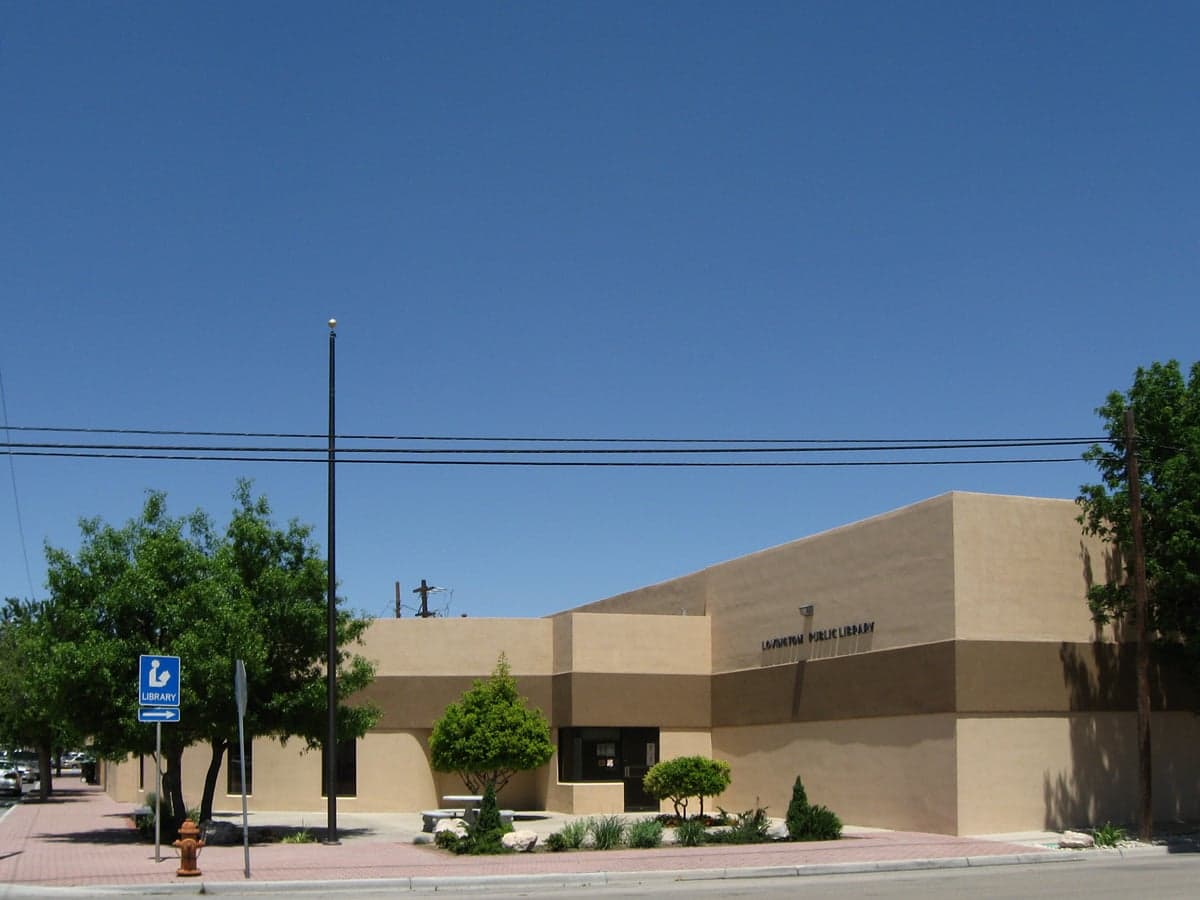
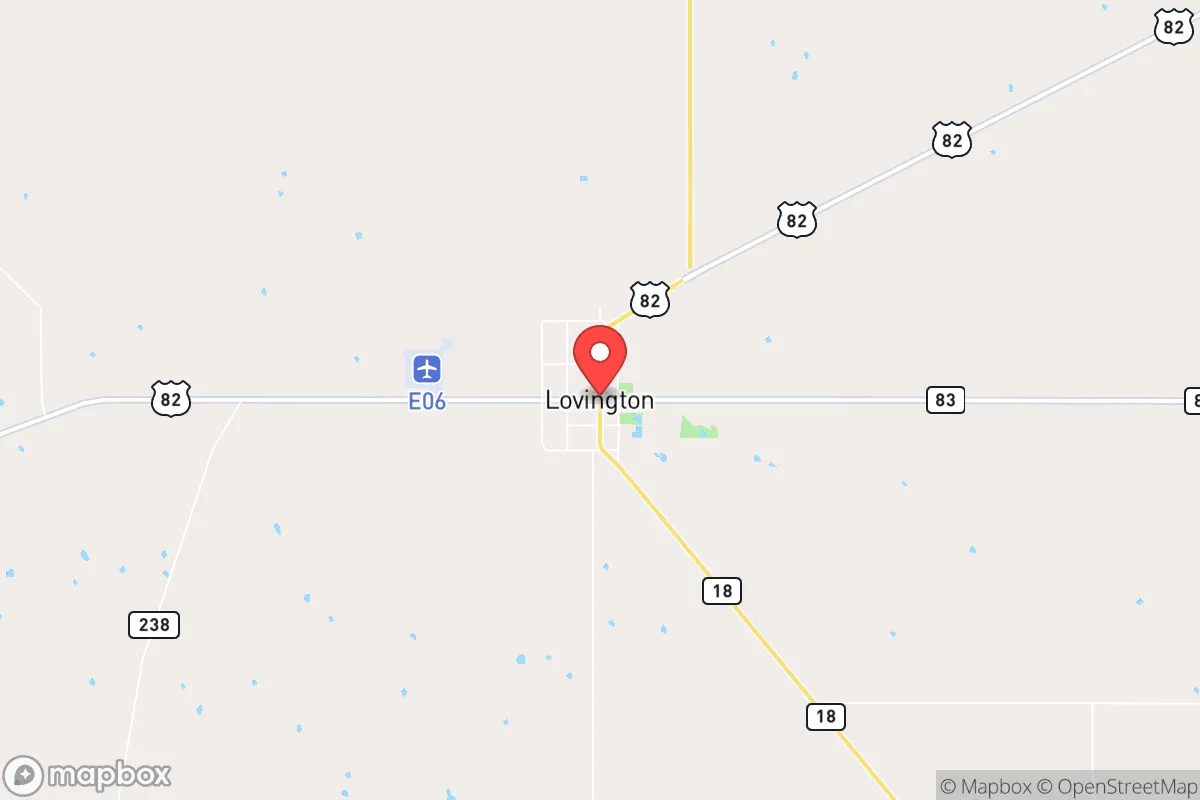
Photo: Wikipedia
Strategic Assessment of Lovington, NM
Workable tactical position. Some exposure to population density or targets, but generally defensible in a crisis.
What does the Strategic Assessment tell us?
Our Strategic Assessment grades tactical survivability of an area. Major population centers, military targets, fallout zones, natural disasters, and border exposure all drive risk — lower exposure means a more defensible position in a crisis.
This is heavily inspired by Joel Skousen's Strategic Relocation book. Highly recommended you checkout the book ($)What does this tell us?
Our Strategic Assessment grades tactical survivability of an area. Major population centers, military targets, fallout zones, natural disasters, and border exposure all drive risk — lower exposure means a more defensible position in a crisis.
This is heavily inspired by Joel Skousen's Strategic Relocation book. Highly recommended you checkout the book ($)Strategic Pillars

Key Distances
Regional Safe Places
Below is our recommended "safe zones" in New Mexico and the surrounding area based on our strategic heuristics. For most people, it's unrealistic to live in a “safe zone” full-time due to work, family or other personal reasons. They tend to be more rural. However, many of these areas are perfect for second homes and retreat properties that double as a vacation home or even a short-term rental.

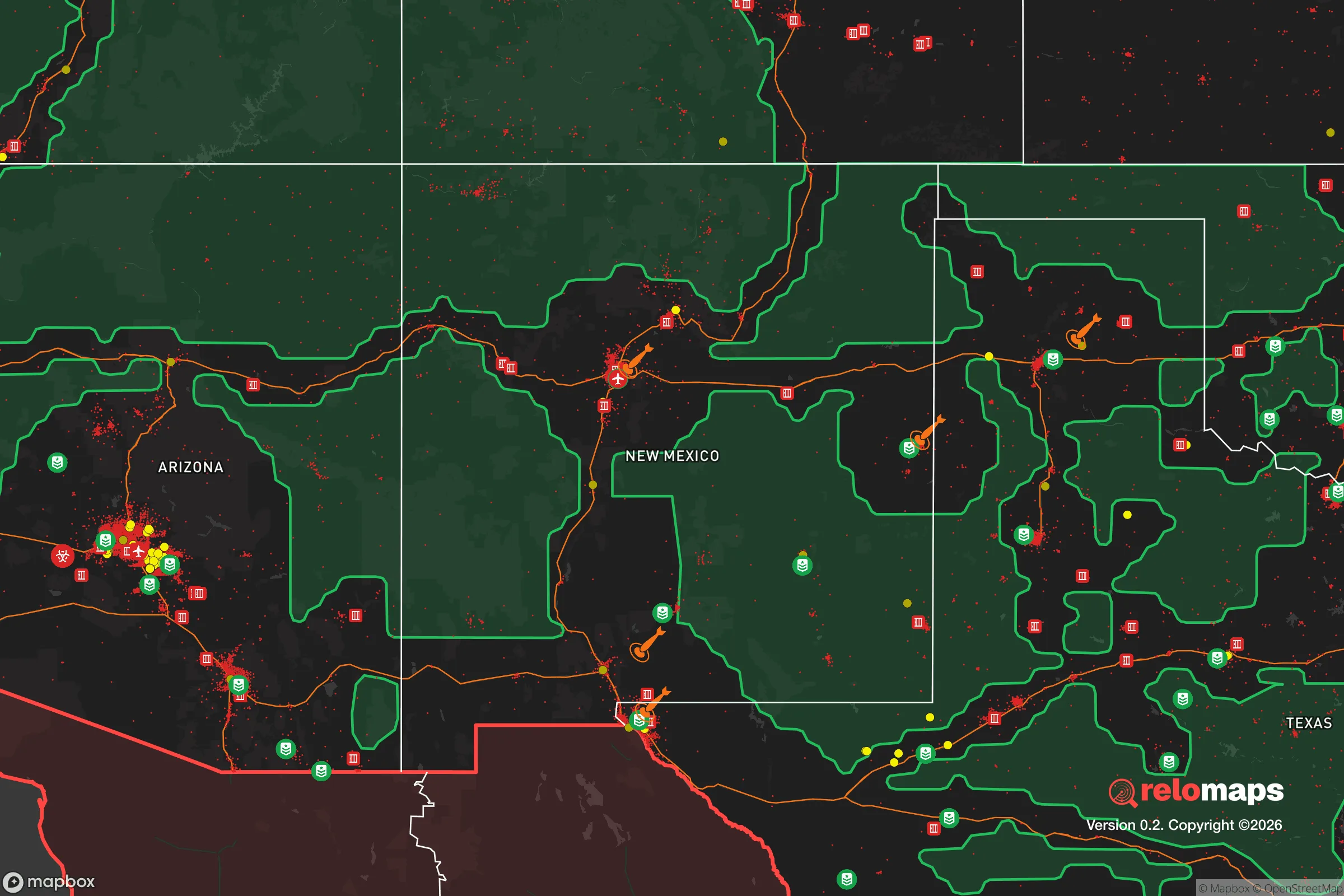


Important Note: For informational purposes only. This does not mean nothing bad ever happens in the green zones. Please use common sense. This is based on public data and modeled with AI. We tried to take a conservative approach but mistakes happen. We update this regularly as new information becomes available.
Solar Generator Recommendations
Backup power matters more here than in safer locations. We've picked three solar generators across budgets and capacity tiers — start with the budget unit if you only need a few essentials, or step up if you want to run a fridge and HVAC for days at a time.

Jackery Portable Power Station Explorer 300
Budget OptionPower on the Go: Weighing only 11 lbs, it's convenient to set up and store with book-sized foldable solar panels

BLUETTI Portable Power Station AC180
Designed for both indoor and outdoor scenarios, AC180 is highly capable as it has a robost capacity and continuous output power.

EF ECOFLOW DELTA Pro Ultra Power Station
Upgraded PickEcoFlow DELTA Pro Ultra is a whole-home energy system designed to grow with your family. Integrated with the Smart Home Panel 2, it scales to meet your evolving energy needs — keeping your home powered, intelligent, and secure through every stage of life.
We earn a commission, at no additional cost to you.
Strategic Assessment Analysis
Lovington, New Mexico, offers a strategic relocation option for those prioritizing resilience and self-sufficiency in an increasingly uncertain world. Its remote location in the southeastern corner of the state, far from major population centers and critical infrastructure targets, provides a natural buffer against the cascading effects of civic unrest, mass casualty events, and large-scale disasters. While not without its own vulnerabilities, the area's low population density, agricultural base, and distance from likely fallout zones make it a defensible and sustainable choice for individuals and families seeking to weather potential disruptions.
Geographic isolation and natural buffers: Why Lovington's location works for preppers
Lovington sits in Lea County, roughly 80 miles from the Texas border and equidistant from the major cities of Lubbock (TX) and Roswell (NM), each about 100 miles away. This distance is a key advantage. In the event of a major urban crisis—whether from civil unrest, a biological event, or a coordinated attack—Lovington is far enough removed to avoid the immediate chaos, yet close enough to access supplies or medical care if needed. The surrounding landscape is flat, semi-arid ranchland and oil fields, offering few natural choke points but also few avenues for large-scale incursion. The area's primary natural advantage is its groundwater access via the Ogallala Aquifer, which underlies much of the region and provides a reliable, if finite, water source for wells. The climate is dry, with low humidity and minimal risk of hurricanes, tornadoes (though they can occur), or flooding, reducing the likelihood of weather-related disruptions that could compound other emergencies.
Risks, exposures, and proximity to fallout-relevant landmarks: What to watch for
No location is a fortress, and Lovington has its share of strategic liabilities. The most significant is its proximity to the Waste Isolation Pilot Plant (WIPP), a federal nuclear waste repository located about 30 miles east, near Carlsbad. While WIPP is designed for long-term storage of transuranic waste, a catastrophic failure—whether from accident, sabotage, or seismic event—could render large portions of southeastern New Mexico uninhabitable. Additionally, the area is crisscrossed by natural gas pipelines and dotted with oil drilling operations. A major pipeline rupture or well fire could create localized hazards, though these are generally manageable with proper planning. On the human threat side, Lovington's isolation works both ways: it's a long drive to any major hospital (the nearest Level I trauma center is in Lubbock, 100 miles away), and law enforcement response times in a widespread emergency could be slow. The town itself has a population of roughly 11,000, meaning that in a full-scale collapse scenario, local resources could be quickly overwhelmed by refugees from larger cities like Hobbs (20 miles west) or even Carlsbad (60 miles south). Fallout from a nuclear event at WIPP or a strike on a major city like Albuquerque (250 miles northwest) would likely not reach Lovington due to prevailing winds and distance, but the risk of secondary effects—such as displaced populations or supply chain interruptions—remains real.
Practical resilience for a relocator: Food, water, energy, and defensibility
For a family or individual serious about preparedness, Lovington offers several concrete advantages. Water is the first priority, and the Ogallala Aquifer provides a deep, reliable source for private wells, though drilling costs can be significant (typically $10,000–$20,000 for a domestic well). Rainwater catchment is also viable, with annual precipitation averaging about 14 inches—enough to supplement a well system. Food production is feasible: the growing season is long (April to October), and the sandy loam soil, while not rich, can be amended for gardens. Local agriculture is dominated by cotton, sorghum, and cattle, meaning bulk food supplies (grains, hay, livestock) are available from nearby farms. Energy is a mixed bag. The area has abundant solar potential—over 300 sunny days per year—making off-grid solar panels a practical investment. Natural gas is cheap and widely available for heating and cooking, but reliance on the grid is a vulnerability; a well-maintained generator or battery bank is advisable. Defensibility is moderate. The flat terrain offers little natural cover, but a rural property with a perimeter fence, good visibility, and a well-stocked armory can be made secure. The local culture is gun-friendly, with a strong hunting and shooting tradition, so firearms training and ownership are socially acceptable and legally straightforward. Community resilience is a wildcard: Lovington's population is predominantly conservative and self-reliant, which can foster mutual aid, but it can also mean a "every man for himself" attitude in a crisis. Building relationships with neighbors before a disaster is critical.
The overall strategic picture for Lovington is one of calculated trade-offs. It offers genuine advantages in terms of isolation, water access, and energy independence, making it a strong candidate for those who want to be far from the fray. The primary risks—proximity to WIPP, dependence on a finite aquifer, and distance from advanced medical care—are manageable with proper planning and investment. For a conservative-leaning relocator who values self-sufficiency, community cohesion, and a low-profile existence, Lovington represents a solid, if not perfect, bet. It's not a bunker, but it's a place where a prepared family can build a sustainable life while the world burns from a safe distance. The key is to arrive with a plan, a well, and a willingness to dig in—literally and figuratively.

* Values derived from national, state, county, city and local statistics and may differ in a specific area. Last updated: 2026-04-19T11:37:09.000Z
Narrative content on this page is AI-generated and may contain mistakes. Verify any details that matter before acting on them.
ReloMaps may earn a commission from affiliate links at no extra cost to you.

