Photo: Wikipedia
Personal Sovereignty in Lowell, MA
Viable for self-reliance. Generally workable, though some barriers may limit total independence.
What does Personal Sovereignty tell us?
Personal Sovereignty measures your capacity for self-reliance and independence with minimal government friction. Higher scores mean fewer barriers between you and the way you want to live... but it assumes you have the space you need and good neighbors.
What does this tell us?
Personal Sovereignty measures your capacity for self-reliance and independence with minimal government friction. Higher scores mean fewer barriers between you and the way you want to live... but it assumes you have the space you need and good neighbors.
State Policy
Energy independence: Importer (5% of energy produced in-state)
Personal Liberty
Homesteading

Personal Liberty Analysis
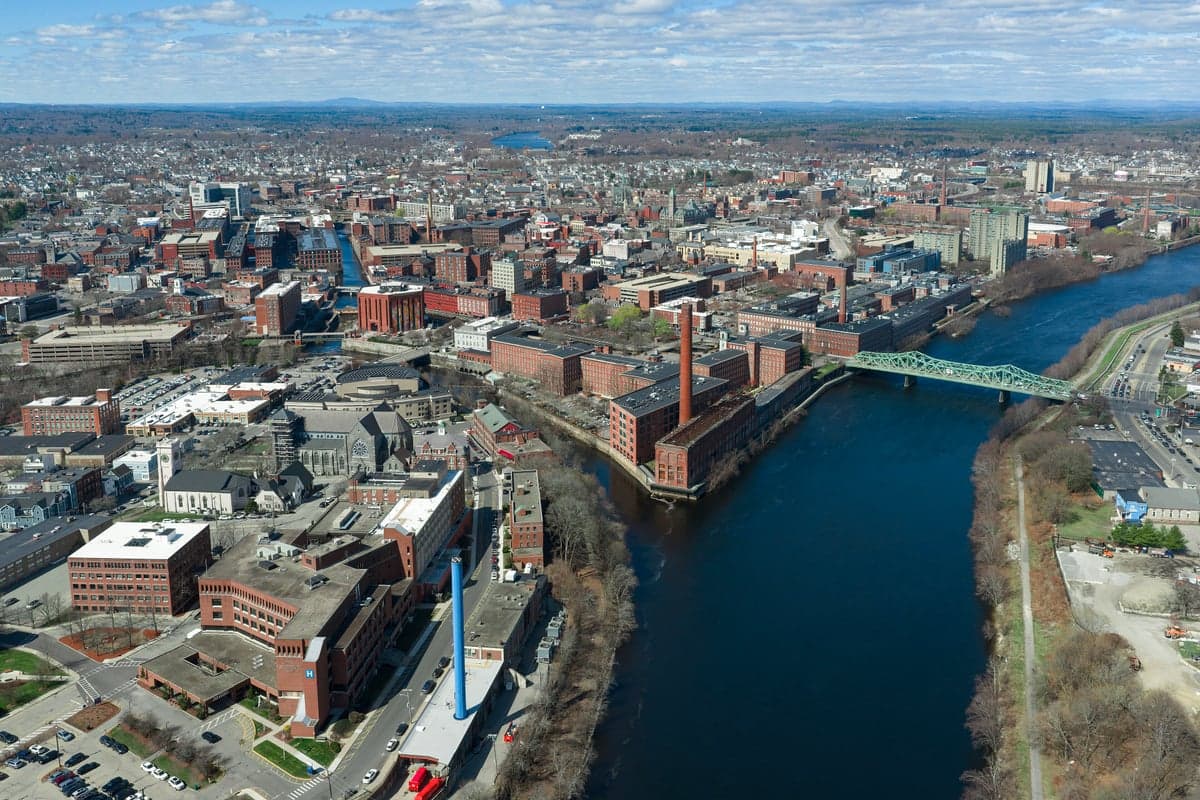
Lowell, Massachusetts presents a challenging environment for personal sovereignty, where the state’s progressive regulatory framework significantly constrains individual autonomy. For conservative-leaning individuals and parents prioritizing self-reliance, the city’s dense urban layout and Massachusetts’ expansive government apparatus create a landscape where freedom is heavily mediated by state and local mandates. While Lowell offers some practical advantages for those willing to navigate its legal thicket, the overall sovereignty score is low compared to less regulated regions in New England or the South, making it a location for strategic adaptation rather than outright liberty.
Tax burden and regulatory posture: How much of your income and freedom is claimed by the state
Massachusetts imposes one of the heaviest tax burdens in the nation, and Lowell residents feel it directly. The state’s flat income tax rate of 5.0% (as of 2026) is coupled with a 6.25% sales tax, and property taxes in Lowell average around $1.40 per $1,000 of assessed value—moderate for the state but high nationally. More insidious for the self-reliant is the regulatory posture: Massachusetts has some of the strictest building codes, environmental regulations, and business licensing requirements in the country. For a prepper or homesteader, this means every modification to property—from installing a backup generator to building a root cellar—likely requires permits and inspections that can take months. The state’s vehicle excise tax is an annual annoyance, and the Massachusetts estate tax kicks in at just $1 million, penalizing wealth transfer. Lowell’s city government adds its own layers, including strict zoning that limits home-based businesses and agricultural activities. The net effect is that a significant portion of your time and money goes to compliance, not self-sufficiency.
Self-defense and gun law specifics: What you can and cannot do to protect your home and family
Massachusetts is one of the most restrictive states for gun owners, and Lowell offers no relief. The state requires a License to Carry (LTC) for both open and concealed carry, which is issued by local police chiefs—meaning your rights depend on the discretion of Lowell’s police department. The process includes a background check, fingerprinting, a firearms safety course, and a fee, with approval times often stretching 6-12 months. Assault weapons are banned under state law, as are magazines holding more than 10 rounds. For home defense, you are limited to handguns or shotguns with restricted capacity. Castle Doctrine is not codified in Massachusetts; instead, the state uses a “duty to retreat” standard in public, though your home is generally considered a place where you can defend yourself without retreat. However, the legal burden is on you to prove reasonable fear of death or great bodily harm. Stand-your-ground laws do not exist. For preppers, this means stockpiling ammunition is legal but transporting it requires an LTC, and any defensive use of a firearm will trigger intense legal scrutiny. Lowell’s urban density also means that even a justified self-defense shooting could lead to civil liability or criminal charges if the prosecutor disagrees with your assessment of the threat.
Self-reliance and homesteading viability: Lot sizes, zoning, and off-grid feasibility in an urban setting
Lowell’s dense, historic layout makes traditional homesteading nearly impossible. The typical residential lot is 0.1 to 0.25 acres, with many homes built on narrow plots with little yard space. Zoning is predominantly residential, with strict prohibitions on keeping livestock—chickens are allowed in some districts but require a permit and are limited to four hens (no roosters). Larger animals like goats or pigs are banned outright. Off-grid living is legally unfeasible: Massachusetts requires all homes to be connected to the municipal water and sewer system, and solar panels must be grid-tied unless you obtain a special variance. Rainwater collection is technically legal but heavily regulated, and composting toilets are not permitted in urban zones. For a prepper, the best you can do is a small vegetable garden, a backup generator (with noise restrictions), and a deep pantry. The city’s Community Garden Program offers plots for $25-$50 per year, but these are temporary and subject to city rules. If you want real self-reliance—acreage, well water, septic, and the ability to raise your own food—Lowell is a dead end. You would need to look 30-60 minutes north or west, where rural towns like Pepperell or Townsend offer 1-5 acre lots with fewer restrictions.
Personal liberties: Parental rights, medical autonomy, speech, and property rights in practice
Massachusetts is a leader in expanding state authority over personal decisions, and Lowell reflects that. Parental rights are significantly eroded: the state mandates comprehensive sex education in public schools, and parents cannot opt their children out of lessons on gender identity or sexual orientation. Medical autonomy is constrained by mandatory vaccination laws for school attendance—only medical exemptions are allowed, no religious or philosophical ones. During public health emergencies, the governor has broad powers to mandate treatments, as seen during COVID-19. Free speech is legally protected, but in practice, Lowell’s city council has passed resolutions condemning certain political viewpoints, and public spaces are increasingly monitored. Property rights are weak: the state’s Chapter 40B law allows developers to override local zoning for affordable housing projects, meaning your neighborhood could change without your input. Eminent domain is used aggressively for redevelopment, and the city’s Rent Control (via the 2024 Community Preservation Act) places limits on rent increases, which can reduce property values for landlords. For a conservative individual, the message is clear: the state prioritizes collective mandates over individual choice, and Lowell’s local government actively enforces that hierarchy.
In the broader landscape of personal sovereignty, Lowell ranks low. Compared to New Hampshire—just 30 minutes north—you face higher taxes, stricter gun laws, weaker property rights, and less parental control. For a survivalist or prepper, Lowell is a place to work and earn, not to build a self-reliant life. The city’s dense infrastructure and progressive governance create a high-compliance environment where every aspect of autonomy is mediated by permits, fees, and state oversight. If you must live here, focus on financial resilience, legal compliance, and building a network of like-minded individuals. But for those serious about sovereignty, the Merrimack Valley’s rural towns or a move to a red state like New Hampshire or Texas will offer far more breathing room. Lowell is a strategic outpost, not a homestead.

* Values derived from national, state, county, city and local statistics and may differ in a specific area. Last updated: 2026-05-02T01:37:53.000Z
Narrative content on this page is AI-generated and may contain mistakes. Verify any details that matter before acting on them.
ReloMaps may earn a commission from affiliate links at no extra cost to you.

