
Photo by Ulrike R. Donohue on Unsplash
Political ClimatePolitical Climate in Ludlow, VT
District shown is the primary district for this city’s centroid. Cities may span multiple districts.
Inherited from parent state — no local data available.
Local Political AnalysisPolitical Analysis of Ludlow, VT
Ludlow, Vermont, leans heavily Democratic, with a Cook PVI of D+17, meaning the area votes about 17 points more Democratic than the national average. That’s a pretty stark shift from what I remember growing up here, when the town was a lot more purple—you’d have your ski bums and your loggers, and folks mostly just wanted to be left alone. Now, the local politics are dominated by progressive activists, and the trajectory is clearly toward more government involvement in daily life, which is a red flag for anyone who values personal freedoms.
How it compares
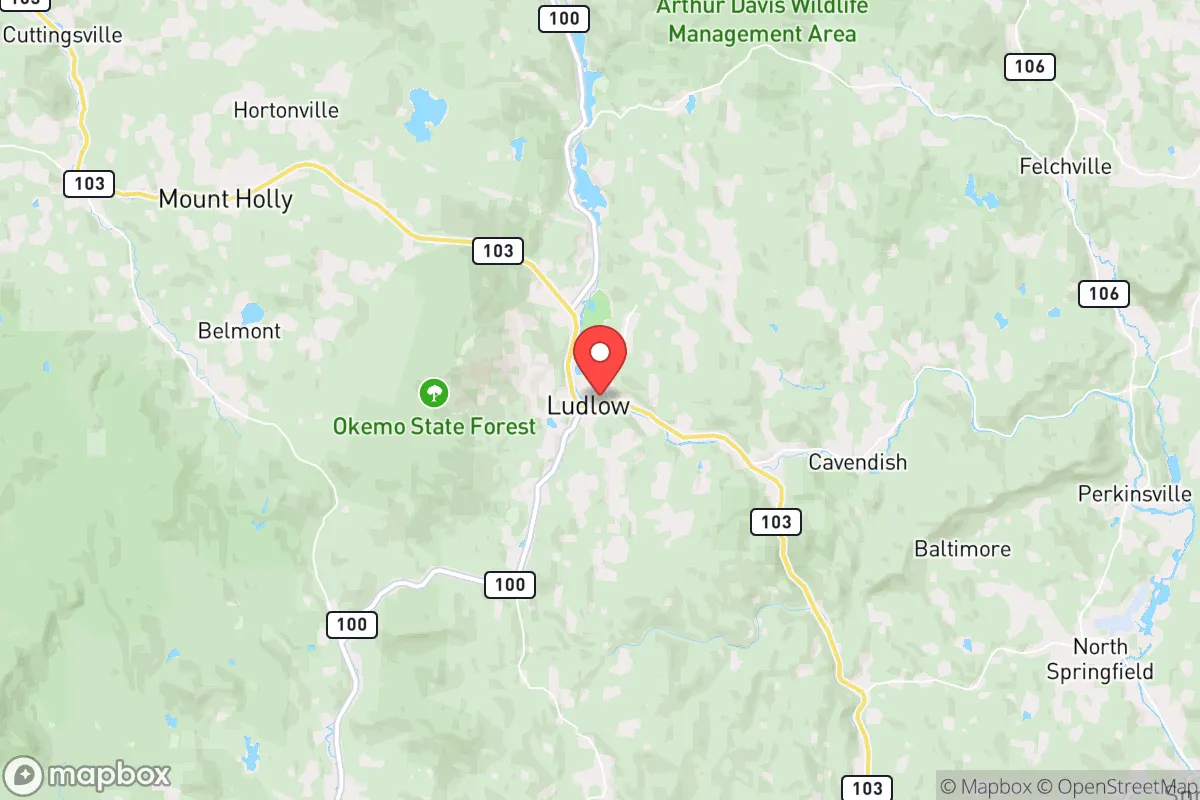
If you drive 20 minutes north to Rutland, you’ll find a more balanced political scene—Rutland County voted about 55% for Biden in 2020, but the city itself has a strong independent streak and a Republican mayor. Head east to Springfield, and you’re in a working-class town that’s reliably red-leaning, with a lot of folks who’d rather see the government stay out of their business. Ludlow, by contrast, has become a haven for out-of-state transplants, especially from places like New York and Massachusetts, who bring their big-government ideas with them. The contrast is sharp: in Ludlow, you’ll see yard signs for Bernie Sanders and local progressive candidates; in nearby Proctorsville or Cavendish, you’re more likely to see “Don’t Tread on Me” flags. That D+17 rating isn’t just a number—it reflects a real cultural divide that’s grown over the last decade.
What this means for residents
For those of us who’ve lived here a while, the biggest concern is how this political tilt translates into policy. Property taxes are already among the highest in the state, and the progressive majority in Montpelier keeps pushing new mandates—like stricter environmental regulations on wood stoves and septic systems, or paid family leave that gets funded through payroll taxes. These might sound good on paper, but they hit small business owners and self-employed contractors hard. The local school board has also shifted left, with more emphasis on diversity, equity, and inclusion training than on basic math and reading scores. If you’re a conservative or even a moderate, you’ll feel like your voice is getting drowned out. The long-term trend is concerning: as more people move here for the “Vermont lifestyle,” they vote to change the very things that made it attractive—low regulation, personal responsibility, and a live-and-let-live attitude.
One cultural distinction that stands out is Ludlow’s relationship with Okemo Mountain Resort. The resort drives the local economy, and it’s owned by a corporation that tends to align with progressive causes—think sustainability pledges and diversity hires. That’s fine, but it also means the town’s biggest employer is pushing a certain worldview. Meanwhile, the local gun culture, which used to be strong, is fading; you don’t see as many hunters at the diner, and the town’s annual turkey shoot has been replaced by a farmers’ market. It’s a small sign of a bigger shift: the old Vermont of self-reliance is being replaced by a version that’s more dependent on government programs and out-of-state money. If you’re thinking of moving here, just know that the political climate is increasingly one-size-fits-all, and if you don’t fit that size, you’ll feel it.

State Political ClimatePolitical Climate in Vermont
State Political AnalysisPolitical Environment in the State
Vermont has long been painted as one of the most reliably progressive states in the nation, and the numbers back that up: since 1992, it has voted for the Democratic presidential candidate by margins that often exceed 20 points, hitting a +35-point spread for Joe Biden in 2020. But that statewide blue veneer hides a much more complicated picture — one where a deep rural-urban split, a fierce independent streak, and a growing libertarian-leaning resistance to government overreach are reshaping the political landscape. Over the last 10-20 years, the state has shifted from a quirky, live-and-let-live New England republic to a laboratory for progressive policy, and that trajectory is causing real friction for conservatives and moderates who call it home.
Urban vs. rural divide
The political map of Vermont is a tale of two worlds. The urban core — Burlington, the state's largest city, along with Montpelier and Winooski — drives the state's deep-blue lean. Burlington, home to the University of Vermont and a dense concentration of government and tech workers, routinely votes 80%+ Democratic. These cities are the engine of progressive legislation, from paid family leave to carbon taxes. But drive 20 minutes in any direction, and the landscape flips. Rutland, Barre, and Newport are working-class towns that have trended redder in recent cycles. In 2020, Orleans County (home to Newport) voted for Trump by 20 points, while Essex County in the remote Northeast Kingdom went +18 for Trump. Even Chittenden County, the state's most populous and liberal, has pockets like Colchester and Milton where conservative-leaning voters are holding the line. The divide isn't just about cities versus farms — it's about a cultural chasm between the activist class in Burlington and the rest of the state, where people still hunt, fish, and resent being told how to live.
Policy environment
Vermont's policy environment is a mixed bag that will feel familiar to anyone from a high-tax, high-regulation state. The state has a progressive income tax with a top rate of 8.75%, one of the highest in the nation, and property taxes are among the steepest in the country — driven largely by school funding formulas that have ballooned since Act 60 and Act 68 in the 1990s. Sales tax is a relatively low 6%, but the state more than makes up for it with fees and use taxes. On the regulatory front, Vermont was the first state to legalize same-sex marriage via legislation (2009) and the first to pass a single-payer healthcare system (2011, though it was never fully implemented). More recently, the state has enacted a carbon tax on heating fuels (the Global Warming Solutions Act of 2020) and a paid family leave program funded by payroll deductions. For conservatives, the biggest red flags are the state's aggressive gun control laws — Act 179 (2018) banned magazines over 10 rounds and raised the purchase age to 21, and Act 69 (2023) added a 72-hour waiting period and a ban on carrying in public buildings. Education policy is also a sore spot: Vermont has a universal school choice system for public schools, but the state's education bureaucracy is top-heavy, and school boards in liberal towns have pushed controversial curricula. Election laws are among the most permissive in the country — universal mail-in voting, same-day registration, and no voter ID requirement — which conservatives view as a recipe for fraud, though no major scandals have emerged.
Trajectory & freedom
On the freedom front, Vermont is a study in contradictions. On one hand, the state has a strong tradition of personal liberty — no billboards, no billboard-style advertising, and a fiercely independent spirit that resents federal overreach. But over the last decade, the state legislature has steadily expanded government control into areas that conservatives hold dear. Gun rights have been systematically eroded: Act 179 (2018) and Act 69 (2023) have made Vermont a national outlier for a rural state, with magazine bans and waiting periods that many gun owners see as unconstitutional. Parental rights took a hit in 2023 when the state passed a law allowing minors to receive gender-affirming care without parental consent, and a 2024 law banned conversion therapy for minors. Medical autonomy is a mixed bag: Vermont legalized assisted suicide in 2013 and recreational marijuana in 2018, but the state's vaccine mandate for healthcare workers (2021) and school vaccine requirements (with limited exemptions) have sparked backlash. Property rights are under pressure from Act 250, the state's landmark land-use law, which has been used to block development and limit property owners' ability to build. The trajectory is clear: Vermont is becoming less free for those who value gun rights, parental control, and low taxes, while expanding freedoms in areas like drug use and end-of-life choices. For a conservative, the trend is concerning — the state is moving toward a European-style social democracy where the government decides more and more of your daily life.
Civil unrest & political movements
Vermont isn't known for street violence, but the political temperature has risen noticeably. In 2020, Burlington saw large Black Lives Matter protests that turned into property damage and looting, leading to a police reform law (Act 6) that critics say has handcuffed law enforcement. The Yellow Vests Vermont movement, a loose coalition of gun rights activists and anti-lockdown protesters, held rallies at the Statehouse in Montpelier in 2020 and 2021, drawing hundreds. More recently, the Vermont Republican Party has seen a surge in grassroots activism, with local town committees in places like St. Albans and Bennington becoming more organized. The secessionist undercurrent is real — the Second Vermont Republic movement, though small, has pushed for independence from the U.S. as a way to escape federal overreach. Immigration politics are relatively quiet, as Vermont has a small foreign-born population (about 7%), but the state has a sanctuary policy that limits cooperation with ICE, which frustrates conservatives. Election integrity is a hot-button issue: the state's universal mail-in system and lack of voter ID have led to calls for reform, but no major fraud cases have been proven. The flashpoints a new resident would notice are the constant debates over gun laws, school curriculum, and property taxes — these are the issues that get people out to town meeting day.
Projection
Looking ahead 5-10 years, Vermont's political trajectory is likely to continue its leftward drift, but with increasing friction. The state is experiencing a slow demographic shift: young, college-educated progressives are moving to Burlington and other urban centers, while working-class families and retirees are leaving for lower-tax states like Florida, Texas, and New Hampshire. In-migration from out-of-state — particularly from New York and Massachusetts — is accelerating the progressive tilt, as these newcomers bring their politics with them. The rural areas, however, are becoming more conservative and more vocal, and the state's small size means that a few thousand votes can flip a county. The Northeast Kingdom and Rutland County are likely to remain red, while Chittenden County and Washington County will deepen blue. The real wild card is the state's fiscal situation: with an aging population and a shrinking tax base, the progressive spending agenda may hit a wall, forcing either tax hikes or service cuts. For a conservative moving in now, expect to find a state where your vote on local issues matters more than your vote for president — town meeting day still decides school budgets and zoning laws. But the state-level trend is clear: more regulation, higher taxes, and less personal freedom in the areas that matter most to conservatives.
Bottom line for a new resident: If you're a conservative considering Vermont, you're moving into a state where you'll be in the minority politically, but not alone. The rural towns and small cities offer a quality of life that's hard to beat — low crime, beautiful scenery, and a strong sense of community. But you'll need to be prepared to fight for your values at the local level, because the state government in Montpelier is unlikely to change course anytime soon. Your best bet is to look at towns like Newport, St. Johnsbury, or Rutland, where the political climate is more balanced, and where you can still find a school board that respects parental rights and a town meeting that listens to taxpayers. Just don't expect to carry a 15-round magazine or keep your property taxes low — those battles are already lost at the state level.
* Values derived from national, state, county, city and local statistics and may differ in a specific area. Last updated: 2026-05-01T14:09:12.000Z
Narrative content on this page is AI-generated and may contain mistakes. Verify any details that matter before acting on them.
ReloMaps may earn a commission from affiliate links at no extra cost to you.

