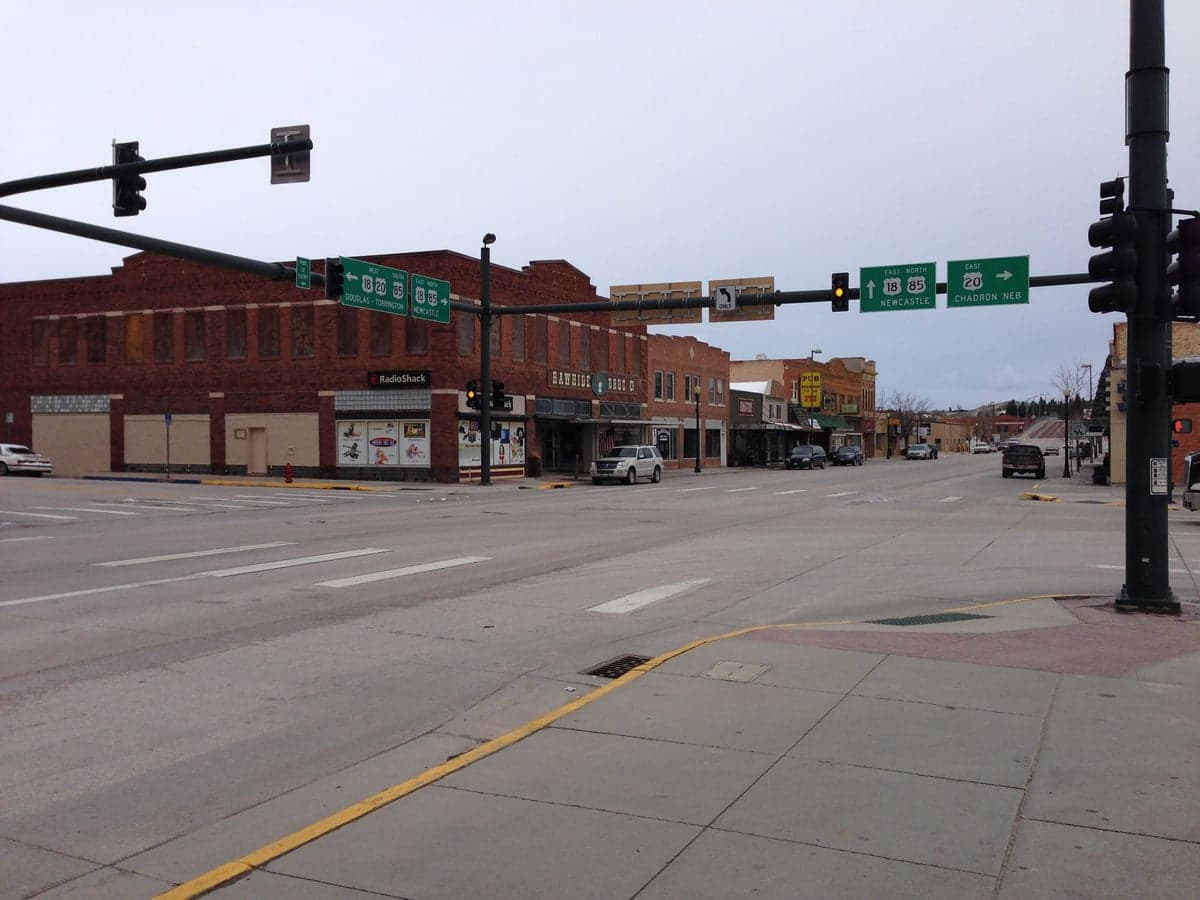
Photo: Wikipedia
Strategic Assessment of Lusk, WY
Strong survivability profile. Good buffer from population centers, with manageable environmental and tactical risks.
What does the Strategic Assessment tell us?
Our Strategic Assessment grades tactical survivability of an area. Major population centers, military targets, fallout zones, natural disasters, and border exposure all drive risk — lower exposure means a more defensible position in a crisis.
This is heavily inspired by Joel Skousen's Strategic Relocation book. Highly recommended you checkout the book ($)What does this tell us?
Our Strategic Assessment grades tactical survivability of an area. Major population centers, military targets, fallout zones, natural disasters, and border exposure all drive risk — lower exposure means a more defensible position in a crisis.
This is heavily inspired by Joel Skousen's Strategic Relocation book. Highly recommended you checkout the book ($)Strategic Pillars

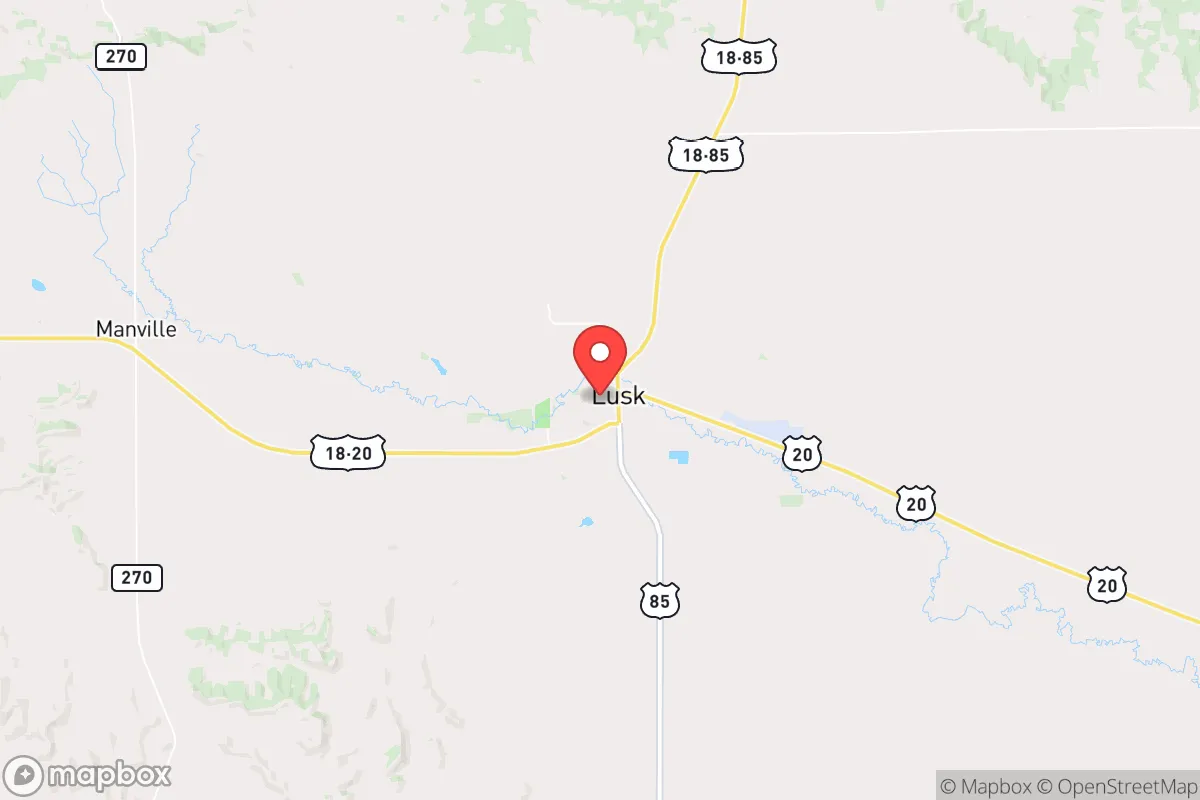
Key Distances
Regional Safe Places
Below is our recommended "safe zones" in Wyoming and the surrounding area based on our strategic heuristics. For most people, it's unrealistic to live in a “safe zone” full-time due to work, family or other personal reasons. They tend to be more rural. However, many of these areas are perfect for second homes and retreat properties that double as a vacation home or even a short-term rental.
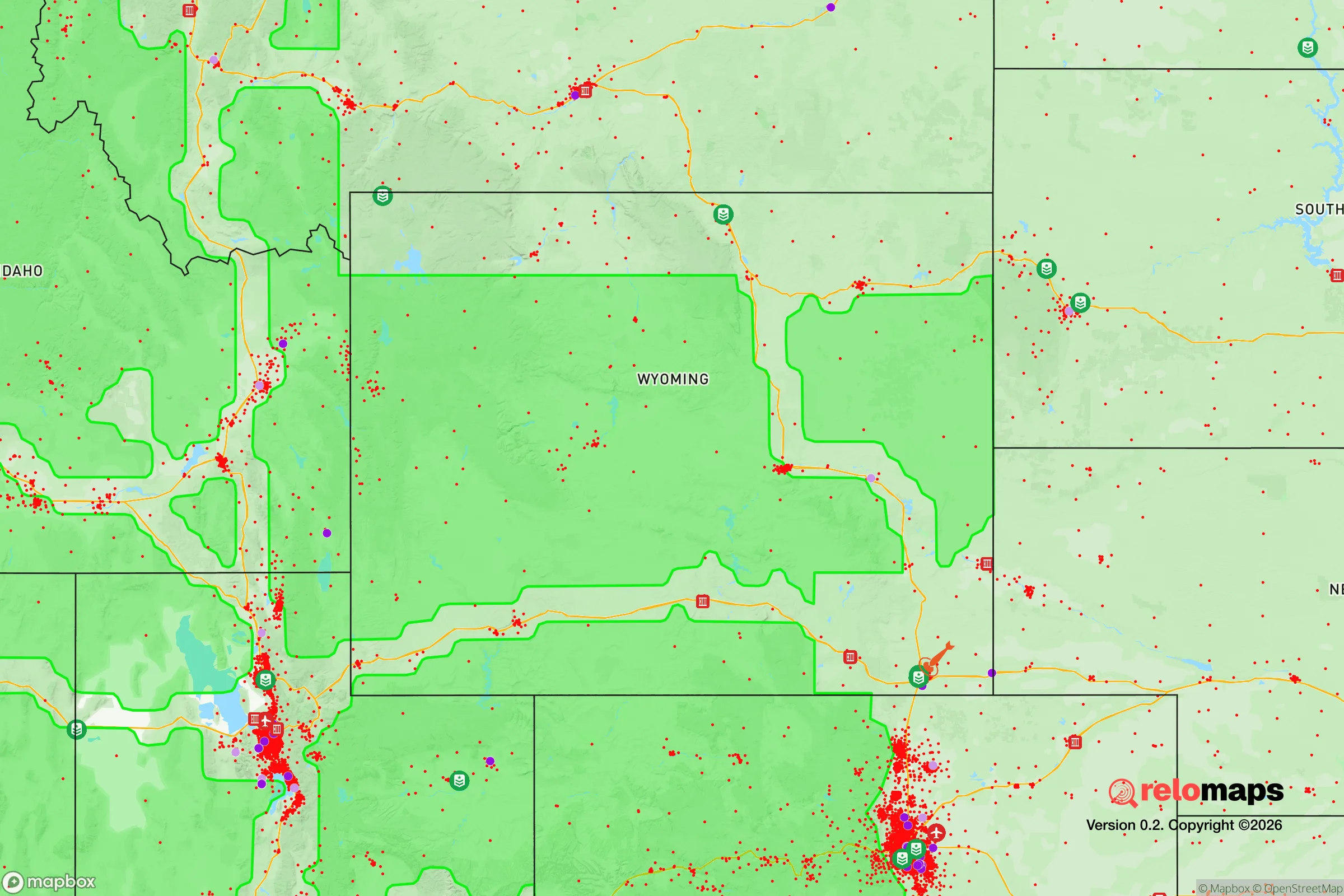
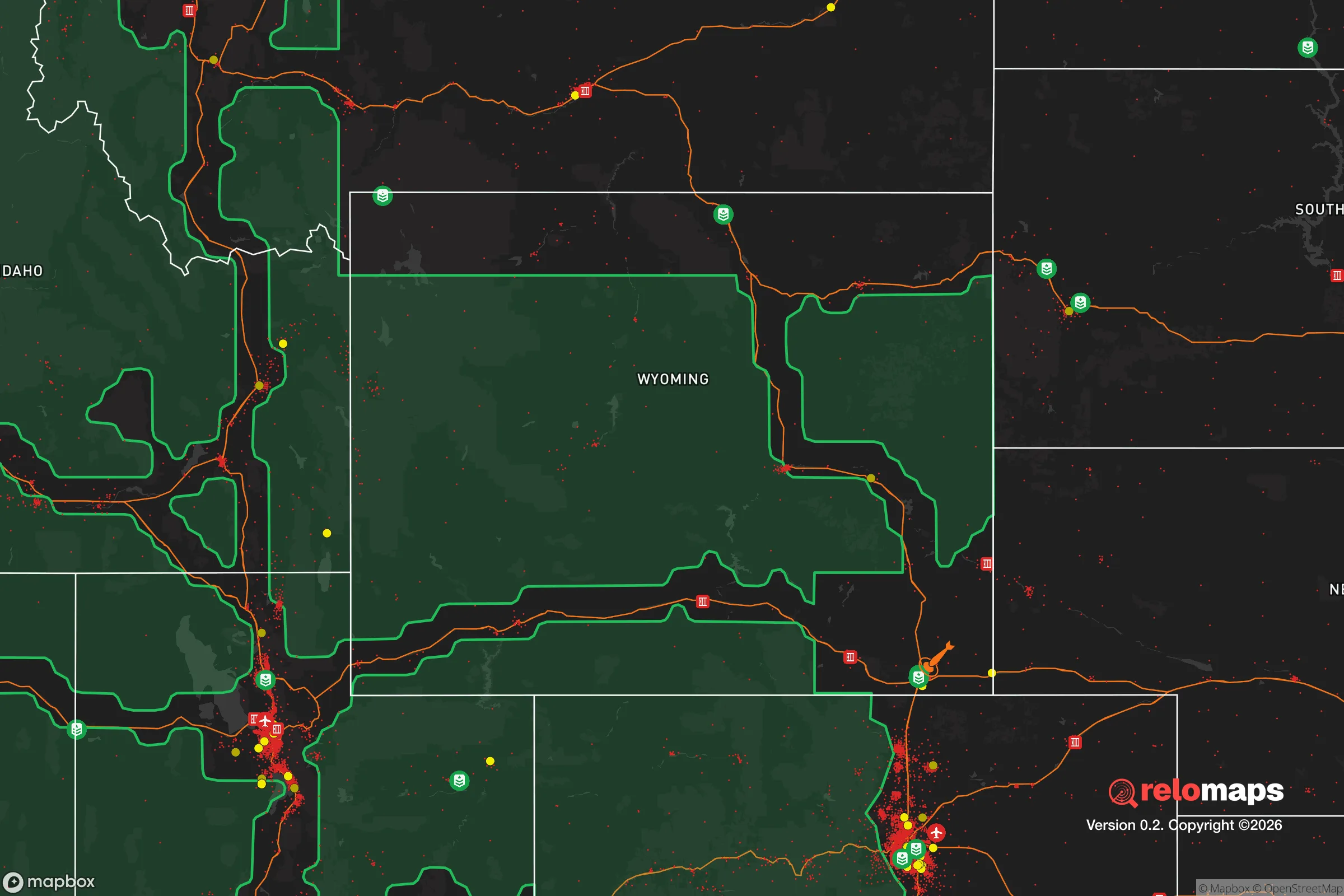


Important Note: For informational purposes only. This does not mean nothing bad ever happens in the green zones. Please use common sense. This is based on public data and modeled with AI. We tried to take a conservative approach but mistakes happen. We update this regularly as new information becomes available.
Solar Generator Recommendations
Backup power matters more here than in safer locations. We've picked three solar generators across budgets and capacity tiers — start with the budget unit if you only need a few essentials, or step up if you want to run a fridge and HVAC for days at a time.

Jackery Portable Power Station Explorer 300
Budget OptionPower on the Go: Weighing only 11 lbs, it's convenient to set up and store with book-sized foldable solar panels

BLUETTI Portable Power Station AC180
Designed for both indoor and outdoor scenarios, AC180 is highly capable as it has a robost capacity and continuous output power.

EF ECOFLOW DELTA Pro Ultra Power Station
Upgraded PickEcoFlow DELTA Pro Ultra is a whole-home energy system designed to grow with your family. Integrated with the Smart Home Panel 2, it scales to meet your evolving energy needs — keeping your home powered, intelligent, and secure through every stage of life.
We earn a commission, at no additional cost to you.
Strategic Assessment Analysis
Lusk, Wyoming, sits as a quiet outlier in the high plains, offering a strategic combination of geographic isolation and logistical connectivity that makes it a serious candidate for those prioritizing long-term resilience. With a population hovering around 1,500, this Niobrara County seat is roughly 100 miles from Cheyenne and 50 miles from the Nebraska line, placing it far from major population centers while still being within a day’s drive of Interstate 25 and the Union Pacific rail corridor. For a relocator concerned with civic unrest, mass casualty events, or systemic collapse, Lusk’s low profile, sparse population density (roughly 2 people per square mile in the county), and distance from high-value targets offer a baseline of security that few other places in the Lower 48 can match.
Geographic position and natural advantages for long-term security
Lusk sits at the edge of the Thunder Basin National Grassland, a 572,000-acre expanse of public land that provides a natural buffer zone and a potential resource for foraging, grazing, and off-grid movement. The area’s elevation—around 5,000 feet—means cooler summers and harsh winters, which naturally discourages transient populations and reduces the risk of disease vectors common in warmer climates. The North Platte River runs about 30 miles south, offering a reliable water source, while the Ogallala Aquifer lies beneath the region, providing deep groundwater access for those who drill. The terrain is rolling prairie with occasional buttes and draws, offering limited but usable cover and good lines of sight—a defensible landscape for a prepared individual or small group. The lack of major highways (US-18 and US-85 are two-lane roads) means that any large-scale movement of people or military assets would likely bypass Lusk entirely, keeping the area off the radar during a crisis.
Risks, exposures, and proximity to fallout-relevant landmarks
No location is without risk, and Lusk has specific exposures that a strategic relocator must weigh. The nearest obvious target for a nuclear exchange or major terrorist event is F.E. Warren Air Force Base near Cheyenne, home to Minuteman III ICBM silos and a key command node. While Lusk is 100 miles from the base, prevailing westerly winds could carry fallout from a strike on Warren or from missile fields scattered across eastern Wyoming and western Nebraska. The Union Pacific rail line running through Lusk is a secondary concern—it’s a critical freight corridor for coal and goods, making it a potential sabotage target during civil unrest. Additionally, the area sits within the Niobrara shale formation, meaning oil and gas infrastructure (pipelines, pump stations) exists nearby, which could become a target for eco-activists or state-sponsored disruption. Natural risks include severe blizzards, tornadoes (though rare in this part of the state), and drought—the region averages only 14 inches of precipitation annually, making water storage and management a non-negotiable part of any prepper plan.
Practical resilience for a relocator: food, water, energy, and defensibility
For a single individual or family looking to establish a sustainable foothold, Lusk offers several practical advantages that align with a prepper mindset. Water access is the strongest asset: the Ogallala Aquifer provides consistent groundwater at depths of 100-300 feet, and many rural properties come with existing wells. Surface water from the North Platte can be trucked in or diverted with proper rights, though Wyoming water law is complex and requires due diligence. Food production is viable but challenging: the short growing season (90-100 frost-free days) limits crops to cold-hardy varieties like potatoes, carrots, and grains, but the surrounding grassland supports cattle and bison ranching. Local ranchers often sell direct to buyers, and the Lusk Farmers Market (seasonal) offers some local produce. For long-term storage, the dry climate reduces spoilage risk for grains and dried goods. Energy independence is achievable: solar potential is good (5.5 peak sun hours per day in summer), and wind is abundant—small-scale turbines can supplement solar during winter months. Propane is widely available for heating and cooking, and wood-burning stoves are common in older homes. Defensibility is moderate: the open terrain makes approach detection easy, but cover is limited. A property with a creek bed, a butte, or a draw offers natural concealment. The local sheriff’s office is small (fewer than 10 deputies), so during a breakdown of civil order, residents would largely rely on themselves and their neighbors. The community is tight-knit and conservative—gun ownership is near-universal, and the local gun club and shooting ranges are active. Medical resilience is a weak point: the nearest hospital is Niobrara Community Hospital in Lusk itself, a critical access facility with limited surgical capability. For serious trauma or chronic care, the nearest full-service hospitals are in Torrington (60 miles) or Cheyenne (100 miles). Stockpiling trauma kits, antibiotics, and telemedicine equipment is strongly advised.
Overall strategic picture for the conservative prepper
Lusk presents a compelling trade-off for the relocator who values isolation and self-sufficiency over convenience and amenities. Its distance from major cities, low population density, and access to water and energy make it a strong candidate for weathering a range of scenarios—from economic collapse and civil unrest to a limited nuclear exchange. The trade-offs are real: harsh winters, limited medical infrastructure, and a thin local economy that depends on agriculture, oil, and government services. But for someone willing to invest in a well, solar panels, a greenhouse, and a solid stockpile, Lusk offers a defensible, low-profile base of operations in a state that consistently ranks among the most conservative and self-reliant in the nation. The key is to arrive prepared, build relationships with local ranchers and tradespeople, and treat the location as a long-term investment in security rather than a quick escape. In a world where the grid and the government can no longer be counted on, Lusk is a place where a prepared individual can still make a stand.

* Values derived from national, state, county, city and local statistics and may differ in a specific area. Last updated: 2026-04-30T13:36:24.000Z
Narrative content on this page is AI-generated and may contain mistakes. Verify any details that matter before acting on them.
ReloMaps may earn a commission from affiliate links at no extra cost to you.

