Photo: Wikipedia
Personal Sovereignty in Lyndonville, VT
Moderate friction. Expect trade-offs in some aspect of personal liberty and independence.
What does Personal Sovereignty tell us?
Personal Sovereignty measures your capacity for self-reliance and independence with minimal government friction. Higher scores mean fewer barriers between you and the way you want to live... but it assumes you have the space you need and good neighbors.
What does this tell us?
Personal Sovereignty measures your capacity for self-reliance and independence with minimal government friction. Higher scores mean fewer barriers between you and the way you want to live... but it assumes you have the space you need and good neighbors.
State Policy
Energy independence: Importer (15% of energy produced in-state)
Personal Liberty
Homesteading

Personal Liberty Analysis
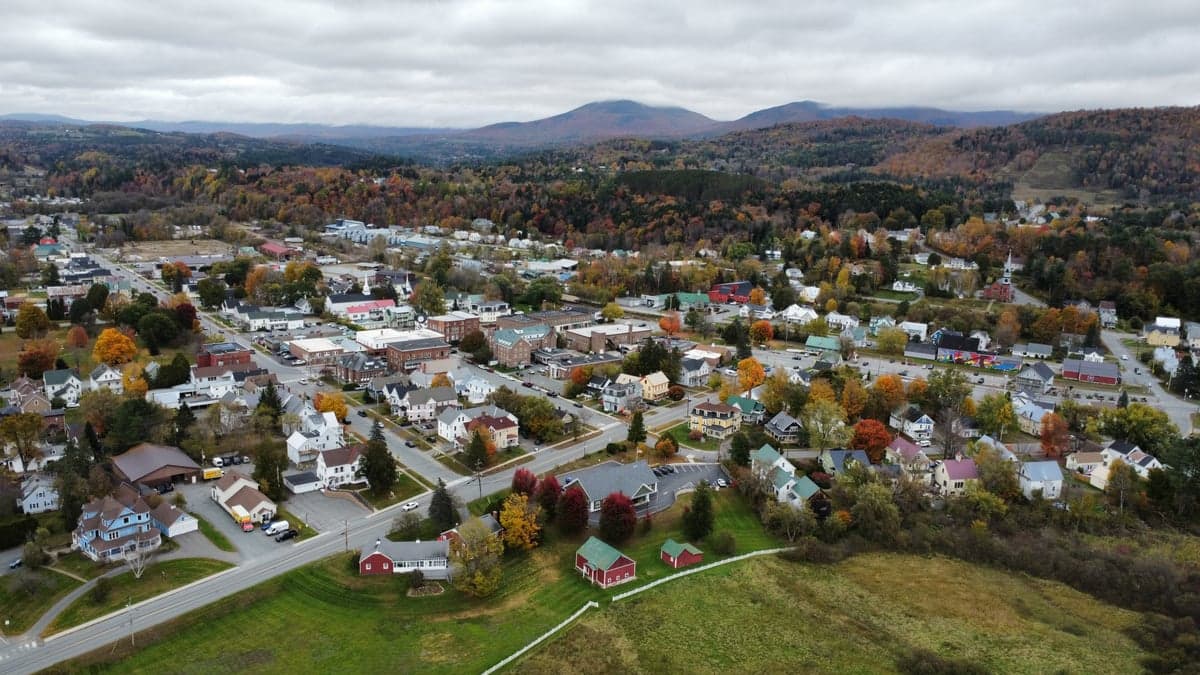
Lyndonville, Vermont offers a unique balance of personal sovereignty that appeals to those seeking to minimize government overreach while maintaining access to essential services. Nestled in the Northeast Kingdom, this town of roughly 1,200 residents operates within a state known for progressive policies, yet local enforcement and cultural norms often allow for greater autonomy than state laws suggest. For single individuals and parents with a survivalist or prepper mindset, Lyndonville provides a workable environment where self-reliance is respected, but vigilance is required regarding state-level mandates that can infringe on personal freedoms.
Tax burden and regulatory posture in Lyndonville
Vermont’s tax burden is among the highest in the nation, with a state income tax ranging from 3.35% to 8.75% and property taxes averaging around 1.8% of assessed value. In Lyndonville, the combined state and local property tax rate hovers near 2.0%, which is steep compared to neighboring New Hampshire but lower than many southern Vermont towns. The regulatory environment is mixed: while the state imposes strict Act 250 land-use regulations on larger developments, Lyndonville’s small-town character means most residential projects under 10 acres face minimal bureaucratic hurdles. The town has no local income tax, and sales tax is capped at 6% on most goods, though prepared food and lodging carry a 9% rate. For those seeking to minimize tax exposure, the key strategy is to keep property improvements modest and avoid triggering state-level permitting. The state’s push for renewable energy mandates, including net-metering requirements for new construction, adds a layer of regulatory cost that preppers should factor into their budgets. Overall, Lyndonville’s tax burden is a significant consideration, but the town’s laissez-faire local enforcement provides some breathing room for those willing to navigate state rules.
Self-defense rights and gun law specifics in Vermont
Vermont is a constitutional carry state, meaning no permit is required to carry a concealed firearm for self-defense. This is a strong point for personal sovereignty, as the state recognizes the right to keep and bear arms without government permission. However, recent legislation has introduced restrictions: in 2023, Vermont enacted a ban on magazines holding more than 10 rounds for long guns and 15 rounds for handguns, along with a waiting period for firearm purchases. These laws are enforced statewide, including in Lyndonville, and non-compliance carries criminal penalties. The town itself has no additional local gun ordinances, and the Caledonia County Sheriff’s Office generally takes a pro-Second Amendment stance. For preppers, the magazine capacity limits are a notable constraint, but the ability to carry without a permit and the absence of a state-level firearm registry preserve a degree of autonomy. Stand-your-ground laws are not explicitly codified in Vermont, but case law supports the use of deadly force in self-defense when facing imminent threat. Those prioritizing self-defense should consider stockpiling compliant magazines and training in legal use-of-force scenarios, as the state’s political climate leans toward further restrictions.
Self-reliance and homesteading viability in Lyndonville
Lyndonville’s rural character makes it viable for homesteading and off-grid living, though state regulations impose some limits. Minimum lot sizes in the town are typically 1 acre for residential use, but larger parcels of 5 to 10 acres are common for those seeking agricultural or self-sufficient lifestyles. Zoning allows for backyard chickens, goats, and small livestock without special permits, but pigs and larger animals require a conditional use permit from the town board. Off-grid systems, such as solar panels and rainwater collection, are permitted, but Vermont law requires grid-tied solar to be net-metered, and off-grid setups must meet state electrical codes. Composting toilets are allowed, but septic systems must be approved by the state’s Agency of Natural Resources, which can be a costly process. The growing season in the Northeast Kingdom is short—roughly 120 days—limiting year-round food production, but cold frames and greenhouses can extend it. For preppers, the key advantage is the abundance of undeveloped land and a local culture that values self-sufficiency, with neighbors often trading skills and resources. The main drawback is state oversight of water rights and waste disposal, which can feel intrusive to those seeking total autonomy.
Personal liberties in Lyndonville: parental rights, medical autonomy, speech, and property
Parental rights in Vermont are generally respected, but the state has moved toward centralizing education decisions. Lyndonville’s public schools, part of the Caledonia Central Supervisory Union, allow for some parental input, but the state mandates curriculum standards that include comprehensive sex education and social-emotional learning, which may conflict with conservative values. Homeschooling is legal with minimal oversight—parents must submit an annual enrollment notice and provide a basic curriculum outline, but no standardized testing is required. Medical autonomy is a mixed bag: Vermont has no vaccine mandate for adults, but school attendance requires a full slate of vaccinations, with only medical exemptions allowed. The state’s Act 39 allows for medical aid in dying, which some view as a personal liberty, but it also reflects a broader trend of government involvement in end-of-life decisions. Free speech is protected under the First Amendment, and Lyndonville’s small-town atmosphere means political expression is generally tolerated, though the state’s dominant progressive culture can create social pressure against conservative viewpoints. Property rights are strong in terms of ownership, but the state’s Act 250 and environmental regulations can restrict land use, particularly for timber harvesting or development near waterways. For those prioritizing personal liberties, Lyndonville offers a workable environment where local norms often override state overreach, but constant awareness of legislative changes is necessary.
Overall, Lyndonville provides a moderate level of personal sovereignty compared to other areas in the Northeast, falling somewhere between the near-total autonomy of rural New Hampshire and the heavy regulation of urban centers like Burlington. The town’s low population density, strong community ties, and local enforcement leniency create a buffer against state-level intrusions, making it a viable option for preppers and conservative-leaning individuals. However, the tax burden, gun restrictions, and state mandates on education and healthcare are real constraints that require strategic planning. For those willing to adapt and stay informed, Lyndonville offers a solid foundation for self-reliance without the extreme isolation of more remote locations.

* Values derived from national, state, county, city and local statistics and may differ in a specific area. Last updated: 2026-05-04T02:45:10.000Z
Narrative content on this page is AI-generated and may contain mistakes. Verify any details that matter before acting on them.
ReloMaps may earn a commission from affiliate links at no extra cost to you.

