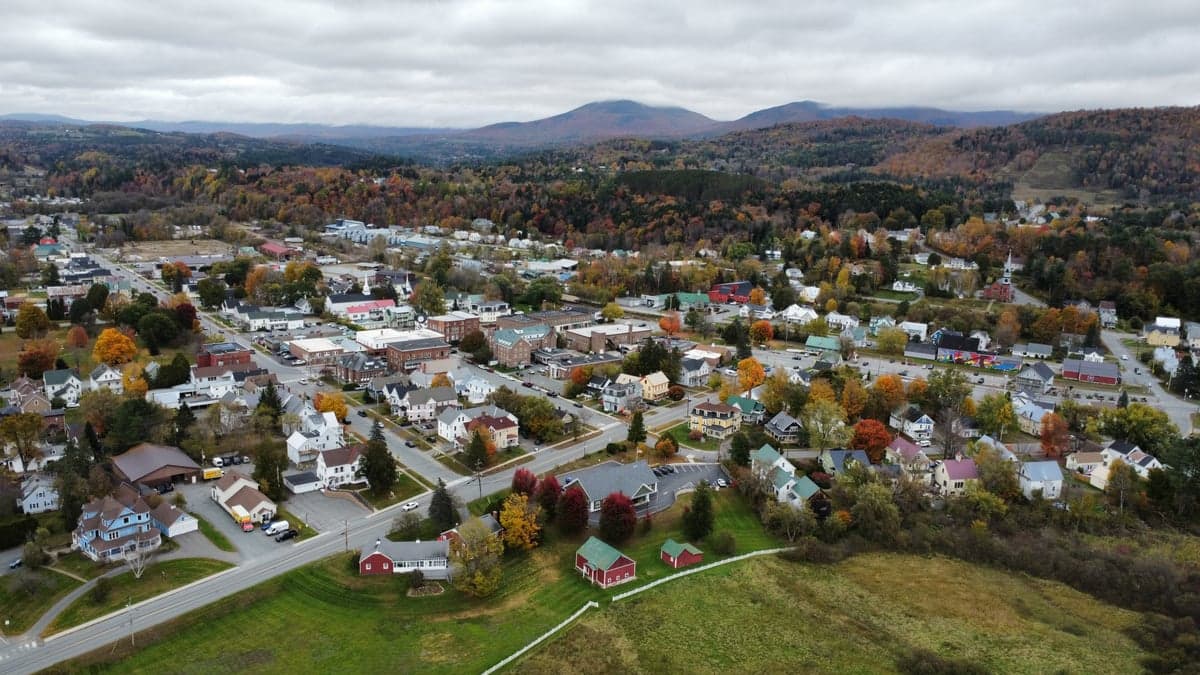
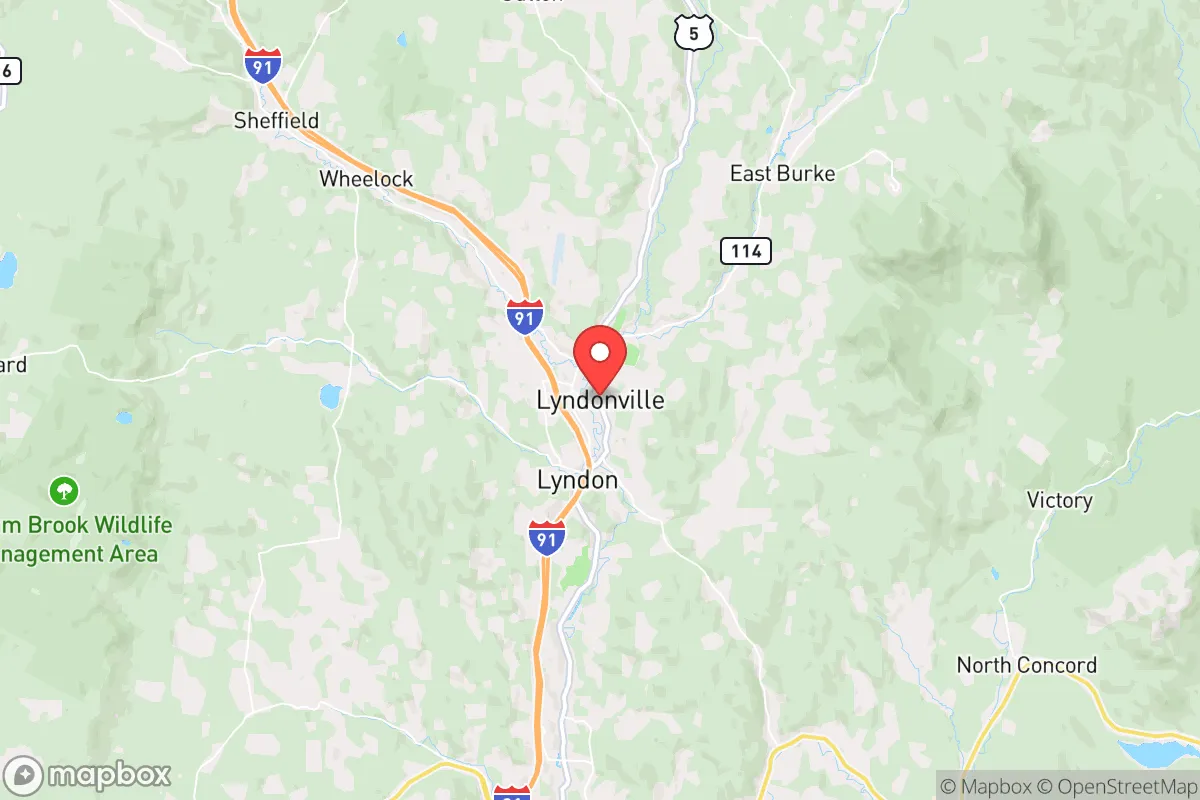
Photo: Wikipedia
Political ClimatePolitical Climate in Lyndonville, VT
District shown is the primary district for this city’s centroid. Cities may span multiple districts.
Inherited from parent state — no local data available.
Local Political AnalysisPolitical Analysis of Lyndonville, VT
Lyndonville, Vermont, sits in a state that’s gone deep blue, and the numbers back it up—the Cook PVI here is D+17, meaning this area votes about 17 points more Democratic than the national average. That wasn’t always the case. I remember when this town was a lot more independent, folks voting for the person, not the party, and keeping government out of their business. But over the last decade or so, the political winds have shifted hard. You see it in local elections, in the school board meetings, and in the way people talk about things like property rights and gun laws. It’s not the Lyndonville I grew up in, and honestly, the trajectory has me worried about how much further it’ll lean into progressive policies that feel more like control than common sense.
How it compares
To really get the picture, you gotta look at the towns around us. Drive ten miles west to St. Johnsbury, and you’ll find a similar story—blue-leaning, with a lot of the same progressive energy. But head east toward the Connecticut River, into places like Guildhall or even across into New Hampshire’s Northumberland, and the contrast is stark. Those areas still vote more conservative, with a focus on local control and less interference from Montpelier. Even within Caledonia County, Lyndonville stands out as the most liberal pocket. The surrounding towns like Burke or Kirby have a mix, but they haven’t gone as far down the road of embracing every new state mandate or social policy. It’s like Lyndonville is the bellwether for how fast the whole region is changing, and not in a way that respects the old Vermont values of live and let live.
What this means for residents
For someone living here, the political climate translates directly into daily life. You feel it in the property taxes, which keep climbing to fund state-level programs you might not agree with. You see it in the local school curriculum debates, where there’s pressure to adopt progressive frameworks that can sideline parental input. And on the Second Amendment front, Vermont used to be a model of freedom—no permit needed to carry, no magazine bans. Now, with Act 68 and other restrictions passed in recent years, that’s eroding. The state government in Montpelier, which is overwhelmingly Democratic, doesn’t seem to care much about how these laws affect rural towns like ours. It’s a one-size-fits-all approach that feels like overreach. If you value personal freedom and want to keep government out of your home and your wallet, you’re swimming against the current here.
The cultural shift is the hardest part to swallow. Lyndonville used to have a strong sense of community where neighbors helped neighbors without a government program. Now, there’s more emphasis on top-down solutions—like the push for renewable energy mandates that force solar arrays on farmland, or housing policies that prioritize state-approved development over local zoning. The local Democratic committee is active and vocal, and they’ve got the numbers to push their agenda. If you’re a conservative or even a moderate who just wants to be left alone, you might feel like an outsider in your own town. I’d say keep an eye on the next few election cycles—if the trend holds, Lyndonville could become even more of a progressive stronghold, and that’s a future I’m not looking forward to.

State Political ClimatePolitical Climate in Vermont
State Political AnalysisPolitical Environment in the State
Vermont has a reputation as one of the most reliably progressive states in the union, but the reality on the ground is more complicated than the national headlines suggest. For the last 20 years, the state has been under unified Democratic control in the governor’s office (with the notable exception of Republican Governor Phil Scott, who is a moderate) and supermajorities in the legislature, but this dominance masks a deep and growing urban-rural split. The state’s overall partisan lean is roughly D+15 to D+20 in presidential elections, but that number is heavily driven by Chittenden County (Burlington) and a handful of college towns; the rest of the state is far more competitive, with many towns and counties voting Republican or libertarian-leaning in local races.
Urban vs. rural divide
The political map of Vermont is a tale of two states. The urban core is Chittenden County, anchored by Burlington, the state’s largest city and home to the University of Vermont. This area is the engine of the state’s progressive politics, consistently delivering margins of 70-80% for Democratic candidates. Montpelier, the state capital, and Middlebury (home to Middlebury College) follow a similar pattern. Drive 30 minutes in any direction, however, and the landscape shifts dramatically. Rural counties like Orleans, Essex, and Franklin in the Northeast Kingdom are reliably Republican, often voting +20 to +30 points for GOP candidates in state and federal races. The town of Newport, for example, is a conservative stronghold where local politics revolve around property rights, gun ownership, and opposition to the state’s education mandates. The divide isn’t just about party registration; it’s about worldview. In Burlington, the conversation is about carbon taxes and social justice; in the Kingdom, it’s about keeping the state from regulating your wood stove or telling you how to run your small farm.
Policy environment
Vermont’s policy environment is a mixed bag for a conservative-leaning newcomer. On the plus side, the state has no sales tax and no corporate income tax for small businesses, which is a genuine draw. Property taxes, however, are among the highest in the nation, driven by a school funding system that is both expensive and inefficient. The state’s regulatory posture is heavy: Act 250, the landmark land-use law, gives state agencies broad authority over development, making it notoriously difficult to build anything new, from a house to a business. This has contributed to a severe housing shortage and high costs. On education, Vermont has a statewide school choice system (towns pay for public or approved independent schools), which is a rare freedom, but the state’s education bureaucracy is large and mandates are constant. Healthcare is dominated by the state-run Green Mountain Care Board, which controls hospital budgets and insurance rates, leading to high premiums and limited provider networks. Election laws are among the most liberal in the country: universal mail-in voting, same-day registration, and no voter ID requirement. For a conservative, this is a red flag for election integrity, though the state has not seen major fraud scandals.
Trajectory & freedom
The trajectory over the last five years has been concerning for anyone who values personal liberty. In 2023, the legislature passed a sweeping gun control package (Act 69) that bans the sale of many semi-automatic rifles, limits magazine capacity to 10 rounds, and raises the purchase age to 21. This was followed by a 2024 law (Act 179) that imposes a 72-hour waiting period and mandatory background checks for all firearm transfers, including private sales. On the medical freedom front, Vermont was one of the first states to mandate COVID-19 vaccines for schoolchildren (though this was later repealed), and it has a strict vaccine schedule for public school attendance. Parental rights took a hit with Act 1 (2023), which removed the requirement for schools to notify parents if a child changes their gender identity or pronouns. Property rights are under constant pressure from Act 250 and new climate-related regulations, including a proposed “clean heat standard” that would effectively tax heating oil and propane. The state is also moving toward a single-payer healthcare system, which would further centralize control. In short, the state is becoming less free in nearly every measurable dimension, especially for gun owners, parents, and property owners.
Civil unrest & political movements
Vermont is not a hotbed of street-level civil unrest, but there are organized movements on both sides. The left is dominated by the Vermont Progressive Party, which holds seats in the legislature and pushes for rent control, universal healthcare, and defunding police. They have been vocal in protests against the state’s housing crisis and in support of Palestinian rights. On the right, the Vermont Republican Party is small but active, with a strong libertarian wing focused on gun rights and school choice. The “Green Mountain Patriots” and similar groups have held rallies at the Statehouse, particularly during the COVID-19 mandates, and there is a growing secessionist sentiment in the Northeast Kingdom, where some towns have passed resolutions calling for greater local autonomy or even joining New Hampshire. Immigration politics are relatively quiet, as Vermont has a small foreign-born population, but the state is a “sanctuary state” by policy, with state law prohibiting local law enforcement from cooperating with federal immigration authorities. Election integrity is a flashpoint: the state’s universal mail-in system and lack of voter ID have led to persistent concerns, though no major scandals have emerged. A new resident would notice the political divide most acutely in the contrast between Burlington’s activist culture and the quiet, independent-minded rural towns.
Projection
Over the next 5-10 years, Vermont is likely to continue its leftward drift, driven by in-migration from out-of-state progressives (especially from New York and Massachusetts) and the out-migration of younger conservatives seeking lower taxes and fewer regulations. The state’s population is aging and shrinking, which will put increasing pressure on the tax base and likely lead to even higher property taxes. The housing crisis will worsen unless Act 250 is reformed, which is politically unlikely. Gun control will likely tighten further, with possible magazine bans and “safe storage” mandates. Parental rights will remain a battleground, with the legislature likely to expand Act 1-style policies. The clean heat standard and other climate mandates will raise energy costs significantly. For a conservative moving in now, the expectation should be that the state will be less free and more expensive in a decade, with the political center of gravity firmly in Burlington.
Bottom line: If you value low taxes, gun rights, parental control over education, and minimal government interference, Vermont is a tough sell. The natural beauty and small-town feel are real, but they come with a heavy price tag and a growing list of mandates. The best bet for a conservative is to look at the Northeast Kingdom towns like Newport or St. Johnsbury, where the local culture is more independent, but you’ll still be fighting state-level policies. If you’re considering a move, come with your eyes open: you’ll be a minority in state politics, and the trend lines are not in your favor.
* Values derived from national, state, county, city and local statistics and may differ in a specific area. Last updated: 2026-05-04T02:45:10.000Z
Narrative content on this page is AI-generated and may contain mistakes. Verify any details that matter before acting on them.
ReloMaps may earn a commission from affiliate links at no extra cost to you.

