Photo: Wikipedia
Personal Sovereignty in Mackinac Island, MI
Strong independent fundamentals that actively favor personal liberty and low regulation.
What does Personal Sovereignty tell us?
Personal Sovereignty measures your capacity for self-reliance and independence with minimal government friction. Higher scores mean fewer barriers between you and the way you want to live... but it assumes you have the space you need and good neighbors.
What does this tell us?
Personal Sovereignty measures your capacity for self-reliance and independence with minimal government friction. Higher scores mean fewer barriers between you and the way you want to live... but it assumes you have the space you need and good neighbors.
State Policy
Energy independence: Importer (20% of energy produced in-state)
Personal Liberty
Homesteading

Personal Liberty Analysis
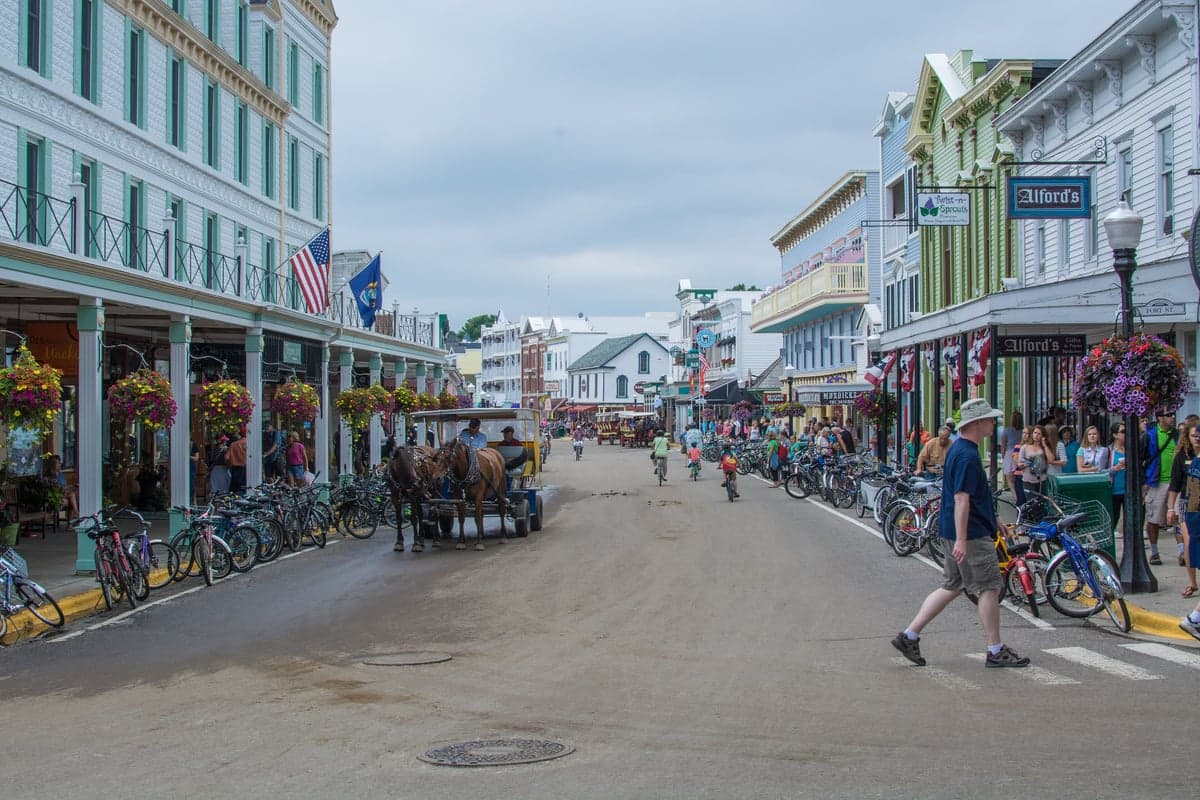
Mackinac Island presents a unique autonomy environment shaped by its status as a car-free, state-regulated resort community within Michigan’s broader legal framework. While the island itself operates under a heavy-touch local ordinance regime that restricts motor vehicles and governs land use tightly, residents benefit from Michigan’s relatively light state-level tax burden and permissive self-defense laws. The trade-off for living in this historic, tourism-driven enclave is a highly curated public sphere, balanced by the personal freedoms guaranteed under Michigan’s constitutional and statutory landscape. For the freedom-minded individual, the island offers a paradox: maximum personal sovereignty in the abstract, constrained by a very specific, localized regulatory reality.
Tax burden and regulatory posture in a resort community
Michigan’s state tax structure is moderate compared to the national average, with a flat 4.25% individual income tax and a 6% sales tax, both of which apply to Mackinac Island residents. The state’s property tax system, governed by the Headlee Amendment and Proposal A, caps annual assessment increases at 5% or the inflation rate, whichever is lower, providing predictability for long-term homeowners. However, Mackinac Island’s local regulatory posture is notably heavy-handed in specific areas. The island’s historic district commission and city council enforce strict design and use regulations on all buildings, and the ban on motorized vehicles (except emergency and service vehicles) is enforced year-round. This means residents rely on bicycles, horse-drawn carriages, and walking for all transportation, a unique constraint that limits personal convenience but also preserves the island’s character. Zoning is tight: most residential lots are small (often under 0.25 acres) and located within the city limits, with no new subdivisions permitted outside the historic core. The city also imposes a seasonal population cap and restricts short-term rentals, which can affect property rights for those seeking to monetize their homes. For a reader prioritizing low regulatory interference, the island’s local rules are a significant factor to weigh against Michigan’s otherwise business-friendly state climate.
Self-defense and gun law specifics in Michigan
Michigan is a shall-issue state for concealed pistol licenses (CPLs), meaning the county sheriff must issue a permit if the applicant meets statutory requirements, including a background check and an 8-hour training course. Open carry of a handgun is legal without a permit for individuals 18 and older, though local ordinances can restrict it in certain areas. Mackinac Island itself falls under the jurisdiction of Mackinac County, which has no additional firearm restrictions beyond state law. However, the island’s unique transportation environment creates practical considerations: carrying a firearm while bicycling or walking in crowded tourist zones may draw scrutiny, and the island’s small police force (the Mackinac Island Police Department) has discretion in enforcing public safety. Michigan law also provides strong castle doctrine and stand-your-ground protections, with no duty to retreat in any place where an individual is lawfully present. For residents, this means the legal framework for self-defense is robust at the state level, but the island’s dense, pedestrian-heavy layout may make defensive scenarios less likely than in rural areas. Importantly, the island has no gun-free zones beyond those mandated by federal law (e.g., post offices), and private property owners can set their own rules. For the conservative-leaning reader, Michigan’s gun laws are among the more permissive in the Midwest, and Mackinac Island does not add local restrictions beyond what state law provides.
Self-reliance and homesteading viability on a small island
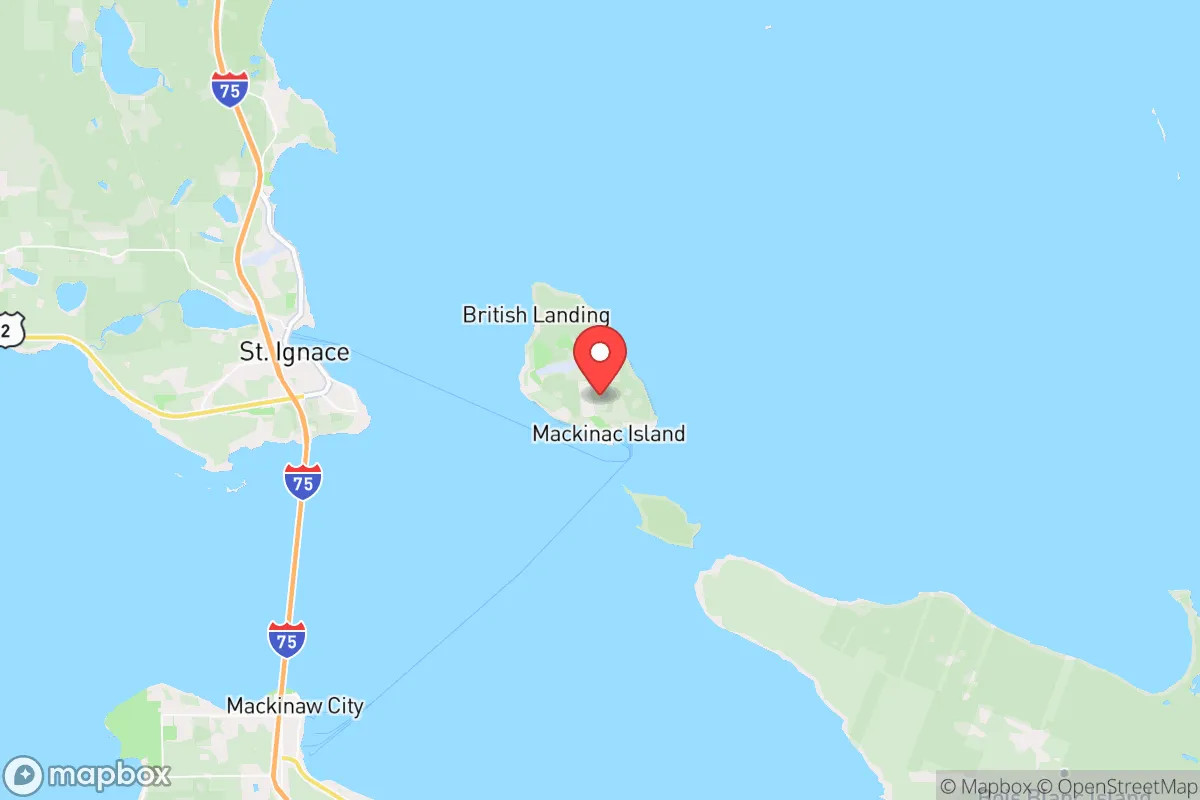
Mackinac Island’s geography and zoning make traditional homesteading nearly impossible. Residential lots are small, typically 0.1 to 0.5 acres, and the city’s historic preservation ordinances restrict the construction of outbuildings, greenhouses, or livestock enclosures. The island has no agricultural zoning, and keeping chickens, goats, or other livestock is prohibited within the city limits. Off-grid living is also severely constrained: the island is connected to the mainland via underwater power and water lines, and the city requires all residences to be connected to municipal water and sewer. Solar panels are permitted but must be approved by the historic district commission, and their visibility from public streets is often restricted. The island’s reliance on ferry service for all supplies (groceries, building materials, fuel) means that self-reliance in the sense of subsistence farming or energy independence is not viable. However, the island does foster a culture of practical self-reliance in other ways: residents must be able to maintain bicycles, manage horse-drawn transportation, and handle snow removal manually. For those seeking a homesteading lifestyle, the mainland in Mackinac County (e.g., St. Ignace or rural areas) offers larger parcels, less restrictive zoning, and the ability to install septic systems, wells, and solar arrays. On the island, the regulatory and physical environment is fundamentally incompatible with the off-grid or homesteading ideal.
Personal liberties: parental rights, medical autonomy, speech, and property
Michigan law provides strong protections for parental rights, including the right to direct a child’s education, medical care, and religious upbringing. The state does not require parental notification for a minor’s abortion (a 2023 court ruling struck down the previous law), which may be a concern for some conservative families. Homeschooling is legal with minimal regulation: parents need only submit a simple intent form and provide instruction in core subjects, with no standardized testing or curriculum approval required. Medical autonomy is generally respected, though Michigan has a vaccine mandate for school attendance (with medical and religious exemptions available). The state’s emergency powers, used during the COVID-19 pandemic, were controversial and led to legislative reforms in 2021 that limit the governor’s ability to issue extended emergency orders without legislative approval. Free speech is protected under both the U.S. and Michigan constitutions, and the island’s public forums (parks, streets) are open for expressive activity, though amplified sound is regulated. Property rights are strong at the state level, with Michigan’s eminent domain laws requiring just compensation and a public purpose. However, on Mackinac Island, property rights are heavily circumscribed by the historic district commission’s authority to deny permits for exterior changes, demolitions, or new construction. This means a property owner’s ability to use their land as they see fit is significantly limited compared to most other Michigan communities. For the reader who values unfettered property control, this is a major drawback.
Overall, Mackinac Island offers a mixed sovereignty profile relative to other Michigan areas. The state provides a solid foundation for personal freedom with low taxes, permissive gun laws, and strong parental rights. But the island’s local regulatory environment—tight zoning, historic preservation controls, and the motor vehicle ban—creates a level of government oversight that is unusual even for a small resort town. For the freedom-minded individual, the island works best as a lifestyle choice for those who accept its curated, historic character as a trade-off for Michigan’s broader liberties. For those seeking maximum personal sovereignty, the mainland in Mackinac County or other rural Michigan areas will provide fewer constraints on property use, transportation, and daily life.

* Values derived from national, state, county, city and local statistics and may differ in a specific area. Last updated: 2026-10-20T08:17:16.000Z
Narrative content on this page is AI-generated and may contain mistakes. Verify any details that matter before acting on them.
ReloMaps may earn a commission from affiliate links at no extra cost to you.

