Photo: Wikipedia
Political ClimatePolitical Climate in Mackinac Island, MI
District shown is the primary district for this city’s centroid. Cities may span multiple districts.
Local Political AnalysisPolitical Analysis of Mackinac Island, MI
Mackinac Island leans solidly Republican, with a Cook PVI of R+11, making it significantly more conservative than the state of Michigan as a whole, which sits at EVEN. This isn't a recent shift; the island has long been a GOP stronghold, driven by a mix of small-business owners, second-home owners, and a year-round population that values limited government and low taxes. While the island's tourist-dependent economy might suggest a more moderate outlook, the local political reality is that Republicans consistently win here, and the Democratic presence is minimal in local elections.
How it compares
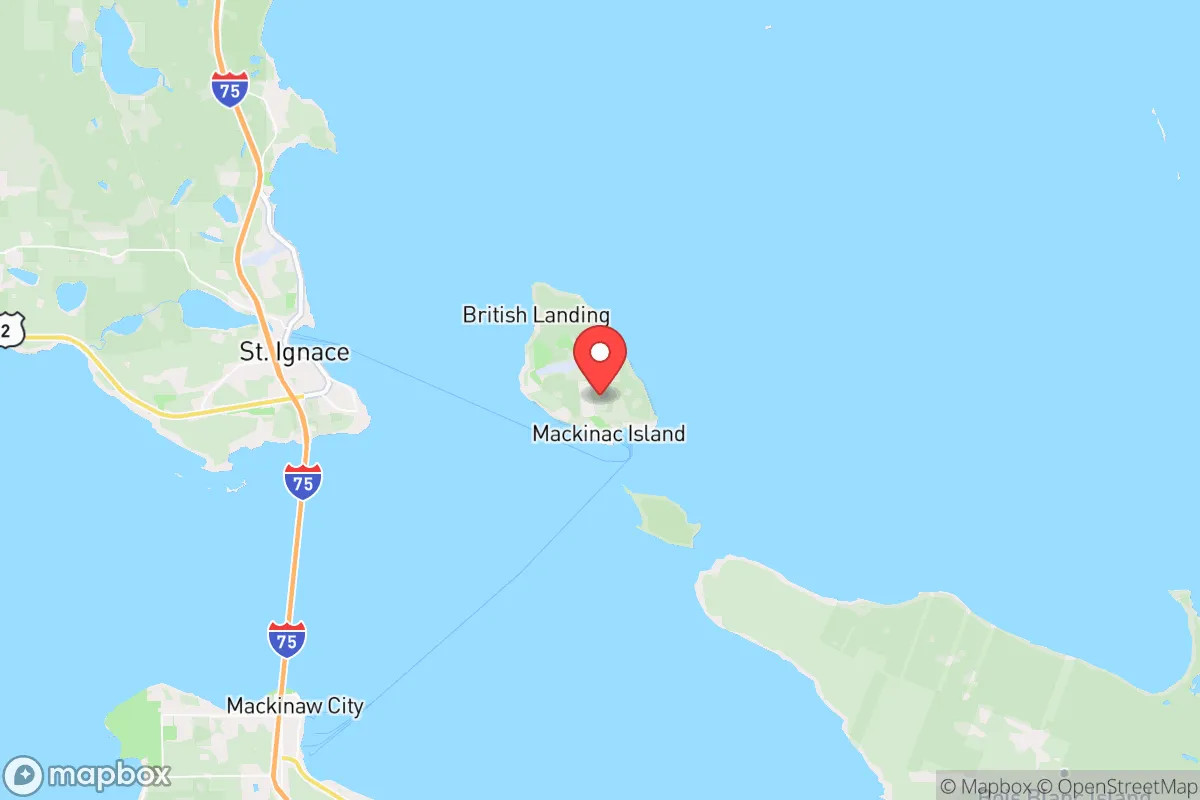
The contrast between Mackinac Island and the rest of Michigan is stark. The state as a whole is a true battleground, swinging between parties in presidential elections and closely divided in statewide races. Mackinac Island, by contrast, is a reliable red dot in a purple state. Nearby cities like St. Ignace (just across the bridge) and Cheboygan (to the east) are also Republican-leaning, but not as overwhelmingly as the island. The real political contrast is with places like Traverse City (about 90 minutes southwest) or Ann Arbor (far downstate), which are liberal strongholds. On the island, you'll hear more talk about property rights, tourism regulations, and the ferry monopoly than about the culture-war issues that dominate state-level politics.
What this means for residents
For conservative residents, the R+11 lean means their views are the local norm. Local government tends to be business-friendly, with a focus on maintaining the island's unique charm without heavy-handed regulation. The city council and county commission are reliably Republican, so conservative priorities—like keeping taxes low and limiting government expansion—are generally reflected in policy. For liberal residents, the reality is that they are a clear minority. They may feel their voices are less heard in local elections, but they are not silenced; the island's small size means personal relationships often transcend party lines. The practical effect is that political debates here are less about national issues and more about local concerns: how to manage the horse-drawn carriage industry, how to balance tourism with year-round livability, and how to preserve the island's historic character.
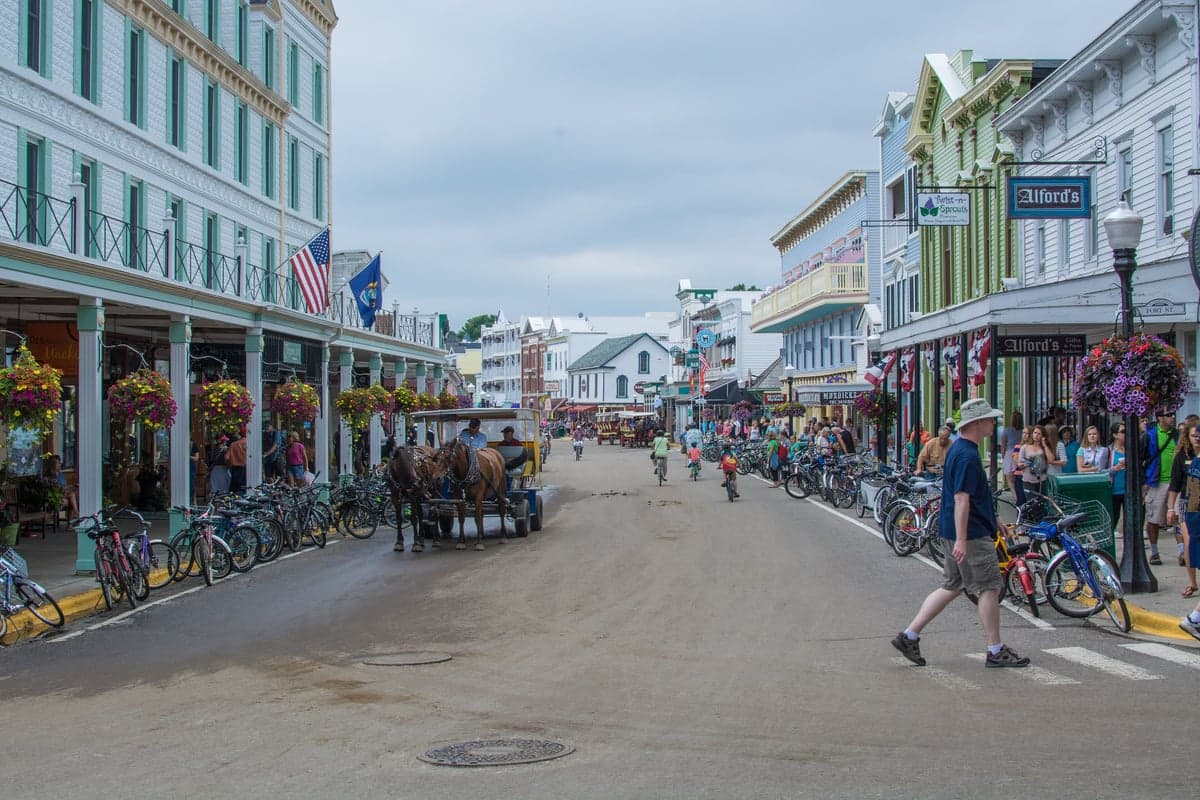
Culturally, Mackinac Island is distinct from much of Michigan. The ban on motor vehicles creates a slower pace of life that appeals to both conservatives and liberals, but for different reasons. Conservatives often see it as a rejection of over-regulation (the ban is a local ordinance, not a state mandate), while liberals appreciate the environmental and quality-of-life benefits. The island's economy is almost entirely tourism-driven, which means local politics often prioritize the visitor experience over year-round resident needs—a tension that both parties grapple with. In the near term, expect the island to remain R+11, as its demographic and economic base is stable. The long-term trajectory depends on whether more year-round residents move in from liberal areas, but for now, Mackinac Island remains a reliably conservative enclave in a swing state.

State Political ClimatePolitical Climate in Michigan
State Political AnalysisPolitical Environment in the State
Michigan is a genuine battleground state with a Cook PVI of EVEN, meaning it votes almost exactly in line with the national average. Over the last 20 years, the state has swung from reliably blue (voting for Democrats in every presidential election from 1992 to 2012) to a true toss-up, with Donald Trump flipping it in 2016 by 0.2 points, Joe Biden reclaiming it in 2020 by 2.8 points, and Trump winning it back in 2024 by a similar margin. The dominant coalitions are a union-heavy, diverse urban base in Southeast Michigan versus a growing, increasingly energized conservative coalition in the western and northern Lower Peninsula and the Upper Peninsula. The trajectory is a slow but steady rightward shift, driven by out-migration from Detroit and in-migration from other Midwestern states, though the Democratic stronghold in Wayne, Washtenaw, and Oakland counties remains formidable.
Urban vs. rural divide
The political map of Michigan is a textbook study in geographic polarization. The Democratic base is concentrated in the urban core of Detroit (Wayne County) and its inner-ring suburbs, along with college towns like Ann Arbor (Washtenaw County) and Lansing (Ingham County). These three counties alone delivered roughly 60% of Biden's 2020 margin. In contrast, the Republican base dominates the western side of the state, from the Grand Rapids metro area (Kent County, which flipped from blue to red in 2016 and has stayed red) northward through Traverse City and the entire Upper Peninsula. The "blue wall" counties of Macomb and Oakland have become true swing areas—Macomb, a working-class suburban county, voted for Obama twice, then Trump twice, then Biden, then Trump again. The rural thumb region and the central Lower Peninsula are deeply red, with counties like Lapeer, St. Clair, and Midland routinely voting 65-70% Republican. The UP, once a Democratic stronghold due to mining unions, has shifted hard right over the past decade, with most counties now voting 60%+ Republican.
Policy environment
Michigan's policy environment reflects its split political identity. The state has a flat income tax of 4.25% (reduced from 4.35% in 2023 via a 2015 law that triggers automatic cuts when revenue exceeds a threshold). Sales tax is 6%, and property taxes are relatively high, averaging about 1.5% of assessed value, but capped by the 1994 Proposal A, which limits annual increases to 5% or inflation, whichever is lower. The regulatory posture is moderate—Michigan is a right-to-work state for private-sector employees (the 2012 law was repealed by Democrats in 2023, but the repeal is being challenged in court and is currently on hold). Education policy is a flashpoint: the state has a robust charter school sector and a school of choice system that allows cross-district enrollment, but funding per pupil remains below the national average. Healthcare is mixed—Michigan expanded Medicaid under the Affordable Care Act, and the state has a strong insurance regulatory framework. Election laws are relatively moderate: no-excuse absentee voting was approved by voters in 2018, and same-day voter registration is allowed. However, voter ID is required at the polls, and the state has a 10-day residency requirement for registration.
Recent policy direction
The last few years have seen Michigan lurch back and forth between Democratic and Republican control, creating a volatile policy environment. In 2023, Democrats held a trifecta for the first time in 40 years and passed a flurry of legislation: they repealed the 2012 right-to-work law (currently stayed by a court), expanded the Elliott-Larsen Civil Rights Act to include sexual orientation and gender identity, and enacted a "red flag" gun law allowing courts to temporarily remove firearms from individuals deemed a threat. They also repealed the state's 1931 abortion ban and codified abortion rights into law. On the other side, Republicans have pushed for parental rights in education, including a 2023 bill requiring schools to notify parents of any changes in a student's mental or physical health (vetoed by Governor Gretchen Whitmer). Gun laws are a key divide: Michigan has universal background checks and safe storage requirements (passed in 2023), but it remains a shall-issue state for concealed carry permits, and open carry is legal without a permit. Property rights are generally strong, with no statewide rent control and relatively low property tax caps. On voting, the state has expanded mail-in voting and early voting (Prop 2 of 2022), but also maintains a voter ID requirement. The net effect for a relocator: Michigan is not a "free" state in the libertarian sense—it has moderate taxes, moderate gun laws, and moderate regulation—but it is not a heavily regulated blue state either. It sits in the middle, with the direction depending entirely on which party controls the legislature after each election.
Civil unrest & political movements
Michigan has been a flashpoint for political activism on both sides. The most visible recent event was the 2020 armed protests at the state capitol in Lansing against COVID-19 lockdowns, which drew national attention and led to the "Wolverine Watchmen" kidnapping plot against Governor Whitmer. That event galvanized both the militia movement (which has a strong presence in the rural Lower Peninsula) and the progressive activist network. On the left, the "Michigan Liberation" and "Detroit Action" groups are active in criminal justice reform and voting rights, while the "Michigan Democratic Party" has a strong ground game in urban areas. Immigration politics are relatively quiet—Michigan is not a border state, and sanctuary policies are limited to a few cities like Ann Arbor and Detroit, which have "welcoming city" ordinances. Election integrity remains a live issue: the 2020 and 2024 results in Michigan were heavily litigated, with Republican activists alleging irregularities in Detroit's absentee ballot counting. The state has since passed bipartisan election reforms, including a 2022 law requiring post-election audits and chain-of-custody tracking for absentee ballots. A new resident would notice the political divide most acutely in the media landscape—talk radio and local news are heavily polarized, with conservative outlets dominating outside of Southeast Michigan.
Projection
Over the next 5-10 years, Michigan is likely to remain a swing state, but the trend lines favor Republicans. The Detroit metro area is losing population (down about 10% since 2010), while the Grand Rapids and Traverse City areas are growing. The Upper Peninsula is aging and shrinking, but its shift to the right is solidifying. In-migration from other states is modest but tilts conservative—people moving to Michigan from Illinois and Ohio tend to settle in the western suburbs and exurbs. The Democratic coalition is aging too—union membership has declined from 20% of the workforce in 2000 to about 13% today, and the party's reliance on young voters in Ann Arbor and Detroit is precarious if turnout drops. The wild card is the 2026 gubernatorial election: if Republicans win the governorship, they could pass a voter ID law, restrict abortion, and repeal the 2023 gun laws. If Democrats hold, the state will continue its moderate-left trajectory. For a relocator, the realistic expectation is that Michigan will be a purple state for the foreseeable future, with control of the legislature and governor's office flipping every few cycles. The practical effect is that state policy will be unpredictable—what is law today could be reversed in two years.
For a new resident, the bottom line is that Michigan offers a balanced political environment where your experience depends heavily on where you live. If you're conservative, you'll feel at home in Grand Rapids, Traverse City, or the Upper Peninsula, with low taxes relative to the coasts and a strong sense of local community. If you're liberal, Ann Arbor and Detroit offer progressive policies and cultural amenities. The key practical takeaway is to choose your county carefully—the political climate in Oakland County (swing) is very different from Kent County (red) or Washtenaw County (blue). Michigan is not a state where you can assume a consistent policy environment; it's a state where you need to be engaged in local politics to protect your interests, whether that's property taxes, school funding, or gun rights. The upside is that your vote actually matters here—Michigan is one of the few states where a single ballot can genuinely swing a national election.
* Values derived from national, state, county, city and local statistics and may differ in a specific area. Last updated: 2026-10-20T08:17:16.000Z
Narrative content on this page is AI-generated and may contain mistakes. Verify any details that matter before acting on them.
ReloMaps may earn a commission from affiliate links at no extra cost to you.

