Photo: Wikipedia
Find The Best Places To Live
in Mackinac Island
PRO TIP! You can paste a Zillow or Redfin link to get info on that property.
What It's Like Living in Mackinac Island, MI
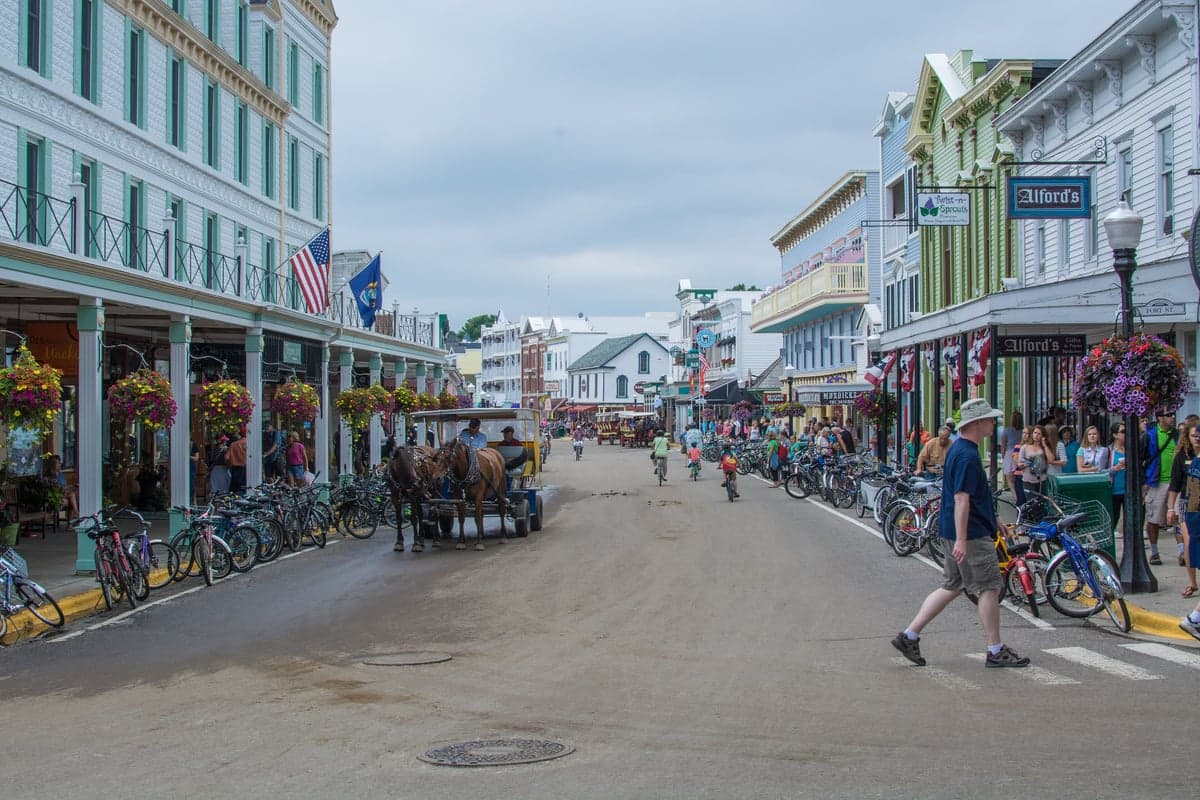
Mackinac Island feels less like a typical Michigan town and more like a living museum that happens to have a grocery store and a bar. With a year-round population of just 663, it’s a place where the absence of cars—banned since 1898—dictates the pace of everything, from the morning commute to the way kids get to school. Living here means accepting that your neighbors are also your coworkers, your mail arrives by horse-drawn cart, and the entire island shuts down for a solid five months when the lake-effect snow buries the ferry docks.
The Daily Rhythm: Life Without a Car
Daily life on Mackinac Island revolves around two seasons: the frantic summer tourist crush and the quiet, isolating winter. From May through October, the population swells to thousands of seasonal workers and day-trippers, and residents adapt by doing their errands early. The main grocery store, Doud’s Market (the oldest family-run grocery in the country), is where you’ll see everyone—the ferry crew, the school principal, the fudge shop owner—grabbing supplies before the first boat arrives. Commuting is done by bicycle, on foot, or by horse; the average commute time of about 24 minutes is a bit misleading because it’s a 3.7-mile loop, and you’re often walking a horse or pulling a wagon of supplies. In winter, the island’s population drops to around 500, and the only way on or off is by small plane or the rare ice-breaking ferry. Residents stock up on canned goods and firewood, and the social scene shifts to the two year-round bars: the Mustang Lounge and the Pink Pony, where locals gather for trivia and to complain about the snow removal budget.
Who Fits In Here: The Year-Round Personality
The kind of person who thrives here is self-reliant, patient, and comfortable with a small-town fishbowl. The median age is 39.8, and 38.1% of residents hold a college degree, which is high for a rural community—many are professionals who work remotely or run island-based businesses like bed-and-breakfasts or horse livery services. The median household income of $100,125 is solid, but it’s deceptive: the cost of living index sits at 178 (nearly 80% above the national average), driven almost entirely by housing. A gallon of milk costs double what it does in St. Ignace, and a modest three-bedroom home can easily fetch $834,600. Affluence here is less about flashy cars (there are none) and more about owning a house with a heated garage for your snowmobile. Families with young children are rare—the school district serves about 40 kids total, and many families leave for the mainland once kids hit middle school to access sports and extracurriculars.
Sports, Festivals, and What People Actually Do for Fun
Sports on the island are hyper-local and community-driven. There’s no high school football team—the school is too small—but the Mackinac Island Lakers basketball team is a big deal, with games drawing nearly the entire year-round population. The big annual event is the Lilac Festival in June, a 10-day affair with a parade, a 10K run, and a horse-drawn carriage show that feels like a county fair crossed with a history pageant. For outdoor recreation, residents have the entire island as their backyard: hiking the limestone bluffs at Arch Rock, kayaking the shoreline, or ice fishing on the frozen harbor in January. The Grand Hotel is the island’s most famous landmark, but locals rarely go there except for the occasional Sunday brunch or to use the golf course. Instead, the real hangouts are the Horn’s Bar on the main strip and the Mackinac Island Community Center, which hosts everything from yoga to bingo to the annual chili cook-off. Music is mostly acoustic and folk, with the occasional cover band at the Pink Pony during summer weekends.
Pros and Cons of Island Living
The upsides are genuine and specific: no traffic jams, no car payments, and a level of quiet that’s hard to find anywhere else in the Lower 48. Kids can roam freely, and the community is tight-knit to the point where a lost dog is front-page news on the island’s Facebook page. The downsides are equally real. The violent crime rate is 322.6 per 100,000—higher than the national average, though nearly all incidents are tied to seasonal worker housing disputes or alcohol-fueled fights in tourist season, not random violence. The isolation wears on some people; the ferry schedule is unreliable in winter, and medical emergencies require a medevac flight to Petoskey. The school is a double-edged sword: it’s small enough that every child gets individual attention, but it lacks the sports teams, band programs, and AP classes that mainland schools offer. For families, the decision to stay past elementary school is a serious one, and many choose to move to St. Ignace or Mackinaw City for the high school years. For singles and couples without kids, the trade-off is simpler: you trade convenience and anonymity for a life that’s slower, quieter, and deeply connected to the seasons.

Similar small towns to Mackinac Island
* Values derived from national, state, county, city and local statistics and may differ in a specific area. Last updated: 2026-10-20T08:17:16.000Z
Narrative content on this page is AI-generated and may contain mistakes. Verify any details that matter before acting on them.
ReloMaps may earn a commission from affiliate links at no extra cost to you.

