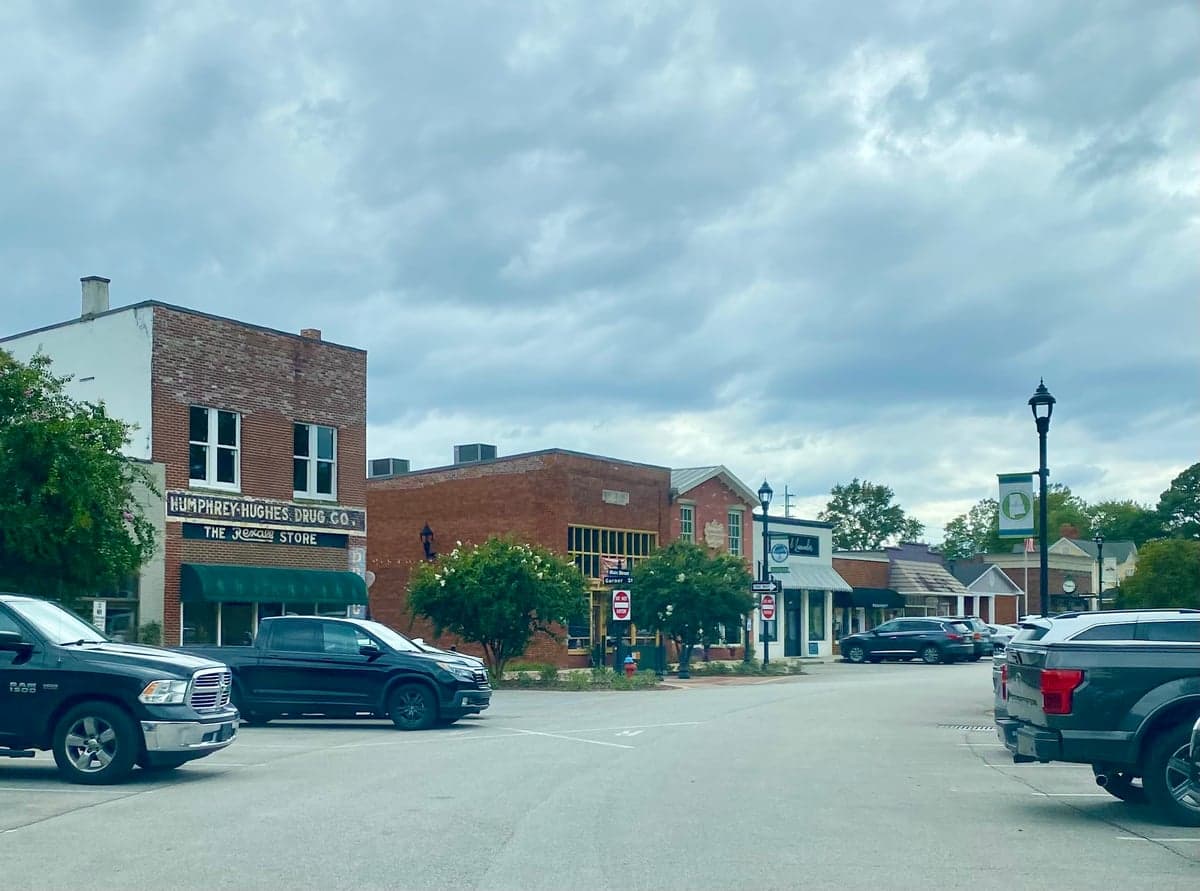
Photo: Wikipedia
Personal Sovereignty in Madison, AL
Viable for self-reliance. Generally workable, though some barriers may limit total independence.
What does Personal Sovereignty tell us?
Personal Sovereignty measures your capacity for self-reliance and independence with minimal government friction. Higher scores mean fewer barriers between you and the way you want to live... but it assumes you have the space you need and good neighbors.
What does this tell us?
Personal Sovereignty measures your capacity for self-reliance and independence with minimal government friction. Higher scores mean fewer barriers between you and the way you want to live... but it assumes you have the space you need and good neighbors.
State Policy
Energy independence: Importer (45% of energy produced in-state)
Personal Liberty
Homesteading

Personal Liberty Analysis
Madison, Alabama offers a notably high degree of personal sovereignty compared to many other Southern growth corridors, largely because it sits within a state that has aggressively pushed back against federal overreach and maintains a legal framework that prioritizes individual autonomy. For the strategic relocator—whether a single professional or a parent—this translates into a living environment where the default posture of local and state government is non-interference in your personal affairs, your property, and your family decisions. The key question isn't whether Madison is a libertarian paradise—it isn't—but whether its specific mix of low taxes, strong gun rights, permissive zoning, and parental control creates a buffer against the creeping regulatory state that many preppers and conservatives find suffocating elsewhere. The answer, based on the data and legal landscape, is a qualified yes, with the main caveat being that you are still subject to the whims of a growing municipal government that has shown some appetite for standard suburban controls.
Tax burden and regulatory posture: how Alabama's state-level protections limit local overreach
Alabama's tax structure is a major pillar of personal sovereignty here. There is no state-level property tax; the entire burden is local, and in Madison, the combined city and county property tax rate hovers around 0.5% of assessed value, one of the lowest effective rates in the nation. This means the government takes a smaller slice of your real estate equity every year, leaving more capital in your hands for self-reliance investments—land, supplies, or simply savings. The state income tax is a flat 5%, but Alabama allows a full deduction of federal income taxes paid, which effectively lowers the bite for many earners. More importantly, the state's regulatory climate is deliberately hostile to new rules. Alabama is a "right-to-work" state with no state-level occupational licensing for many trades, and Madison's city council has historically been reluctant to impose the kind of business-friendly-but-individual-restrictive ordinances seen in cities like Huntsville or Birmingham. There is no city income tax, no local sales tax on groceries, and the combined sales tax rate of about 8.5% is moderate. The regulatory posture from Montgomery is clear: they want to keep the state a low-tax, low-regulation haven, and Madison benefits from being in a county (Limestone and Madison) that leans heavily into that philosophy. For the prepper, this means fewer layers of bureaucracy to navigate when building a workshop, storing supplies, or running a home-based business.
Self-defense and gun law specifics: what the Second Sanctuary state means for daily carry and storage
Alabama is a constitutional carry state, meaning no permit is required to carry a concealed firearm for anyone legally allowed to possess one. This is not a recent concession; it's been the law since 2022, and Madison's local law enforcement has publicly stated they will not enforce any federal gun control measures they deem unconstitutional. For the survivalist mindset, this is the bedrock of personal sovereignty. You can carry openly or concealed without fear of a "permitless carry" loophole being closed by local ordinance—state preemption law explicitly prohibits cities like Madison from passing their own gun restrictions. The state also has a "Stand Your Ground" law with no duty to retreat, and castle doctrine protections extend to your vehicle and occupied structures. Magazine capacity limits, assault weapon bans, and waiting periods are all nonexistent at the state level. For storage, there are no state requirements for safe storage or locking devices, though federal law still applies to dealers. The practical effect for a Madison resident is that your right to self-defense is not subject to the whims of a city council; it is a fixed, state-level guarantee. This is a significant advantage over moving to a state like Colorado or Virginia, where local governments can and do create a patchwork of restrictions. The only caveat is that Madison is a family-oriented suburb, so open carry in a grocery store might draw unwanted attention from other citizens, but it remains perfectly legal.
Self-reliance and homesteading viability: lot sizes, zoning, and off-grid feasibility in a growing suburb
This is where Madison's sovereignty picture gets more nuanced. The city is experiencing rapid growth, and its zoning code reflects a tension between preserving rural character and accommodating suburban density. For the prepper looking for acreage, the sweet spot is the unincorporated areas of Limestone County just north of Madison, where lot sizes of 1 to 5 acres are still common and agricultural zoning allows for livestock, gardens, and even small-scale aquaculture. Inside city limits, most residential lots are standard suburban quarter-acre to half-acre plots, and the city's zoning code restricts things like keeping chickens (allowed with a permit, but limited to hens only) and prohibits pigs, goats, or larger livestock on standard lots. Off-grid feasibility is limited within city limits: Madison requires connection to municipal water and sewer for new construction, and solar panel installations must comply with building codes that effectively ban full off-grid setups (no battery storage without permits, and grid-tie is required). However, the county areas just outside city limits have no such requirements. You can drill a well, install a septic system, and run your home on solar with generator backup without any county interference, as long as you meet basic health department standards. For the serious homesteader, the strategy is to buy land in the county and commute into Madison for work and shopping. The city's own comprehensive plan acknowledges a desire to preserve "rural character" in certain zones, but the reality is that the growth machine is pushing for more subdivisions. The sovereignty play here is to get outside the city's extraterritorial jurisdiction before it expands further.
Personal liberties: parental rights, medical autonomy, speech, and property protections
Alabama has become a national leader in codifying parental rights. The state's "Parental Rights in Education" law (often called the "Don't Say Gay" bill) and the more recent "Parental Bill of Rights" give parents explicit legal standing to review curriculum, opt their children out of any instruction they find objectionable, and sue school districts that violate those rights. Madison City Schools, which are highly rated, have generally complied without public controversy, but the legal framework is there if needed. Medical autonomy is more complex. Alabama has some of the strictest vaccine mandates for school attendance (requiring a full slate of childhood vaccines), but it also has a robust religious exemption process that is rarely challenged. The state banned nearly all abortions in 2019, which aligns with the conservative view of fetal personhood, but for the prepper, the more relevant issue is that Alabama has no state-level health insurance mandate and no state-run exchange that penalizes non-participation. You can choose to self-insure or use a health-sharing ministry without state interference. Free speech protections are strong; Alabama has no hate speech laws that criminalize political speech, and the state's public universities (including nearby UAH) have been relatively restrained in punishing controversial speakers compared to coastal states. Property rights are protected by a strong eminent domain law that requires "public use" (not just "public benefit"), and the state has a "right to farm" law that protects agricultural operations from nuisance lawsuits—useful if you buy that county land. The overall picture is that the state government views itself as a shield against federal overreach, and Madison's local government, while not perfect, has not shown any appetite for challenging that posture.
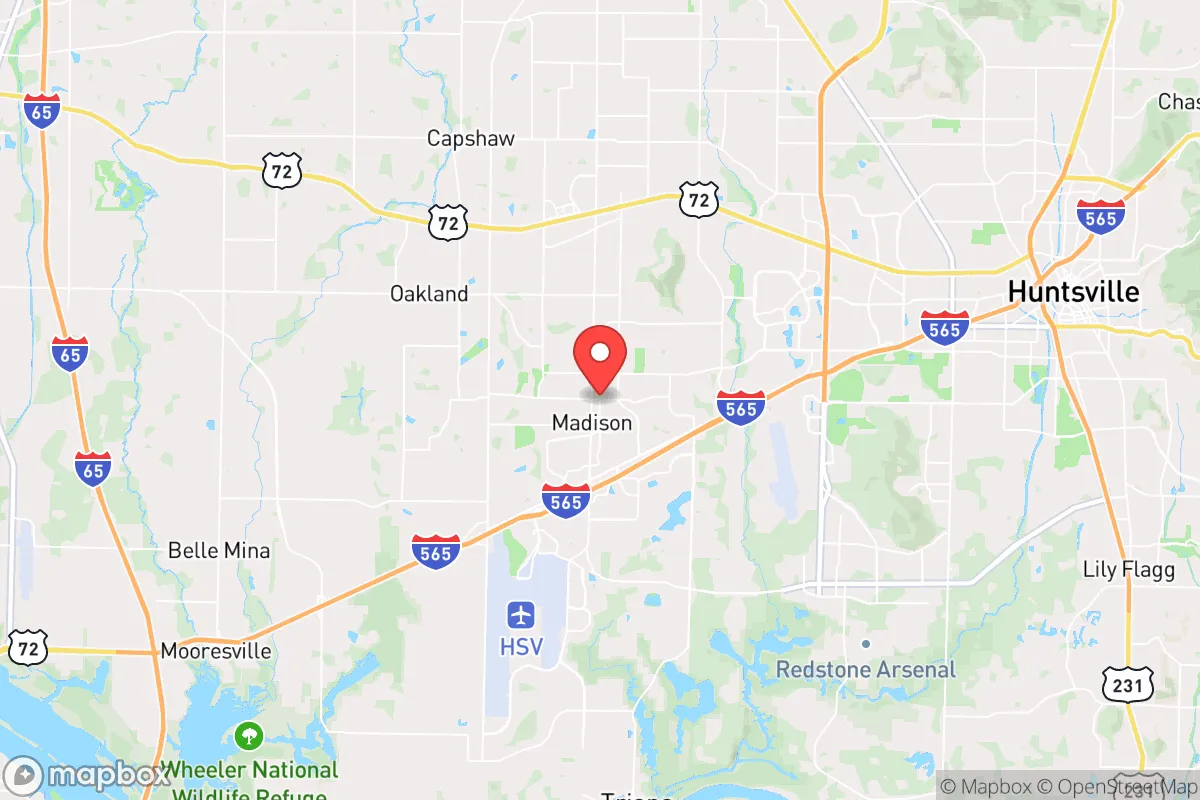
In the broader context of the Southeast, Madison offers a sovereignty profile that is significantly stronger than what you'd find in the research triangles of North Carolina or the exurbs of Atlanta, where local governments are more aggressive with zoning and tax policy. It is weaker than truly rural counties in the Alabama Black Belt or the Wiregrass, where you can buy 40 acres and never see a code enforcement officer. But for someone who needs a professional job—likely at Huntsville's Redstone Arsenal or Cummings Research Park—and wants to live in a community that respects your right to be left alone, Madison is a top-tier choice. The key is to understand the boundary: inside city limits, you get a well-run suburb with low taxes and strong gun rights; outside city limits, you get near-total autonomy. The strategic move is to buy on the edge, in the county, and enjoy the best of both worlds while the city's growth hasn't yet swallowed that freedom.

* Values derived from national, state, county, city and local statistics and may differ in a specific area. Last updated: 2026-04-19T18:56:38.000Z
Narrative content on this page is AI-generated and may contain mistakes. Verify any details that matter before acting on them.
ReloMaps may earn a commission from affiliate links at no extra cost to you.

