Photo: Wikipedia
Political ClimatePolitical Climate in Madison, AL
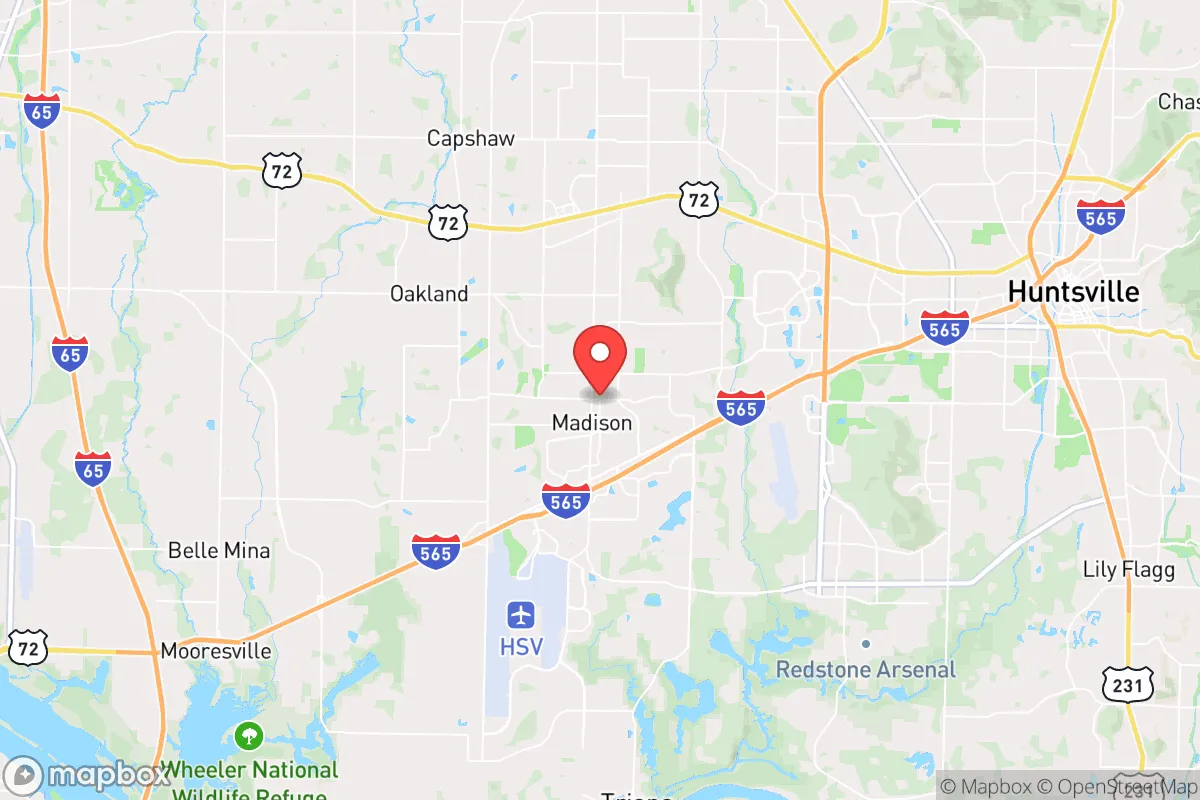
District shown is the primary district for this city’s centroid. Cities may span multiple districts.
Local Political AnalysisPolitical Analysis of Madison, AL
Madison, Alabama, has long been a solidly conservative stronghold, and the numbers back that up with a Cook PVI of R+15. For decades, this was a place where folks minded their own business, the government stayed out of your backyard, and the biggest political debates were about school funding and road improvements. But over the last five to ten years, you’ve started to see some subtle shifts, especially as the Huntsville metro area has boomed and brought in a wave of new residents from more progressive parts of the country. While Madison itself still leans heavily Republican, the surrounding areas like Huntsville proper and even parts of Limestone County are showing signs of a slow, creeping move toward more progressive policies, which has a lot of long-time locals keeping a wary eye on things.
How it compares
If you drive ten minutes east into Huntsville, you’ll hit a different political vibe entirely. Huntsville’s core has become a blue dot in a red sea, with city council races and local initiatives increasingly reflecting a more progressive agenda—think higher taxes for bike lanes and affordable housing mandates. Meanwhile, head west toward Athens or south toward Decatur, and you’re back in deep-red territory where the talk is still about property rights and low regulation. Madison sits right in the middle, acting as a kind of buffer zone. It’s still conservative, but you can feel the pressure from Huntsville’s growth spilling over. The real contrast is with places like Mooresville or Triana, tiny towns that haven’t changed much in 50 years and where the political climate is as predictable as the sunrise. Madison, by comparison, is now a battleground for the soul of the community—between those who want to keep it a quiet, family-oriented suburb and those who see it as an extension of Huntsville’s urban experiment.
What this means for residents
For the average family living here, the political climate directly affects your wallet and your freedoms. The biggest concern I hear from neighbors is about government overreach creeping in through zoning laws and school board policies. There’s a real fear that as the population grows, the county and city will start telling you what you can do with your own property—like limiting how big a shed you can build or mandating certain landscaping. The school system, which is one of the best in the state, has also seen some heated debates over curriculum and parental rights. So far, Madison has held the line, but the pressure is mounting. If you value low taxes, minimal interference in your daily life, and a community that respects traditional values, Madison is still a good bet—but you’ve got to stay engaged. The long-term trajectory depends on whether the new arrivals assimilate into the local culture or try to change it.
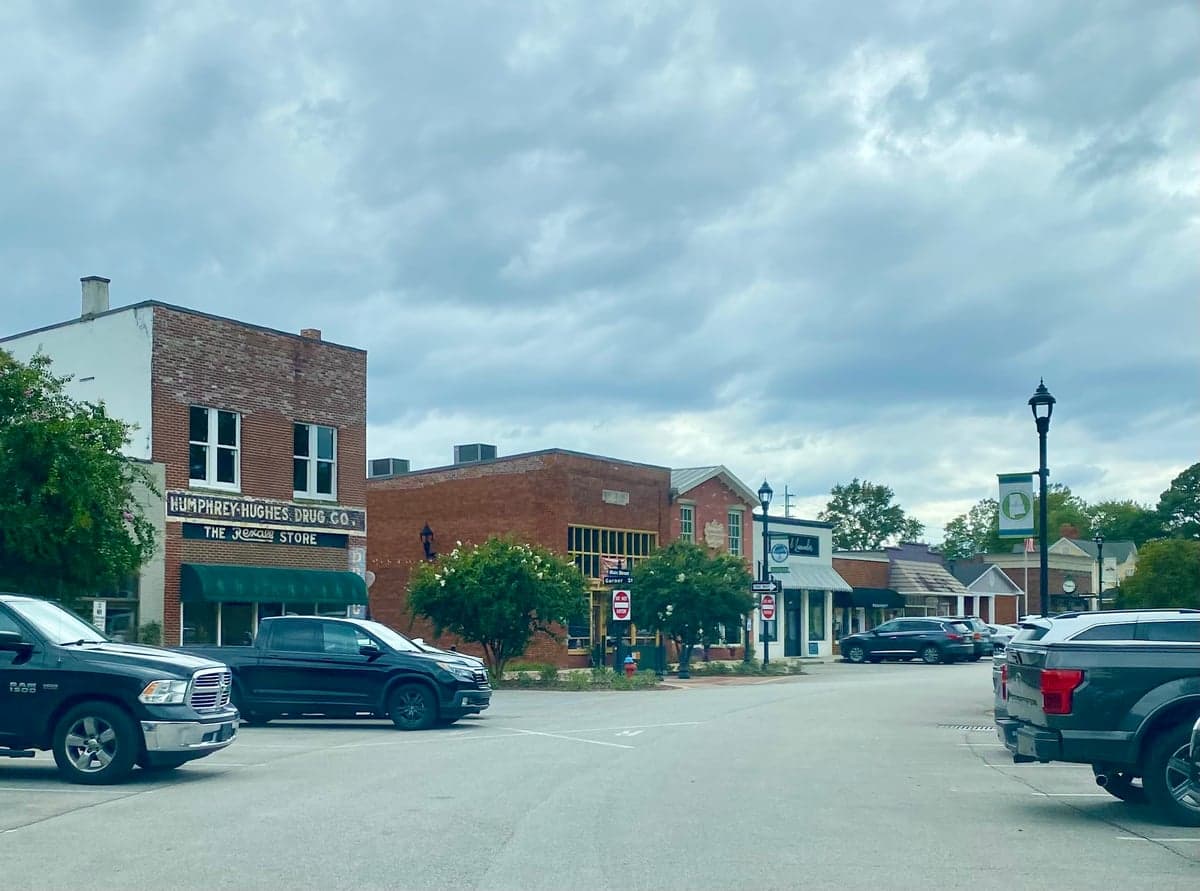
One cultural distinction that stands out is Madison’s strong sense of local identity, which is rare in a bedroom community. You’ve got the historic downtown, the annual festivals, and a real pride in the high school football team that binds people together across political lines. But there’s also a growing undercurrent of tension around issues like mask mandates and vaccine requirements that flared up during the pandemic. That was a real wake-up call for a lot of folks here—seeing how quickly local government could overstep if given the chance. The good news is that Madison’s political DNA is still rooted in the idea that the best government is the one closest to the people, and most elected officials here still remember that. But if you’re thinking of moving here, just know that the political climate is not static. It’s a place where you’ll need to vote in every local election to keep things from sliding toward the kind of progressive overreach you see in bigger cities. For now, it’s still a great place to raise a family with conservative values, but the fight to keep it that way is real and ongoing.

State Political ClimatePolitical Climate in Alabama
State Political AnalysisPolitical Environment in the State
Alabama has been a reliably Republican state for decades, with a deep-red lean that has only intensified since the turn of the century. The state hasn’t voted for a Democratic presidential candidate since 1976, and in 2024, Donald Trump carried it by over 30 points. The dominant coalition is a mix of rural conservatives, evangelical Christians, and a growing number of suburban families fleeing higher-tax states. Over the last 10-20 years, the shift has been away from the old “Blue Dog” Democrat tradition in the Black Belt and toward a solid, culturally conservative Republican majority, though urban centers like Birmingham and Montgomery still provide a counterweight.
Urban vs. rural divide
The political map of Alabama is a study in contrasts. The rural counties—places like DeKalb, Cullman, and Blount in the north, and Coffee, Dale, and Geneva in the south—routinely deliver 75-85% Republican margins. These areas are the backbone of the state’s conservative identity. Meanwhile, the major metros tell a different story. Jefferson County (Birmingham) and Montgomery County have trended blue in recent cycles, driven by Black voters and a growing professional class. Mobile County is a bellwether, leaning Republican but with a significant Democratic minority in the city proper. Huntsville, in Madison County, is a fascinating exception: a fast-growing tech hub that remains reliably Republican thanks to a high concentration of defense contractors and engineers. The suburbs of Birmingham—like Hoover, Vestavia Hills, and Mountain Brook—are deeply conservative, but the city itself is a Democratic stronghold. This urban-rural split means that while the state is solidly red, the cultural and political battles are fought most intensely in the growing suburbs and the few competitive legislative districts.
Policy environment
Alabama’s policy environment is a model of limited government, at least on paper. There is no state income tax on retirement income, and the state’s overall tax burden is among the lowest in the country. The corporate tax rate is a flat 6.5%, and property taxes are famously low—often under 0.5% of assessed value. The regulatory posture is business-friendly, with right-to-work laws and minimal zoning restrictions outside major cities. On education, the state has expanded school choice through the Alabama Accountability Act and the more recent CHOOSE Act, which provides education savings accounts for families. Healthcare policy remains a flashpoint: Alabama did not expand Medicaid under the Affordable Care Act, a decision that keeps costs down for taxpayers but leaves a coverage gap for some low-income adults. Election laws are strict but straightforward: voter ID is required, and absentee voting is limited to specific excuses. The state has also passed a constitutional amendment affirming that there is no right to abortion, and it has some of the strongest parental rights laws in the country, including the Parental Rights Protection Act.
Trajectory & freedom
Alabama is moving in the direction of more personal freedom, particularly in areas that matter most to conservatives. In 2022, the state passed constitutional carry, allowing law-abiding citizens to carry a concealed handgun without a permit. This was a major expansion of Second Amendment rights. On parental rights, the 2022 law requiring schools to notify parents of any “sexually explicit” instructional materials and the 2024 law banning gender transition procedures for minors have solidified Alabama as a leader in protecting children from progressive overreach. Property rights remain strong, with no statewide rent control and minimal eminent domain abuse. However, there are concerning trends. The state’s medical marijuana program, passed in 2021, has been mired in bureaucratic delays and legal challenges, suggesting a lingering government overreach into personal medical choices. Additionally, the state’s alcohol laws remain antiquated—dry counties still exist, and Sunday sales restrictions are common. Overall, the trajectory is positive for freedom, but there’s room for improvement in rolling back outdated blue laws and streamlining business licensing.
Civil unrest & political movements
Alabama has not seen the kind of widespread civil unrest seen in other states, but there have been notable flashpoints. The 2020 Black Lives Matter protests in Birmingham and Montgomery were largely peaceful, though they did lead to some property damage and a renewed push for police reform. On the right, the “Stop the Steal” movement had a strong presence in 2020, with rallies in Montgomery and at the State Capitol. Immigration politics are less heated here than in border states, but there is a vocal minority pushing for stricter enforcement, particularly in the wake of the Biden-era border crisis. The state has no sanctuary cities, and a 2011 law (HB 56) was one of the toughest anti-illegal immigration measures in the country, though parts were later struck down. Election integrity remains a hot topic, with the 2022 law requiring absentee ballot applications to include a copy of the voter’s ID. A new resident would notice that political conversations are common and civil, but the divide between the urban and rural areas is palpable—especially in the media and local news coverage.
Projection
Over the next 5-10 years, Alabama is likely to become even more conservative, but with a twist. The in-migration of retirees and remote workers from states like California, Illinois, and New York is accelerating, particularly in the Huntsville and Baldwin County (Gulf Shores) areas. These newcomers tend to be fiscally conservative but socially moderate, which could soften the state’s hardline positions on some social issues. However, the state’s strong cultural and religious base will likely resist any major shifts. The demographic trend is clear: the Black Belt is losing population, while the suburbs and coastal areas are growing. This will further entrench Republican dominance at the state level, but it could also create a more libertarian-leaning wing of the party that prioritizes economic freedom over social regulation. A new resident moving in now should expect to find a state that is politically stable, with a government that is generally responsive to conservative values, but with an emerging tension between traditionalists and a growing class of freedom-minded transplants.
For a new resident, the bottom line is this: Alabama offers a high degree of personal freedom, low taxes, and a government that respects the Second Amendment and parental rights. The political climate is stable and predictable, with no real threat of a blue wave anytime soon. The main practical takeaway is to choose your location carefully—if you want a deep-red, rural lifestyle, head to Cullman or Baldwin County. If you want a more moderate, suburban feel with good schools, look at Huntsville or the Birmingham suburbs. Either way, you’ll be living in a state that values liberty and tradition, and that’s a rare thing in 2026.
* Values derived from national, state, county, city and local statistics and may differ in a specific area. Last updated: 2026-04-19T18:56:38.000Z
Narrative content on this page is AI-generated and may contain mistakes. Verify any details that matter before acting on them.
ReloMaps may earn a commission from affiliate links at no extra cost to you.

