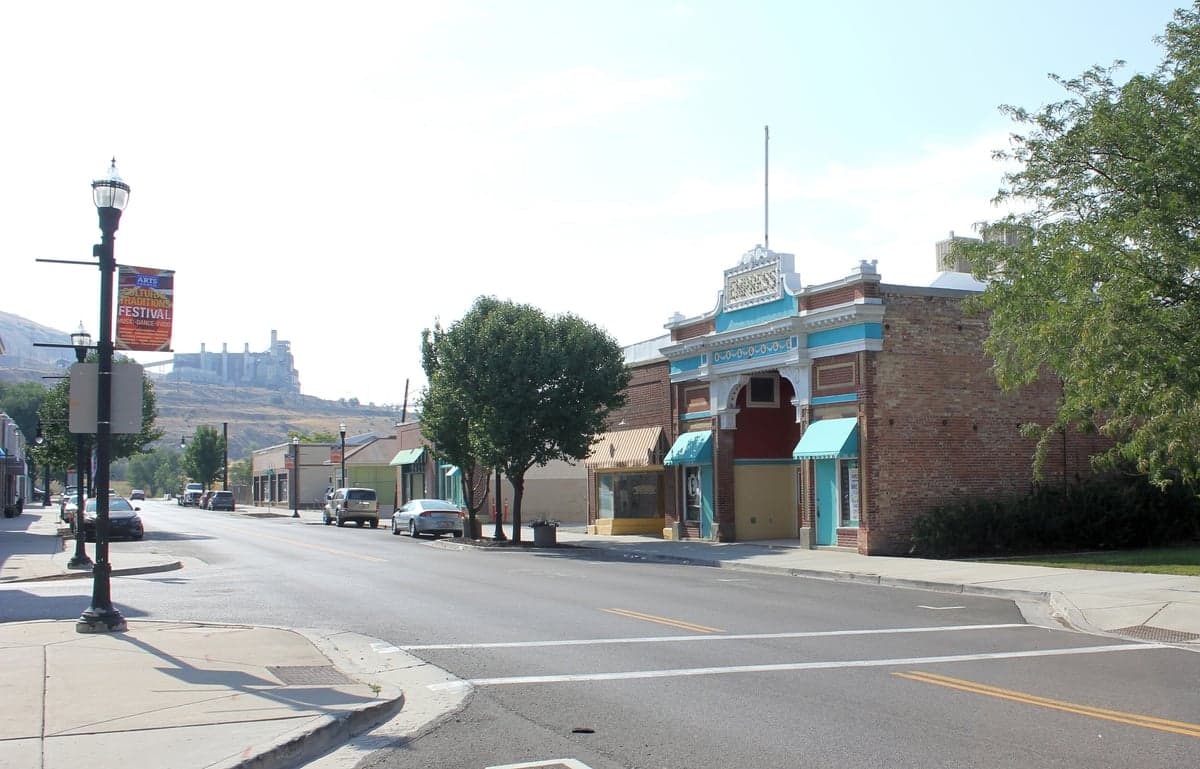
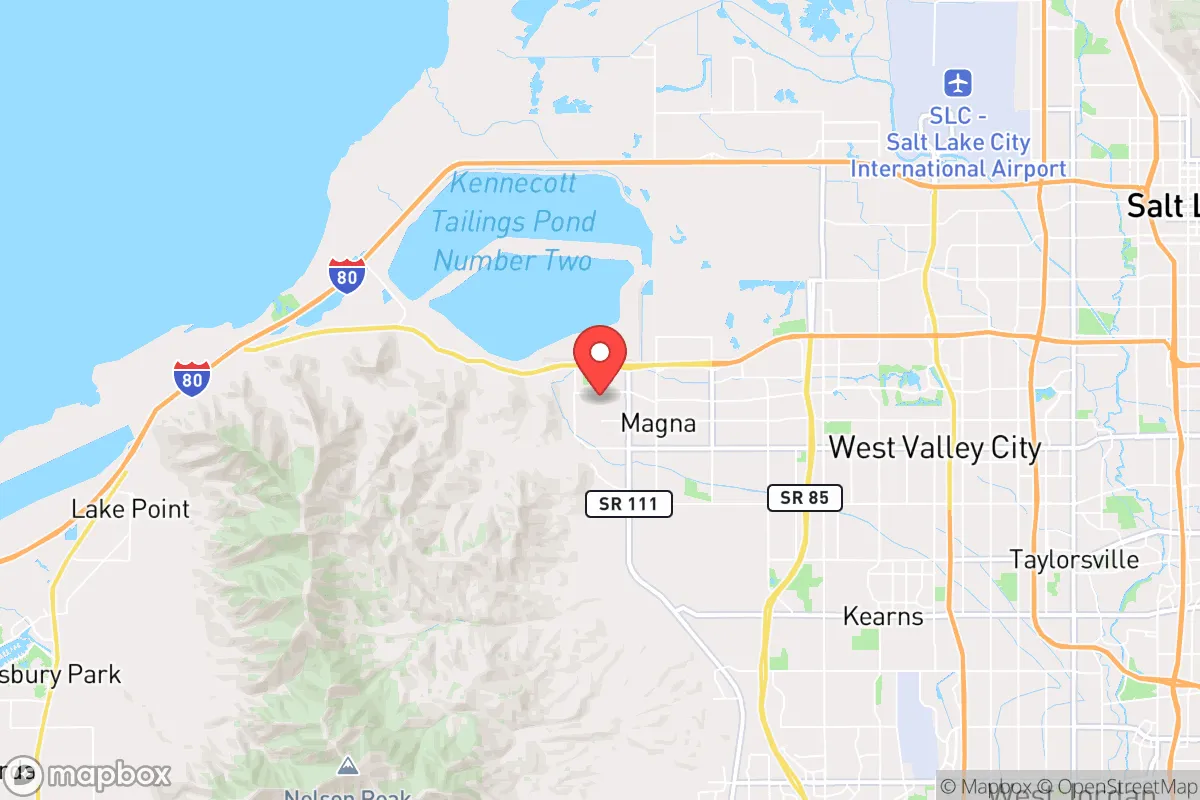
Photo: Wikipedia
Personal Sovereignty in Magna, UT
Viable for self-reliance. Generally workable, though some barriers may limit total independence.
What does Personal Sovereignty tell us?
Personal Sovereignty measures your capacity for self-reliance and independence with minimal government friction. Higher scores mean fewer barriers between you and the way you want to live... but it assumes you have the space you need and good neighbors.
What does this tell us?
Personal Sovereignty measures your capacity for self-reliance and independence with minimal government friction. Higher scores mean fewer barriers between you and the way you want to live... but it assumes you have the space you need and good neighbors.
State Policy
Energy independence: Self-sufficient (80% of energy produced in-state)
Personal Liberty
Homesteading

Personal Liberty Analysis
Magna, Utah, offers a notably high degree of personal sovereignty relative to many urban and suburban areas in the Intermountain West, largely because it sits at the edge of Salt Lake County’s regulatory reach while still benefiting from Utah’s generally liberty-friendly state laws. For a survivalist or prepper mindset, the key trade-off is proximity to a major metro area (Salt Lake City is 20 minutes east) versus the ability to live with fewer restrictions on property use, self-defense, and daily autonomy. The town’s working-class roots and semi-rural character mean that government overreach is less pronounced here than in more affluent, HOA-heavy suburbs like Sandy or Draper, but residents still contend with state-level mandates on everything from water rights to firearm storage. For single individuals and parents who prioritize keeping options open for self-reliance, Magna represents a strategic middle ground—close enough to urban resources, far enough from intrusive zoning and enforcement.
Tax burden and regulatory posture: How much the state and county take
Utah’s overall tax burden is moderate, ranking around the middle nationally, but Magna’s specific situation is shaped by Salt Lake County’s property tax rates and the state’s income tax structure. The state levies a flat 4.65% income tax, which is predictable but not negligible for those trying to maximize savings for prepping supplies or land purchases. Property taxes in Magna run roughly 0.6% to 0.8% of assessed value—lower than many coastal states but higher than neighboring Tooele County, where land is cheaper and taxes are lighter. The regulatory posture in Magna is less aggressive than in Salt Lake City proper: there are no city-level business license fees that strangle small-scale home-based enterprises (like selling dehydrated goods or offering firearms training), and the county’s zoning enforcement is generally complaint-driven rather than proactive. However, Utah’s state-level building codes and water rights regulations are strict, especially for anyone wanting to drill a well or install a rainwater catchment system—permits are required, and the state water engineer has broad authority. For a prepper, this means you can operate a home garden and small workshop with minimal hassle, but any major infrastructure project (like a septic system upgrade or a solar array tied to the grid) will involve county inspections and fees. The overall regulatory posture is best described as “live and let live, as long as you don’t draw attention”—a far cry from the permitting gauntlet in California or Colorado.
Self-defense and gun law specifics: What you can carry and where
Utah is a shall-issue state for concealed carry permits, and Magna residents benefit from some of the most permissive firearm laws in the West. No permit is required to open carry a handgun or long gun, and concealed carry permits are issued to any law-abiding adult after a background check and a short training course—no waiting periods, no magazine capacity limits, and no assault weapon bans. This is a critical advantage for a survivalist mindset: you can keep a rifle in your truck or a sidearm on your hip without worrying about local ordinances overriding state preemption. Utah law also explicitly preempts local governments from passing their own gun restrictions, so Magna City cannot ban firearms in parks or impose storage requirements beyond state law. The one notable limitation is that carrying in schools and certain government buildings is restricted, even with a permit, which matters for parents who want to be armed during school drop-off or pickup. Stand-your-ground laws are on the books, and there is no duty to retreat in any place you have a legal right to be. For those concerned about government overreach in a crisis, Utah’s firearm-friendly environment is a major plus—though the state does require background checks for all firearm purchases from licensed dealers, private sales between individuals are not regulated.
Self-reliance and homesteading viability: Lot sizes, zoning, and off-grid feasibility
Magna’s zoning is a mixed bag for serious homesteading. Most residential lots in the older parts of town are around a quarter-acre, which is enough for a substantial garden, a chicken coop, and a small workshop, but not for livestock like goats or pigs without a special permit. Agricultural zoning exists in the western fringe of Magna, near the Oquirrh Mountains, where lot sizes can exceed one acre—these areas are where you’ll find properties suitable for a more self-sufficient lifestyle, including the possibility of keeping horses or running a small market garden. Off-grid feasibility is limited by Utah’s strict building codes and utility requirements: the county generally requires a permanent dwelling to be connected to the electrical grid and municipal water or a permitted well, and solar-only setups are not allowed as primary power sources for new construction. However, existing homes can be retrofitted with solar panels and battery storage without much hassle, and the state offers net metering that makes grid-tied solar economically viable. Rainwater collection is legal but regulated—you can capture up to 2,500 gallons without a permit, but larger systems require a water right. For a prepper, the best strategy is to buy a property on the western edge of Magna, where zoning is looser, and invest in a grid-tied solar system with battery backup, a large garden, and a deep pantry. The town’s proximity to the mountains also means ample public land for hunting, foraging, and bug-out locations within a 30-minute drive.
Personal liberties: Parental rights, medical autonomy, speech, and property
Utah has a strong track record on parental rights, with state law explicitly affirming that parents have the fundamental right to direct their children’s education, healthcare, and religious upbringing. Magna parents can homeschool without excessive state oversight—just a simple affidavit filed with the local school district, and no curriculum approval or testing requirements. Medical autonomy is more complicated: Utah does not have a state-level vaccine mandate for adults, but certain employers and schools can require vaccinations, and the state’s response to public health emergencies has historically involved broad executive powers (as seen during COVID-19). For those wary of government overreach in medical decisions, Magna’s local culture is skeptical of mandates, and many residents openly refused masking and vaccination requirements during the pandemic without facing legal consequences. Free speech is robustly protected under both the Utah Constitution and state law, which includes explicit protections for political speech on private property and limits on local governments’ ability to regulate signs or public gatherings. Property rights are generally strong, but the state’s eminent domain authority is broad for infrastructure projects—something to watch if you buy land near proposed highway expansions or utility corridors. Overall, Magna offers a high degree of personal liberty in daily life, with the main friction points being state-level health mandates and water regulation, not local overreach.
In the broader context of the Intermountain West, Magna ranks as a solid choice for those prioritizing personal sovereignty without moving to a remote, off-grid location. It is not as liberty-friendly as rural Idaho or Montana, where property taxes are lower and zoning is nearly nonexistent, but it beats most of Utah’s Wasatch Front suburbs by a wide margin. For a single individual or parent with a survivalist mindset, the combination of permissive gun laws, low regulatory friction for home-based enterprises, and a community that values self-reliance makes Magna a strategic relocation option. The key is to choose your specific property carefully—stick to the western edge for larger lots and fewer neighbors, and be prepared to navigate state-level water and building codes that still reflect a degree of government control. If you want to be left alone to prepare, train, and live on your own terms, Magna offers a realistic balance of access and autonomy.

* Values derived from national, state, county, city and local statistics and may differ in a specific area. Last updated: 2026-09-21T19:36:43.000Z
Narrative content on this page is AI-generated and may contain mistakes. Verify any details that matter before acting on them.
ReloMaps may earn a commission from affiliate links at no extra cost to you.

