Photo: Wikipedia
Strategic Assessment of Magna, UT
Workable tactical position. Some exposure to population density or targets, but generally defensible in a crisis.
What does the Strategic Assessment tell us?
Our Strategic Assessment grades tactical survivability of an area. Major population centers, military targets, fallout zones, natural disasters, and border exposure all drive risk — lower exposure means a more defensible position in a crisis.
This is heavily inspired by Joel Skousen's Strategic Relocation book. Highly recommended you checkout the book ($)What does this tell us?
Our Strategic Assessment grades tactical survivability of an area. Major population centers, military targets, fallout zones, natural disasters, and border exposure all drive risk — lower exposure means a more defensible position in a crisis.
This is heavily inspired by Joel Skousen's Strategic Relocation book. Highly recommended you checkout the book ($)Strategic Pillars

Key Distances
Regional Safe Places
Below is our recommended "safe zones" in Utah and the surrounding area based on our strategic heuristics. For most people, it's unrealistic to live in a “safe zone” full-time due to work, family or other personal reasons. They tend to be more rural. However, many of these areas are perfect for second homes and retreat properties that double as a vacation home or even a short-term rental.


Important Note: For informational purposes only. This does not mean nothing bad ever happens in the green zones. Please use common sense. This is based on public data and modeled with AI. We tried to take a conservative approach but mistakes happen. We update this regularly as new information becomes available.
Solar Generator Recommendations
Backup power matters more here than in safer locations. We've picked three solar generators across budgets and capacity tiers — start with the budget unit if you only need a few essentials, or step up if you want to run a fridge and HVAC for days at a time.

Jackery Portable Power Station Explorer 300
Budget OptionPower on the Go: Weighing only 11 lbs, it's convenient to set up and store with book-sized foldable solar panels

BLUETTI Portable Power Station AC180
Designed for both indoor and outdoor scenarios, AC180 is highly capable as it has a robost capacity and continuous output power.

EF ECOFLOW DELTA Pro Ultra Power Station
Upgraded PickEcoFlow DELTA Pro Ultra is a whole-home energy system designed to grow with your family. Integrated with the Smart Home Panel 2, it scales to meet your evolving energy needs — keeping your home powered, intelligent, and secure through every stage of life.
We earn a commission, at no additional cost to you.
Strategic Assessment Analysis
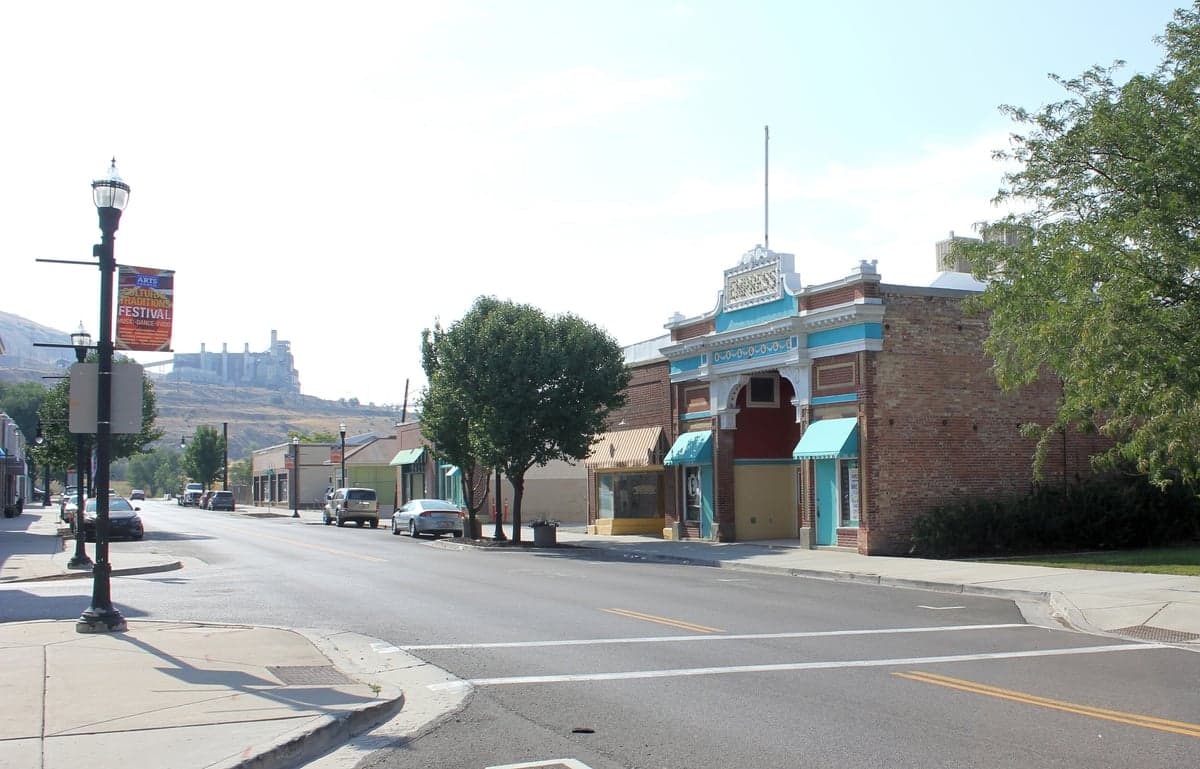
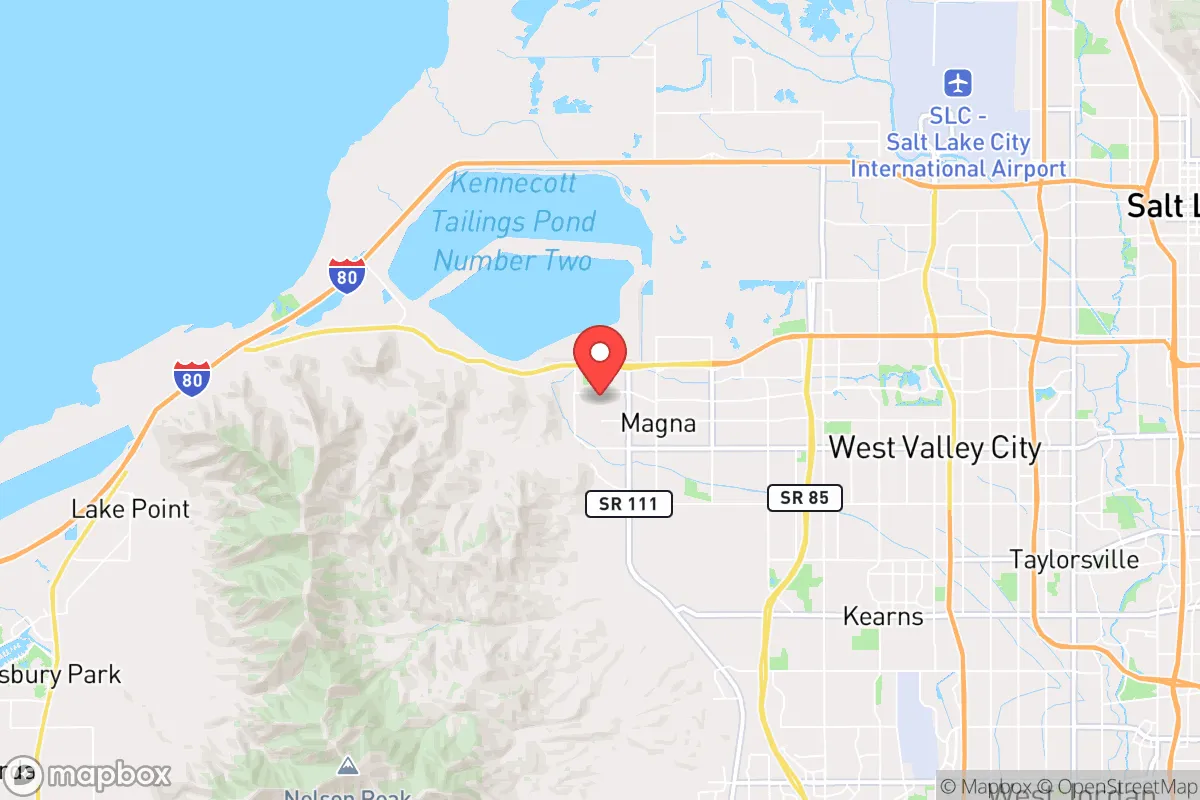
Magna, Utah, sits in a precarious but potentially advantageous position for those serious about resilience and long-term preparedness. Located just 18 miles west of Salt Lake City, it offers proximity to urban resources while maintaining a distinct separation from the core metro area. However, its location near the eastern edge of the Great Salt Lake Desert and directly adjacent to major transportation corridors and industrial infrastructure creates a mixed strategic picture—one that demands careful evaluation for anyone considering it as a relocation hub for uncertain times.
Geographic position and natural advantages for long-term survival
Magna's primary strategic asset is its position at the western edge of the Salt Lake Valley, where the Wasatch Front meets the Great Basin. This places it within a day's drive of multiple ecological zones: high alpine forests in the Wasatch Mountains to the east, the vast and sparsely populated West Desert, and the agricultural lands of Utah County to the south. For a prepper, this means access to diverse resources—timber, water from mountain runoff, and potential hunting grounds—all within a reasonable radius. The area's elevation at roughly 4,200 feet provides a cooler climate than much of the Southwest, reducing heat-related risks during grid-down scenarios. The nearby Oquirrh Mountains offer natural barriers to the east and south, creating a degree of geographic isolation from the more densely populated Salt Lake City core. Magna itself sits on the historic Bingham Creek drainage, which feeds into the Great Salt Lake, providing a potential water source if municipal systems fail, though treatment would be necessary. The region's low humidity also reduces the risk of mold and spoilage in stored supplies, a practical advantage for long-term food storage.
Risks, exposures, and proximity to fallout-relevant landmarks
The most significant vulnerability for Magna is its proximity to critical infrastructure that could become targets during civil unrest or conflict. The area lies directly adjacent to the Bingham Canyon Mine, one of the largest open-pit copper mines in the world, which is a major industrial asset. While not a likely primary target, its scale and the associated rail and processing facilities could draw attention in a broader disruption. More concerning is Magna's position relative to the Salt Lake City International Airport (about 10 miles east) and the major rail yards and refineries along the I-80 corridor. These are plausible targets for sabotage or attack in a major conflict, and Magna's location puts it within the potential blast or fallout zone of a conventional strike on these facilities. The area also sits near the Wasatch Fault line, which runs through the Salt Lake Valley. A major earthquake—estimated at a 7.0 or greater—could cause catastrophic damage to infrastructure, including the aging Kennecott tailings ponds just west of town, which contain decades of mining waste. A breach of those ponds could release toxic slurry into the local watershed, rendering the area uninhabitable for an extended period. Additionally, Magna's position in the valley means it could be subject to inversion-related air quality issues during a prolonged power outage, when heating and cooking would rely on combustion sources.
Practical resilience for a relocator: food, water, energy, and defensibility
For a relocator evaluating Magna's day-to-day survivability, the picture is mixed. Water is the most critical concern. The area relies on municipal water from the Jordan Valley Water Conservancy District, which draws from the Provo River and Deer Creek Reservoir. In a grid-down scenario, this system would fail, and residents would need to rely on private wells—which are common in the older parts of Magna but not universal—or surface water from Bingham Creek, which is seasonal and requires treatment. The Great Salt Lake is too saline for direct use, so rainwater catchment and storage are essential. Food production is feasible but limited by the short growing season (roughly 150 frost-free days) and alkaline soil. Raised beds with imported soil and greenhouse structures would be necessary for serious gardening. The area's proximity to the West Desert offers potential for foraging and small-game hunting, but the desert ecosystem is low-yield compared to eastern Utah's forests. Energy resilience is a bright spot: Utah has abundant solar potential, and Magna's relatively open skyline allows for rooftop solar even with the nearby mountains. Net metering policies are favorable, but a battery backup system is critical for grid-down scenarios. Defensibility is a concern. Magna is a working-class suburb with a mix of older homes and newer subdivisions, meaning it lacks the natural chokepoints or elevated terrain of more remote locations. The town's layout along SR-201 and 8400 West creates multiple entry points, making perimeter security difficult. However, the community's small size (roughly 30,000 residents) and relatively tight-knit character—many families have been here for generations—could foster mutual aid networks, which are more valuable than any physical barrier. The nearby Oquirrh Mountains offer potential retreat locations for those with the means to establish a secondary site.
Overall, Magna presents a strategic compromise. It is not a remote bunker location, nor is it a high-risk urban core. For the conservative prepper who values proximity to Salt Lake City's medical and logistical resources but wants a buffer from the worst of urban collapse, it offers a viable middle ground. The key is to recognize its specific vulnerabilities—the mine, the fault line, the refinery corridor—and mitigate them through decentralized water storage, robust energy independence, and a strong local network. If you can secure a property with a well, solar, and a defensible layout, Magna could serve as a functional base for weathering moderate disruptions. For those seeking true isolation, the West Desert or the Uinta Basin would be better bets. But for a relocator who wants to stay within striking distance of civilization while maintaining a serious preparedness posture, Magna is worth a hard look—provided you go in with eyes wide open about the risks baked into its geography and infrastructure.

* Values derived from national, state, county, city and local statistics and may differ in a specific area. Last updated: 2026-09-21T19:36:43.000Z
Narrative content on this page is AI-generated and may contain mistakes. Verify any details that matter before acting on them.
ReloMaps may earn a commission from affiliate links at no extra cost to you.

