Photo: Wikipedia
Demographics of Magna, UT
Affluence Level in Magna, UT
A middle-class area roughly in line with national averages across income, home values, education, and employment.
People of Magna, UT
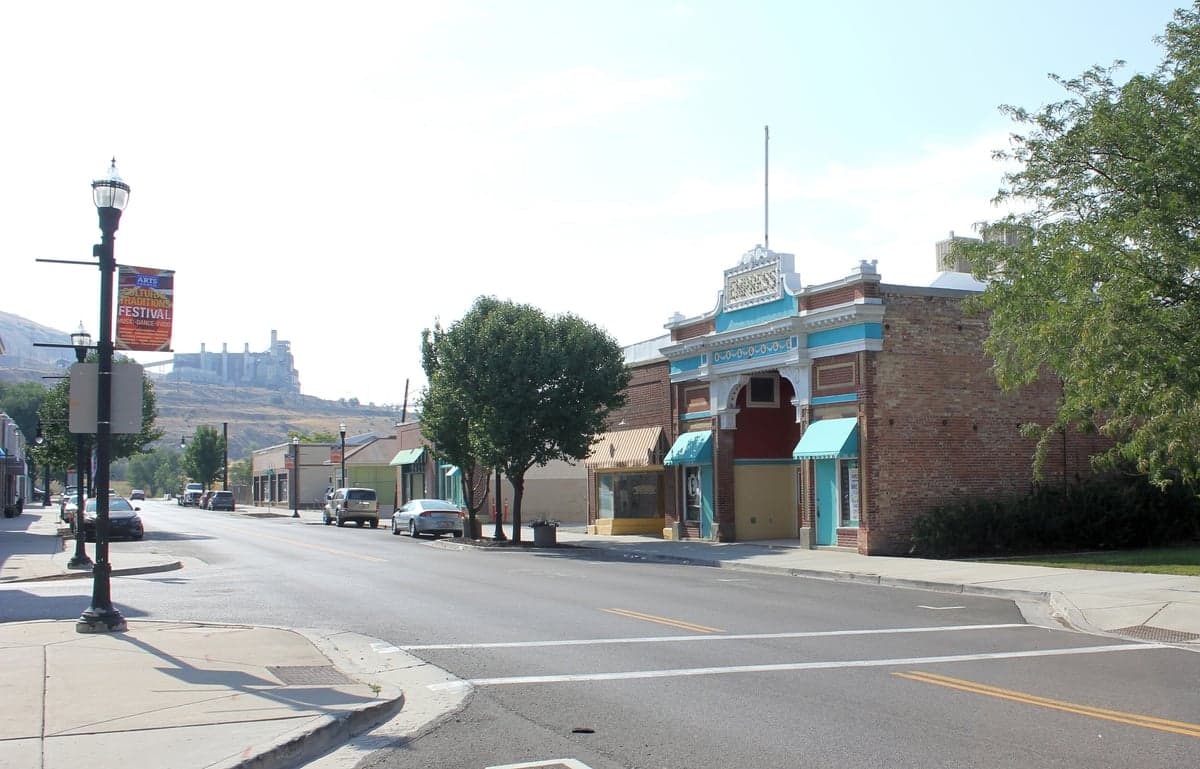
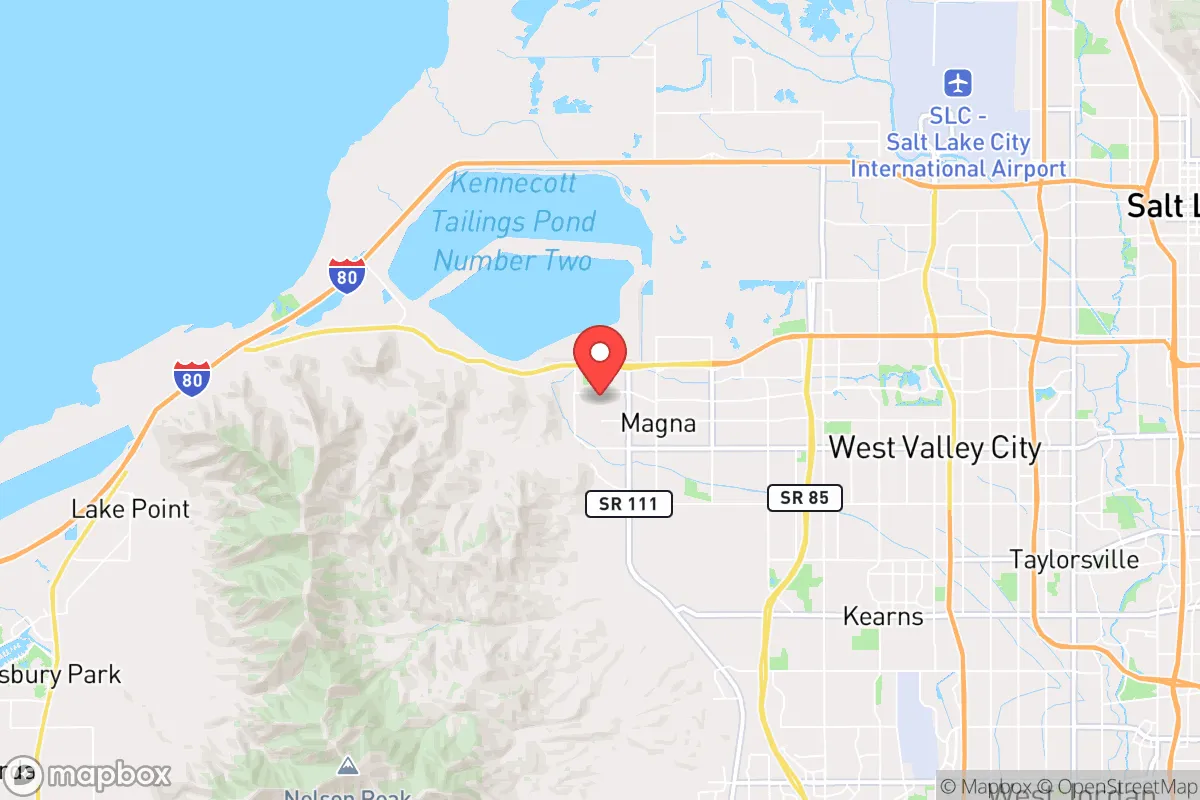
Magna, Utah, is a working-class community of 29,488 residents with a distinct blue-collar identity rooted in its copper-mining past. The city is notably diverse for Utah, with a Hispanic population of 35.7% and a White population of 54.0%, creating a cultural blend that sets it apart from the surrounding Salt Lake Valley suburbs. With only 14.1% of adults holding a college degree, Magna retains a strong trade-and-labor character, and its 10.7% foreign-born share reflects ongoing immigration from Latin America. The population is dense and family-oriented, with a median age around 30, and the community is known for its tight-knit neighborhoods and independent, self-reliant ethos.
How the city was settled and grew
Magna’s population history begins not with Mormon pioneers but with industrial extraction. The town was founded in the early 1900s as a company town for the Utah Copper Company (later Kennecott Copper), whose Bingham Canyon Mine—the world’s largest open-pit copper mine—drew thousands of workers. The original settlers were a mix of European immigrants: Cornish, Irish, Italian, Greek, and Slavic miners arrived between 1906 and 1920, building the first neighborhoods around the smelter and rail lines. Old Magna, the historic core along 2700 South and 8400 West, was where these immigrant families erected modest bungalows and boarding houses. The Smelter District, directly south of the Kennecott facility, housed the earliest Greek and Italian enclaves, with ethnic fraternal halls and Orthodox churches still standing. By the 1930s, the population was overwhelmingly White, native-born, and unionized, with a strong Catholic and Eastern Orthodox presence that contrasted with the LDS majority elsewhere in Salt Lake County.
Modern era (post-1965)
The post-1965 era brought two major demographic shifts. First, the 1970s and 1980s saw an influx of Mexican and Central American workers recruited by Kennecott and nearby construction firms, settling in the Pleasant Green neighborhood east of the old town center. This area, with its older ranch-style homes and apartment complexes, became the initial Hispanic hub. Second, the 1990s and 2000s saw a wave of domestic in-migration from other Western states—particularly California and Nevada—as families sought lower housing costs and industrial jobs. These newcomers, mostly White and Hispanic, moved into newer subdivisions like Lake Ridge (built 1995–2010) west of 8400 West, and Copper Hills near the high school. By 2020, the Hispanic share had risen to 35.7%, while the White share fell to 54.0%. The Black (1.6%) and East/Southeast Asian (2.0%) populations remain small, concentrated in scattered apartment complexes near 3500 South. The Indian-subcontinent share is 0.0%, and Arab-origin residents are negligible. The foreign-born share of 10.7% is almost entirely Latin American, with no significant Asian or European immigration in recent decades.
The future
Magna’s population is heading toward a continued Hispanic majority, likely reaching 45–50% by 2040, driven by higher birth rates and ongoing immigration from Mexico and Central America. The White population is aging and declining, while the Black and Asian shares are expected to remain below 3% each. The city is not tribalizing into distinct ethnic enclaves—Hispanic and White families live intermingled in all neighborhoods—but the Pleasant Green and Old Magna areas are becoming predominantly Hispanic, while Lake Ridge and Copper Hills remain more mixed. The college-educated share (14.1%) is unlikely to rise sharply, as Magna lacks the tech-job base of nearby Lehi or Sandy. New development is limited by the Kennecott buffer zone and the Oquirrh Mountains to the west, so population growth will be moderate—perhaps 2,000–3,000 more residents by 2035. The city is homogenizing in terms of class (working-class, trade-oriented) but diversifying ethnically, creating a community that is increasingly bilingual and bicultural.
For a conservative-leaning individual or family moving to Magna now, the city offers a stable, family-oriented environment with a strong sense of local identity and low crime relative to national averages. The population is becoming more Hispanic and less White, but the cultural values—hard work, self-reliance, religious faith (Catholic and LDS), and suspicion of government overreach—remain consistent across groups. Magna is not a gentrifying suburb or a transient bedroom community; it is a place where people stay for generations, and new arrivals will find a community that values continuity over change.

* Values derived from national, state, county, city and local statistics and may differ in a specific area. Last updated: 2026-09-21T19:36:43.000Z
Narrative content on this page is AI-generated and may contain mistakes. Verify any details that matter before acting on them.
ReloMaps may earn a commission from affiliate links at no extra cost to you.

