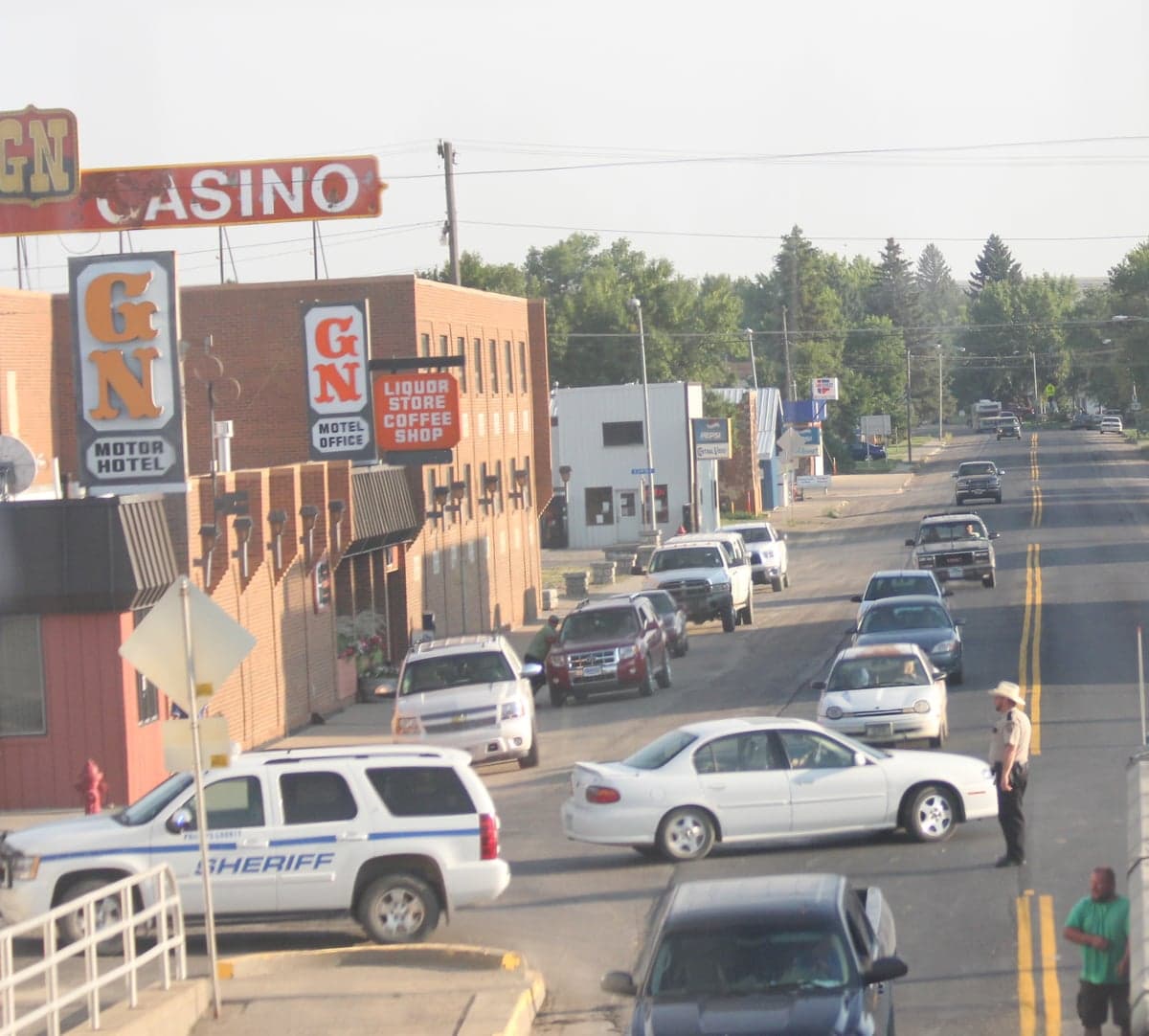
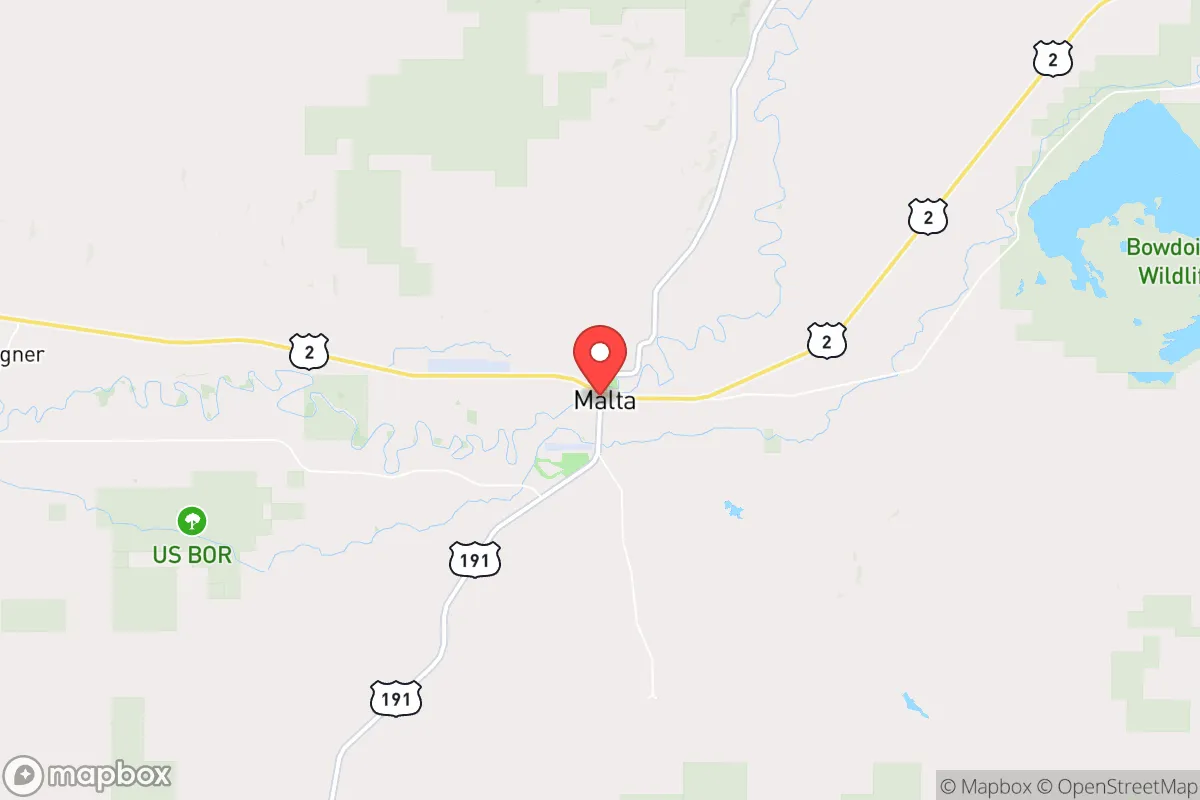
Photo: Wikipedia
Personal Sovereignty in Malta, MT
Viable for self-reliance. Generally workable, though some barriers may limit total independence.
What does Personal Sovereignty tell us?
Personal Sovereignty measures your capacity for self-reliance and independence with minimal government friction. Higher scores mean fewer barriers between you and the way you want to live... but it assumes you have the space you need and good neighbors.
What does this tell us?
Personal Sovereignty measures your capacity for self-reliance and independence with minimal government friction. Higher scores mean fewer barriers between you and the way you want to live... but it assumes you have the space you need and good neighbors.
State Policy
Energy independence: Net exporter (120% of energy produced in-state)
Personal Liberty
Homesteading

Personal Liberty Analysis
Malta, Montana, offers a rare environment for personal sovereignty in the lower 48, where the state’s constitutional and statutory framework actively limits government overreach into daily life. This small Phillips County seat, with a population hovering around 1,800, sits in a region where the ethos of self-reliance isn’t just tolerated—it’s expected. For those looking to minimize entanglement with federal and state mandates, Malta provides a legal and cultural buffer that many other rural towns cannot match, particularly in the areas of taxation, self-defense, and property rights.
Tax burden and regulatory posture: how Montana’s structure preserves your income
Montana’s tax posture is a key pillar of personal sovereignty here. The state imposes no sales tax, meaning every dollar you earn stays in your pocket or can be allocated as you see fit, without the state taking a cut at the register. Property taxes in Phillips County are among the lowest in the state, with effective rates often below 0.6% of assessed value, and agricultural land is taxed at a fraction of that. For a prepper or survivalist, this means more capital for land, supplies, and infrastructure rather than funding state programs. The regulatory environment is equally lean: Montana has no state-level income tax on capital gains, and the state’s business regulations are minimal compared to coastal states. There are no onerous permitting requirements for building on rural land outside Malta’s town limits, and the county’s zoning is virtually nonexistent outside the small town core. This translates to fewer bureaucratic hurdles when constructing a workshop, a root cellar, or a secure storage facility.
Self-defense and gun law specifics: what you can legally own and carry
Montana is a constitutional carry state, and Malta sits squarely within that framework. No permit is required to carry a concealed firearm for anyone legally allowed to possess a gun, and the state preempts local ordinances, meaning Malta’s city council cannot impose its own restrictions. The state also has strong stand-your-ground laws, with no duty to retreat in any place where you are lawfully present. For those with a prepper mindset, this extends to weapon types: Montana law explicitly protects the right to own suppressors, short-barreled rifles, and fully automatic weapons that comply with federal NFA regulations, and there are no state-level bans on magazine capacity or specific firearm features. The state’s castle doctrine is robust, covering vehicles and occupied structures. In practical terms, a resident of Malta can keep a loaded rifle in a truck, carry a sidearm without a permit, and defend their property without fear of prosecution—provided the use of force is reasonable under the circumstances.
Self-reliance and homesteading viability: lot sizes, zoning, and off-grid feasibility
Malta’s surrounding landscape is where personal sovereignty truly takes root. Agricultural and rural residential parcels outside town limits commonly range from 5 to 160 acres, with prices often under $1,000 per acre for raw land. Zoning in Phillips County is minimal: there are no county-wide building codes for rural properties, no mandatory inspections for outbuildings, and no restrictions on rainwater collection or composting toilets. Off-grid living is entirely feasible, as the county does not require connection to municipal water or sewer. Solar panels, wind turbines, and propane systems are common, and the county’s building department only gets involved if you’re constructing a permanent dwelling within the town’s limited jurisdiction. For a homesteader, this means you can build a cabin, dig a well, install a septic system, and raise livestock without a parade of permits. The growing season is short (Zone 4), but cold-hardy crops and greenhouse setups work well. Water rights are a consideration—you’ll need to file for a permit for any significant groundwater use—but the process is straightforward and inexpensive compared to western states.
Personal liberties: parental rights, medical autonomy, speech, and property
Montana’s legal climate strongly favors individual liberty across several fronts. Parental rights are explicitly protected under state law, with a presumption that parents have the fundamental right to direct their children’s education, healthcare, and upbringing. This means no mandatory vaccine requirements for school attendance, and parents can opt out of any curriculum they find objectionable without facing legal pushback. Medical autonomy is similarly robust: Montana has no state-level vaccine mandates for adults, and the state’s right-to-try law allows terminally ill patients access to experimental treatments without FDA approval barriers. The state also has a strong health freedom statute that protects alternative medicine practitioners from prosecution for providing non-licensed care, as long as they don’t claim to cure specific diseases. Speech protections are reinforced by the Montana Constitution, which explicitly guarantees the right to speak freely without government interference—a provision that has been used to strike down campaign finance restrictions and social media censorship laws. Property rights are the bedrock: Montana’s eminent domain laws are among the most restrictive in the nation, requiring a public use that is truly public (not economic development), and the state’s “right to farm” law protects agricultural operations from nuisance lawsuits.
When stacked against other rural areas in the Mountain West, Malta’s sovereignty profile is exceptional. The combination of no sales tax, constitutional carry, minimal zoning, and strong parental rights creates a legal environment where government overreach is the exception, not the rule. For a survivalist or prepper looking to establish a self-sufficient foothold with minimal interference from state or federal authorities, Malta represents a strategic choice—one where the law is written to preserve your autonomy, not erode it. The trade-off is isolation and harsh winters, but for those who value freedom over convenience, that’s a price worth paying.

* Values derived from national, state, county, city and local statistics and may differ in a specific area. Last updated: 2026-05-03T05:02:06.000Z
Narrative content on this page is AI-generated and may contain mistakes. Verify any details that matter before acting on them.
ReloMaps may earn a commission from affiliate links at no extra cost to you.

