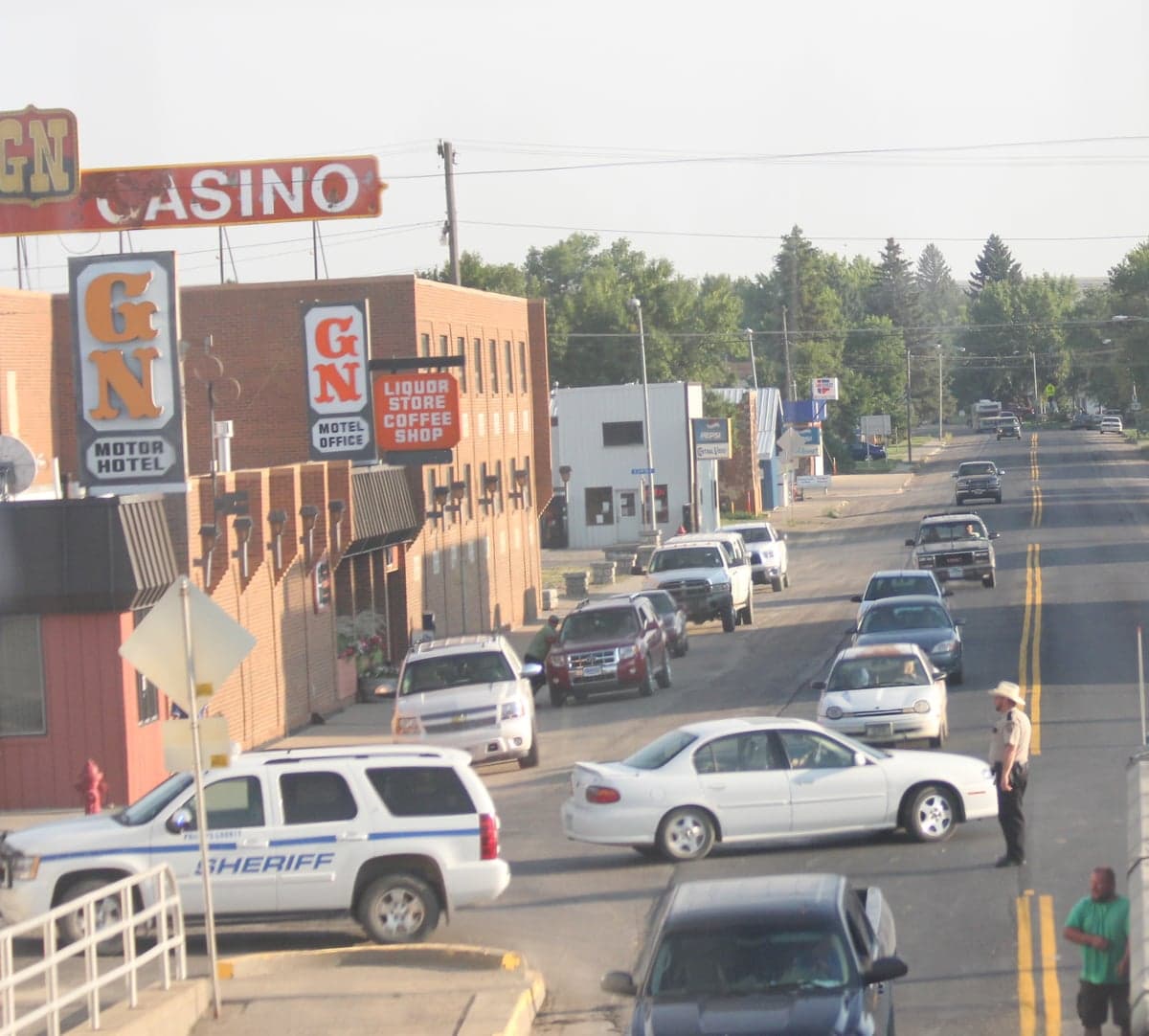
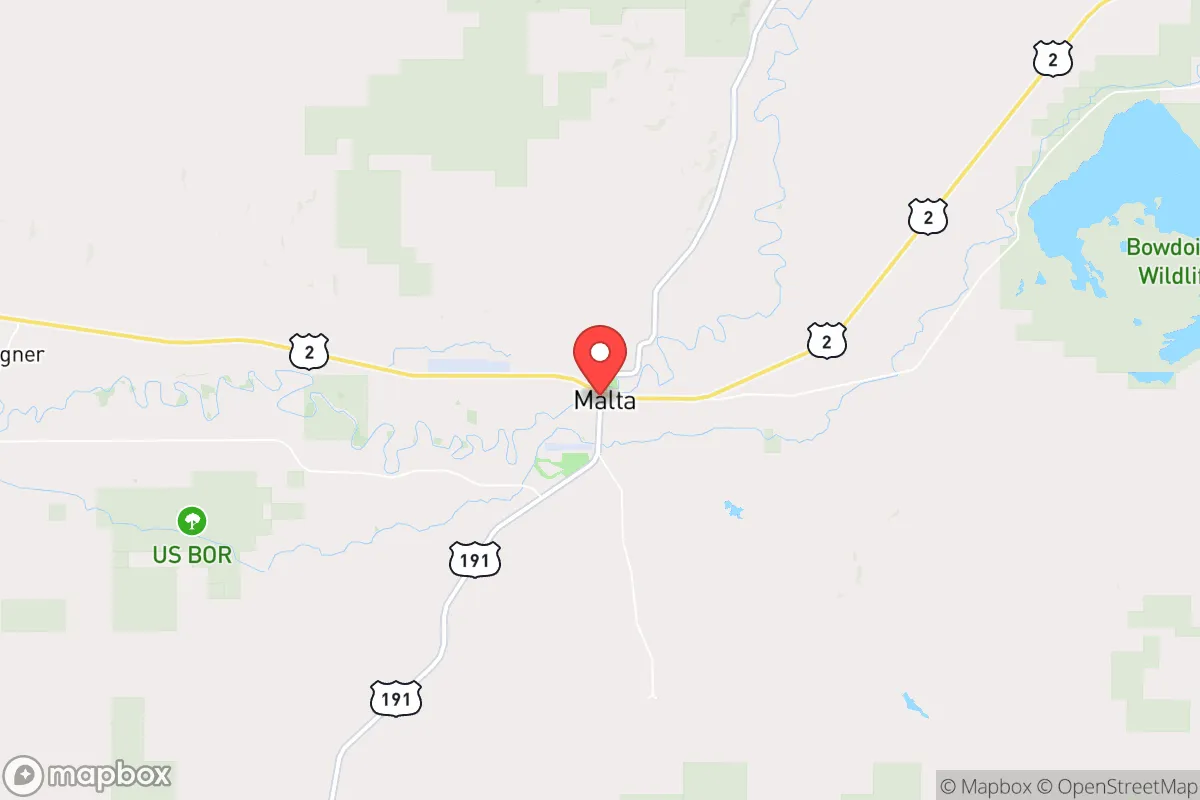
Photo: Wikipedia
Political ClimatePolitical Climate in Malta, MT
District shown is the primary district for this city’s centroid. Cities may span multiple districts.
Local Political AnalysisPolitical Analysis of Malta, MT
Malta, Montana, sits deep in the heart of the Hi-Line, and politically, it’s about as red as the prairie dirt after a summer rain. The Cook PVI of R+15 tells you the math, but it doesn’t tell you the feel—and the feel is that this is a place where folks still believe the county commission and the school board ought to be the highest authorities in their lives, not some bureaucrat in Helena or Washington. The trajectory here is steady, but there’s a quiet unease. We’ve watched neighboring towns like Glasgow and Wolf Point drift a little more purple over the last decade, and while Malta hasn’t flipped, you can sense the pressure from outside money and outside ideas trying to nudge things left. The old-timers remember when you could leave your truck running at the Cenex without a second thought; now, there’s a feeling that we’re one bad legislative session away from losing that kind of freedom.
How it compares
If you drive 70 miles east to Glasgow, you’ll find a town that’s still conservative but has a noticeable progressive streak in its younger crowd, thanks in part to the hospital and the college satellite campus. Wolf Point, another 30 miles east, is even more of a mixed bag, with tribal politics and a growing Hispanic population shifting the local conversation. Malta, by contrast, feels like a holdout. The Phillips County Commission hasn’t bent to the pressure for zoning overlays or “equity” initiatives that you see creeping into places like Havre or even smaller towns like Chinook. The difference is stark: in Malta, the biggest political fights are still about gravel road maintenance and the county weed ordinance, not about which DEI training the library staff has to sit through. That’s a good sign, but it’s a fragile one.
What this means for residents
For a family or a retiree looking at Malta, the political climate means you can still live your life without a government official peeking over your shoulder. The local school board hasn’t gone down the rabbit hole of critical theory or gender ideology—they’re focused on ag education, FFA, and making sure the kids can pass the basic skills test. Property taxes are a sore spot, as they are everywhere in Montana, but the county hasn’t used them to fund pet projects. The sheriff’s office is respected, not feared, and the Second Amendment is treated as a given, not a debate topic. What this means in practice is that you can build a shop on your land without a stack of permits, you can homeschool without the district harassing you, and you can speak your mind at the coffee shop without worrying about being canceled. That’s getting rarer by the year, and it’s worth protecting.
The cultural distinction here is that Malta still operates on a handshake and a man’s word. The local Republican party is active but not radical—they’re more worried about keeping the post office open and the grain prices fair than they are about national culture wars. That said, the long-term concern is real. As the oil and gas activity in the Bakken pushes west, and as remote workers from California and Seattle discover cheap land, the political DNA of the Hi-Line is going to be tested. If you value personal freedom, local control, and a government that stays out of your business, Malta is one of the last strongholds. But don’t take it for granted—the same forces that turned Bozeman and Missoula into progressive enclaves are eyeing the Hi-Line next. Keep your ear to the ground and your vote locked in.

State Political ClimatePolitical Climate in Montana
State Political AnalysisPolitical Environment in the State
Montana has long been a reliably Republican state in presidential elections, voting for the GOP candidate in every election since 1968 except for Bill Clinton’s 1992 win. However, the state’s political landscape is far more nuanced than a simple red-state label suggests, with a deep urban-rural divide and a growing tension between the state’s libertarian-leaning, independent-minded heritage and the influx of out-of-state transplants, particularly from the West Coast. Over the past 10-20 years, the state has shifted from a more moderate, “live and let live” conservatism to a sharper, more populist and culturally conservative posture, driven by a backlash against federal overreach and the perceived erosion of traditional values. The dominant coalition is a mix of ranchers, resource-extraction workers, and a growing number of conservative refugees from blue states, all united by a suspicion of centralized power and a desire to preserve Montana’s unique way of life.
Urban vs. rural divide
The political map of Montana is a textbook case of the urban-rural split. The state’s largest city, Billings, is a reliably Republican stronghold, but it’s the smaller cities and rural counties that form the GOP’s bedrock. Missoula, home to the University of Montana, is the state’s most liberal enclave, consistently voting Democratic and acting as a hub for progressive activism. Bozeman and Helena are more politically mixed, with Bozeman’s explosive growth from out-of-state tech and remote workers shifting it from a conservative ranching town to a purple city with a growing progressive tilt. Meanwhile, counties like Gallatin (home to Bozeman) and Missoula have been the only real blue spots on the map, but they are surrounded by deep-red rural counties like Wheatland, Petroleum, and Garfield, where Republicans routinely win by 80% or more. The 2020 election saw Gallatin County flip to Biden by a narrow margin, a sign of the demographic change that is reshaping the state’s political geography. The real battleground is now the suburban and exurban fringe of these growing cities, where new arrivals often bring their blue-state voting habits with them.
Policy environment
Montana’s policy environment is a mixed bag for conservatives. On the positive side, the state has no sales tax, a low income tax (a flat 6.75% rate, though there are ongoing efforts to reduce it), and a relatively light regulatory touch, especially in the energy and agriculture sectors. The 2021 Montana Legislature passed a series of pro-business and pro-gun bills, including permitless carry and preemption laws that prevent local governments from enacting stricter gun ordinances. However, the state’s education system is a growing concern. While Montana has a strong tradition of local control, the teachers’ unions remain powerful, and the state has not yet passed a robust school choice program, though a 2023 bill creating education savings accounts for special needs students was a step in the right direction. On healthcare, the state expanded Medicaid under the Affordable Care Act in 2015, a move that many conservatives view as a federal overreach that has created a dependency class. Election laws are relatively secure, with voter ID requirements and no widespread mail-in voting (except for absentee ballots), though the 2020 election saw a temporary expansion of mail-in voting due to the pandemic, which raised concerns about ballot integrity among many residents.
Trajectory & freedom
The trajectory of freedom in Montana is a tale of two trends. On one hand, the state has aggressively pushed back against federal overreach, particularly on land use and gun rights. The 2021 passage of House Bill 102, which prohibits the enforcement of any federal gun control measure that doesn’t have a state equivalent, is a powerful statement of sovereignty. Similarly, the Montana Land Use Planning Act (2023) aimed to limit local government zoning power, though it was watered down after pushback from local officials. On the other hand, the state’s growing reliance on federal funding (over 40% of the state budget) creates a vulnerability that many conservatives find alarming. The biggest threat to personal liberty, however, is the cultural shift driven by in-migration. As more people from California, Washington, and Oregon move to places like Bozeman and Missoula, they bring with them a preference for more government services, stricter land-use regulations, and progressive social policies. This has already led to housing shortages and skyrocketing property taxes in those areas, which is a direct assault on the property rights of long-time residents. The 2023 legislative session saw a push for a parental rights bill (SB 99) that would have required schools to notify parents of any curriculum related to sexuality, but it was ultimately vetoed by Governor Gianforte, a move that disappointed many social conservatives.
Civil unrest & political movements
Montana is not known for widespread civil unrest, but there have been notable flashpoints. The Yellowstone Club and other wealthy enclaves have seen protests from local activists over housing affordability and the displacement of working-class families. The Standing Rock pipeline protests in neighboring North Dakota in 2016-2017 drew significant support from Montana’s progressive and Native American communities, with activists from Missoula and Bozeman traveling to join the demonstrations. On the right, the Montana Freedom Caucus has become a powerful force in the state legislature, pushing for more aggressive action on election integrity, gun rights, and school choice. The state has also seen a rise in constitutional sheriff movements, particularly in rural counties like Ravalli and Flathead, where sheriffs have publicly stated they will not enforce any federal gun laws they deem unconstitutional. Immigration politics are less of a flashpoint here than in border states, but there is a growing concern about the influx of illegal immigrants being bused to places like Billings and Great Falls from southern states, which has sparked local protests and calls for stricter enforcement. Election integrity remains a hot-button issue, with many conservatives still skeptical of the 2020 results and pushing for a full audit of the state’s voting machines.
Projection
Over the next 5-10 years, Montana is likely to become more politically polarized, not less. The demographic shift is real and accelerating: Bozeman and Missoula will continue to trend blue, while the rural counties will double down on red. The state’s growing population will likely lead to a more competitive political environment, with the possibility of a Democratic governor or senator being elected in the next decade if the trend continues. However, the state’s strong libertarian streak and its deep-seated distrust of federal power will act as a brake on the most extreme progressive policies. The real battle will be over land use and property rights, as new residents demand more services and regulations that clash with the traditional Montana ethos of “leave me alone.” A new resident moving in now should expect to find a state that is still fundamentally conservative, but with a growing and vocal progressive minority that is winning battles in the cities. The key to preserving Montana’s freedom will be to keep the state legislature and governor’s office in conservative hands, and to resist the temptation to adopt the failed policies of the states people are fleeing.
Bottom line for a new resident: If you’re moving to Montana for the freedom and the wide-open spaces, you’ll find plenty of like-minded people, especially outside the major cities. But don’t expect a conservative utopia. The culture war is real here, and it’s being fought over every new subdivision, every school board meeting, and every election. The best advice is to get involved locally, support the candidates and policies that protect property rights and individual liberty, and be prepared for the fight to keep Montana from becoming the place you left behind.
* Values derived from national, state, county, city and local statistics and may differ in a specific area. Last updated: 2026-05-03T05:02:06.000Z
Narrative content on this page is AI-generated and may contain mistakes. Verify any details that matter before acting on them.
ReloMaps may earn a commission from affiliate links at no extra cost to you.

