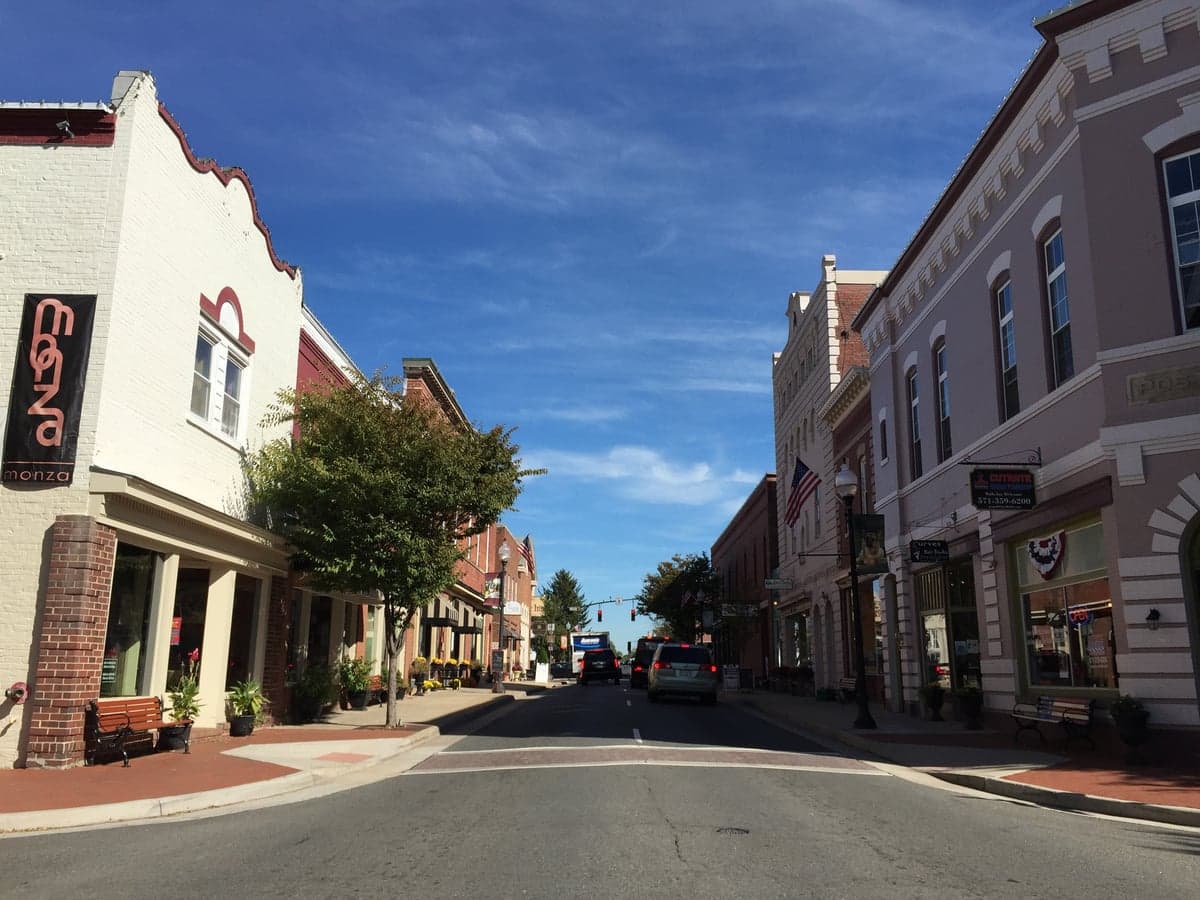
Photo: Wikipedia
Personal Sovereignty in Manassas, VA
Viable for self-reliance. Generally workable, though some barriers may limit total independence.
What does Personal Sovereignty tell us?
Personal Sovereignty measures your capacity for self-reliance and independence with minimal government friction. Higher scores mean fewer barriers between you and the way you want to live... but it assumes you have the space you need and good neighbors.
What does this tell us?
Personal Sovereignty measures your capacity for self-reliance and independence with minimal government friction. Higher scores mean fewer barriers between you and the way you want to live... but it assumes you have the space you need and good neighbors.
State Policy
Energy independence: Importer (20% of energy produced in-state)
Personal Liberty
Homesteading

Personal Liberty Analysis
Manassas, Virginia offers a mixed bag for those prioritizing personal sovereignty, with the Commonwealth’s relatively strong gun rights and low property taxes balanced against a growing regulatory footprint and proximity to D.C. overreach. For a survivalist or prepper mindset, the city’s location in Prince William County provides some buffer from the most aggressive Northern Virginia policies, but state-level trends—especially on taxation and medical mandates—demand careful scrutiny. This analysis breaks down the key factors that determine how much autonomy you can actually carve out here, from the tax code to the backyard garden.
Tax burden and regulatory posture in Manassas
Virginia’s tax structure is generally favorable compared to neighboring states, but Manassas sits in a county that has leaned toward higher spending. The state income tax is a flat 5.75%—no progressive brackets, which benefits higher earners but still cuts into savings. Property taxes in Manassas city run about $1.12 per $100 of assessed value, slightly below the national average, but Prince William County’s overall tax burden is elevated by a meals tax and personal property tax on vehicles (around 4.57% of assessed value). For a prepper, the real concern is regulatory creep: Virginia has adopted stricter environmental and land-use rules in recent years, including stormwater management mandates that can complicate building or expanding a homestead. The state also requires annual vehicle safety inspections, a minor but persistent government touchpoint. On the positive side, Virginia is a right-to-work state, meaning no forced union membership, and there is no state-level occupational licensing for many trades—though local zoning can still trip you up. The overall regulatory posture is moderate, but the trend is toward more oversight, not less.
Self-defense and gun law specifics in Manassas
Virginia is a shall-issue state for concealed carry, meaning the county sheriff must issue a permit if you meet basic criteria—no subjective discretion. Manassas residents can carry openly without a permit, and the state preempts local gun ordinances, so the city cannot ban firearms in most public spaces. However, the Commonwealth has tightened some restrictions since 2020: a one-handgun-per-month purchase limit is in effect, and universal background checks are required for private sales. Magazine capacity is not restricted, and there is no state-level assault weapons ban, though some localities have tried to impose their own (preempted by state law). Stand-your-ground laws are not explicitly codified in Virginia, but the Castle Doctrine applies—no duty to retreat in your home or vehicle. For a survivalist, the key takeaway is that Manassas is a legal environment where you can keep and bear arms with relatively few hurdles, but you must stay current on state-level changes. The proximity to D.C. means federal pressure is always a factor, but Virginia’s gun culture remains robust, with multiple ranges and training facilities within a 20-minute drive.
Self-reliance and homesteading viability in Manassas
Manassas is a suburban city, not rural, so large-scale homesteading is limited. Standard residential lots in the city average 0.2 to 0.5 acres, with some older neighborhoods offering up to 1 acre. Zoning allows for backyard chickens (hens only, no roosters) and small gardens, but livestock like goats or pigs are prohibited within city limits. Prince William County’s agricultural zoning (A-1) permits larger operations, but those parcels are mostly west of Manassas near Gainesville or Haymarket. Off-grid feasibility is low: the city requires connection to municipal water and sewer, and solar panels are allowed but subject to HOA restrictions in many subdivisions. Rainwater collection is legal but limited to 250 gallons per property without a permit. For a prepper, the realistic path is suburban self-reliance—a robust vegetable garden, fruit trees, and a well-stocked pantry—rather than true off-grid living. The Virginia Cooperative Extension offers soil testing and canning classes, which is a practical resource. If you want acreage for a bug-out location, you’ll need to look 30-45 minutes west toward Fauquier or Rappahannock counties.
Personal liberties in Manassas: parental rights, medical autonomy, speech, and property
Virginia has a mixed record on personal liberties. Parental rights are protected under state law, with a Parental Rights in Education statute that requires schools to notify parents of any changes in a child’s mental or physical health—though enforcement varies by school board. Prince William County has been a battleground on this issue, with some school board members pushing for more transparency and others resisting. Medical autonomy is a concern: Virginia has a vaccine mandate for school attendance (though exemptions exist for medical and religious reasons), and the state’s emergency powers were used aggressively during the pandemic, including mask mandates and business closures. For a prepper, this means stocking up on medical supplies and knowing your legal options for opting out of future mandates. Free speech is generally protected, but Virginia has a hate crimes law that can be used to prosecute certain speech if tied to intimidation. Property rights are strong: Virginia is a Dillon’s Rule state, meaning local governments only have powers explicitly granted by the state, which limits the ability of Manassas to impose overly restrictive zoning or rent control. However, eminent domain is a risk for large infrastructure projects, and the state’s land-use planning process can be lengthy and bureaucratic.
Overall, Manassas offers a moderate level of personal sovereignty relative to other areas in the D.C. metro region. It is far more freedom-oriented than neighboring Maryland or D.C. itself, but it lags behind more rural parts of Virginia like the Shenandoah Valley or Southside. For a single individual or family with a prepper mindset, the city provides a workable base with decent gun laws, manageable taxes, and some room for self-reliance, but you will need to stay vigilant against state-level encroachment and plan for a secondary location if true off-grid living is your goal. The key is to leverage Virginia’s strengths—right-to-work, shall-issue carry, and property rights—while mitigating the risks of suburban regulation and proximity to federal power. If you can accept those trade-offs, Manassas can be a strategic outpost for preserving your autonomy in an increasingly uncertain environment.

* Values derived from national, state, county, city and local statistics and may differ in a specific area. Last updated: 2026-04-19T08:36:36.000Z
Narrative content on this page is AI-generated and may contain mistakes. Verify any details that matter before acting on them.
ReloMaps may earn a commission from affiliate links at no extra cost to you.

